I want to control dough temperature
Start with water that suits your kitchen.
Flour, room temperature and mixing warm or cool your dough. This tool estimates the water temperature that compensates for them.
You get a practical range, so one decimal place does not suggest false precision.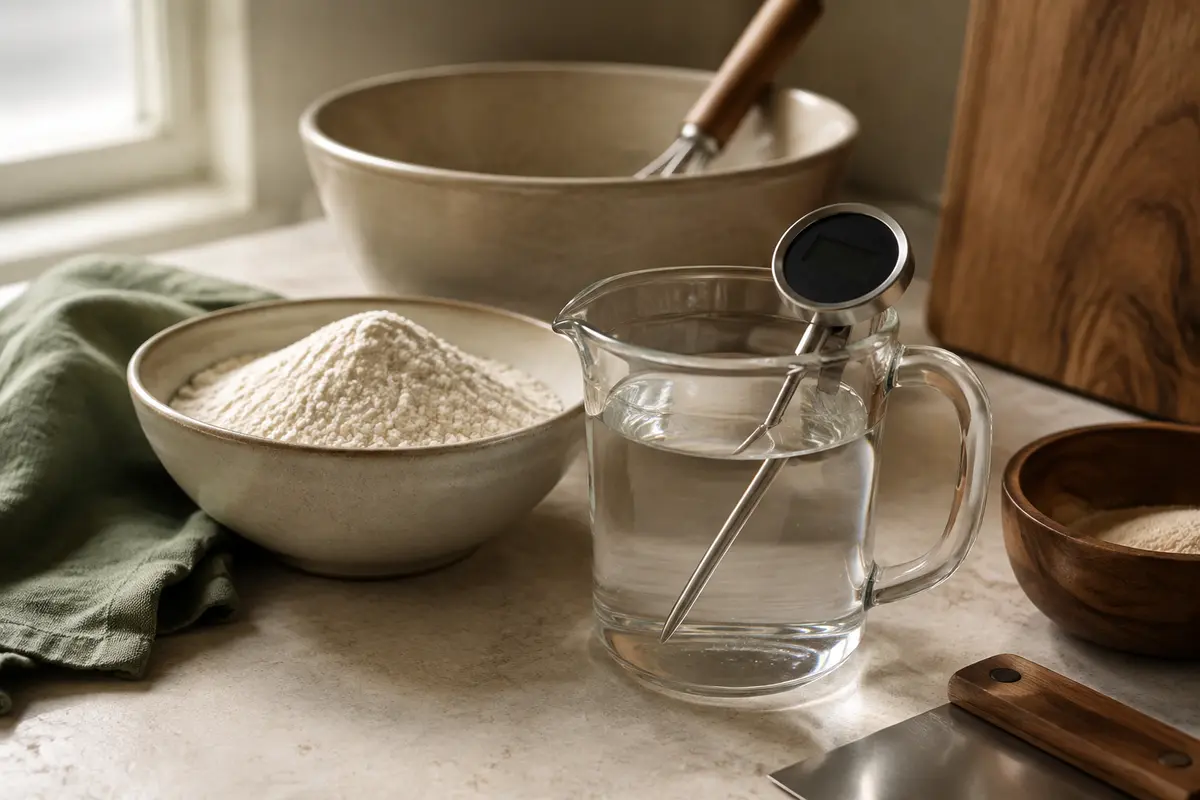
Measure and choose
Which temperatures affect the dough?
Measure the room and flour just before mixing, then choose how you mix; the heat generated by mixing counts too.
Try your kitchen conditions
Each example replaces all inputs. Then adjust the temperatures to your own measurements.
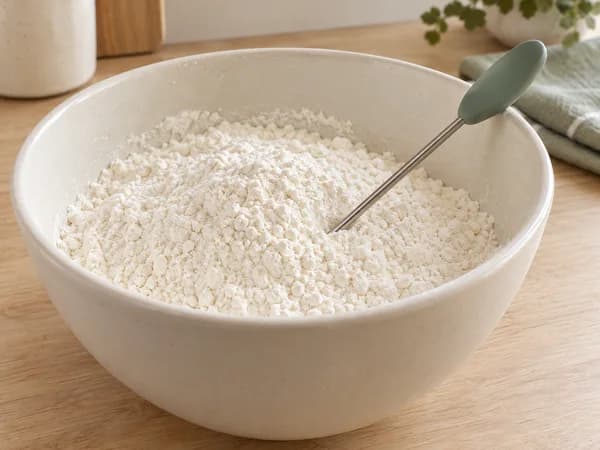
Measure the flour, not just the room
Insert a clean probe thermometer into the centre of the flour without touching the bowl. Wait for a stable reading. Measure your preferment too if you use one.
This is the desired dough temperature after kneading, not the water temperature. Use the target given in your recipe.
The friction factor is a calculation value, not simply the temperature rise of your dough. Presets are starting points; mixer, speed and mixing time matter.
Your starting point
Use water around this temperature
- Practical range
- 28 °C–32 °C
- Target dough temperature
- 25 °C
- Friction factor
- 4 °C
- Calculation
- Room + flour + mixing
A workable range for many doughs. Measure the dough after mixing and adjust next time.
Stir warmer and cooler water together and measure again. Then weigh out the water quantity required by your recipe.
The range is a guide, not a guarantee of the final dough temperature.
Check after kneading
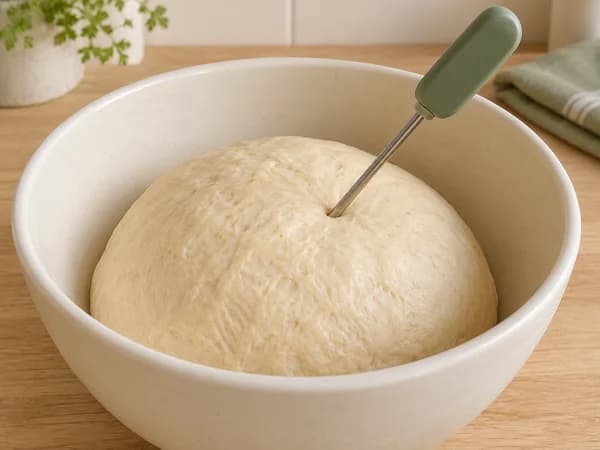
Measure the centre of the dough as soon as kneading is finished, without touching the bowl. Compare it with your target and record the result for your next bake.
Mixing heat varies by mixer, speed, time and dough. Treat this as a starting point and measure the dough directly after mixing.
Then calculate the full dough
Use the same desired dough temperature as a guide when planning the recipe and fermentation.
From calculation to bake