From flour to workable dough
How much water can your flour handle?
Choose your flour, what you want to bake and how supple the dough may be. You get a sensible starting point with room to adjust, not a magically exact number.
Flour brand, protein level and mixing method still matter.
Your dough
Choose your starting point
Not completely sure? Choose the flour that makes up most of your recipe and start with ‘Comfortably workable’.
Start with a baking plan
Each example starts with 500 g flour. Flour type, bread style and handling are preset; you can change everything.
Practical starting point
Your water guide
What does this percentage mean?
Per 100 g flour: 67 grams of water.
The percentage compares water with flour, not with the total dough weight.
firmer62–72%more supple
- Water at target
- 335 g
Split your water into two portions
The reserve is already part of the suggested water. Add it only if the dough can take it; it is not extra water on top of the total.
How to approach it
- First mix the flour with the suggested initial amount of water.
- Rest the dough for 15–20 minutes, then feel it again.
- Add the held-back water little by little; you can stop at any point.
Stronger bread flour can often carry more water, but it also needs enough mixing or folding.
This is a starting guide, not a limit. Temperature, resting, mixing and the specific flour determine how much water feels right.
Want to turn this into a complete recipe?
Take this percentage to the advanced calculator, then add salt, leavening and any extra ingredients.
How the dough may feel
Three illustrative examples using white wheat flour. A photo cannot tell you an exact percentage; whole wheat, spelt and rye may behave differently.
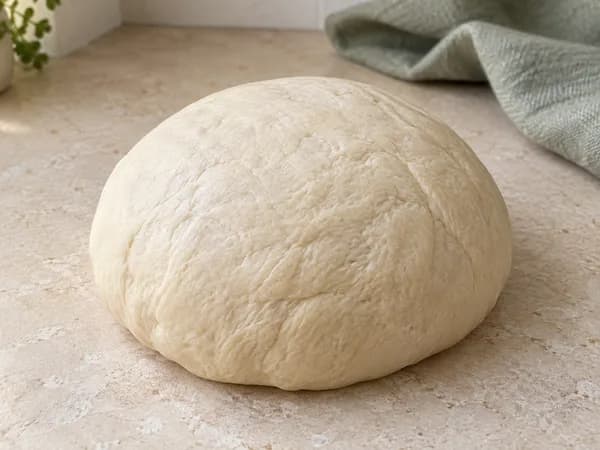
Firmer
Holds its shape easily and offers some resistance. Do not add all the reserve straight away; mix well and rest the dough first.
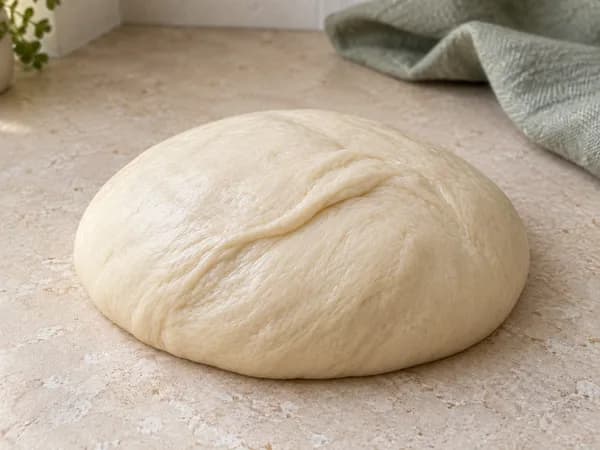
Supple
Stretches and folds while staying cohesive. A little stickiness is normal; use a dough scraper if needed.
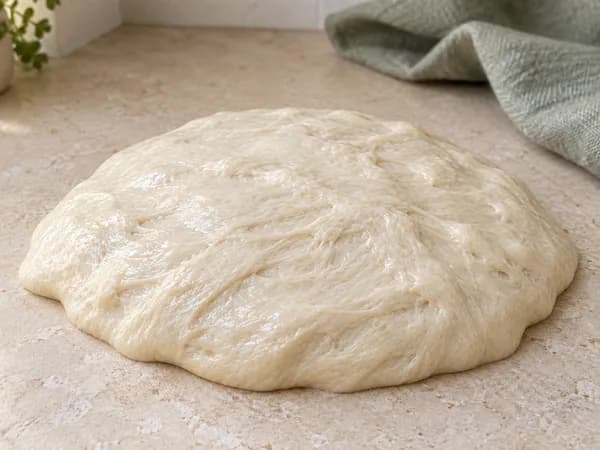
Wet
Spreads further and sticks more. Use damp hands or a scraper and follow the folds in your recipe.
More water does not guarantee larger holes. Flour strength, mixing or folding, fermentation and shaping matter too.
From calculation to bake