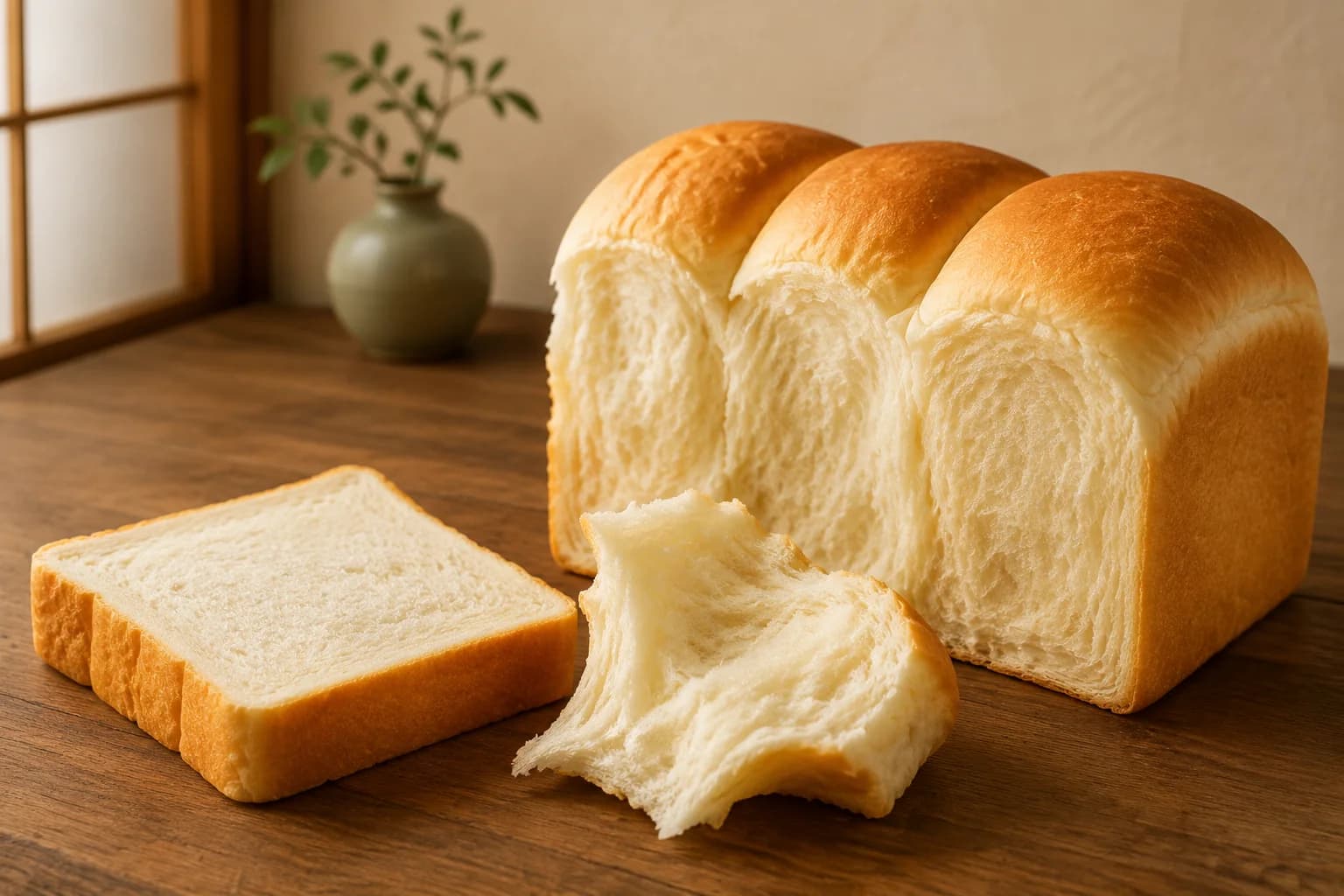
I want bread that stays soft for longer
Softer bread starts with a small scald.
Tangzhong and yudane bind part of the recipe liquid in advance. This tool correctly removes that flour and liquid from the final dough.
Total flour and hydration stay the same; only the method changes.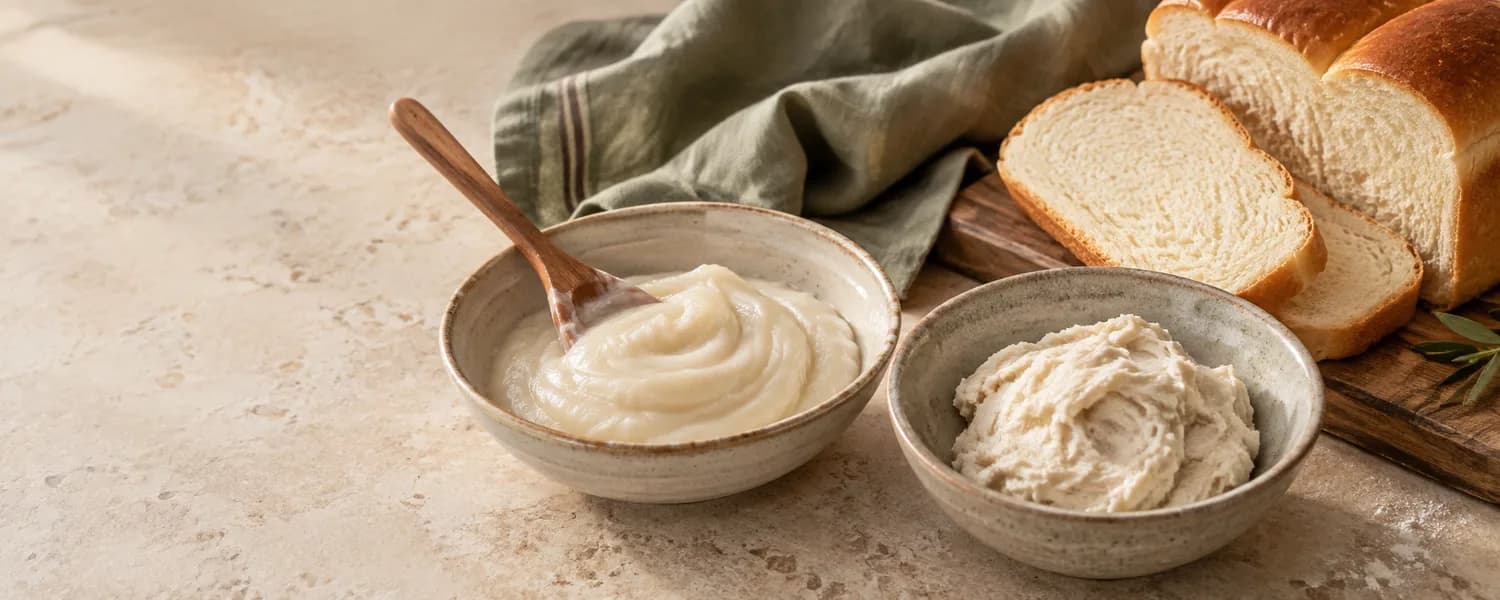
Divide your formula
Split the flour and liquid
Choose a method. The common values are filled in for you, but you can adapt them to your recipe.
Enter all the flour and liquid in your recipe, including the portion for the scald. With 500 g flour, 70% means 350 g liquid.
1:5 means five grams of liquid per gram of flour. Choosing another method restores its usual ratio and flour percentage.
Your split
Make the tangzhong first
- Flour in scald
- 25 g
- Liquid in scald
- 125 g
Add later to the final dough
- Add flour
- 475 g
- Add liquid
- 225 g
Also add the entire cooled scald to the final dough. Follow your recipe for salt, yeast and other ingredients.
Water and milk count here as recipe liquid by weight. Milk is not entirely water, so this does not calculate the actual water content of a milk dough.
Nothing extra goes in
In the scald + added later = recipe total
- Flour
- 25 g + 475 g ≈ 500 g
- Liquid
- 125 g + 225 g ≈ 350 g
Tangzhong: stir until it thickens
At the usual 1:5 ratio: a thick paste that briefly holds the trail left by your spatula.
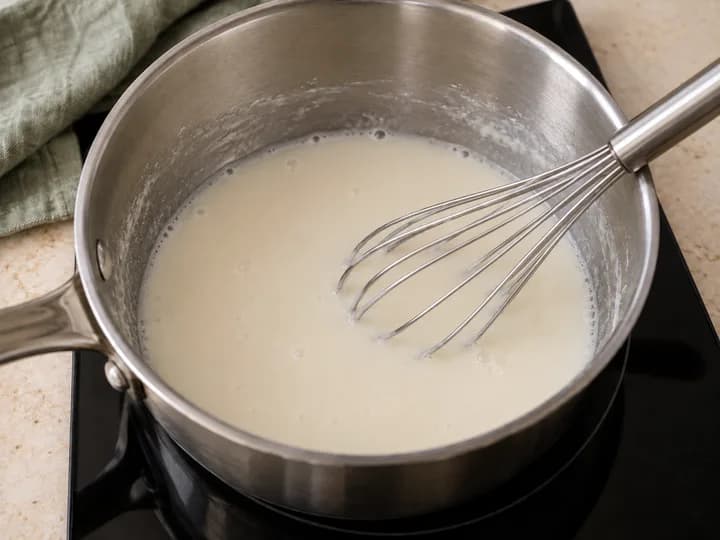
Start cold
Weigh the flour and liquid for the scald. Whisk them smooth in a saucepan before applying heat.
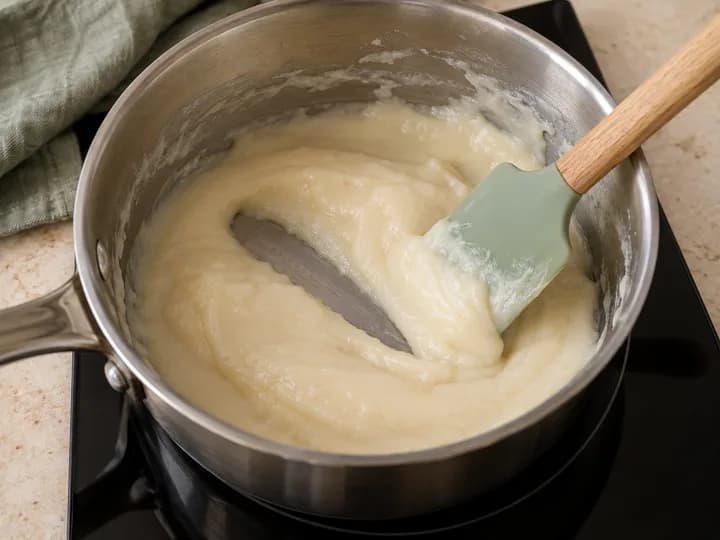
Heat and keep stirring
Use low to medium-low heat until the mixture visibly thickens, around 65 °C / 149 °F. Your spatula briefly leaves a trail. Do not cook the paste dry.
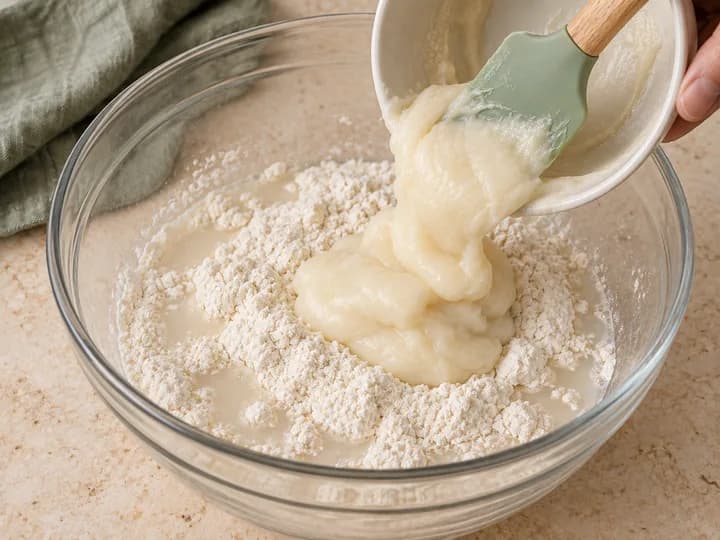
Cool and mix in
Transfer to a bowl, cover and cool. Add the entire scald with the remaining flour and liquid as your recipe directs; do not add yeast to a hot scald.
The defaults are starting points. Prefer a tested recipe for the method; an equal liquid percentage does not guarantee the same dough feel.
Next: from dough to a soft loaf
After step 3, both methods follow the same stages. These photos show a soft wheat loaf shaped as one log. Follow your recipe for the other ingredients, pan size, rising times and oven temperature.
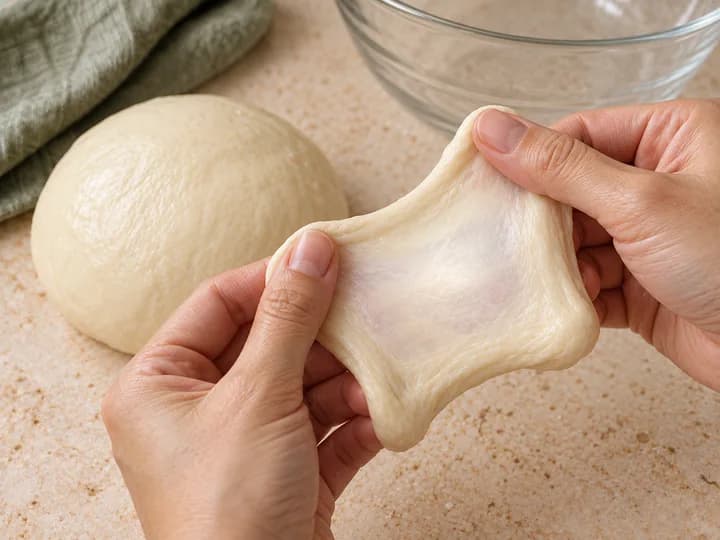
Knead until supple
Mix in the salt, yeast and other ingredients from your recipe; add butter when your recipe directs. Knead until the dough becomes smooth and elastic. A little tackiness is fine: avoid repeatedly adding flour.
What to look for: A small piece can be gently stretched into a thin membrane without tearing straight away.
Let the first rise develop
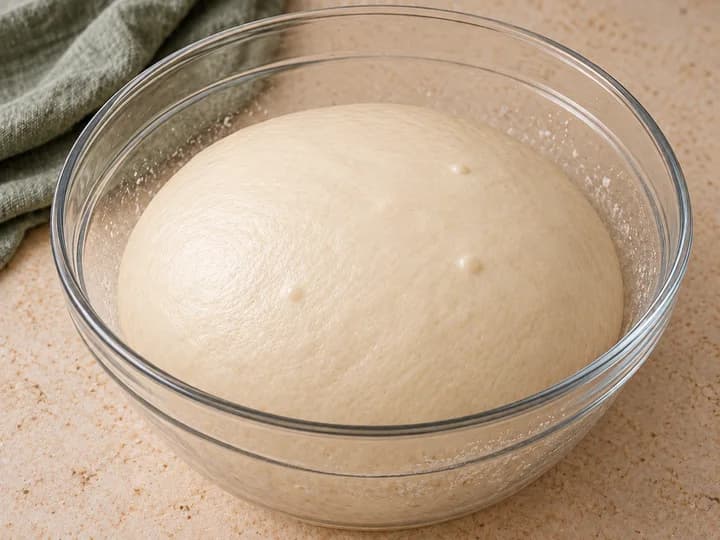
Place the dough in a lightly greased bowl and cover. Look for the volume increase your recipe calls for, rather than relying only on the clock. Temperature and yeast quantity affect the pace.
What to look for: The dough is visibly larger and airier. Do not wait until its top collapses.
Shape an even log
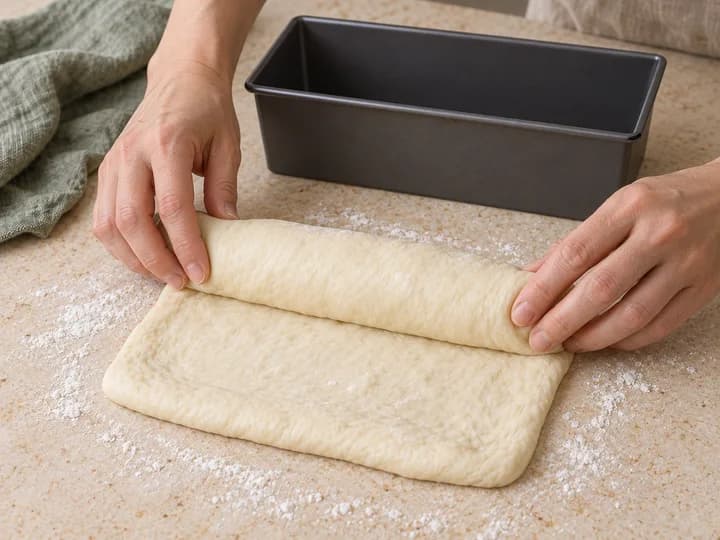
Gently press out large air pockets. For this shape, pat the dough into a rectangle about as wide as your pan is long. Roll up, pinch the seam closed and place seam-side down in the greased pan.
What to look for: The log has an even thickness and a closed seam; avoid tearing the surface.
Allow the final rise
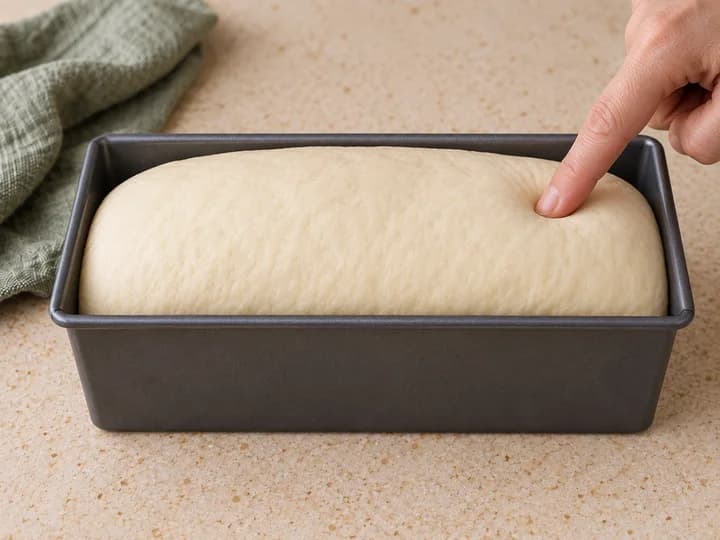
Cover the pan and let the dough become puffy again. Preheat the oven in good time. Follow your recipe’s rising-height guidance; the right height also depends on pan size and dough quantity.
What to look for: A gentle press with a floured finger springs back slowly partway. An immediate bounce needs more time; a lasting dent can indicate overproofing.
Bake and unmould
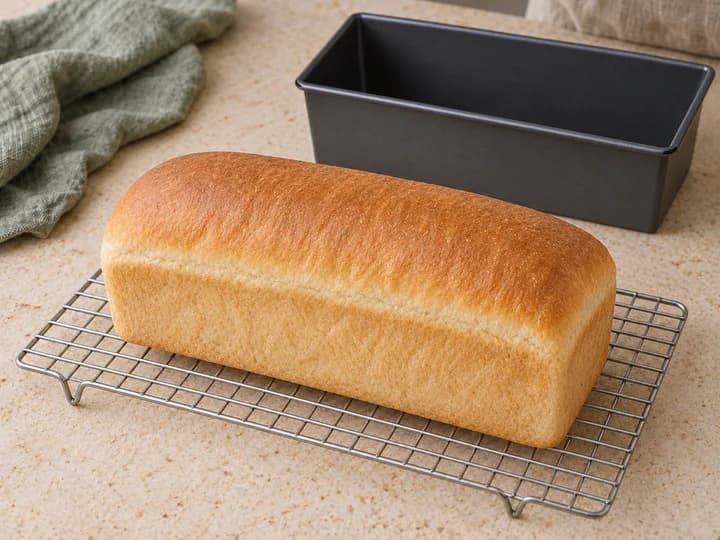
Bake in the preheated oven as your recipe directs. Check doneness using its instructions; a brown top alone is not enough. After the specified short rest, remove the loaf from its pan and put it on a rack.
What to look for: The crust is evenly coloured and the centre is fully baked. Tent loosely if the top browns too quickly.
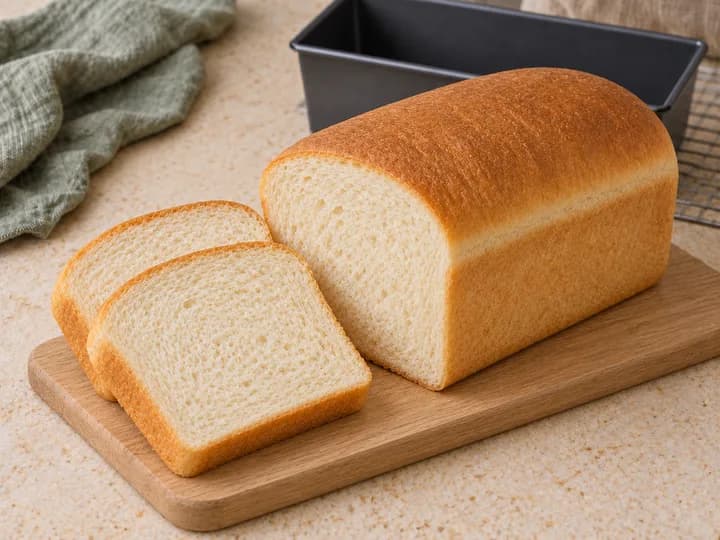
Cool and slice
Let the loaf cool completely on the rack before slicing. Use a bread knife without squashing the loaf. Now you can inspect its crumb properly.
What to look for: For this soft wheat loaf, look for a fine, springy crumb without wet or compressed dough streaks.
Use the scald in your complete recipe
This transfer uses water. Milk has a different water content and is not supported by this transfer. Flour, water and the scald carry over; add salt and leavening in the formula builder.
How to read the result
Fit tangzhong or yudane into a formula without double liquid
The tool redistributes existing flour and liquid between the scald and main dough. Nothing is added on top of the formula.Worked example
Tangzhong for 500 g flour
At 70% hydration, use the standard 5% flour with five parts liquid.Cook 25 g flour with 125 g liquid; the main dough keeps 475 g flour and 225 g liquid.What it means
A redistribution, not an extra ingredient
The 25 g flour and 125 g liquid already belong to the total 500 g flour and 350 g liquid.Common mistake
Adding the scald on top of the recipe
That silently raises total hydration and can make a soft dough loose or sticky.Use it for
Soft rolls and milk bread
Useful when you want to bind liquid for a tender crumb and longer-lasting softness.Not for this
Not automatically right for every loaf
For a crusty, open or deliberately dry bread style, gelatinisation may work against the intended character.From calculation to bake