Better baking · Judging the rise
Has my dough risen enough?
Look at volume, aeration and how the dough feels. The time in your recipe is a guide. During bulk fermentation, assess the whole batch; during the final proof, assess the shaped loaf.
For bread made mainly with wheat flour, including whole wheat, using yeast or sourdough.
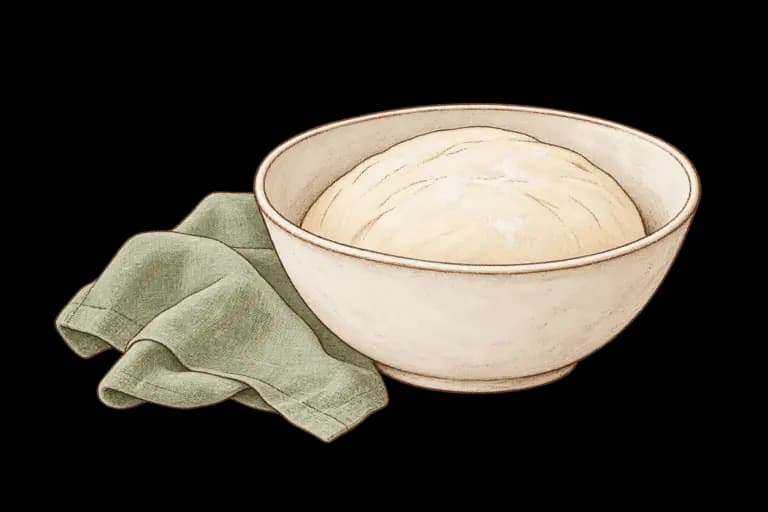
Take a look at your dough
Before or after shaping?
Choose your stage to see what to look for.
First rise
My dough is not shaped yet
- Growth
- Compare with the starting level in your container.
- Air
- Look for bubbles and an airier dough overall.
- Structure
- The dough still holds together for shaping.
Divide and shape as your recipe directs. Doubling is not a universal rule.
Final proof
My loaf is already shaped
- Volume
- The loaf has become fuller and airier.
- Tension
- It still holds its shape without collapsing.
- Poke test
- A gentle dent slowly springs back partway.
Bake in the preheated oven. The poke test is an extra clue for wheat dough at room temperature.
Little growth and still dense? Keep it covered, allow more time and check again.
Unsure, or has it collapsed? See what you can doBulk fermentation
Bulk fermentation, also called the first rise, runs from mixing until the dough is divided or shaped. Any sets of folds are part of this stage.
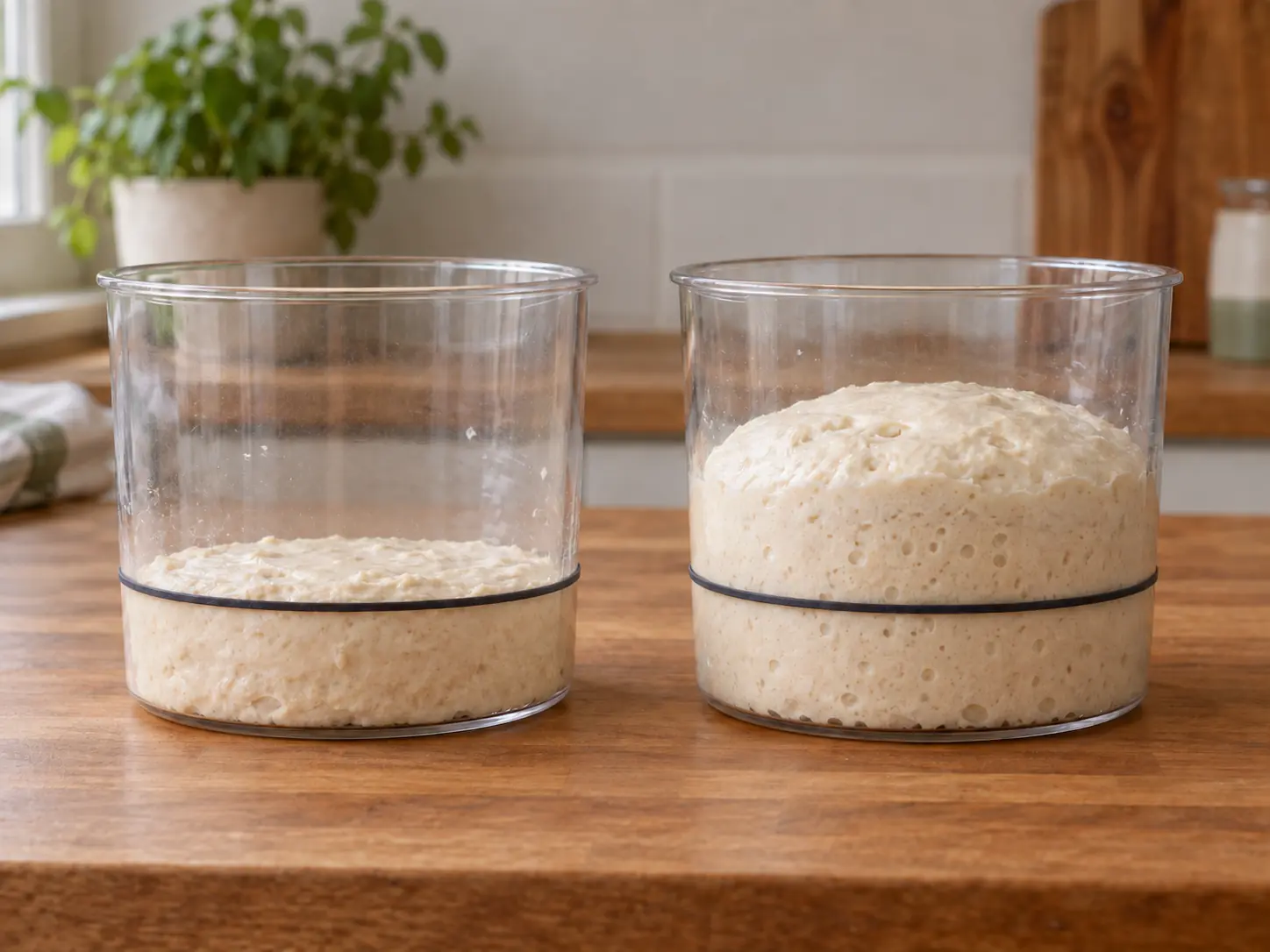
- More volume: mark the starting height in a clear, straight-sided container so you can see the rise.
- Gas in the dough: look for bubbles and an airier dough overall. A few bubbles on the surface alone do not mean it is ready.
- A cohesive dough: wheat dough usually feels airier and springier than just after mixing. It should still hold together well enough to shape.
Dough temperature has a strong influence on rising time. Within normal fermentation temperatures, warmer dough ferments faster and cooler dough more slowly. Your dough may therefore need more or less time than the recipe suggests.
Measure your dough temperature after mixing. Want to get closer to a chosen dough temperature on your next bake? Calculate your mixing water temperature.
Doubling in size is not a universal rule. The rise you are aiming for depends on your recipe, flour, temperature and the fermentation still to come. The poke test used for final proof does not tell you when bulk fermentation is complete.
The final proof
The shaped dough gains volume again and feels airier. For wheat dough at room temperature, a gentle poke can help: lightly flour a finger and press a small, shallow dent into the dough.
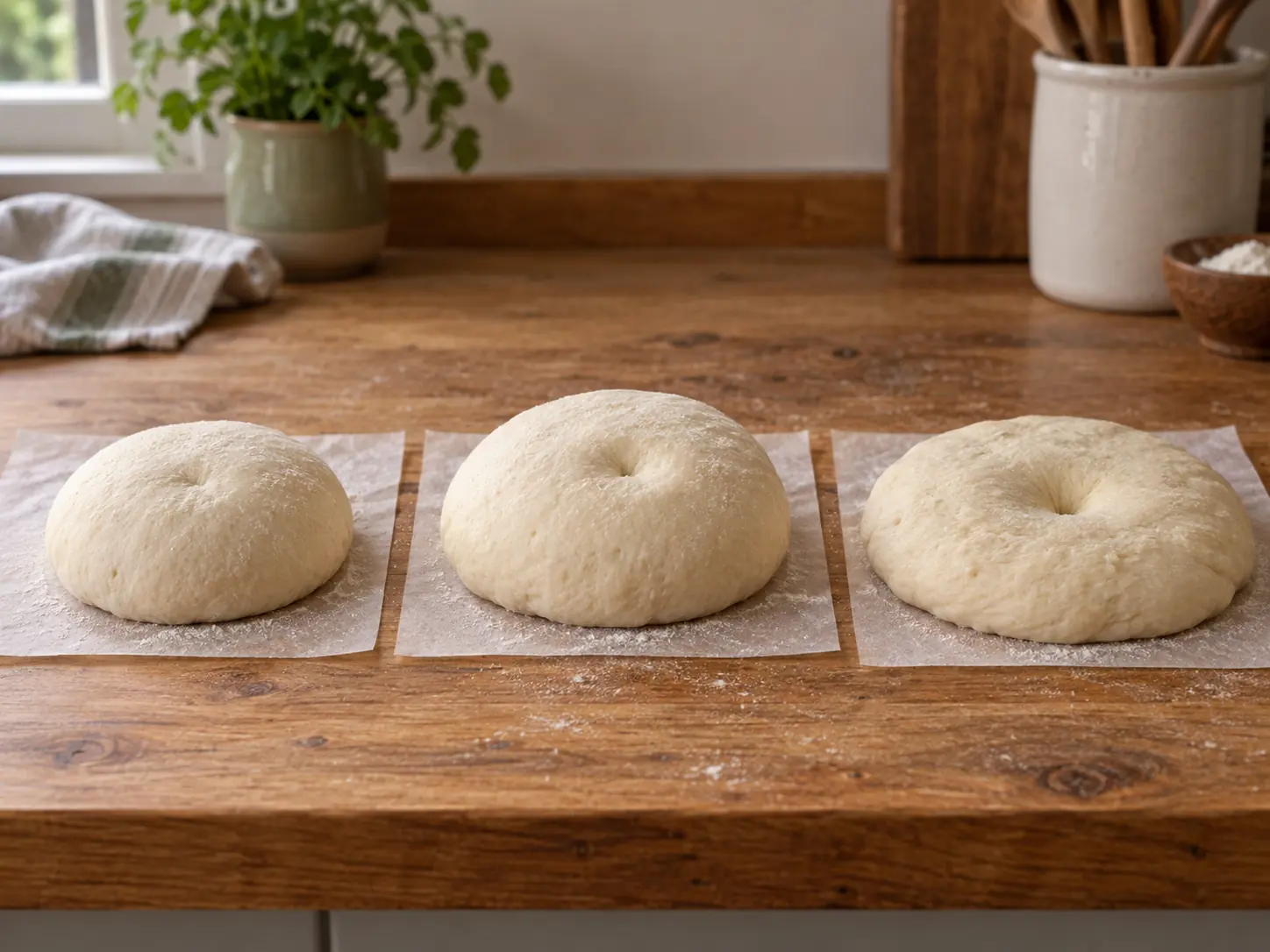
- The dent springs back quickly
- If the dough also feels firm and has risen little, it may need more proofing.
- The dent returns slowly and partly
- Together with increased volume and an airy dough that still holds its shape, this can suggest sufficient proofing.
- The dent remains and the dough loses tension
- If the dough is also very slack or collapsing, it may be overproofed. Handle it gently.
One poke does not tell the whole story. Cold dough responds differently; high hydration, whole-grain flour or rye makes the test less clear. For bread made mainly with rye, follow the signs described in a suitable rye recipe.
What can you do now?
Little rise and a dense dough? Keep it covered, give it more time and check again. Compare it with the guidance in your recipe. Sourdough also needs an active starter.
The final proof looks sufficient? Make sure the oven is preheated as the recipe requires and bake. Do not extend proofing just to reach a stated time.
Very slack dough that collapses? More waiting will not restore its structure. Do not automatically degas and reshape: what is possible depends on the dough and how far it has fermented. Expect less volume when baking.
Dough straight from the fridge? Do not warm it up solely for a poke test. Consider its development before chilling, its current condition and your recipe’s method together.
From reading to trying
Something to try on your next bake.
Keep the rest of your recipe the same. Save what you want to try, then record what you noticed and how the loaf turned out.
The question, your selected observations and the link to this page are saved together.