I want to blend two flours
Two flours. One blend for your recipe.
Read the protein values on your bags. See how much of each flour to weigh and how to use the blend.
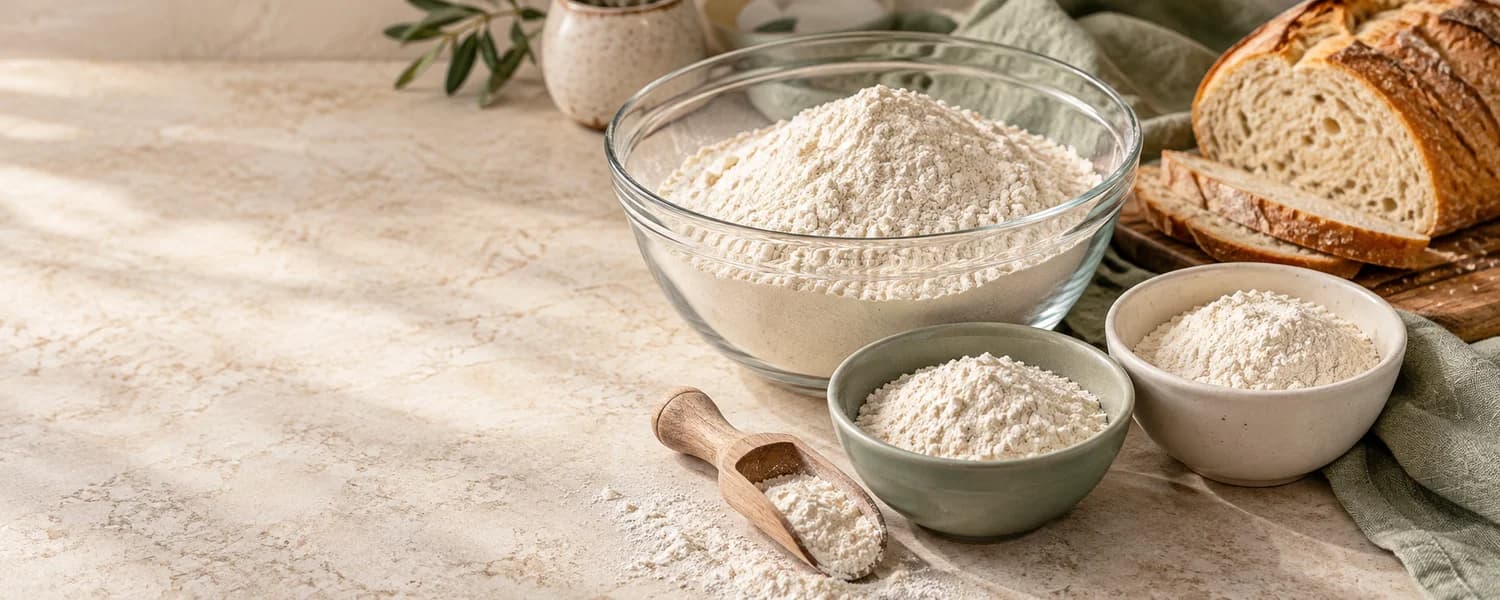
Read the label
Find ‘protein’ in the nutrition values per 100 g. Use that value for flour A and flour B. A per-serving figure needs converting first.
Which target should you choose?
Use the protein value of the flour your recipe calls for, if known. Your target must lie between the two values entered. Not sure? Choose a suitable flour first; 12% here is a worked example, not a standard for every loaf.
Which flours do you have?
Use the miller's protein specification or the label: 11 g protein per 100 g means 11%. Nutrition labels are rounded.
Weigh these amounts
- Flour A (10%)
- 250 g
- 50% of the blend
- Flour B (14%)
- 250 g
- 50% of the blend
- Total flour
- 500 g
- Protein in your blend
- 12%
Mix both flours thoroughly first. Then use the blend as the flour in your recipe.
Weighing amounts are rounded. Protein percentage uses the unrounded weights and the values you entered.
From result to mixing bowl
The amounts below follow your entries. The photos illustrate the actions. If an amount is zero, you do not need to add that flour.
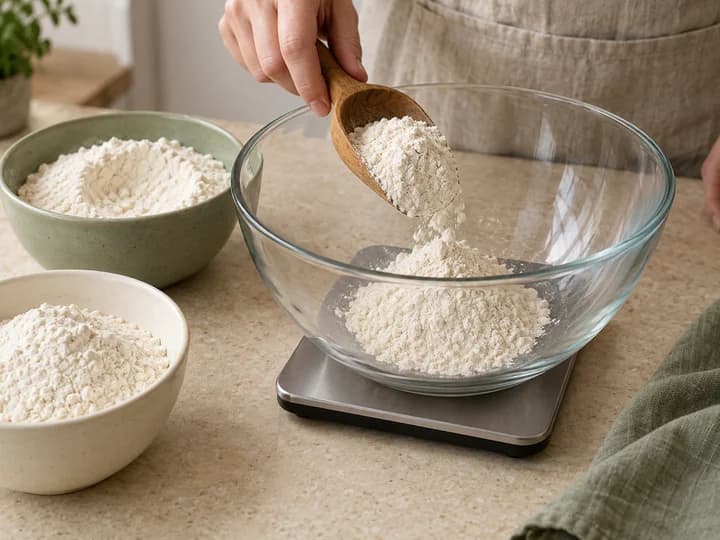
Weigh flour A
Place an empty bowl on the scale and press tare: it should read zero. Weigh out 250 g flour A. Keep the bag nearby so you do not mix up A and B.
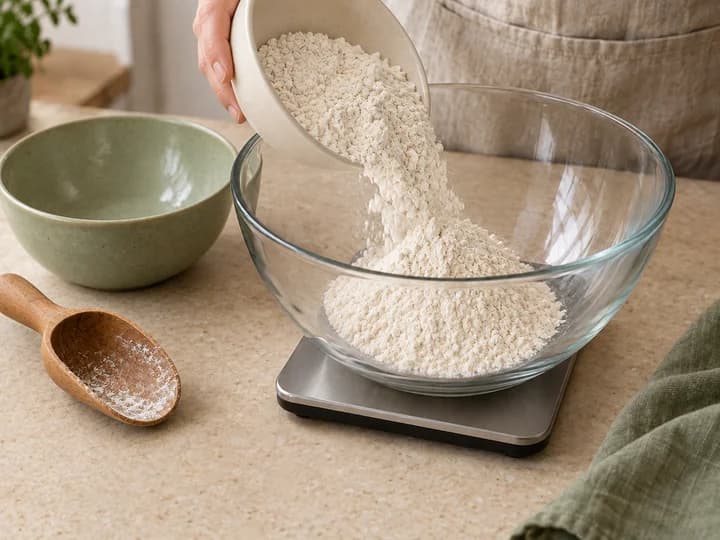
Add flour B
Leave flour A in the bowl and press tare again. Add 250 g flour B. This is the additional weight of B; flour A is already in the bowl.
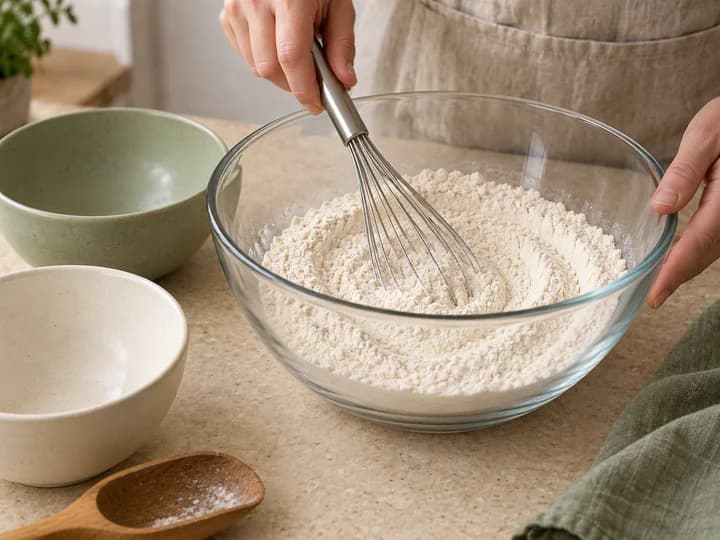
Mix dry and use
Stir gently with a whisk or spoon, reaching the bottom and sides. You now have 500 g blend. Use it in place of the total flour in your recipe, not on top of that amount. Then follow that recipe’s remaining ingredients and method.
What does this blend tell you about your dough?
Protein percentage describes one property. Gluten quality, grain type and wholegrain components also affect dough behaviour. This calculation does not set a new hydration, kneading time or rising time.
Where do I find the protein percentage?
Use the miller's product specification when available. On a nutrition label, grams of protein per 100 g can be entered directly as a percentage. For a per-serving label, divide protein weight by serving weight and multiply by 100; label rounding makes this estimate less precise.
Can I recreate any bread or pizza flour?
You can approximate its protein percentage, but not all its properties. Gluten quality, grain type and extraction rate also matter. Whole wheat, spelt and rye behave differently from white wheat flour, even at the same protein percentage. Type 00, T65 and Type 550 are not protein percentages or direct measures of strength.
Should I change the water amount?
This calculation cannot tell you that directly. Start with your recipe's hydration and adjust during mixing if needed. This tool only determines the proportions of your flours; it does not change your recipe.