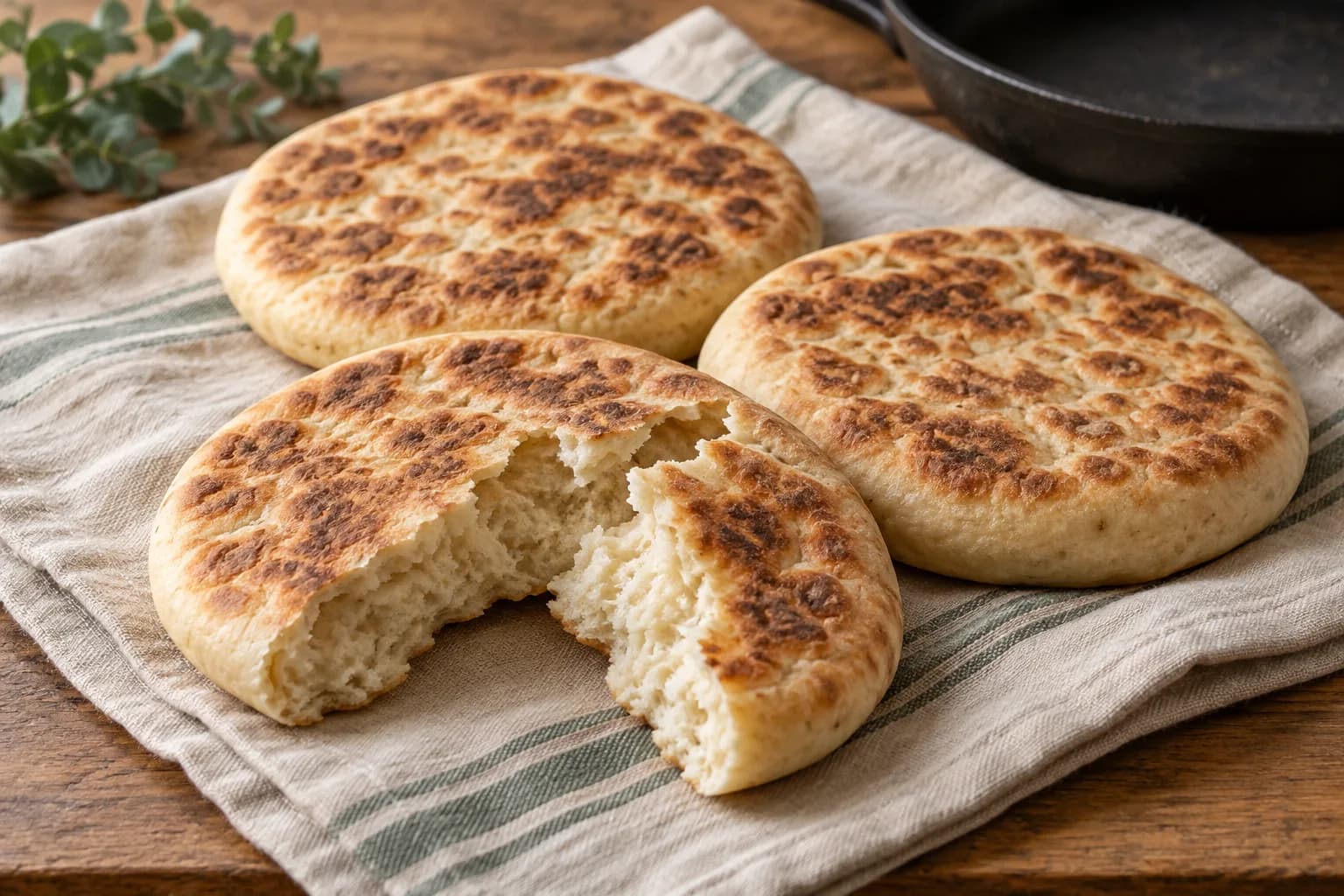
Kraków street classic
Obwarzanek krakowski
Braided, briefly scalded and baked crisp.
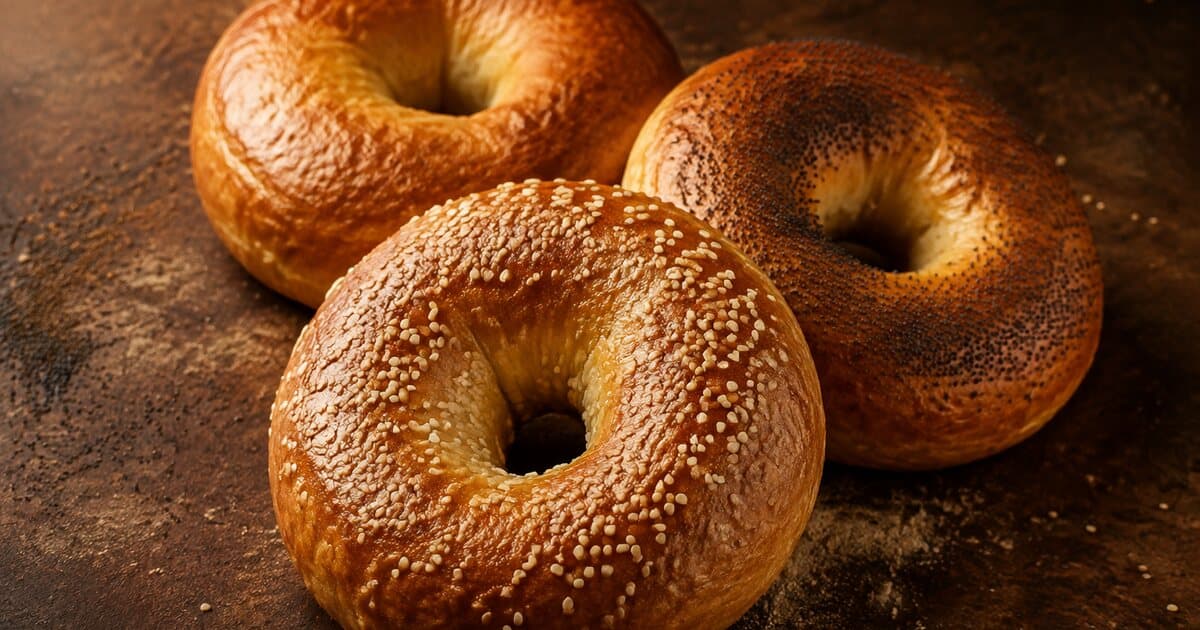
Neither bagel nor pretzel, but a Kraków street classic in its own right: a firm yet tender yeast ring made from two or three twisted strands, briefly scalded, generously topped and baked hot.
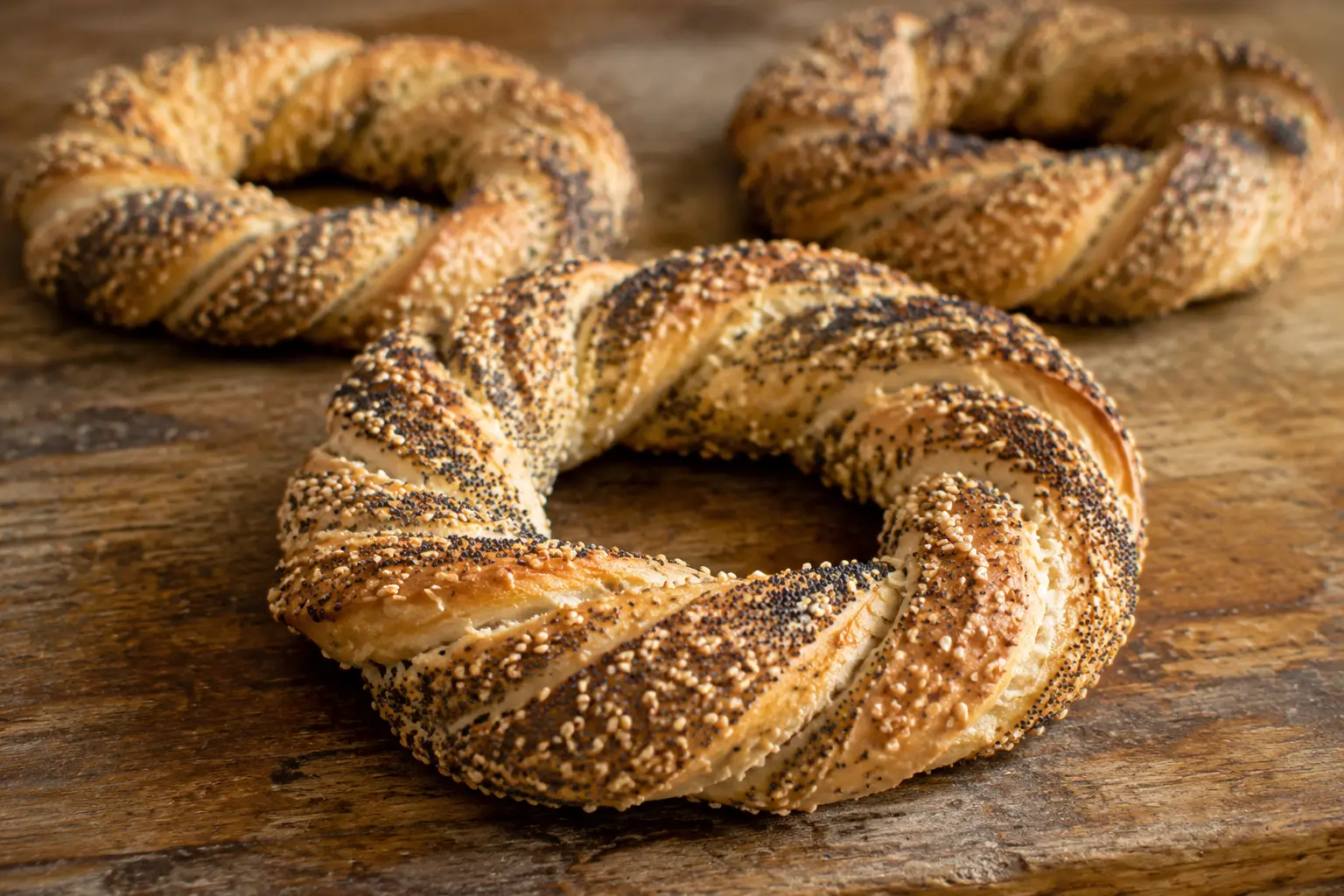
The formula
Ten Kraków rings at about 100 grams each
Starting point: 10 rings of about 100 g including topping. The scalding water is not part of the dough weight.Active preparation: about 45 min · Baking: about 14–18 min. Proofing and scalding take additional time.
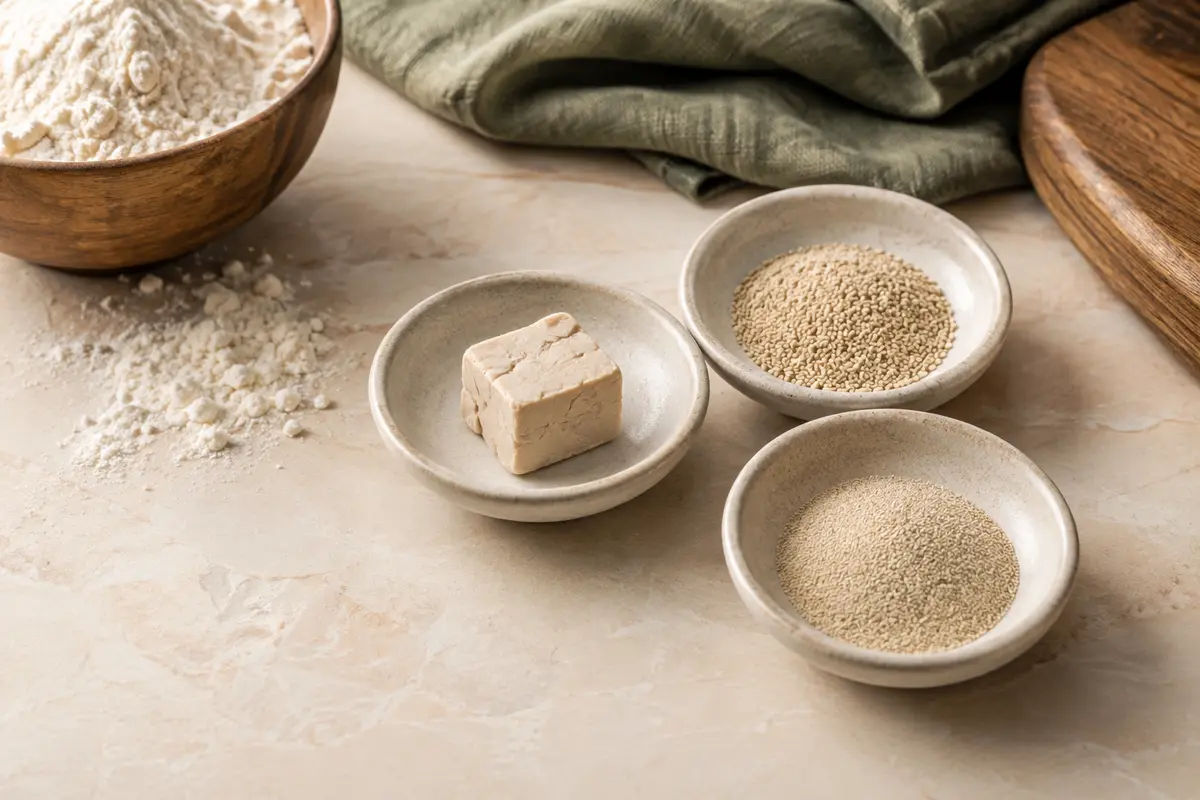
- Wheat flour
- 100%594 g
- Water
- 56%332 g
- Salt
- 2%11.9 g
- Instant yeast
- 1.5%8.9 g
- Soft butter or neutral oil
- 3%17.8 g
- Sugar
- 2%11.9 g
- Seed or salt topping
- 4%24 g
Weights are rounded for weighing; their sum may differ slightly from the calculated total. Small additions stay in grams.
A topping that clings to the wet dough
Scalding does more than start the crust: the wet surface catches the traditional finish immediately.- Poppy, sesame, nigella or coarse salt
- 100%24 g
Weights are rounded for weighing; their sum may differ slightly from the calculated total. Small additions stay in grams.
Firm enough to braid, tender enough to tear
The restrained hydration keeps the spiral visible. A short scald sets the outside; a hot oven turns it glossy, crisp and lightly chewy.Water
A controlled dough that rolls into thin strands without slumping straight back.
Strands per ring
Three cords create a clear spiral and immediately distinguish the shape from a smooth bagel.
Scalding water
Hot enough to gel the surface starch quickly, without a violent rolling boil.
Oven
A short, hot bake develops color and crust before the crumb dries out.
Why this bread ring belongs unmistakably to Kraków
Its name comes from the Polish verb obwarzać, to scald or parboil all around. That is the decisive difference from an ordinary bread ring: a brief dip sets the surface before the wet ring is topped and baked.
The earliest known reference appears in royal court accounts from 1394, recording a purchase for Queen Jadwiga. In 1496 Kraków's bakers received a royal privilege over its production. A practical street snack was also a regulated city craft.
Since 2010 Obwarzanek krakowski has been protected in the EU as a geographical indication. Its specification includes two or three twisted strands, a weight of 80–120 grams, wheat flour of which up to 30% may be replaced with rye, and scalding before baking.
Build the braid first; let hot water begin the crust
Aim for a supple but firm dough. The strands should roll and twist without sticking or losing their relief.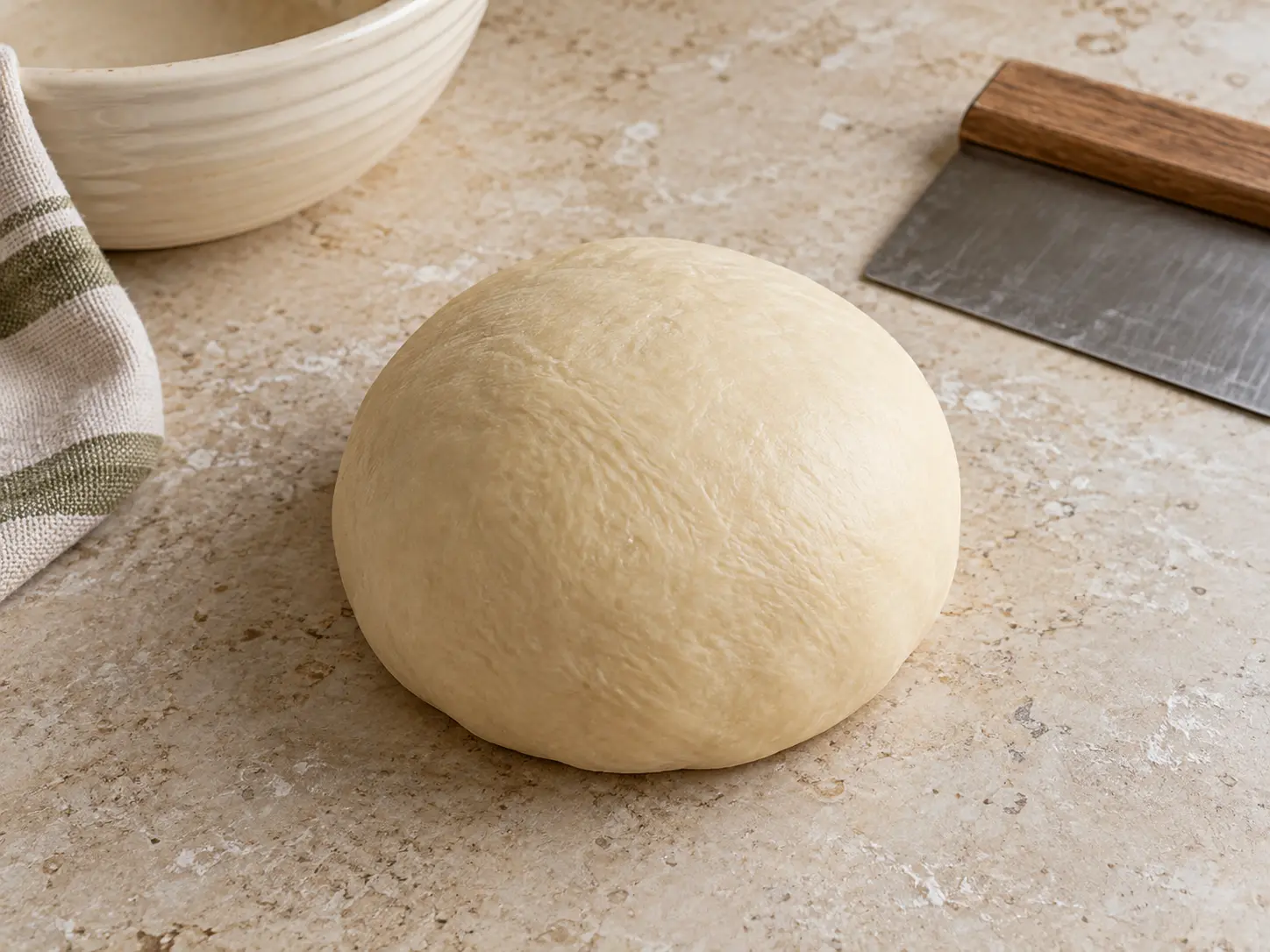
Knead a firm, smooth dough
Mix the flour, water, yeast and sugar. Add the salt and soft butter or oil, then knead for 8–10 minutes until smooth, elastic and barely tacky.
The dough should be smooth and elastic, but firmer than ordinary bread dough.
Give it a controlled first rise
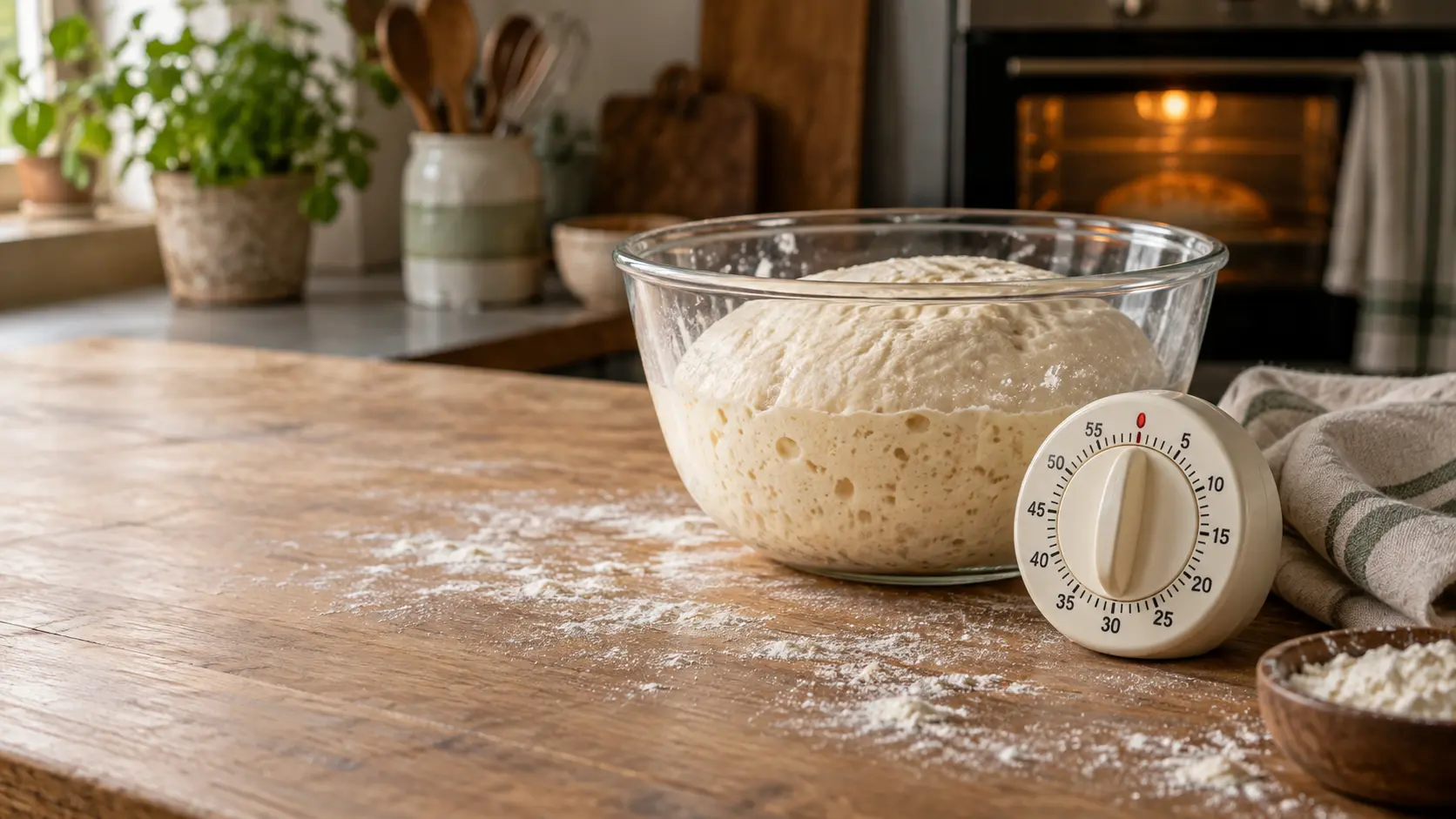
Cover and leave for 35–60 minutes, until roughly half again as large. It need not double; too much gas makes neat rolling and braiding harder.
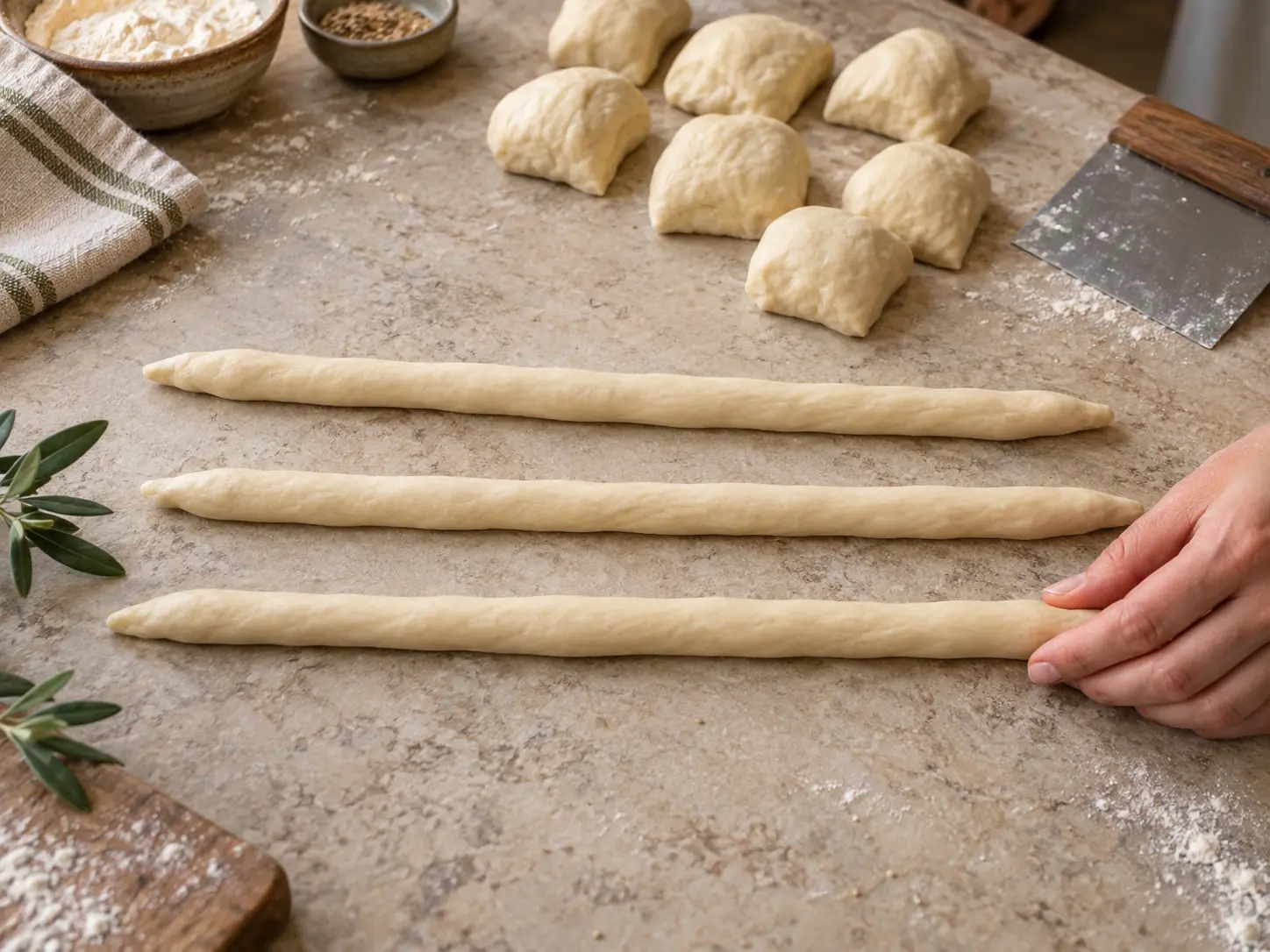
Divide and roll three cords
Divide into ten equal portions. Split each portion into three and roll every piece into a cord about 35–40 cm long, slightly finer at the ends.
Roll three cords to the same length and taper the ends slightly.
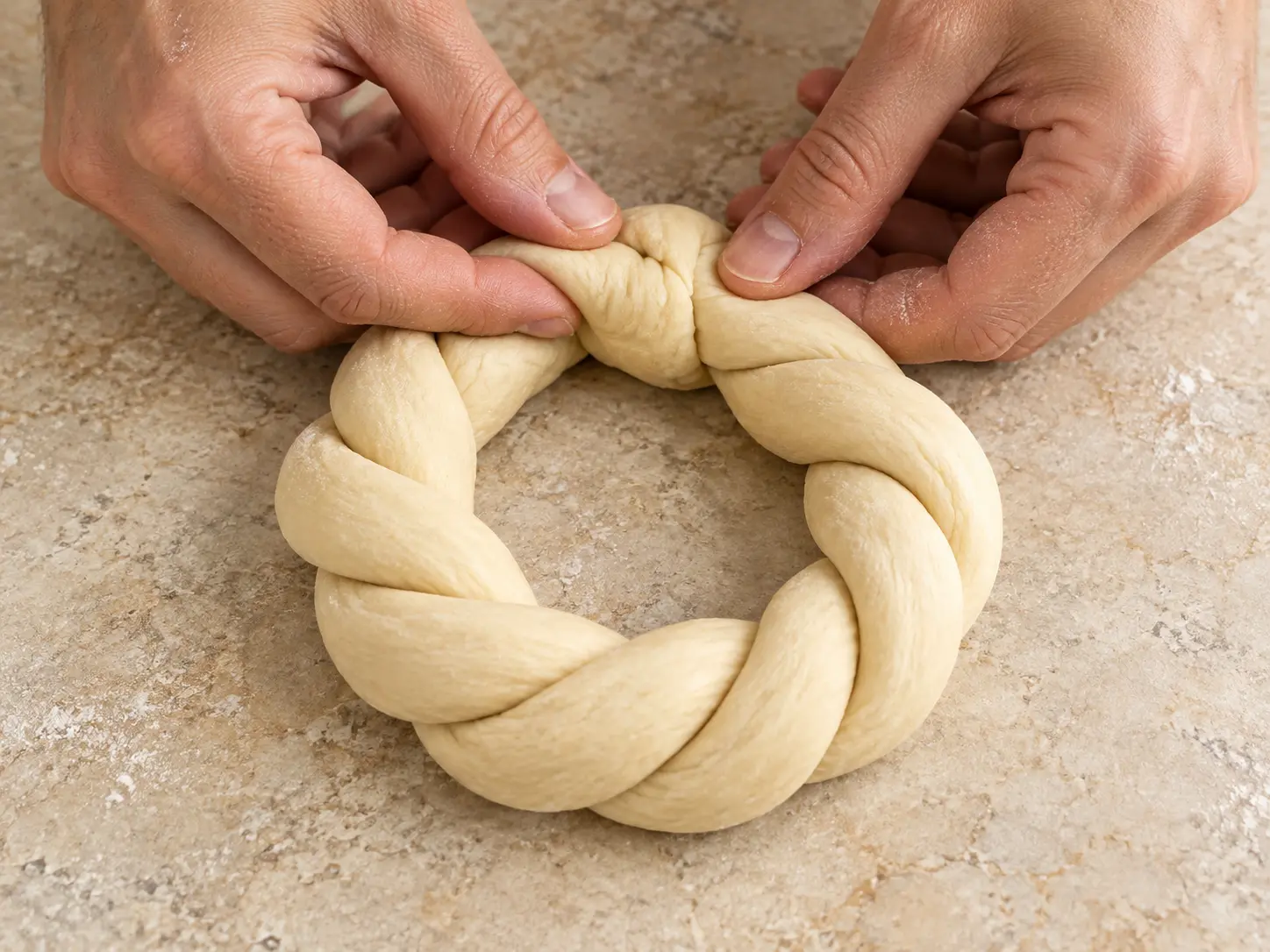
Twist and close the ring
Lay three cords side by side, pinch one end together and loosely twist or braid them. Form a 12–17 cm ring, overlap the ends and roll the join firmly beneath your hand.
Overlap the ends by 4–5 cm and roll the join firmly closed.
Proof briefly
Set the rings on baking paper, cover and rest for 15–25 minutes. They may become a little fuller, but the braid should remain sharply visible.
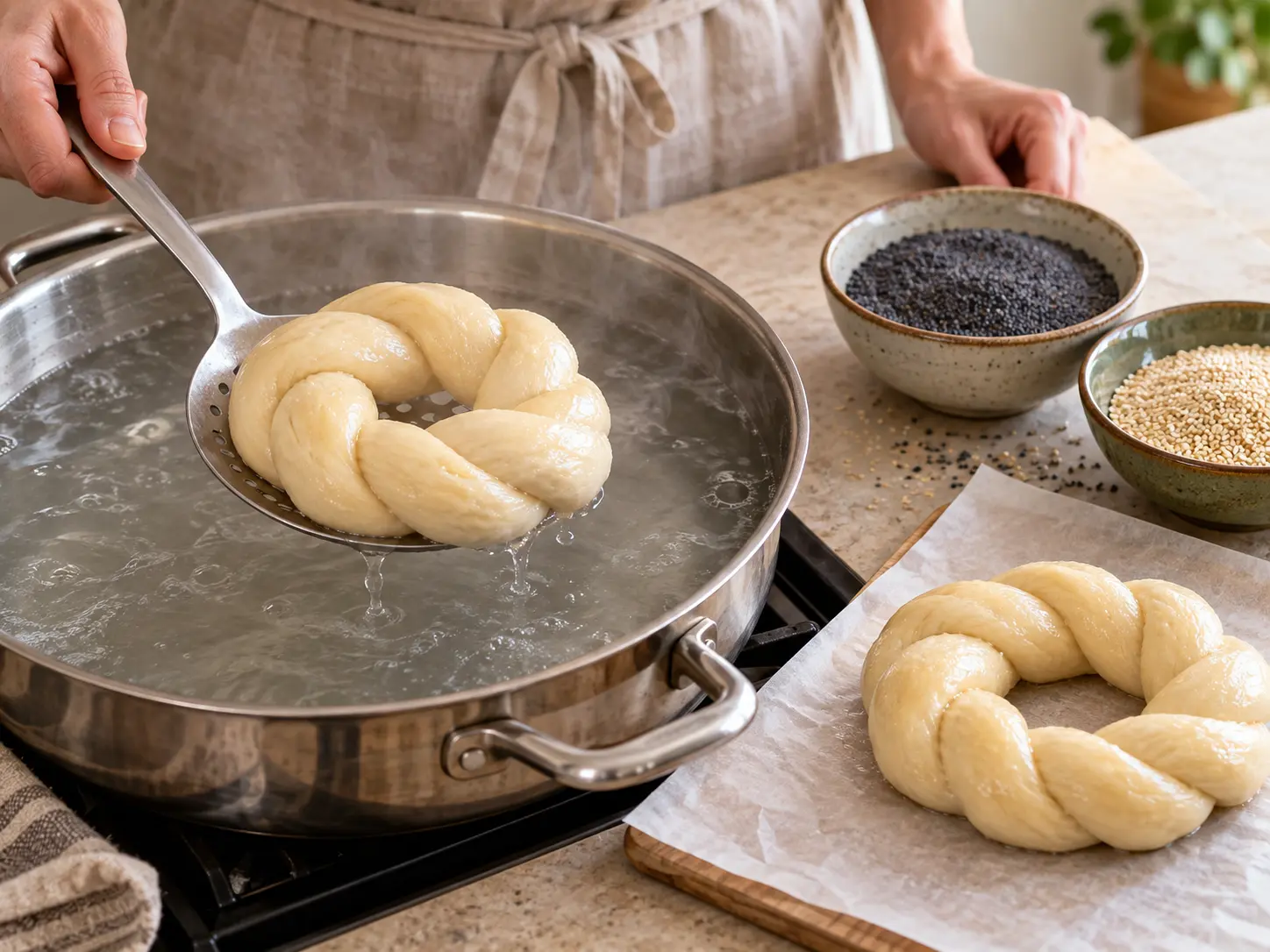
Scald and top
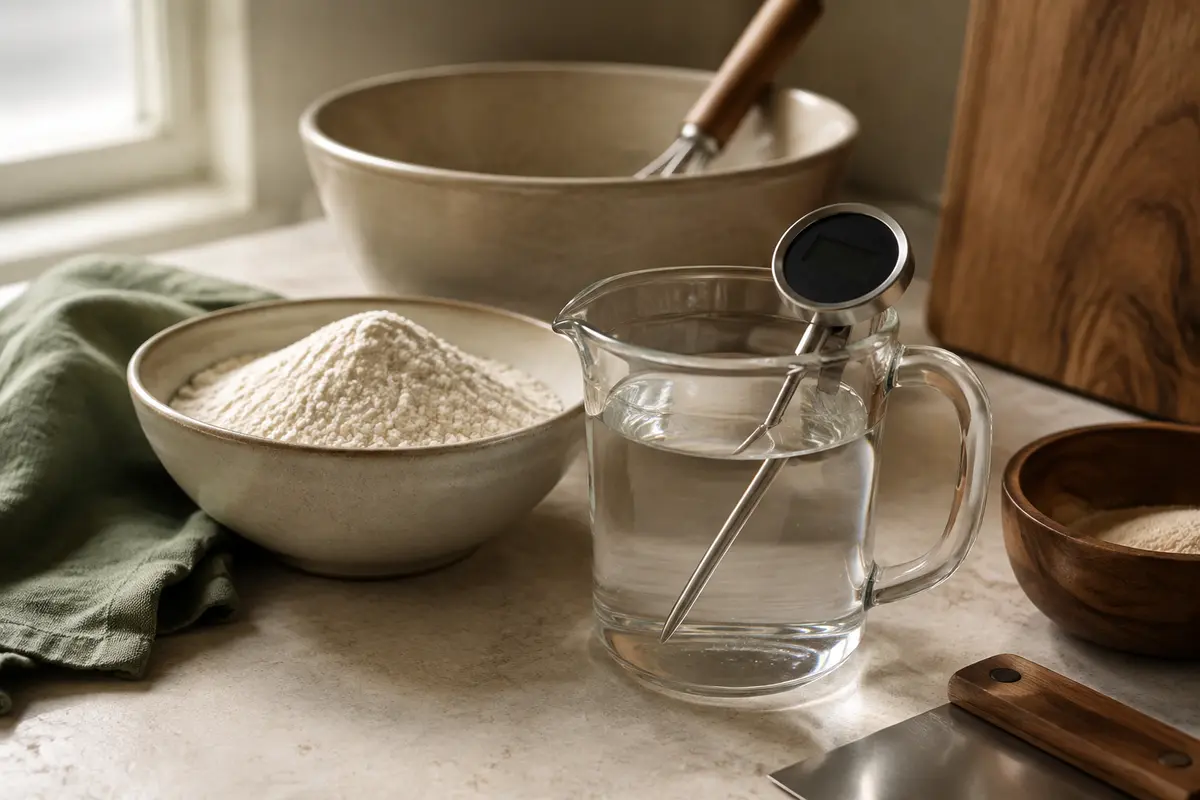
Heat a wide pan of water to 90–95 °C: steaming hot, not violently boiling. Lower in each ring carefully and lift it out when it reaches the surface, usually after 10–20 seconds. Drain briefly and top at once.
Scald briefly in 90–95 °C water and add the topping while the surface is still wet.
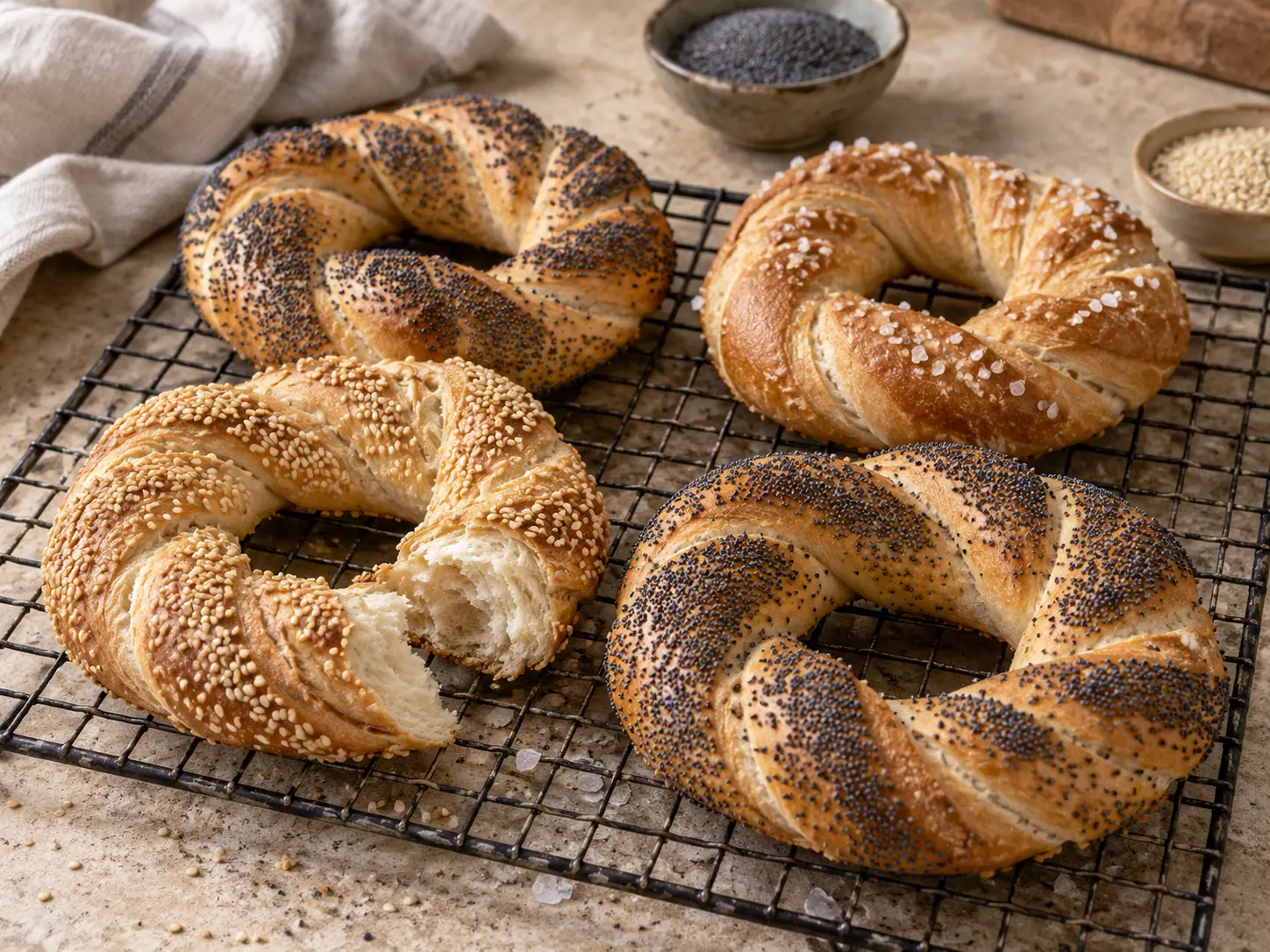
Bake hot and eat fresh
Bake for 14–18 minutes at 220 °C conventional until the ridges are golden to light brown. Cool on a rack. The crust and chew are best on the day of baking.
Take them out when the ridges are golden to light brown and eat them preferably the same day.
Problems with the braid, scald or crust
The cords keep shrinking back
Cover the divided pieces and let them relax for 8–10 minutes, then continue rolling. The gluten was still too tight.
The ring opens in the water
Overlap the ends by 4–5 cm and roll the join firmly and thinly beneath your hand. Put the seam into the water first.
The spiral disappears
Shorten the final proof and keep the dough firm. Over-proofing and extra water turn the ridges round and smooth.
The crust stays pale and soft
Check that the water is genuinely at least 90 °C, drain well and bake on a fully preheated tray or stone at 220 °C.
Frequently asked questions
Is this the same as a bagel?
No. Both meet hot water before baking, but an obwarzanek is visibly built from two or three twisted strands and has its own Kraków tradition and product specification.
Can I add rye flour?
Yes. For this home version, replace 10–20% of the wheat flour with light rye. The official specification permits up to 30%; with a larger rye share, add 1–2% water if the dough needs it.
Should the water contain baking soda or lye?
No. The traditional product specification calls for hot water, not the alkaline bath used for a German pretzel. Plain water keeps the flavor and color closer to the Kraków style.
Which topping is most traditional?
Poppy seed, sesame and coarse salt are the best-known choices; nigella is also used. Apply one generously or combine the seeds.
Can I keep them overnight?
Yes, airtight, but the thin crust loses its crispness quickly. Refresh a ring for 4–6 minutes at 190 °C and eat it warm.