Türkiye · Skillet bread
Bazlama
Fresh bread. Straight from a frying pan.
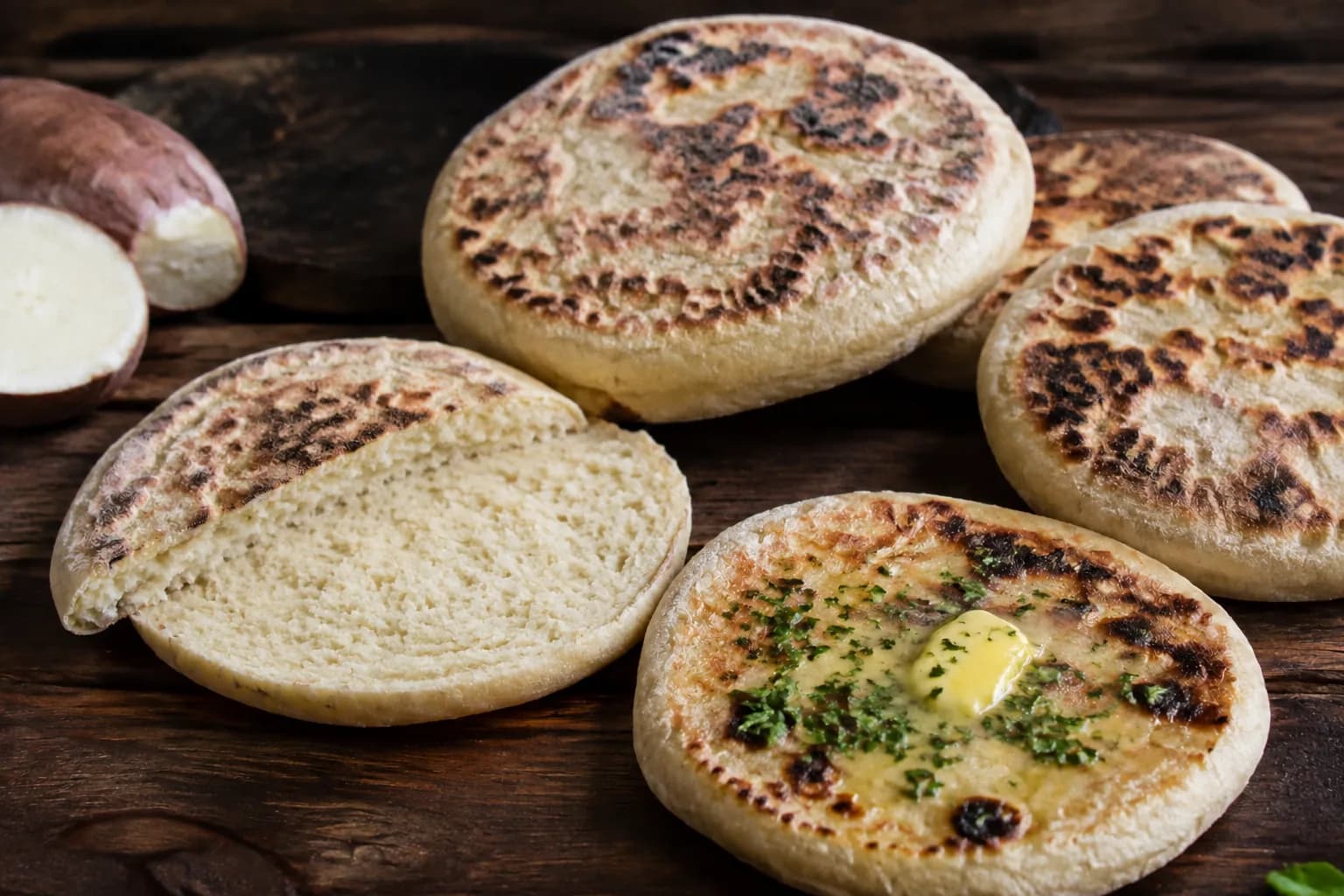
No oven needed: make six round bazlama with flour, water, yeast and salt. This is our simple water-based version, without yogurt. The pan gives the toasted spots; gentle cooking keeps the center soft.
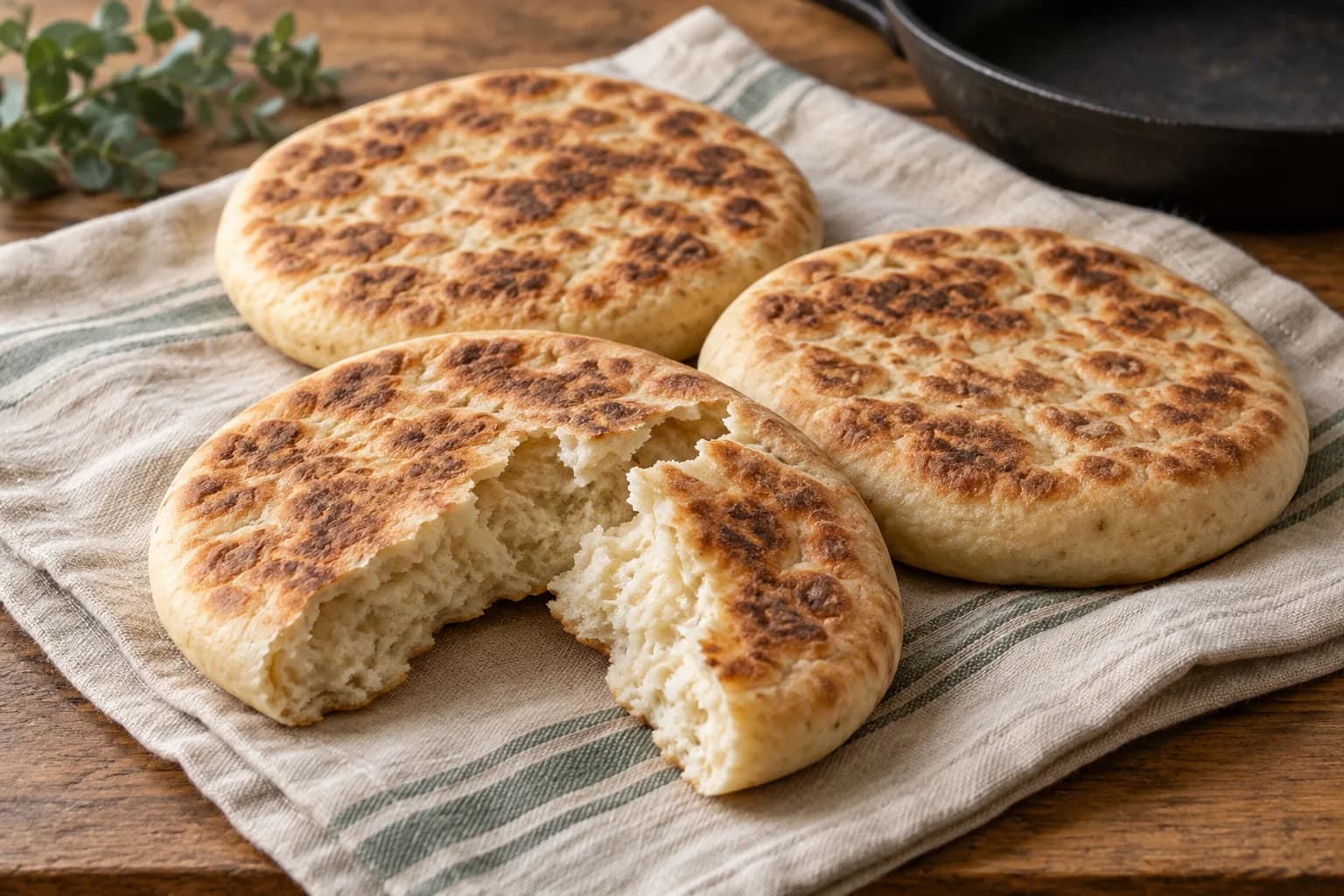
Six flatbreads, 140 g dough each
Six flatbreads, 140 g dough each
500 g flour + 325 g water + 10 g salt + 5 g instant yeast = 840 g dough. Water is 65% of flour weight. Prefer changing the number of breads while keeping 140 g dough per bread; different piece weights need a different diameter or cooking time. Dusting flour is excluded.Preparation: about 25 min · Rising and resting: 80–110 min · Cooking: 4–6 min per bread, 24–36 min for six in one pan.
- Wheat flour
- 100%500 g
- Water
- 65%325 g
- Salt
- 2%10 g
- Instant dry yeast
- 1%5 g
Weights are rounded for weighing; their sum may differ slightly from the calculated total. Small additions stay in grams.
Fresh bread. Straight from a frying pan
Preparation: about 25 min · Rising and resting: 80–110 min · Cooking: 4–6 min per bread, 24–36 min for six in one pan.Water
Supple enough to roll easily, yet firm enough to move to the pan without losing its shape.
Per bread
When scaling, keep the piece weight the same so diameter and cooking time remain predictable.
In the pan
Turn regularly and lower the heat if dark spots appear before the center is cooked.
A Turkish skillet bread variation
Bazlama is a Turkish leavened flatbread. This home formula uses water-based dough and four ingredients; yogurt is not needed here. It does not suggest that all bazlama is made the same way.
From dough ball to warm flatbread
Preparation: about 25 min · Rising and resting: 80–110 min · Cooking: 4–6 min per bread, 24–36 min for six in one pan.Mix and knead
Mix flour, yeast and salt. Add water and knead for 8–10 minutes until supple and slightly tacky. If kneading is difficult, rest covered for 10 minutes before continuing; do not immediately add more flour.
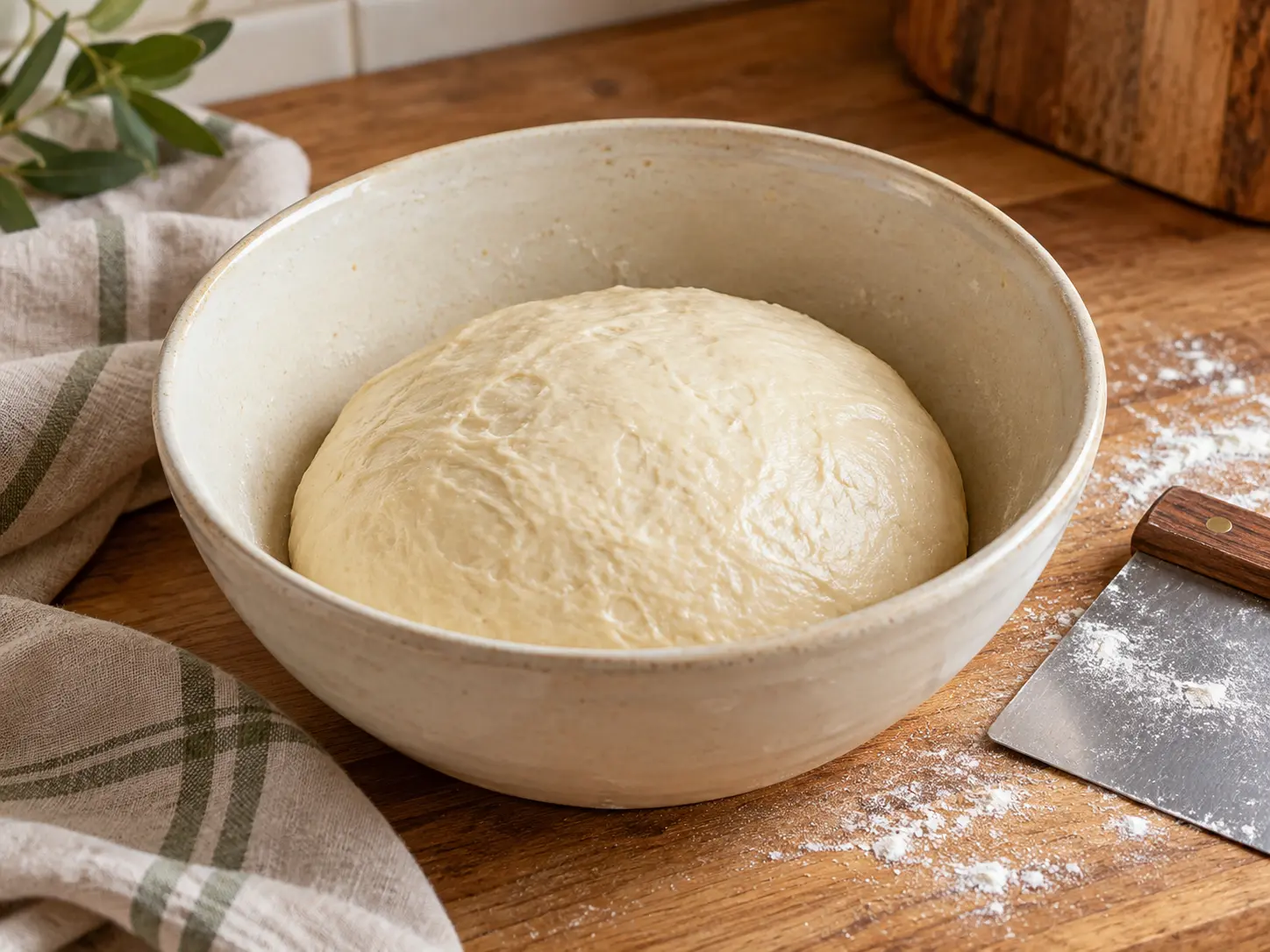
Let it rise
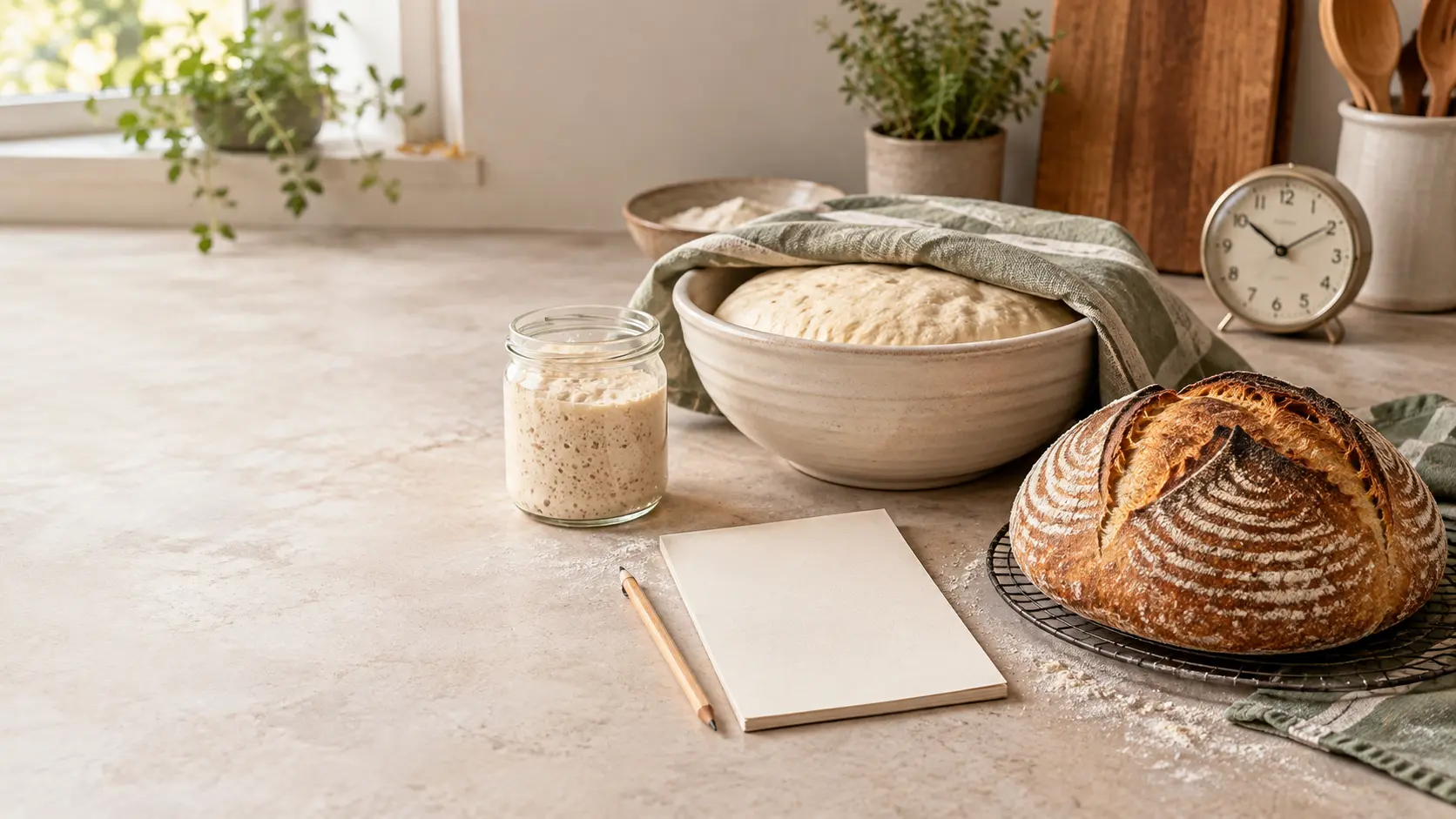
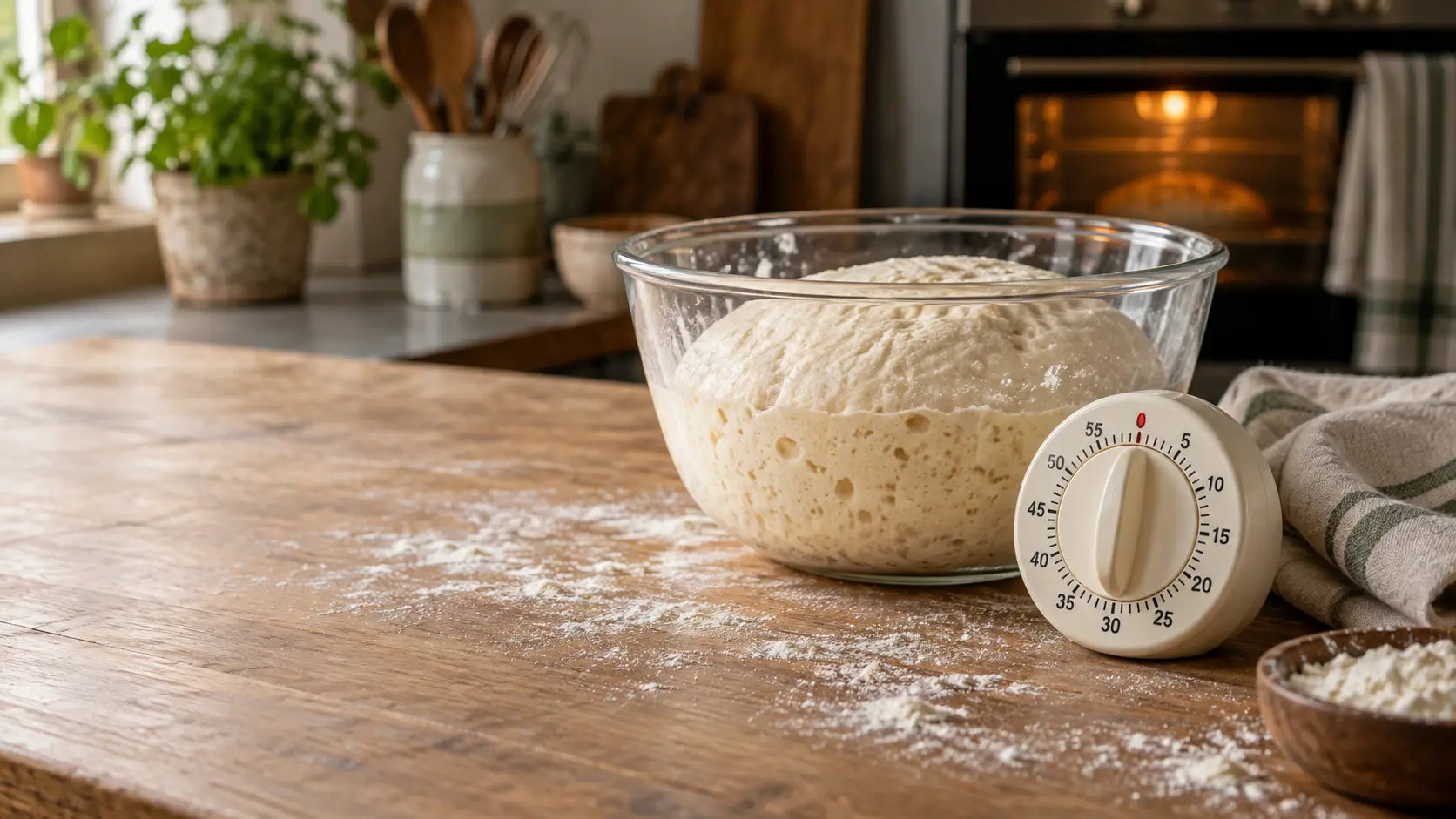
Cover and leave at about 22–24 °C / 72–75 °F for 60–90 minutes, until visibly aerated and roughly doubled. Allow longer in a cool kitchen.
Judge the rise by increased volume and visible aeration, not by the clock alone.
Divide and rest
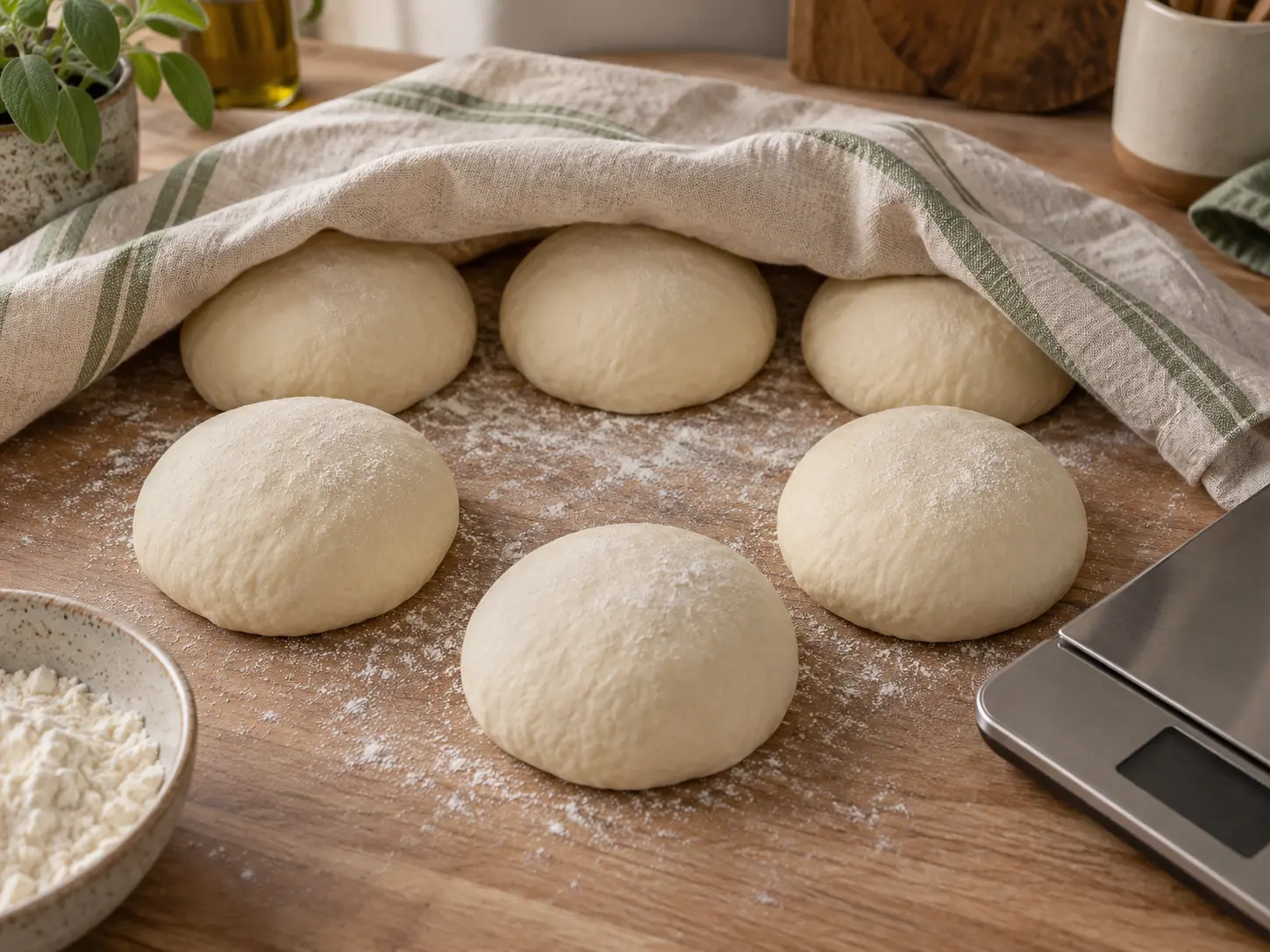
Divide the standard batch into six 140 g / 4.9 oz pieces. Round loosely and rest covered for 10 minutes. For an adjusted batch, use the calculated piece weights.
Six 140 g / 4.9 oz pieces give a predictable diameter and cooking time.
Shape the rounds
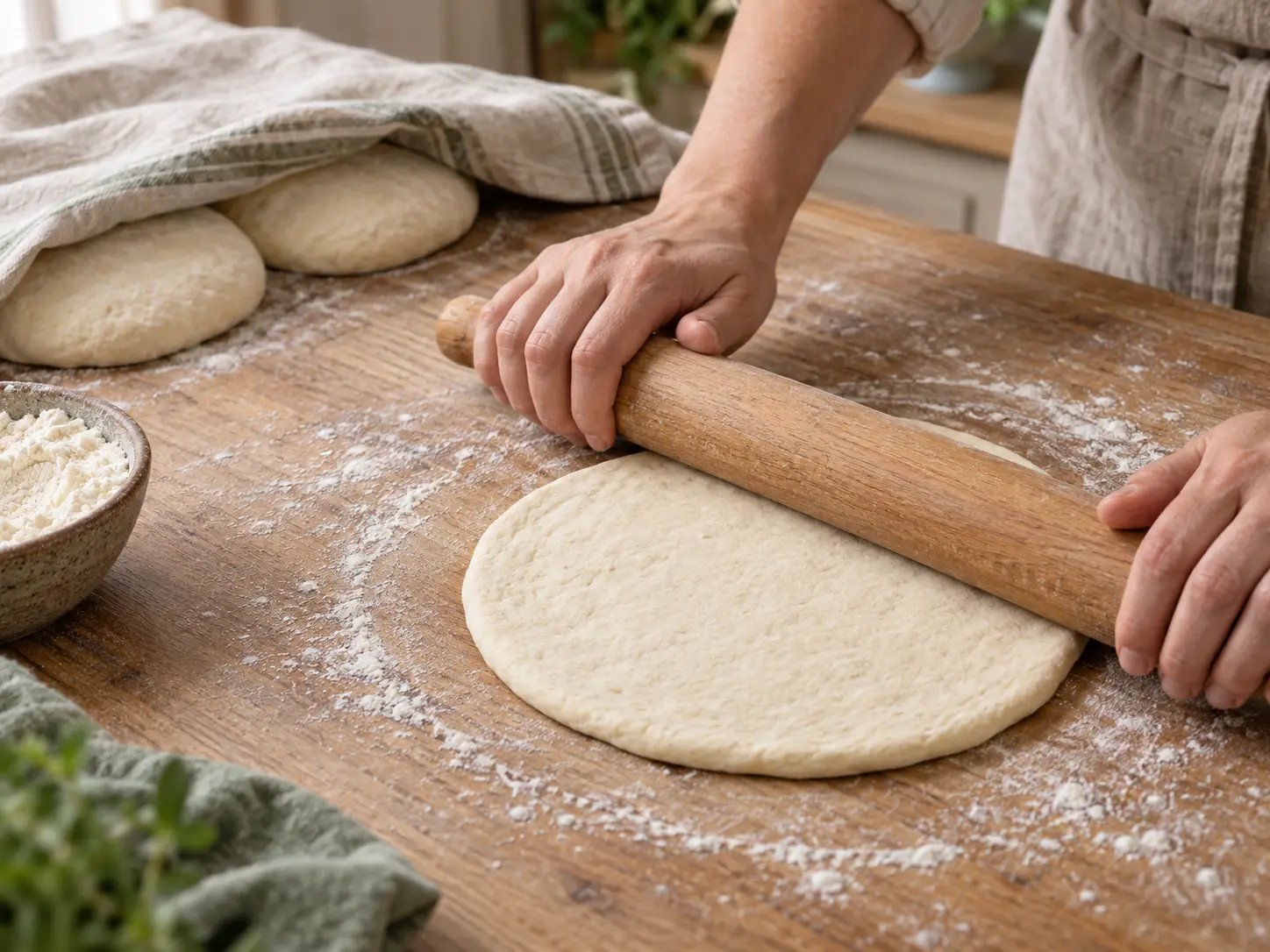
On a lightly floured surface, roll to about 15–16 cm across and 7–8 mm thick. Rest under a cloth for 10 minutes. With one pan, shape two breads first, then shape the next while one cooks.
Roll evenly to 15–16 cm and about 7–8 mm thick; thinner breads dry out faster.
Cook in a dry pan
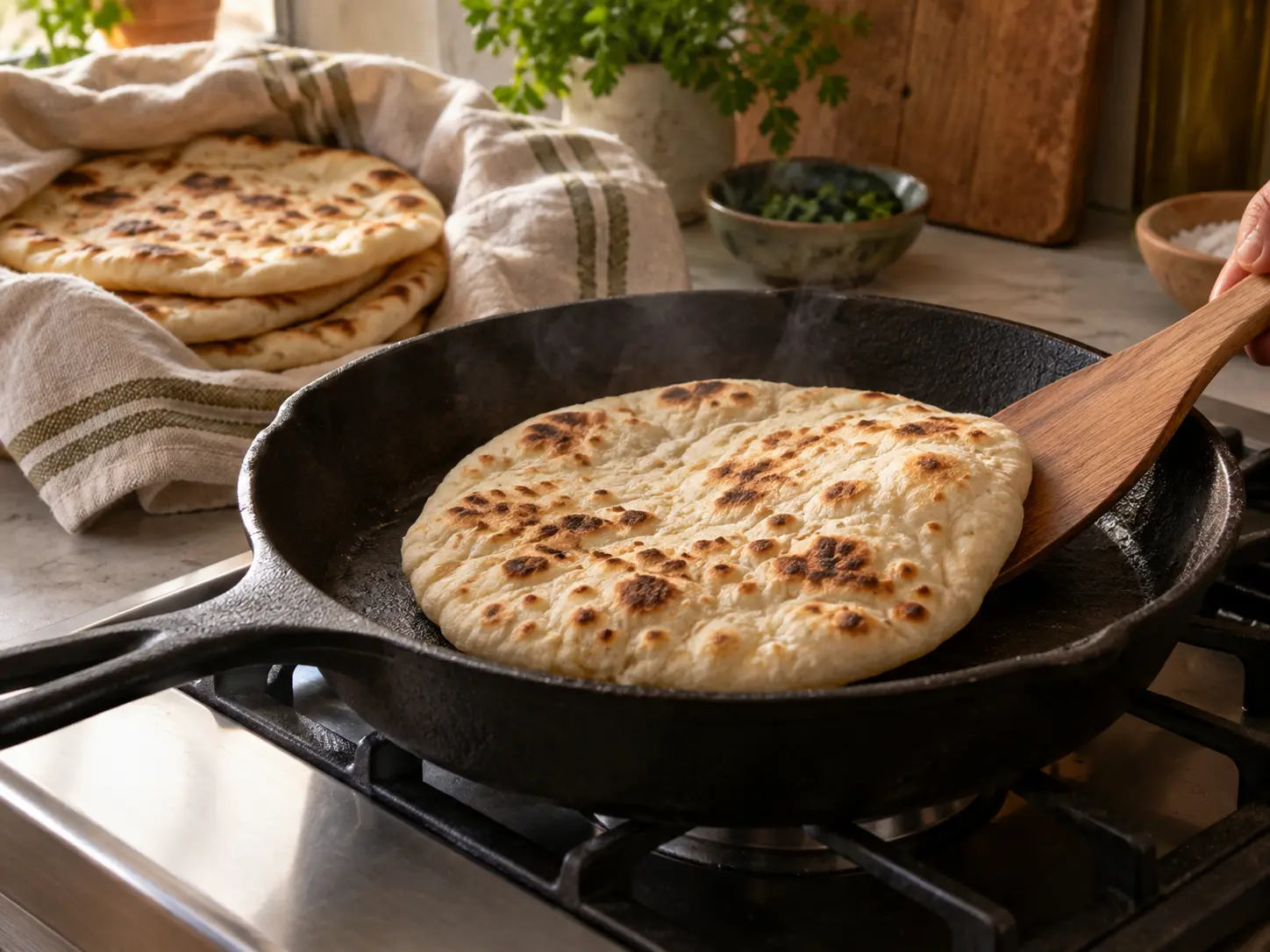
Preheat a heavy cast-iron or steel frying pan for a few minutes over medium-high heat. Brush loose flour off the dough and place one bread in the dry pan. Turn after about a minute, once lightly colored underneath, then every 30–60 seconds. Allow 4–6 minutes per bread in total. Reduce the heat if dark spots appear too quickly.
Turn regularly and lower the heat when the outside colors faster than the center cooks.
Check and serve
Let the first bread release steam briefly, then tear it open: the crumb should be set, with no wet dough line. Cook longer over lower heat if needed. Keep cooked breads loosely wrapped in a clean cloth while cooking the rest. Serve warm alongside soup or for dipping.
When the pan or dough needs help
Dark outside, raw inside
Lower the heat, turn more often and check the thickness. Faster browning does not mean faster cooking through.
The dough springs back
Rest it covered for another 5–10 minutes before rolling again.
The breads turn hard
Avoid rolling too thin, excessive dusting flour and unnecessary cooking time. Keep cooked breads loosely covered with a cloth.
Common questions
Does bazlama have to puff up completely?
No. Bubbles or partial puffing are fine; a fully hollow pocket is not required. Check that the center is cooked.
Can I use fresh yeast?
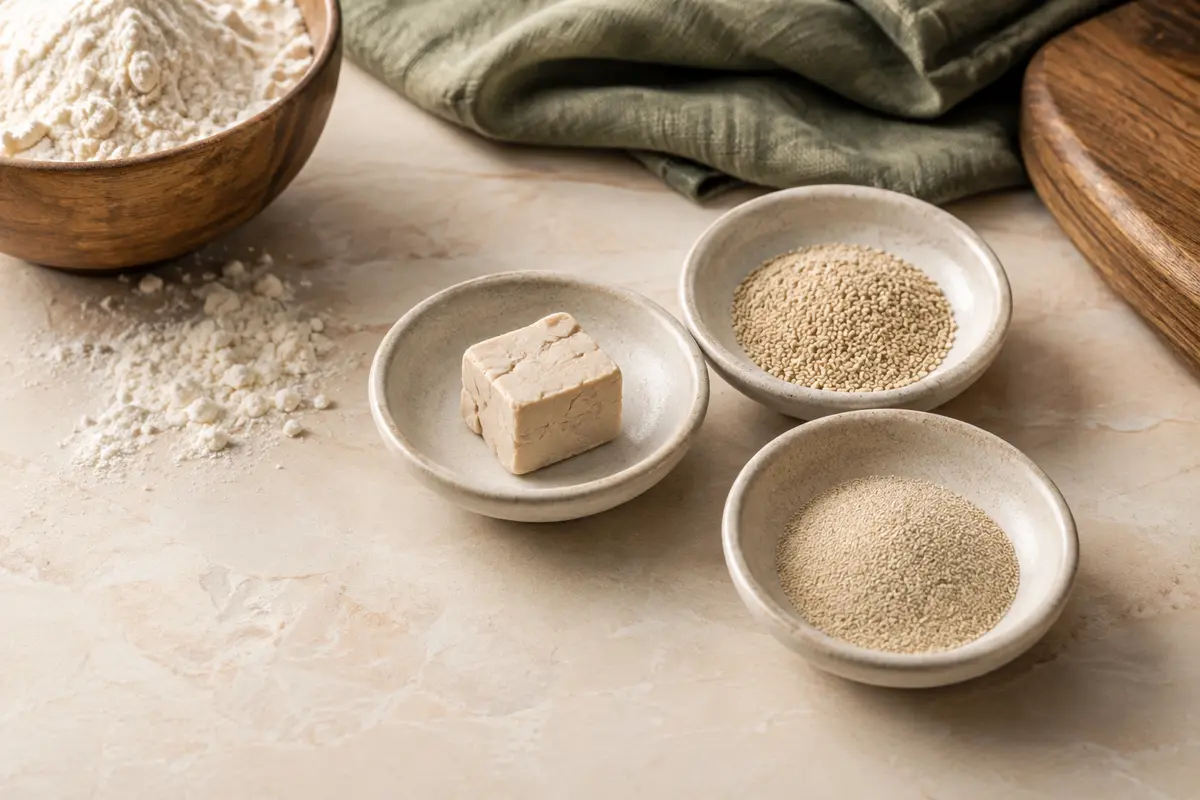
Start with 15 g fresh yeast instead of 5 g instant yeast. This makes 850 g dough, about 142 g per bread. Watch the rise rather than relying on the clock.
How do I store the breads?
Cool completely, then seal for the next day or freeze with paper between the breads. Reheat briefly in a pan; a very light sprinkling of water helps if they have dried out.