French enriched dough
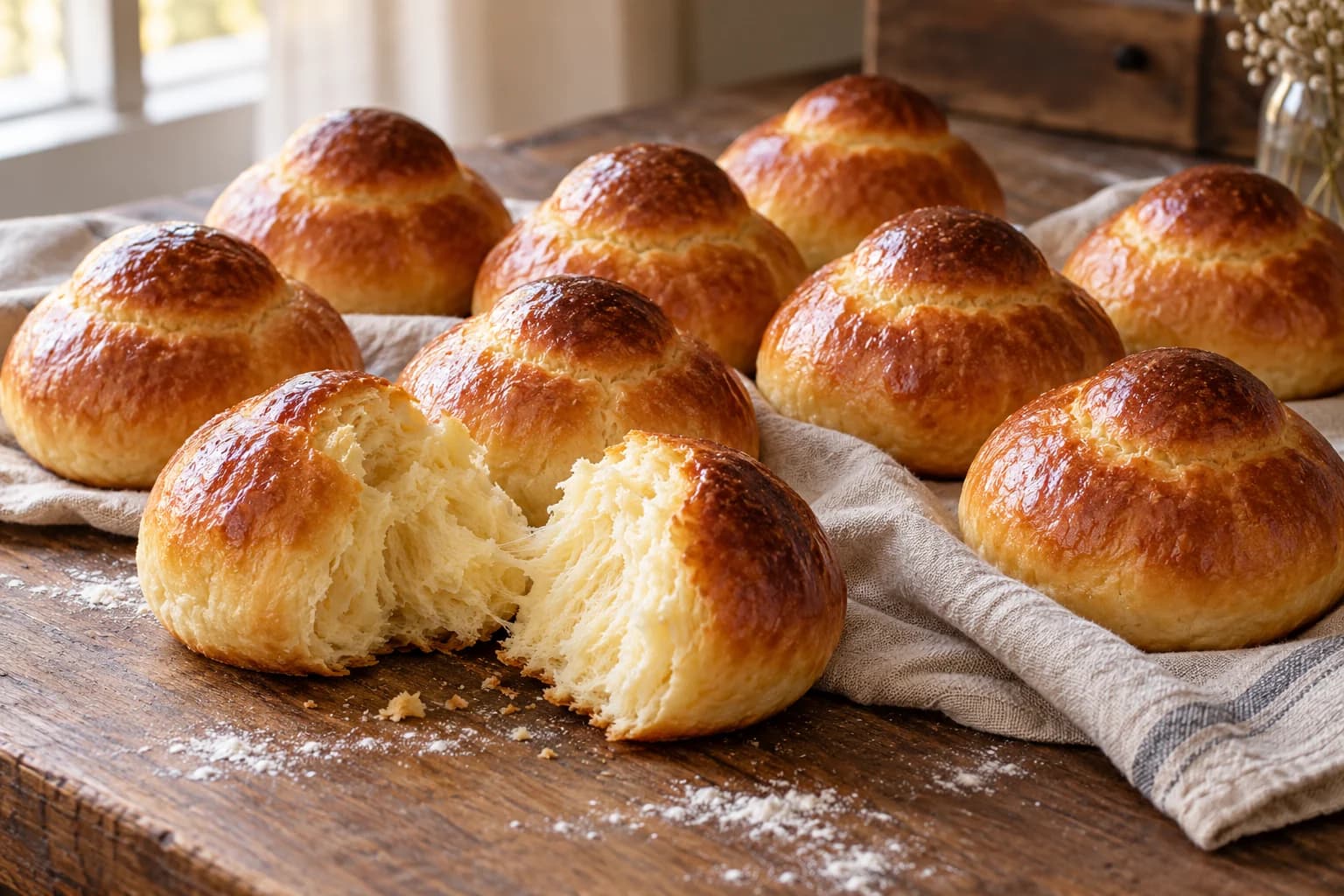
Brioche buns
Butter-rich, egg-rich and softly feathery inside.
Brioche asks for time and a mixer, but the shape stays simple. Build a strong dough first, work in the butter gradually, then chill overnight before rounding ten even buns.
The formula
Ten buns of about 100 grams
Starting point: 10 buns of about 100 g. Egg is listed as a separate dough ingredient, so the 16% milk alone is not a complete measure of all moisture in this rich dough.Active preparation: about 40 min · Chilling: 8–16 hr · Final proof: about 2–3 hr · Baking: 15–20 min.
- Wheat flour or bread flour
- 100%451.3 g
- Whole milk
- 16%72.2 g
- Salt
- 2%9 g
- Instant yeast
- 1.6%7.2 g
- Unsalted butter
- 40%180.5 g
- Sugar
- 12%54.2 g
- Beaten egg
- 50%225.6 g
A rich dough that still rises light
Butter and egg tenderise the crumb, but also slow yeast and expose weak gluten. Follow the order and watch cohesion, temperature and volume.Butter
Rich enough to taste unmistakably like brioche, yet manageable as a first butter-rich dough.
Egg
Adds colour, flavour and structure. Weigh beaten egg instead of relying on an egg count.
Cold rest
The butter firms up, shaping becomes easier and flavour has time to develop.
Bake
Moderate heat cooks the rich centre before the egg-washed surface becomes too dark.
Why brioche mixes differently from lean bread
Brioche is a French enriched yeast dough built around butter and egg. It can become a loaf, braid, bun or classic brioche à tête. Round buns are easy to weigh, bake evenly and use for breakfast, French toast or a sweet filling.
Most gluten strength should develop before the butter goes in. Fat coats flour and gluten; adding it too early or too quickly leaves a slack, greasy mass. With patient mixing, proper brioche becomes smooth, elastic and cohesive again.
A cold rest makes practical sense. Warm brioche smears and sticks, while firm butter gives the dough enough body to shape. The longer fermentation also develops flavour. Proof the shaped buns fully afterwards: rich dough moves more slowly than lean bread.
Build strength first, then add butter and time
A stand mixer is strongly recommended. If the dough turns warm and greasy, pause and chill it instead of adding flour.Mix the base dough
Place flour, cold milk, beaten egg, sugar, salt and yeast in the mixer bowl. Mix slowly for 2 minutes until no dry flour remains, then scrape down the bowl.
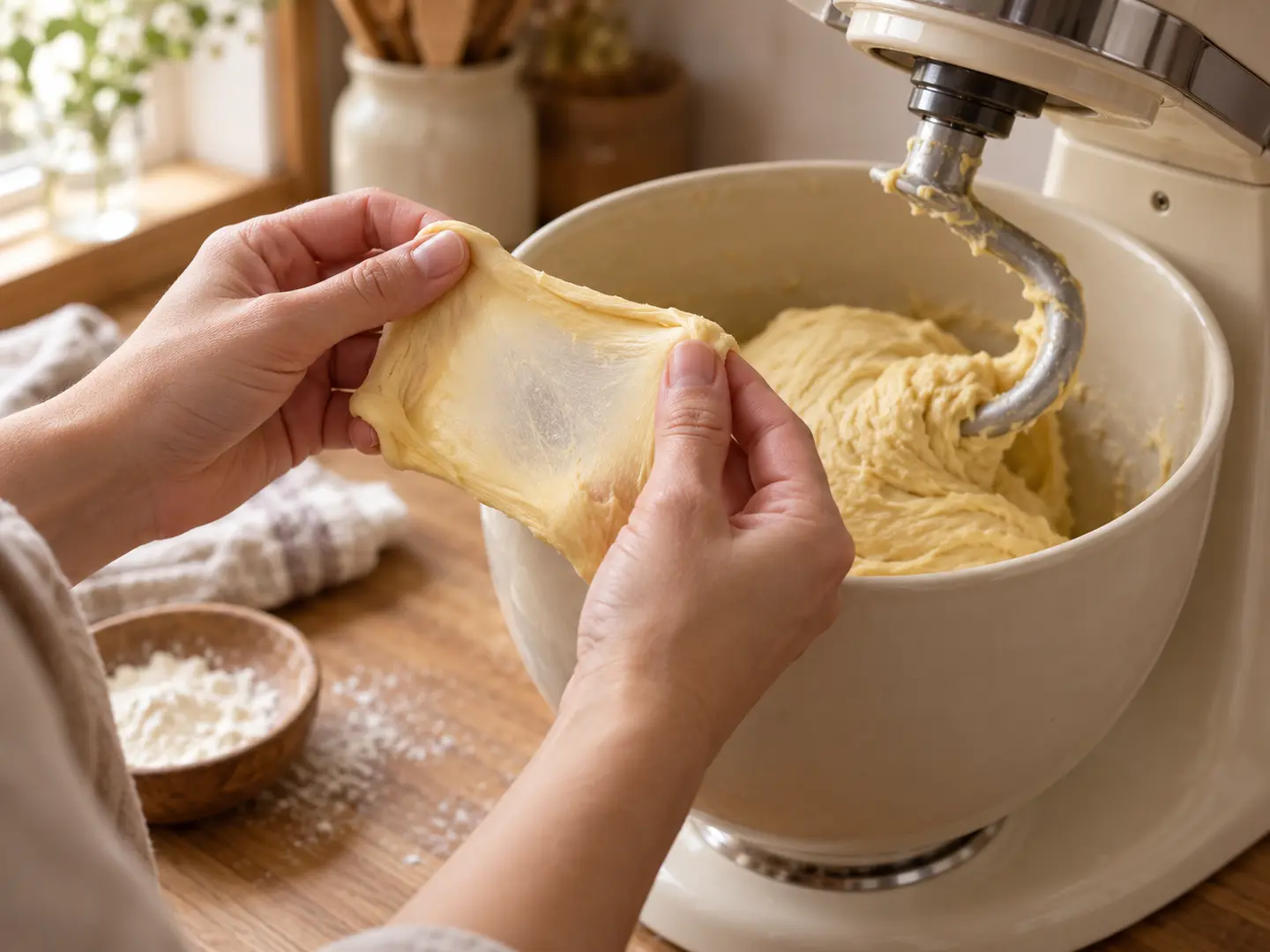
Develop the gluten first
Knead for 8–12 minutes at low to medium speed until elastic and beginning to clear the bowl. It need not stretch paper-thin yet, but it should hold clear tension.
A thin windowpane that does not tear immediately shows that the gluten network is sufficiently developed.
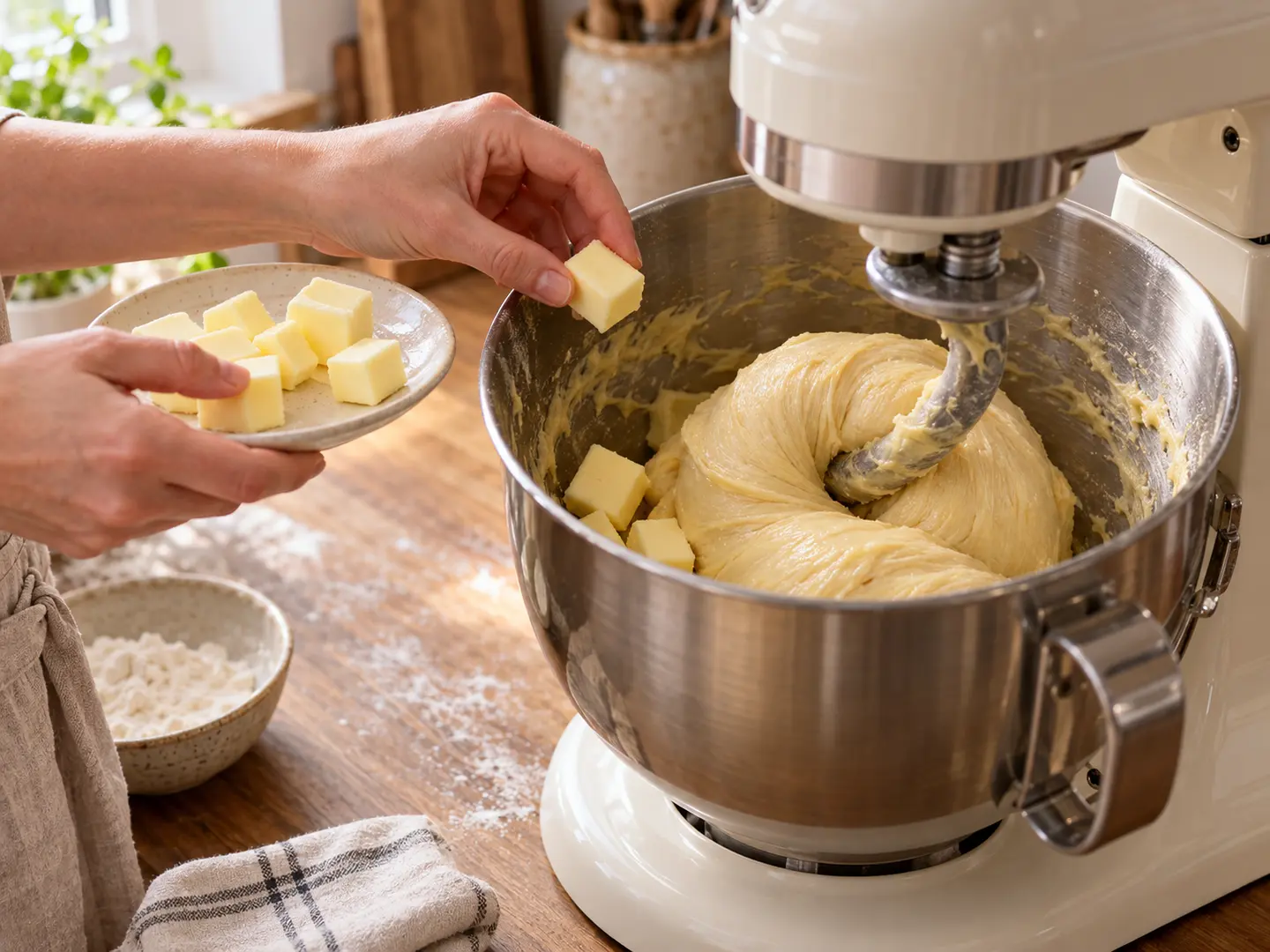
Work in the butter gradually
Cut cool, pliable butter into small pieces. Add a few at a time and wait until absorbed before adding more. Continue until glossy and able to form a thin windowpane. If greasy or warmer than about 26 °C / 79 °F, chill for 15 minutes.
Add the next cube only when the previous one has been almost completely absorbed into the dough.
Start the rise, then chill
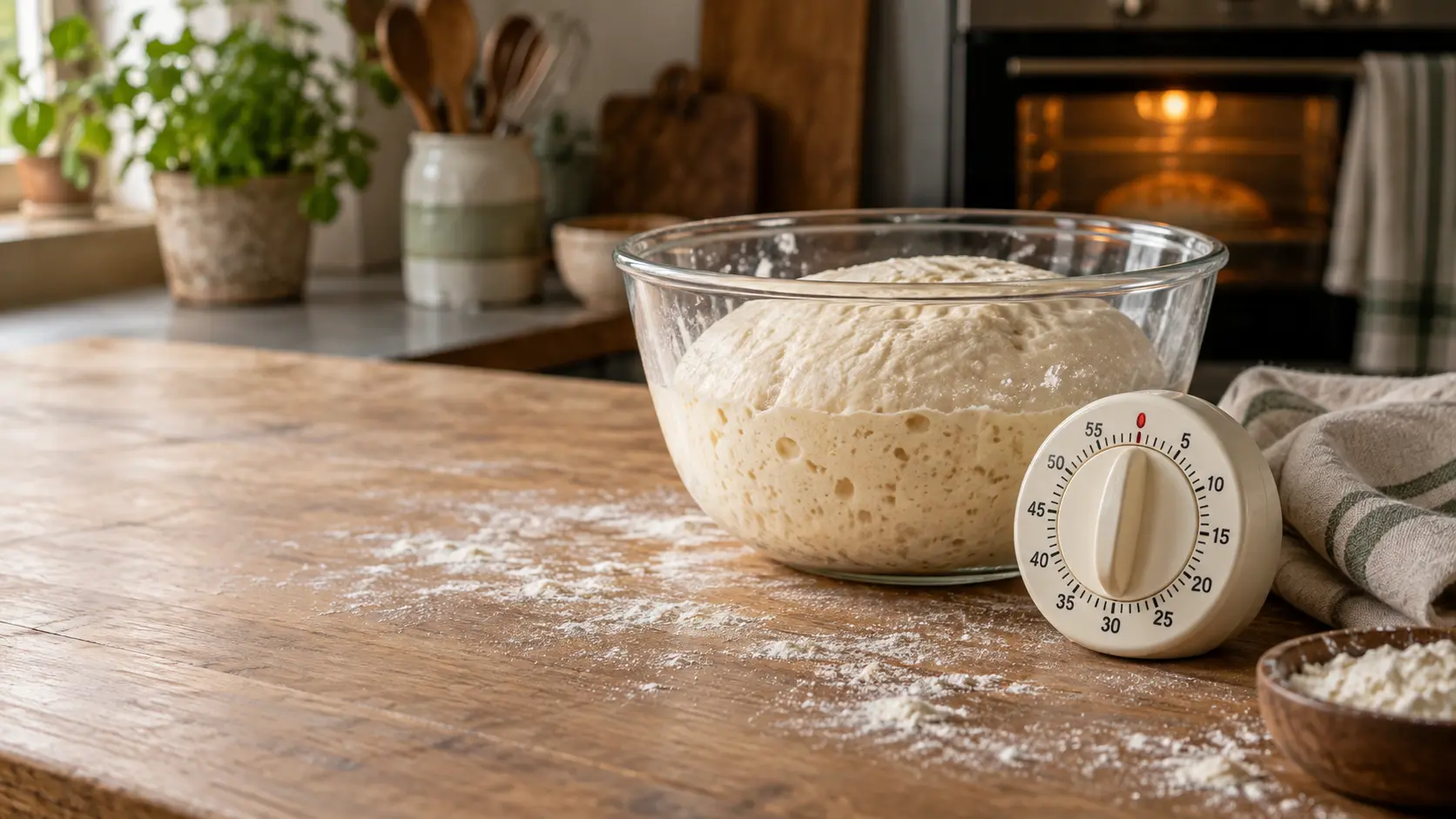
Transfer to a lightly greased bowl, cover and leave at room temperature for about 1 hour. Gently flatten, then refrigerate for 8–16 hours.
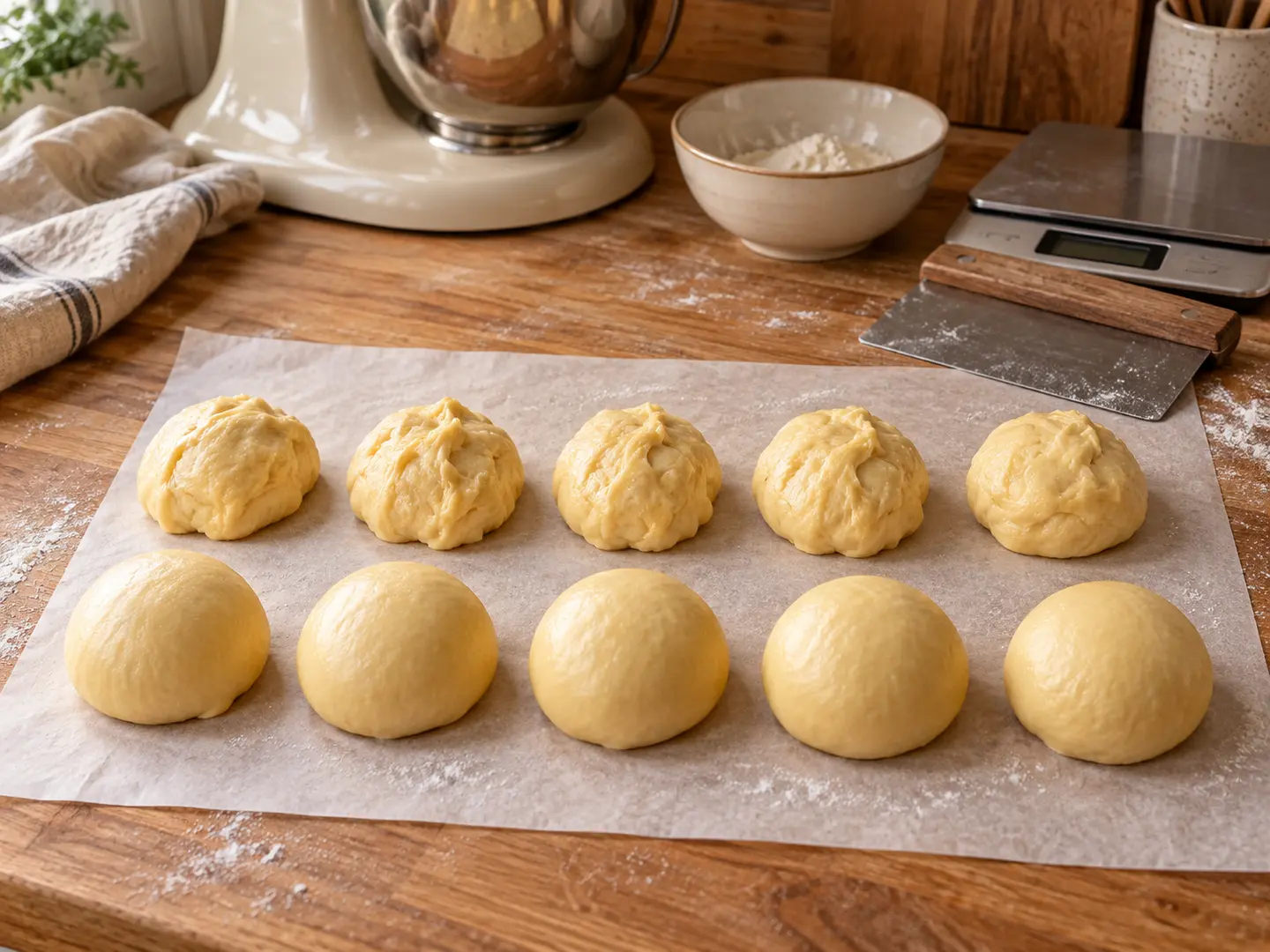
Divide and round tightly
Divide the cold dough into ten equal pieces of about 100 g. Draw the edges underneath and round each piece against the worktop. Space well apart on baking paper.
Weigh equal portions and create surface tension while rounding without tearing the dough.
Proof fully
Cover loosely and proof for 2–3 hours, longer in a cool kitchen. The buns should be visibly puffy and spring back slowly when pressed gently. Preheat the oven to 190 °C / 375 °F.
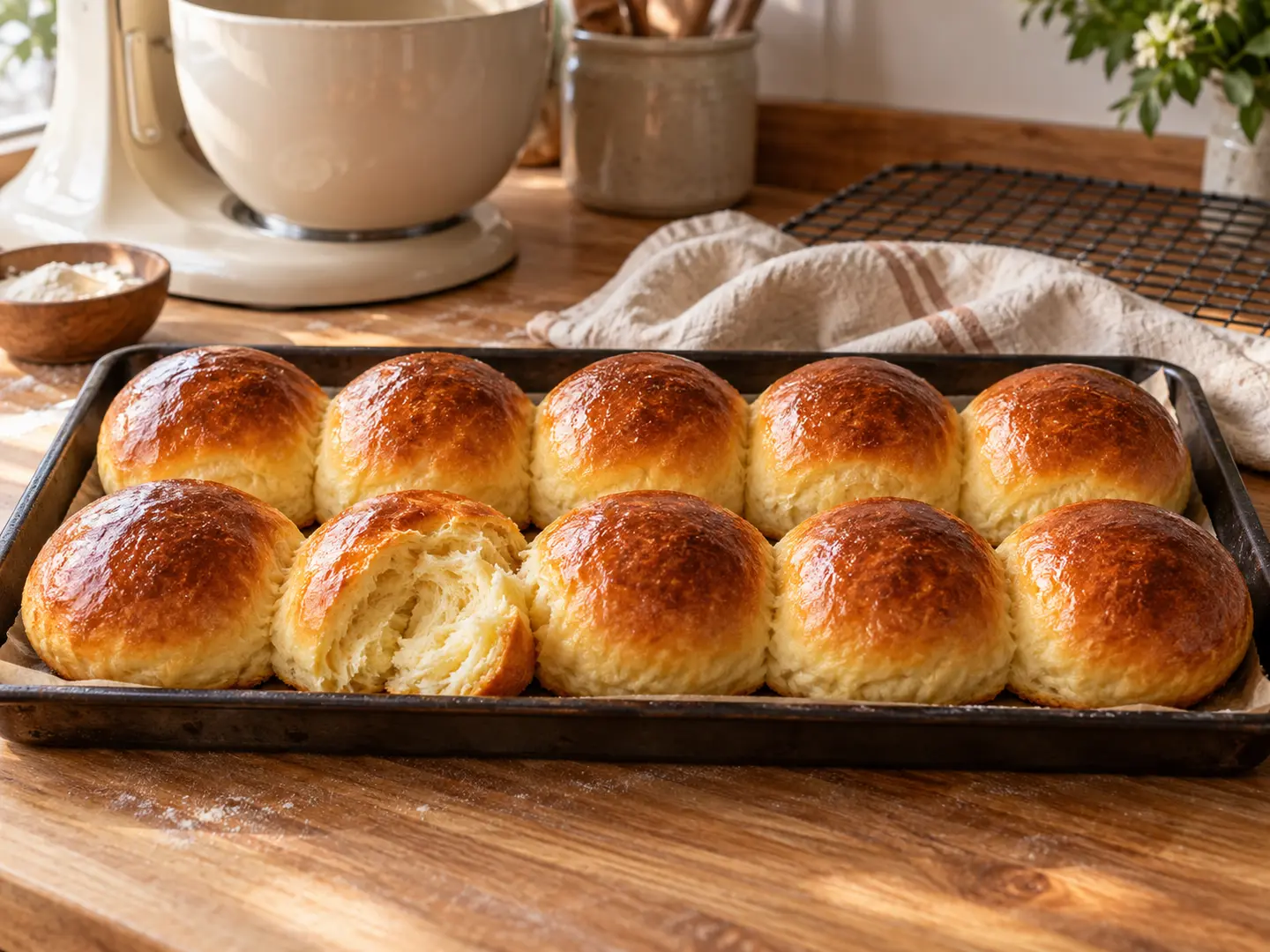
Brush and bake
Brush thinly with leftover beaten egg. Bake for 15–20 minutes until deep golden. Tent loosely if the tops colour too quickly. Cool on a rack.
Bake until deep golden brown, then cool briefly so the buttery crumb can set.
Butter, proofing and crumb problems
The dough turns greasy and slides around the bowl
Stop and chill dough and bowl for 15–20 minutes. Resume once the butter is pliable again. Extra flour will make the buns dry.
The buns stay dense
Mix longer before and after adding butter and allow more proofing time. Cold enriched dough can easily need longer than three hours.
The bases burst open
Round more tightly and seal the seam well. Put the seam underneath and keep the surface covered during proofing.
Dark on top but doughy inside
Bake lower in the oven and tent after sufficient colour develops. Use centre temperature as a check; rich crumb cooks more slowly than the crust browns.
Common questions
Can I knead brioche by hand?
It is possible, but 40% butter makes it slow and temperature control difficult. A stand mixer gives more reliable volume at home.
How many eggs do I need?
Weigh 225 g beaten egg for the reference batch, usually about four large eggs plus part of a fifth. Use the remainder for the egg wash.
Can I bake it the same day?
Yes. Chill for at least 2–3 hours after the first rise, until firm enough to shape. Overnight gives more flavour and easier timing.
Can I make one large loaf?
Yes. Use a suitable loaf tin and bake longer, usually 30–40 minutes at 180 °C / 350 °F. Tent once deeply coloured and check the centre.
How should I store brioche?
Cool completely, seal airtight and eat within two days, or freeze on the baking day. Brief reheating restores some softness.