Japanese bakery staple
Shokupan
A cloud-soft crumb built with scalded flour.
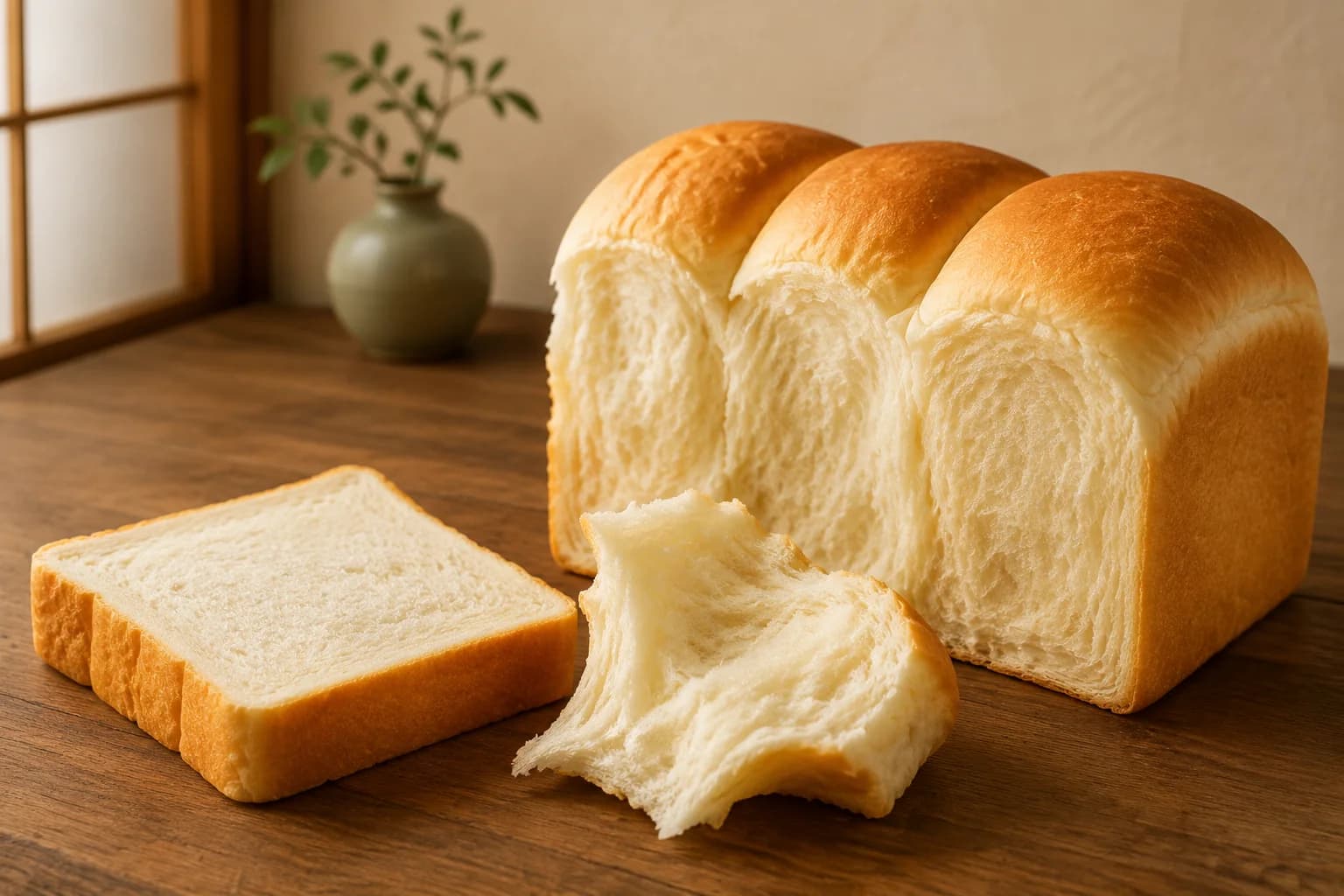
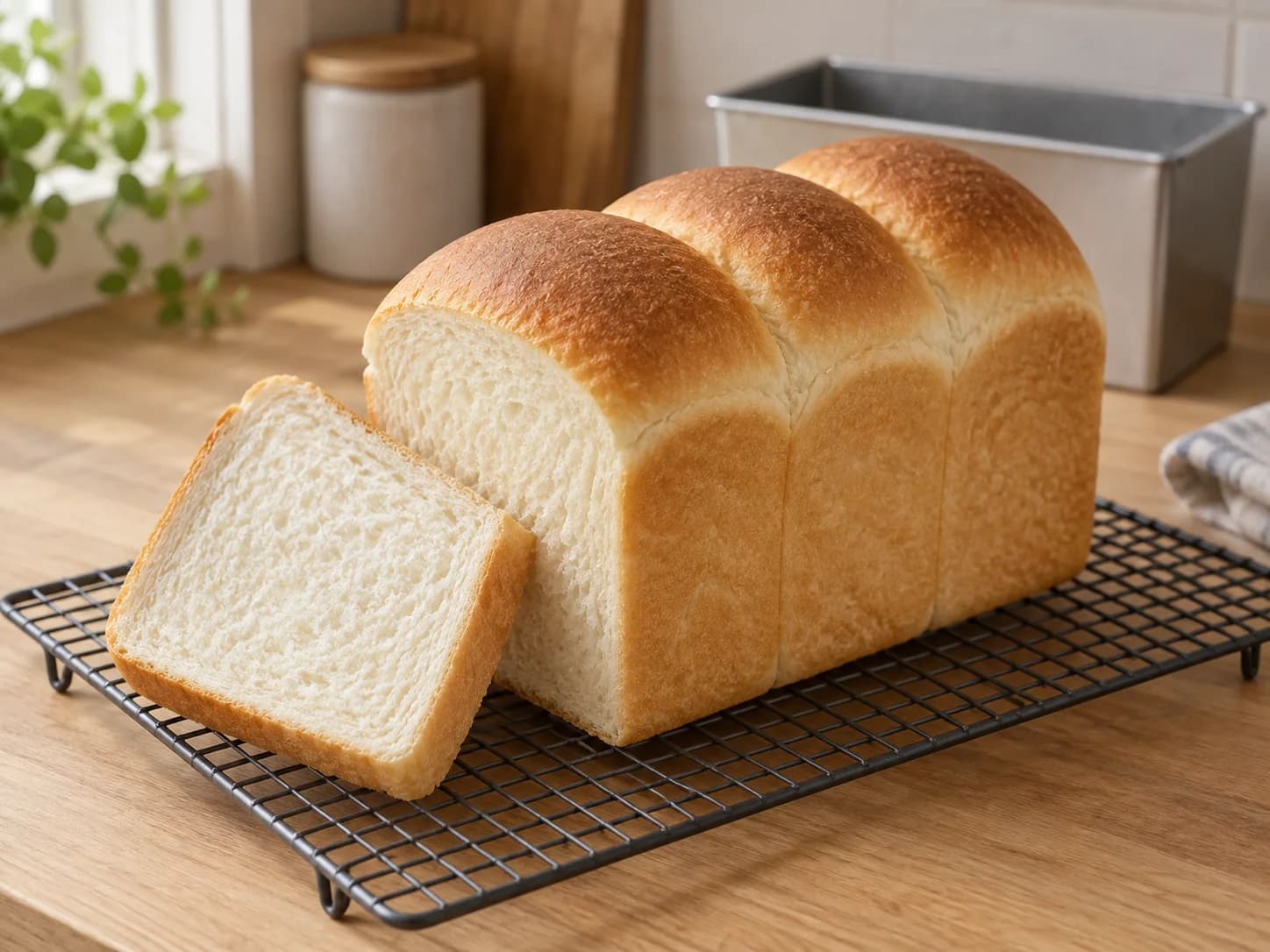
Shokupan is the tall, soft white loaf of Japanese bakeries. A scalded-flour yudane binds extra moisture; three tightly rolled pieces of dough build its fine, shreddable crumb.
The formula
For one loaf: 600 g dough
For one loaf made with 600 g dough, use an open tin measuring about 20 × 10 × 10 cm inside (roughly 2 litres). Of the 317.2 g total flour, 63.4 g goes into the yudane and 253.8 g into the main dough. Water and milk are listed separately below; do not add extra liquid. Use the loaf-pan calculator for a different tin.Active: about 45 min · Yudane: chill 4–12 hours · Rising: 105–165 min, plus a 15 min rest · Baking: 30–35 min · Cooling: at least 2 hours.
- Strong bread flour
- 100%317 g
- Boiling water for the yudane
- 16%51 g
- Whole milk for the main dough
- 60%190 g
- Salt
- 2%6.3 g
- Instant yeast
- 1.2%3.8 g
- Unsalted butter
- 4%12.7 g
- Sugar
- 6%19 g
Weights are rounded for weighing; their sum may differ slightly from the calculated total. Small additions stay in grams.
Hold plenty of moisture without making a slack dough
Shokupan is not designed for an open sourdough crumb. It needs a tall, even structure that pulls apart softly yet still slices cleanly.Yudane flour
One fifth of the flour is scalded with boiling water, binding moisture before the dough is kneaded.
Total liquid
16% water sits in the yudane; 60% whole milk is added to the main dough.
Shaping
Three rolled pieces create the familiar domes and a fine, feathery pull-apart structure.
Gentle oven
Enough heat for volume and a thin golden crust without over-coloring the milk dough.
From imported bread to a Japanese staple
Shokupan is commonly translated as food bread or everyday bread. Bread had been known in Japan for centuries, but became established at breakfast and in school meals particularly after the Second World War. Shokupan developed into the soft sliced loaf used for thick toast and carefully built sandwiches.
Outside Japan it is often called Hokkaido milk bread. That is a useful search term, but not every shokupan comes from Hokkaido or contains cream. Shokupan is the broader Japanese name for this soft white tin loaf; this version uses milk, butter and an open loaf tin.
Yudane is more than an internet bread trick. Boiling water gelatinises starch in part of the flour. Research on yudane bread links that treatment to a softer crumb and slower staling because the loaf retains more bound moisture.
From yudane to three soft domes
Ideally make the yudane the evening before. The quantities below are for 600 g / 21.2 oz dough; scale them along with the formula. Rising times are guides: use volume and springiness to decide when to move on.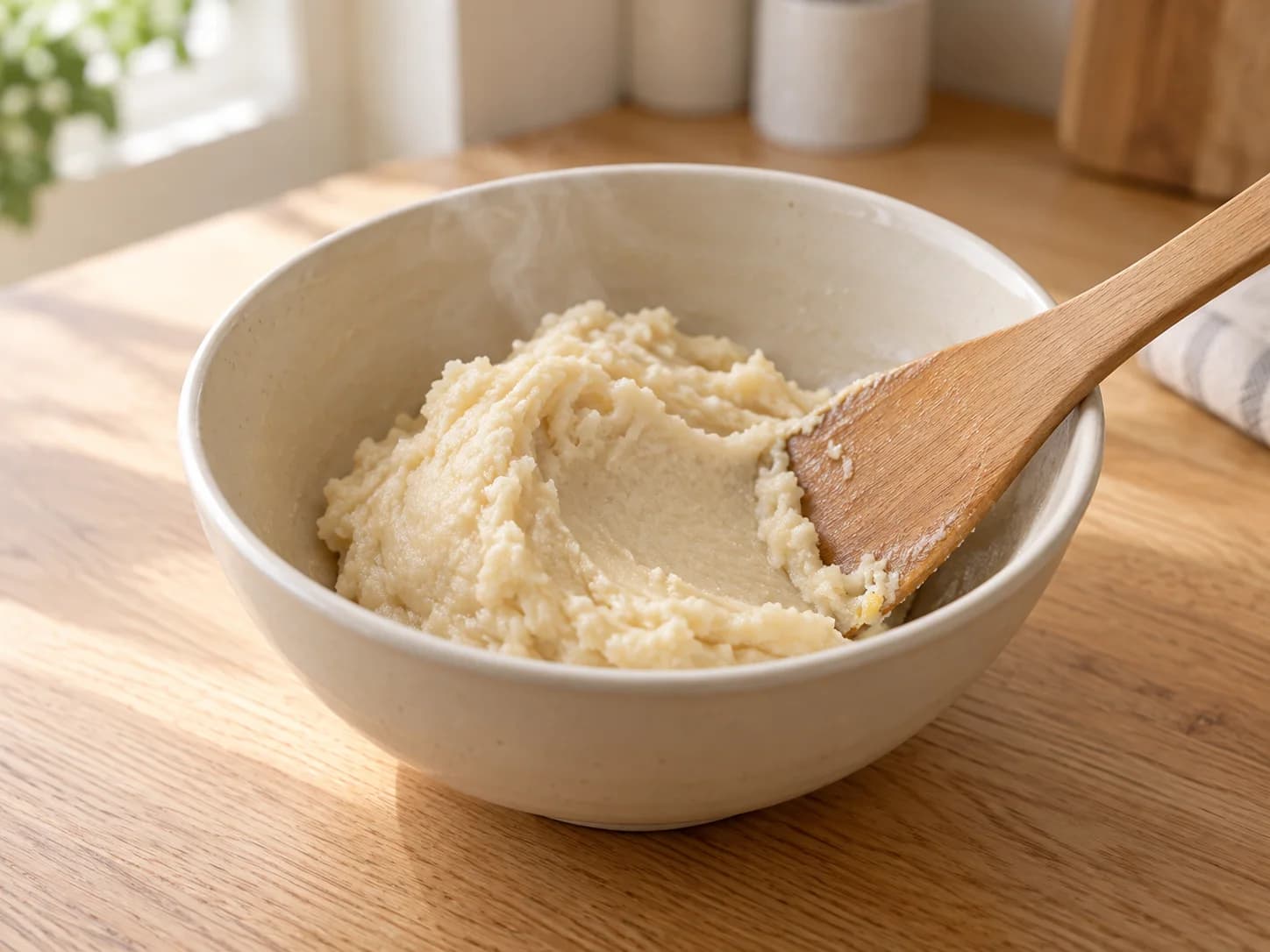
Scald the yudane
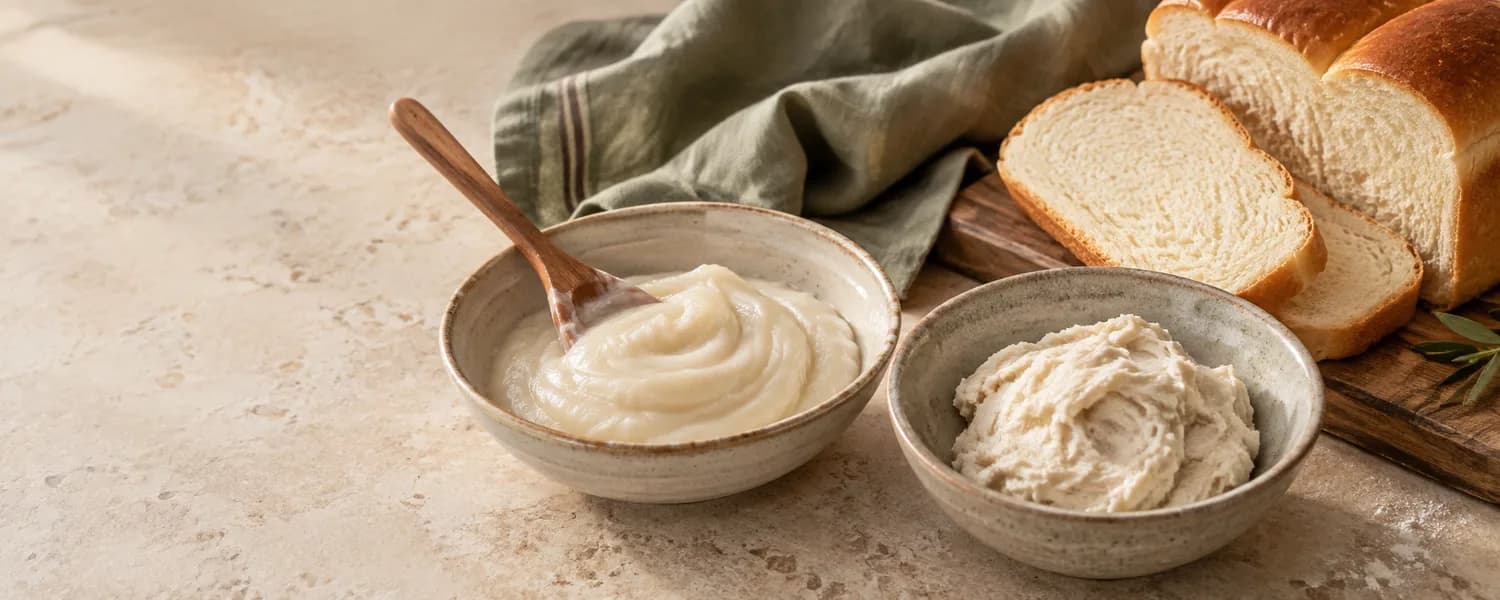
Put 63.4 g / 2.2 oz of the total flour in a heatproof bowl. Add 50.7 g / 1.8 oz water straight from the boil and stir firmly with a spatula until no dry flour remains. It forms a stiff paste. Cover, let cool, then refrigerate for at least 4 hours, ideally 8–12 hours. This flour and water are already included in the recipe totals.
After mixing, all the flour is moistened and the stiff paste holds its shape on the spatula.
Mix the main dough
Cut the cold yudane into small pieces. Mix with 253.8 g / 9.0 oz flour, 190.3 g / 6.7 oz whole milk, 19 g sugar, 3.8 g instant yeast and 6.3 g salt. Use milk at about 20 °C, or cool milk in a warm kitchen. Mix on low speed for 3–5 minutes until cohesive and the yudane is dispersed. Keep the butter aside for now.
Knead to a thin windowpane
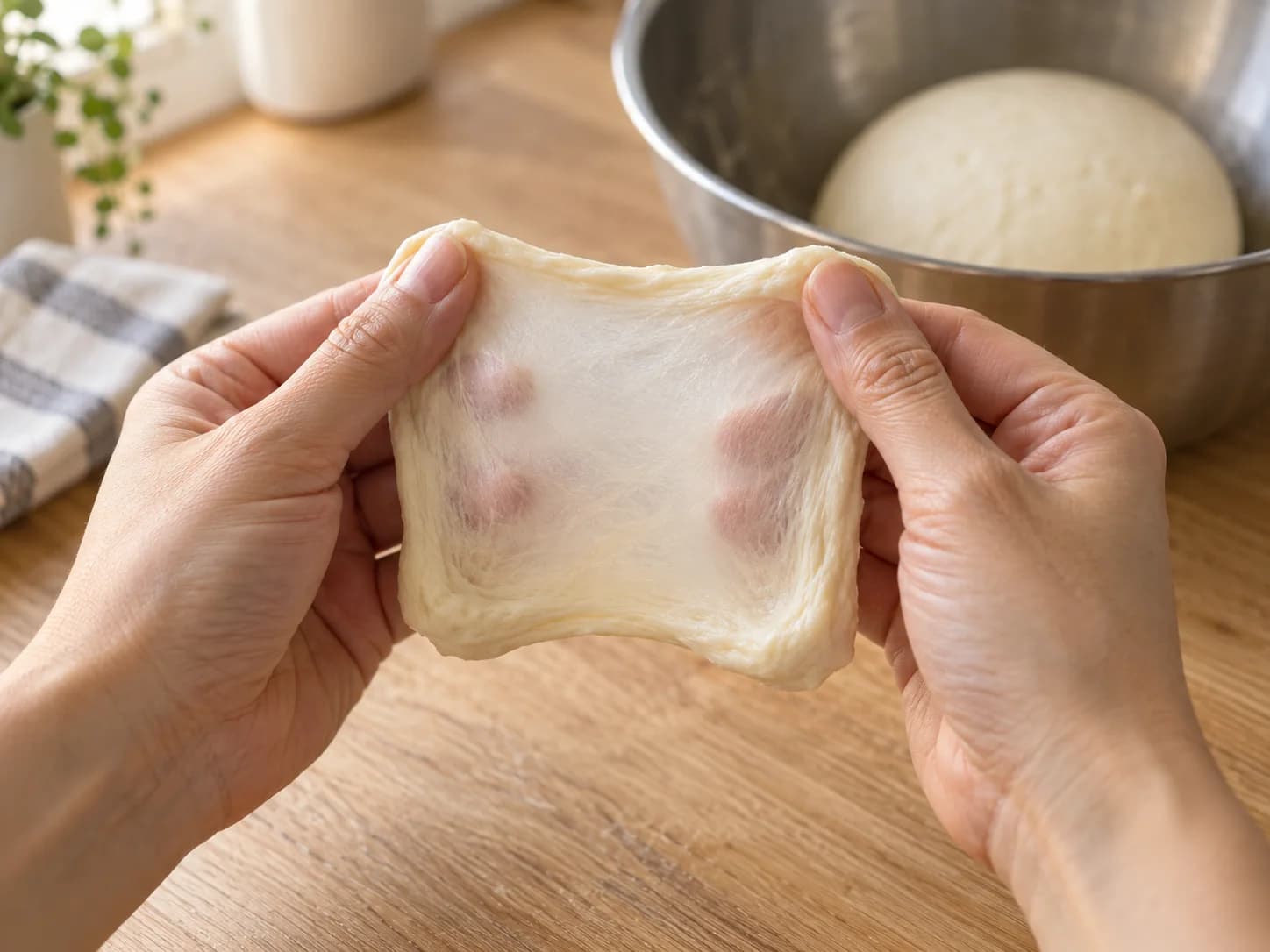
Knead in 12.7 g soft, not melted, butter in small portions. Then knead for about 10–15 minutes on low to medium speed; hand kneading often takes longer. Gently stretch a small sample: its center should become thin and translucent without tearing straight away. If it tears, knead for another 2 minutes and retest. The dough stays soft and slightly tacky; avoid repeatedly adding flour.
You can see the fingers through the center while the membrane stays intact.
Let the dough rise
Place the dough in a lightly greased bowl or straight-sided container, cover and mark its starting height. Leave for about 60–90 minutes at 24–26 °C, until its volume has increased by roughly 75–100%. It should look domed and airy. In a cooler kitchen, allow more time; do not wait until the surface starts to collapse.
Divide and rest
Gently press out large gas bubbles and weigh three pieces of about 200 g / 7.1 oz each. Fold each piece's edges into its center, turn it over and loosely round it with your hands. Cover and rest for 15 minutes. Meanwhile, lightly grease the loaf tin with a little extra butter. Resting lets you roll out the dough without it immediately springing back.
Fold and roll three pieces
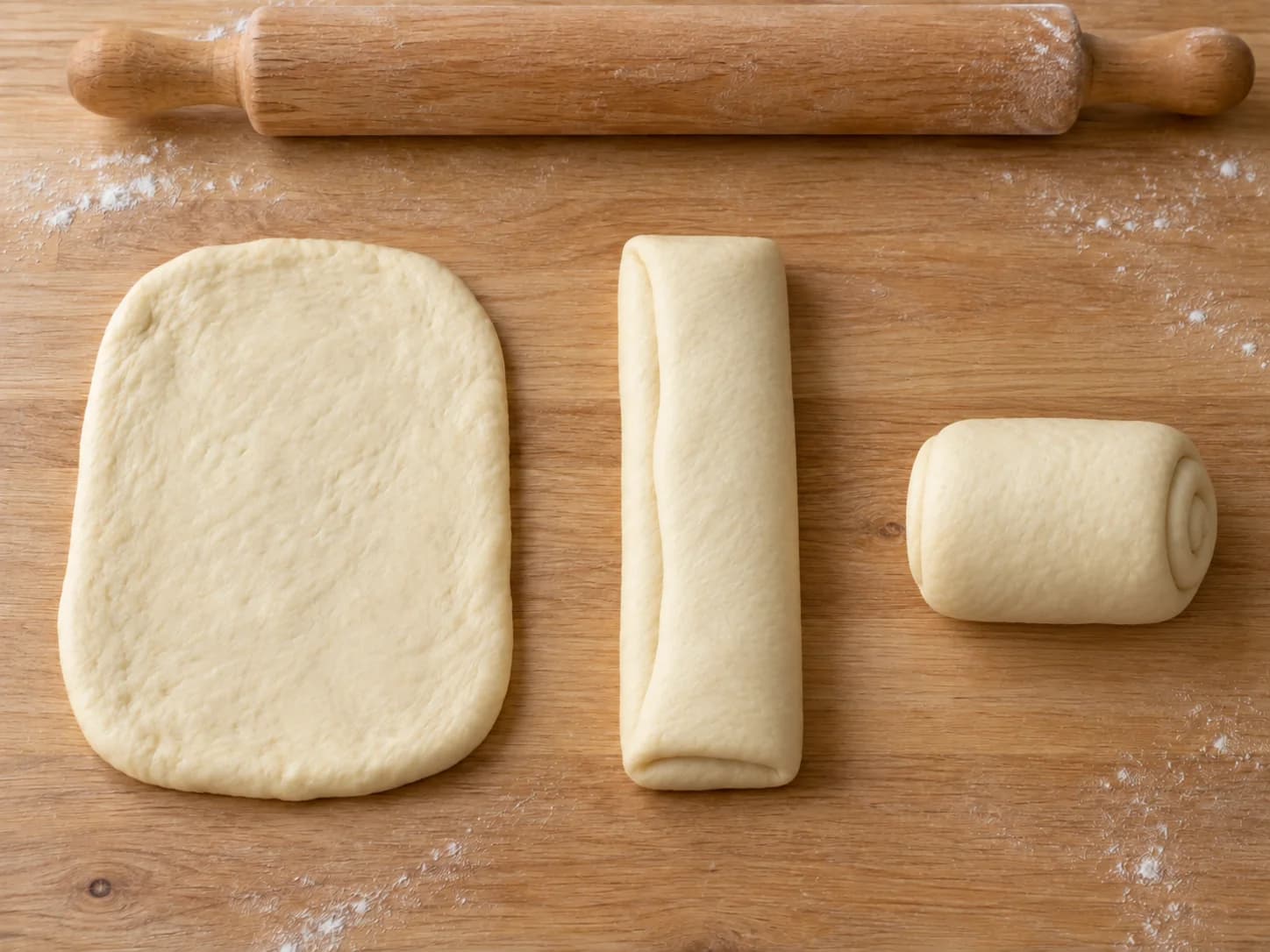
On a very lightly floured surface, roll each ball into a rectangle about 18 × 15 cm, pressing out large bubbles. Fold the two long sides inward so they overlap in thirds, like a letter. Roll gently into a strip about 20 × 7 cm. Starting at a short end, roll up firmly without tearing. Arrange the three rolls in a row along the tin's length, seams underneath and spiral ends facing its long walls.
Left to right: roll flat, fold in thirds, then roll up from a short end. Repeat with all three pieces.
Proof just above the rim
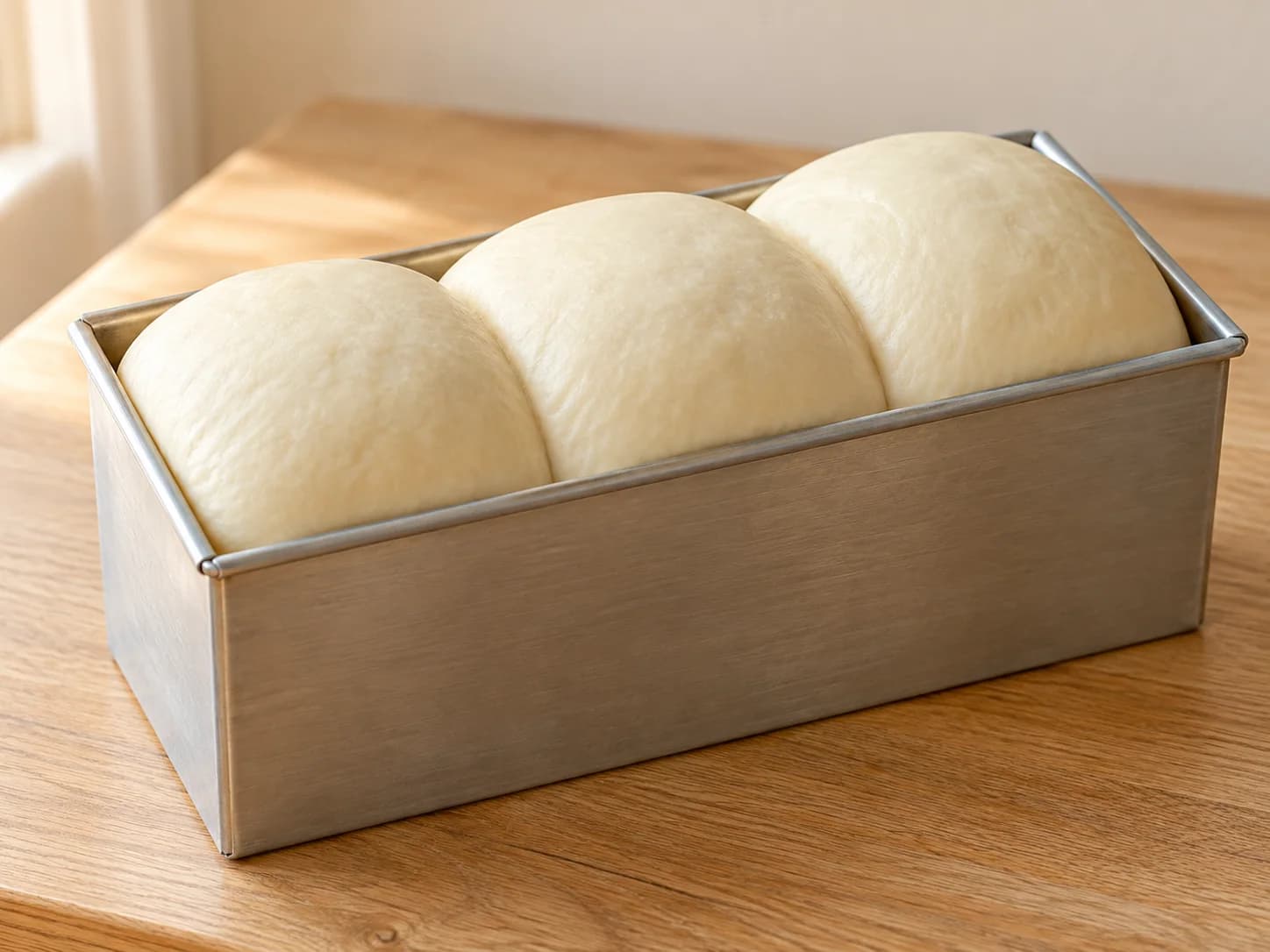
Cover the tin loosely to prevent a skin forming and proof for about 45–75 minutes at 24–26 °C. During the last 20 minutes, preheat the oven to 180 °C conventional or 165 °C fan. In this tin the three domes should rise about 1 cm above the rim. Gently press a lightly floured fingertip about 5 mm into the dough: the dent should spring back slowly and only partway. If it springs straight back, give it a little more time.
Check springiness as well as height: a shallow dent should return slowly and only partway.
Bake until golden and cool
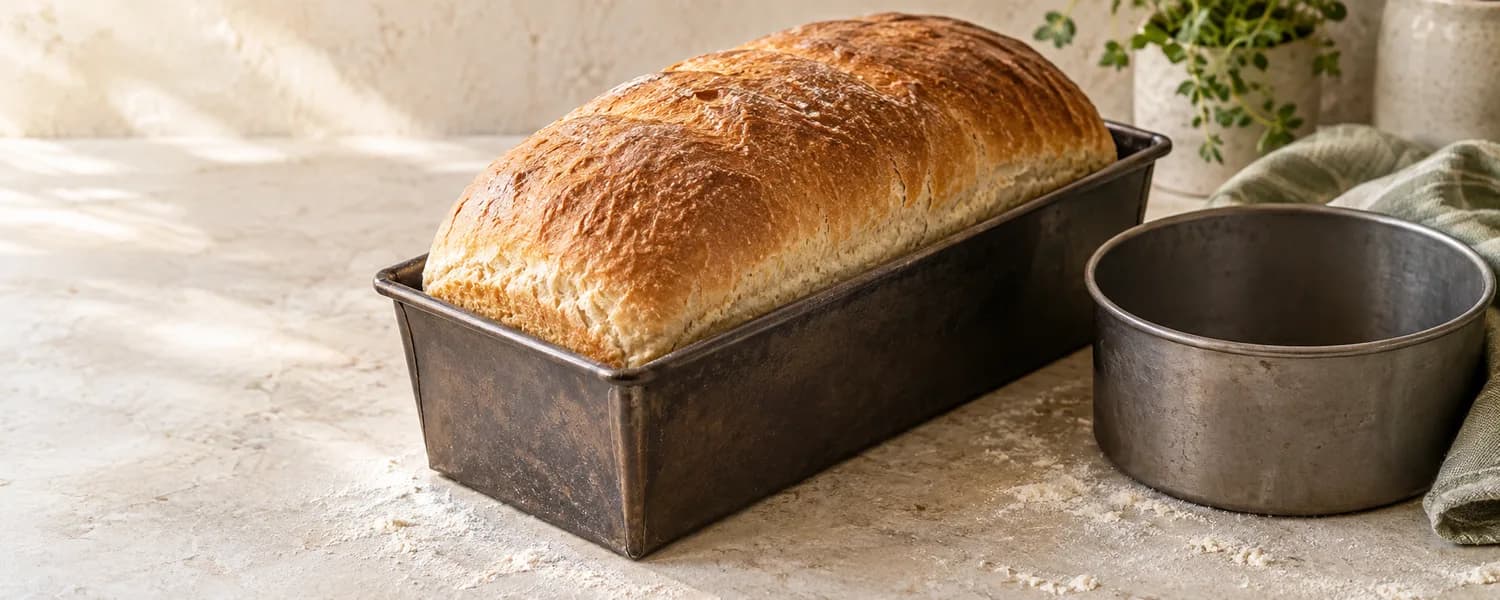
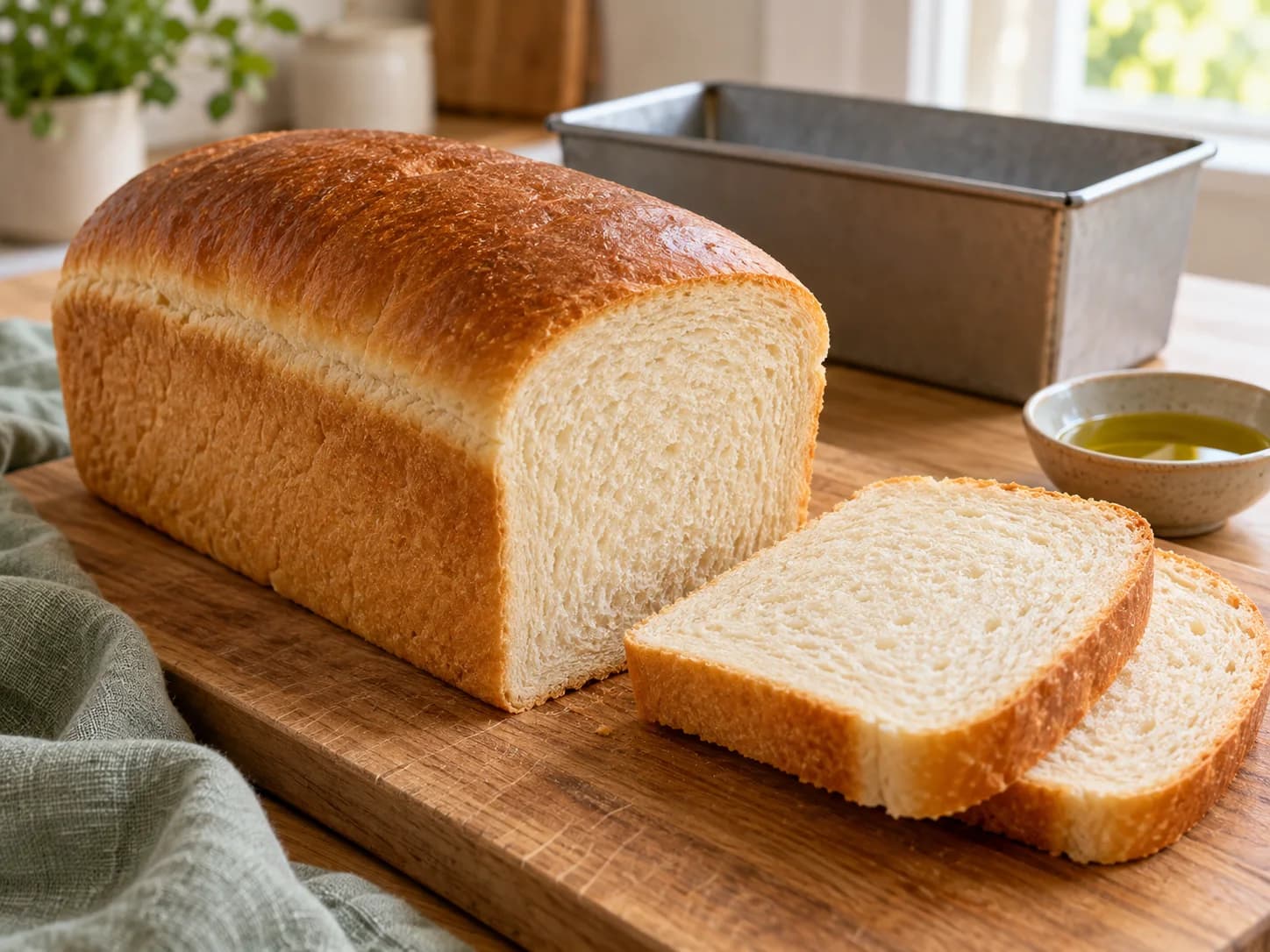
Remove the covering and bake without a lid for 30–35 minutes on a rack just below the oven's center. If the top is already dark after about 20 minutes, tent it loosely with foil. The loaf is done at a center temperature of about 93 °C; measure without touching the tin. Carefully turn it out and cool on a wire rack for at least 2 hours, until the center is no longer warm. Only then cut thick slices.
Let the center cool completely before slicing so the soft crumb stays light.
Problems with volume and crumb
The crumb is dense and does not shred
Knead until a genuinely thin windowpane forms and allow more final proof. Soft dough without a strong gluten network stays low.
Large tunnels appear between the three rolls
Press out large gas bubbles while rolling and coil evenly and firmly. Loose seams become cavities in the oven.
The top colors too quickly
Tent loosely with foil after about 18 minutes or lower the oven by 10 °C. Milk and sugar brown sooner than lean bread dough.
The loaf wrinkles after baking
Bake a little longer and review the final proof. An underbaked or over-proofed loaf lacks support when it leaves the tin.
Frequently asked questions
What is the difference between yudane and tangzhong?
Yudane mixes flour directly with boiling water into a firm paste and usually rests longer. Tangzhong is cooked with more liquid while stirring into a soft roux. Both gelatinise starch, but the method and ratios differ.
Can I use all-purpose flour?
Yes, but higher-protein bread flour gives more reliable height and a stronger feathery crumb. Hold back a little milk at first when using all-purpose flour.
Does the loaf tin need a lid?
No. An open tin creates the three rounded yama-gata domes in this formula. A Pullman lid makes rectangular kaku-gata bread; use slightly less dough or close the lid before the dough reaches the rim.
Is shokupan the same as Hokkaido milk bread?
The names are often used interchangeably outside Japan. Shokupan is the broader Japanese term for soft sliced bread; Hokkaido milk bread mainly describes variants and marketing linked to the famous dairy region.
How should I store shokupan?
Keep it fully cooled and airtight at room temperature, slicing only what you need. For longer storage, freeze thick slices in portions and toast them directly from frozen.