Dutch baking
Dutch fruit buns
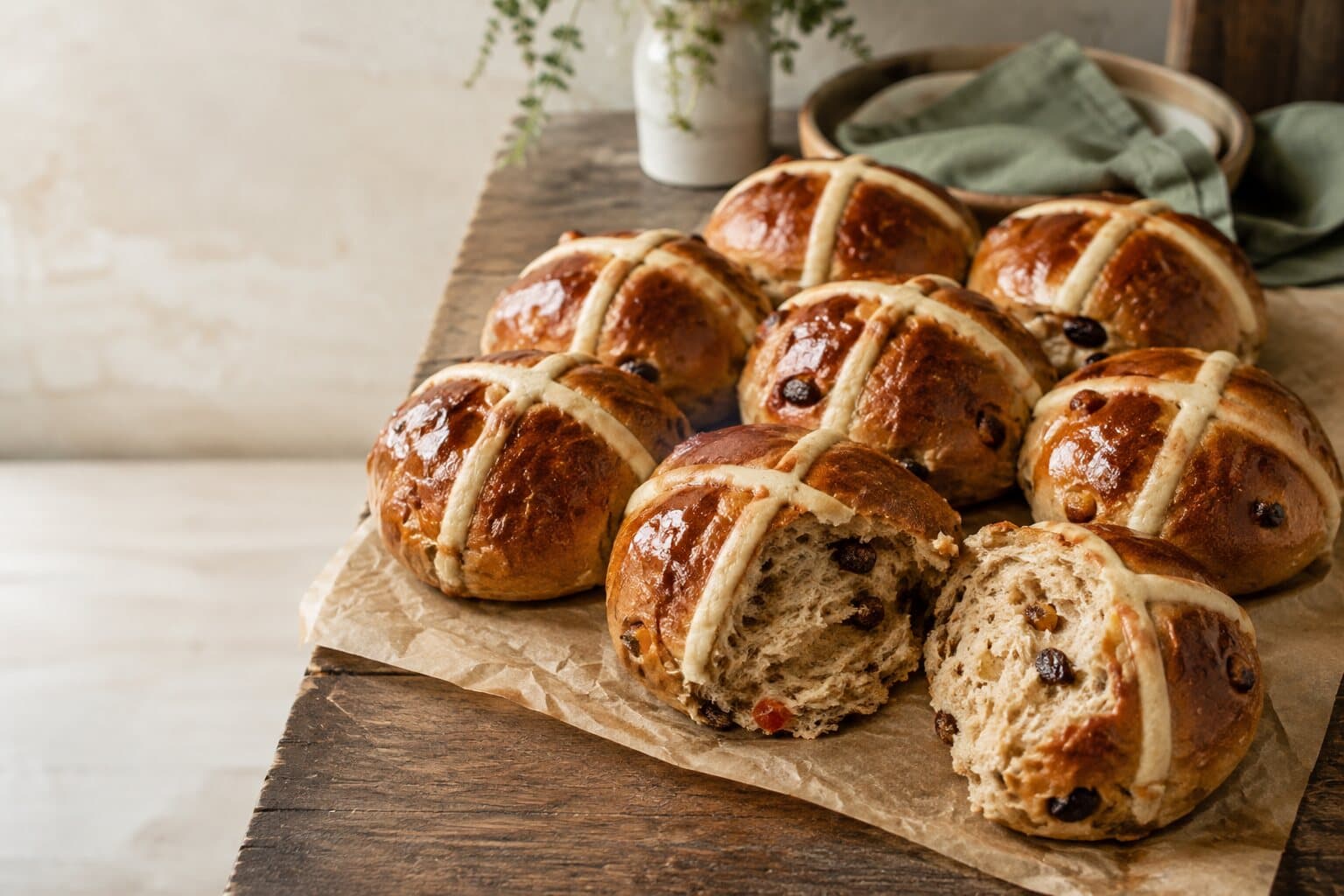
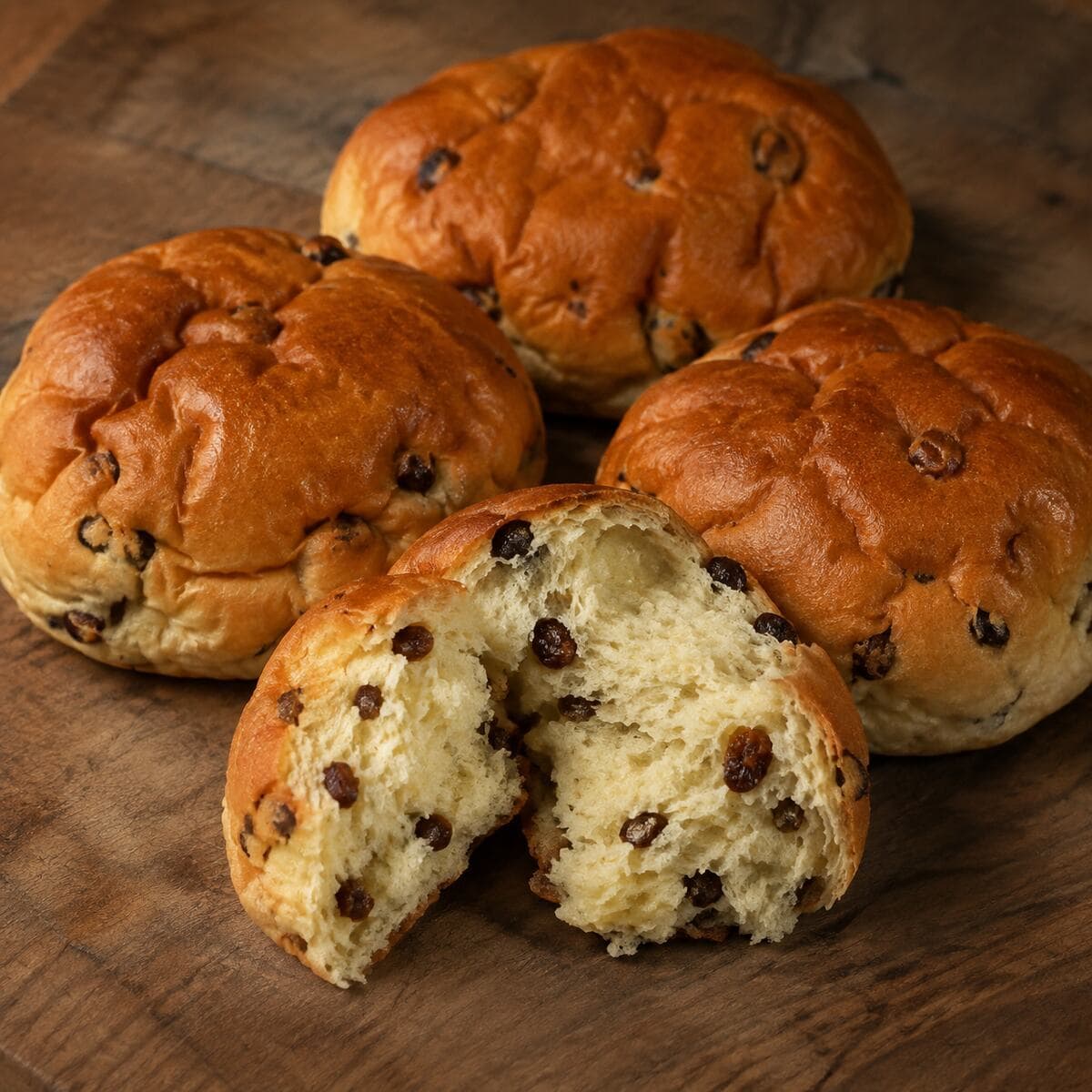
Soft Dutch fruit buns, generously filled.
Krentenbollen are the soft Dutch buns found in bakeries and lunchboxes. Scale them by count or piece weight while milk, butter, sugar and fruit stay in proportion.
The formula
Twelve Dutch fruit buns
Starting point: 12 buns at 90 g / 3.2 oz with 70% fruit. Equal parts currants and raisins work well.Active preparation: about 35 min · Baking: about 15–18 min. Soaking, drying and proofing take additional time.
- Flour
- 100%441 g
- Whole milk
- 55%242 g
- Salt
- 2%8.8 g
- Instant yeast
- 2%8.8 g
- Butter
- 10%44 g
- Sugar
- 6%26 g
- Currants + raisins
- 70%309 g
Weights are rounded for weighing; their sum may differ slightly from the calculated total. Small additions stay in grams.
A soft bun that still carries plenty of fruit
Milk and butter keep the crumb tender. The fruit is generous without making the dough needlessly difficult to knead at home.Milk
Soft dough that remains practical to shape.
Fruit
Try equal parts currants and raisins, calculated against the flour.
Per bun
A generous Dutch fruit bun without becoming heavy.
Oven
Bake at 392 °F for about 15–18 minutes.
What Dutch bakers mean by krentenbollen
The literal translation is currant buns, but Dutch krentenbollen are commonly made with currants, raisins or a mixture. Here, currants mean small dried Zante currants — not fresh blackcurrants. Raisins are larger and sweeter, so a half-and-half mix gives useful contrast.
The fruit is 70% of the flour weight and is included in the final dough weight. The soaking water is not: drain the fruit thoroughly and let its surface dry before mixing it into the dough.
Milk is counted as the hydration and butter as the fat. An optional egg wash for shine or melted butter brushed on after baking is a finish, so it is not included in the dough calculation.
Build the dough first, then add the fruit
Dry fruit and late mixing protect the gluten network you worked to create.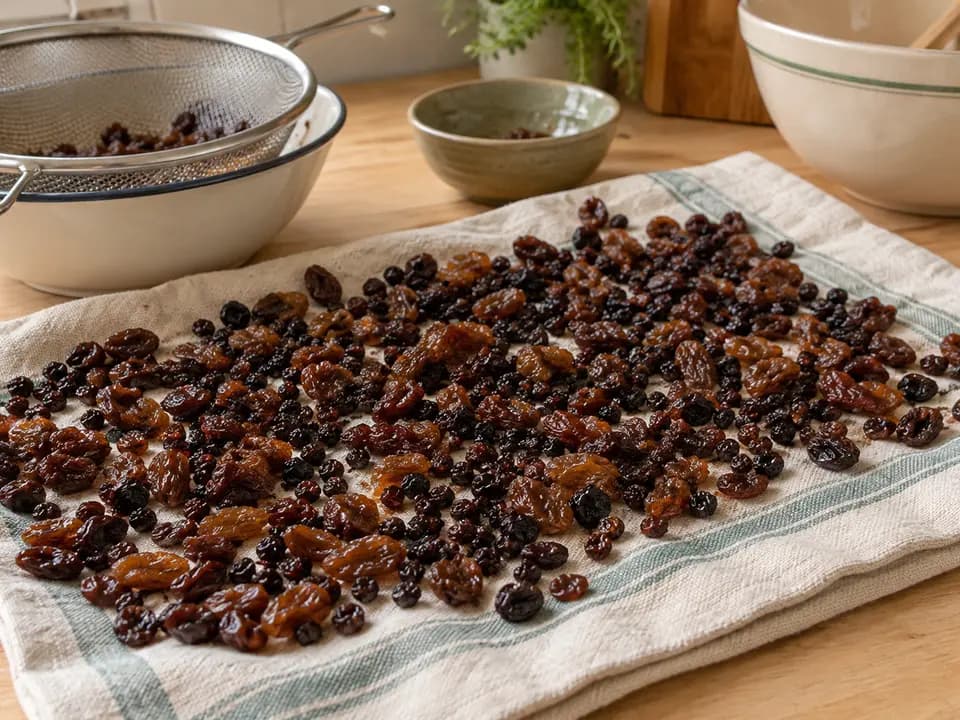
Soak and dry
Rinse the currants and raisins, soak them in lukewarm water for 15 minutes, then drain thoroughly. Spread them out until the surface feels dry.
Spread the drained fruit out to dry; surface water makes the dough slippery.
Mix the dough
Combine flour, milk, yeast and sugar. Add the salt and knead until the dough begins to hold together.
Knead in the butter
Work in the softened butter gradually, then continue kneading until the dough is smooth and elastic.
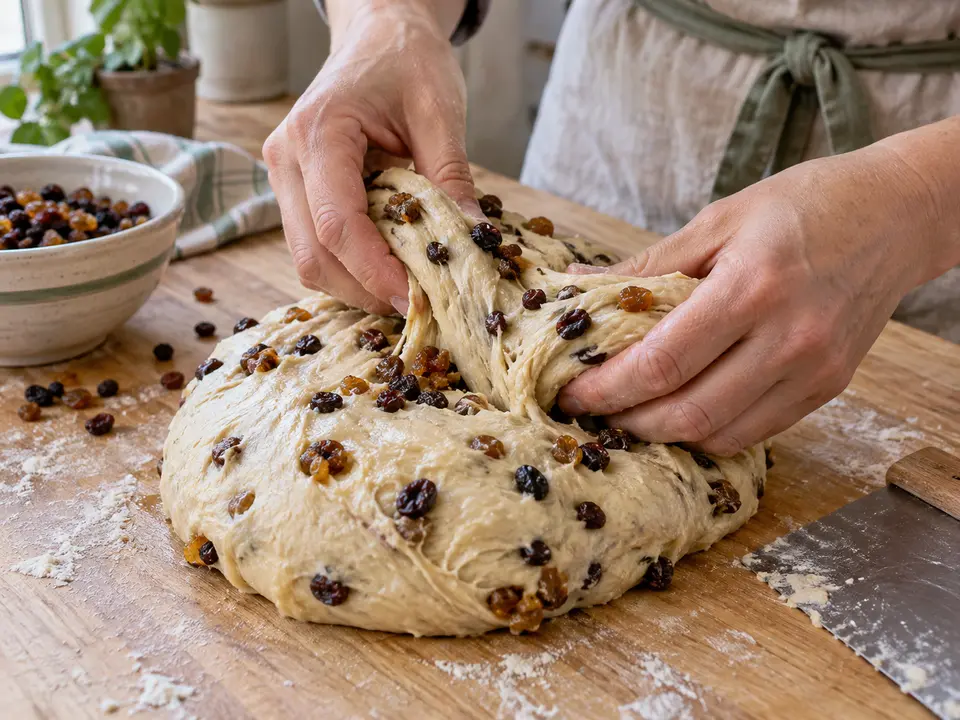
Add the fruit
Mix in the currants and raisins on low speed or by hand. Stop as soon as they are evenly distributed.
Mix briefly and gently, stopping as soon as the fruit is evenly distributed.
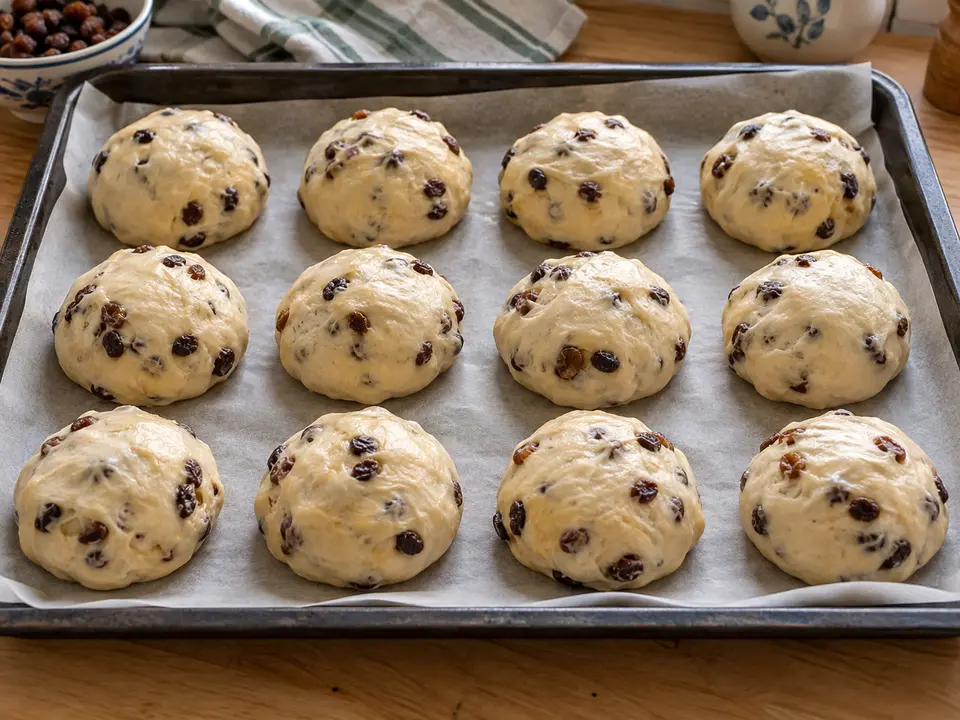
Proof and shape
Let the dough become visibly fuller. Divide into twelve 90 g / 3.2 oz pieces, round without tearing and proof until the buns feel light and spring back slowly.
Round twelve pieces firmly without tearing the dough or pulling fruit through the surface.
Bake until golden
Brush with egg if desired and bake at 200 °C / 392 °F for 15–18 minutes. For a soft sheen, brush lightly with melted butter after baking.
Problems with fruit distribution and dough structure
The fruit tears through the dough
Dry it more thoroughly, develop the gluten first and mix the fruit in briefly at the very end.
The buns stay dense
Check both proofing stages. Enriched dough carrying a lot of fruit may simply need more time.
The tops color too quickly
Move the tray down one level or lower the oven slightly, then keep baking until the centers are cooked and springy.
Frequently asked questions
Can I use only raisins or only currants?
Yes. Keep the same total fruit weight. All raisins taste sweeter; all currants give smaller, slightly sharper pieces of fruit.
Why dry the fruit after soaking?
Soaking makes dried fruit supple, but free water on the surface makes the dough slippery and can weaken its structure.
Can I replace the milk with water?
Yes, start with the same weight. The buns will be a little less rich and tender; let your flour tell you whether it needs all the liquid.
Can I freeze Dutch fruit buns?
Yes. Cool them completely, wrap airtight and freeze while fresh. A short reheat brings back the soft crumb.