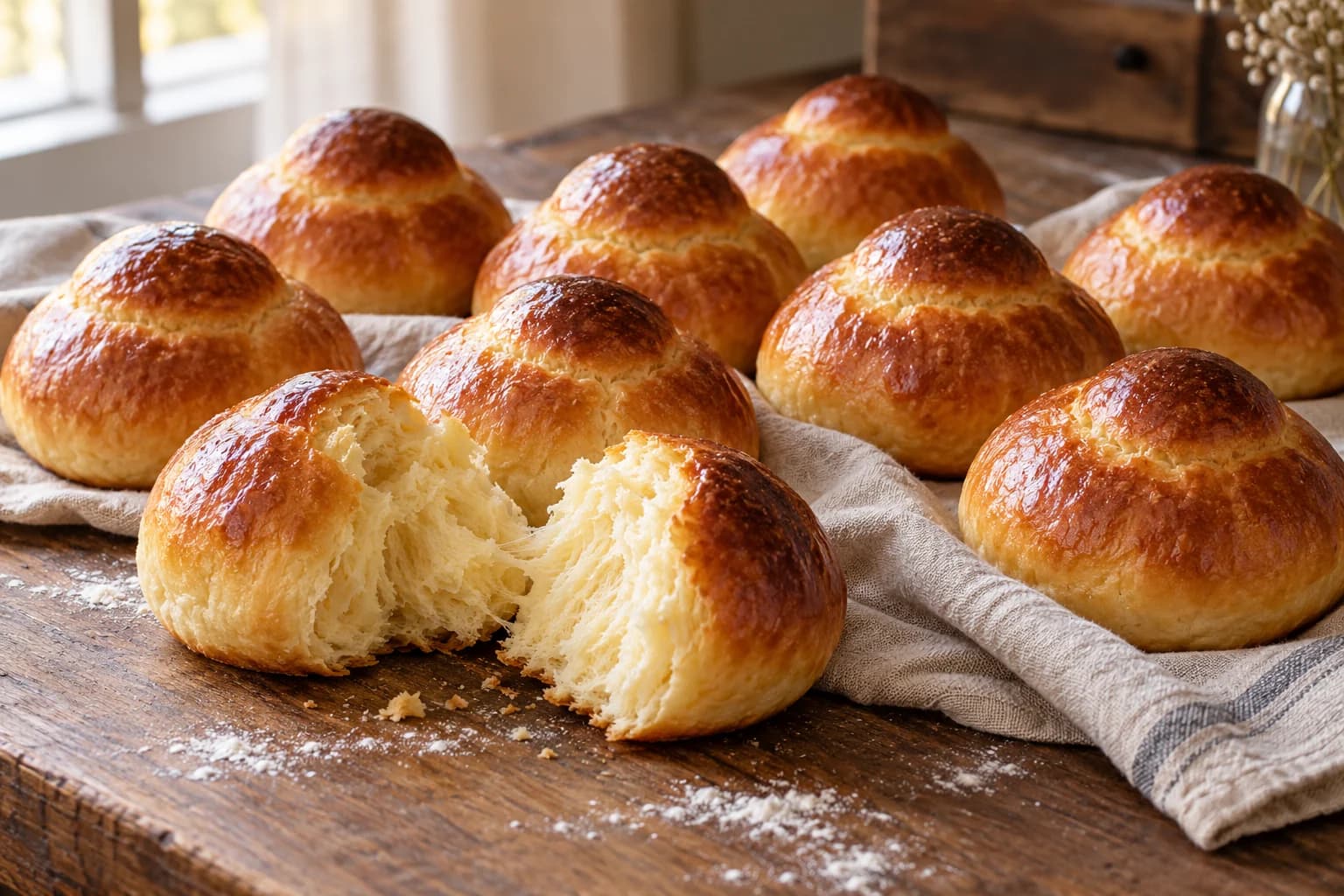
With olive oil
Sandwich bread
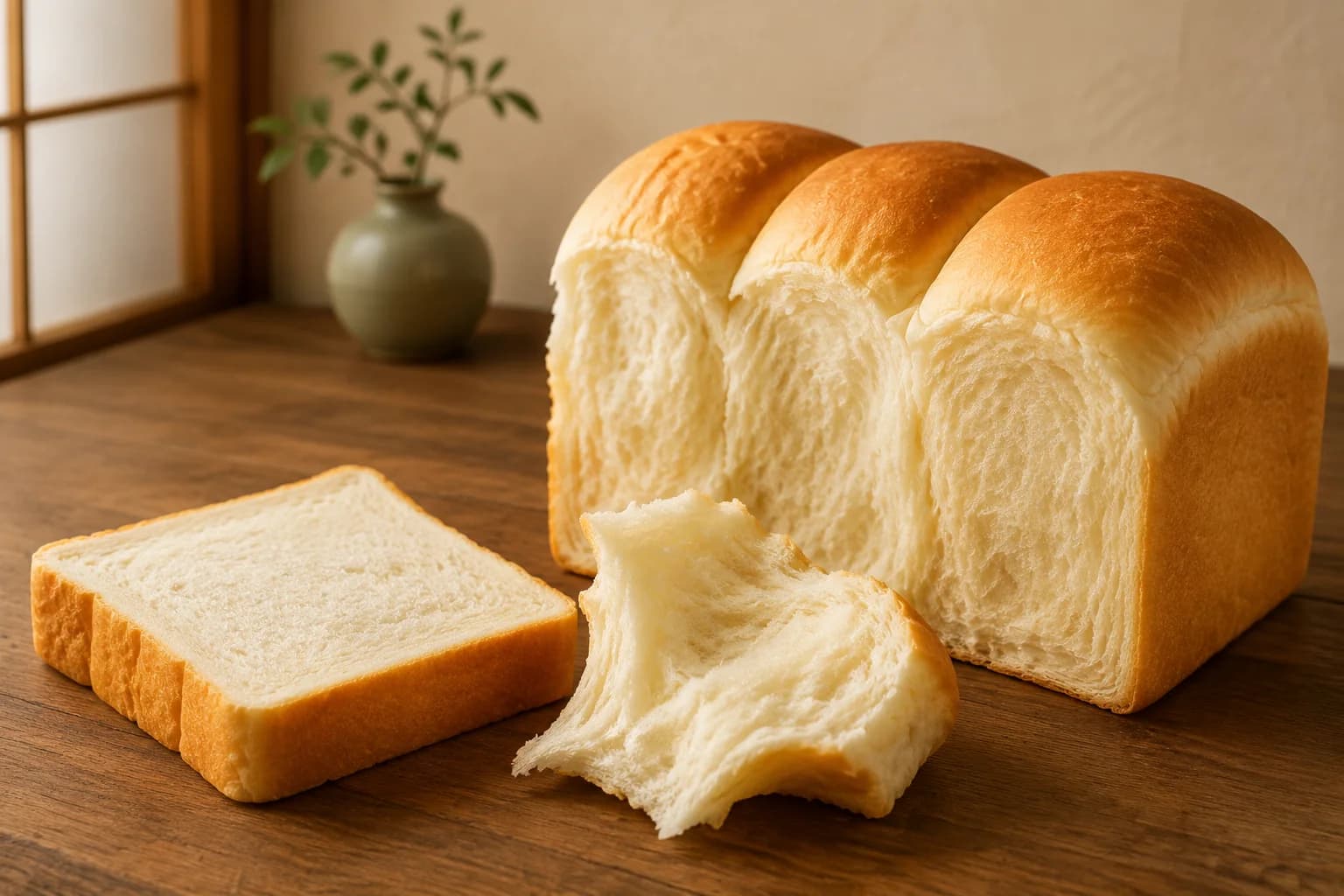
Soft slices, sized for your loaf tin.
A fine white loaf for sandwiches, toast and grilled cheese. Water and a little olive oil make a dough without milk or eggs. One rolled sheet of dough produces an even crumb and slices that hold together well.
Ingredients
One loaf from 850 g of dough
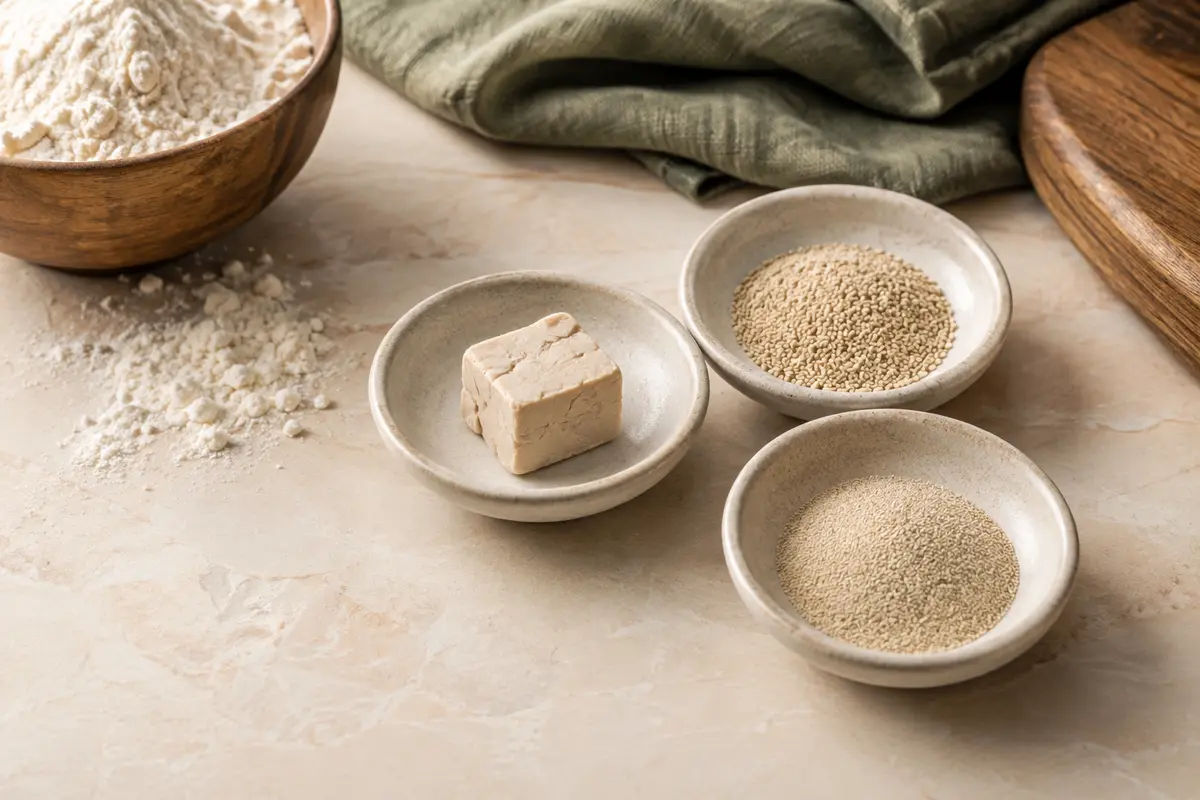
Use white bread flour, preferably with 11–13% protein, and instant yeast. The 850 g is unbaked dough weight; the finished loaf weighs less. Extra oil for greasing the tin is not included.Active time: about 25 min · First rise: 60–90 min · Final proof: 45–75 min at 24–26°C · Baking: 35–40 min · Cooling: at least 2 hours.
- White bread flour
- 100%503.6 g
- Water
- 62%312.2 g
- Salt
- 1.8%9.1 g
- Instant yeast
- 1%5 g
- Mild olive oil
- 3%15.1 g
- Sugar
- 1%5 g
An everyday loaf with a simple dough
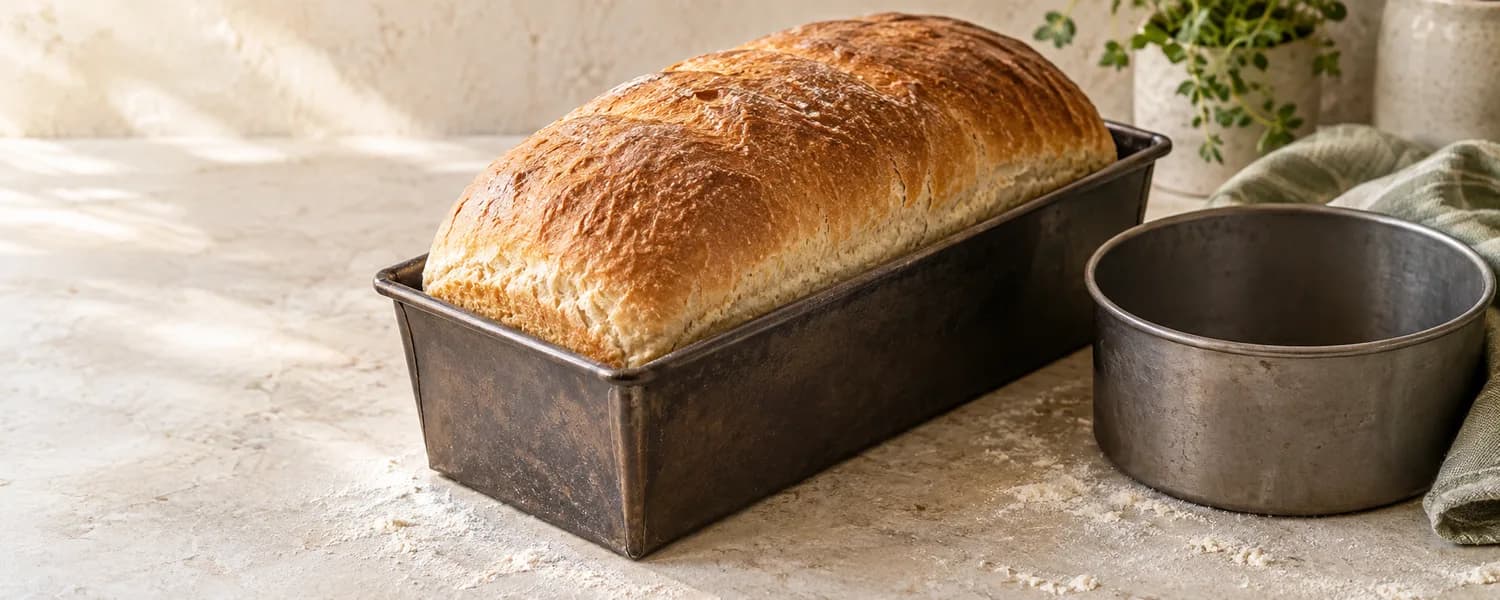
As a starting point, this amount fits an open loaf tin of about 2.4 litres, for example 24 × 10 × 10 cm measured inside.Water
A supple dough that is manageable to knead and roll by hand.
Olive oil
Mild olive oil softens the crumb without dominating the flavour.
Before baking
Adjust the dough weight if your tin has a different volume.
Measure the tin before choosing the dough weight
Measure the length, width and height inside the tin. A 24 × 10 × 10 cm tin holds about 2.4 litres. The pan calculator's classic setting suggests about 840 g of dough, close to this recipe's 850 g.
A shallow cake tin can hold much less even if it has the same length. Find the dough weight with the pan calculator first, then transfer that weight to the main calculator's bread formula. All the ingredients scale together.
From dough to soft slices
The times below assume about 24–26°C. Also judge volume and how the dough springs back; a cooler kitchen takes longer.Mix and knead
Mix the flour, water, instant yeast, sugar and salt until no dry flour remains. Knead for a few minutes, then work in the olive oil. Knead by hand for about 10–12 minutes in total, until smooth and elastic. Give the dough a 5-minute rest if it resists stretching. A small piece stretches into a thin windowpane without tearing immediately.
Let the dough rise
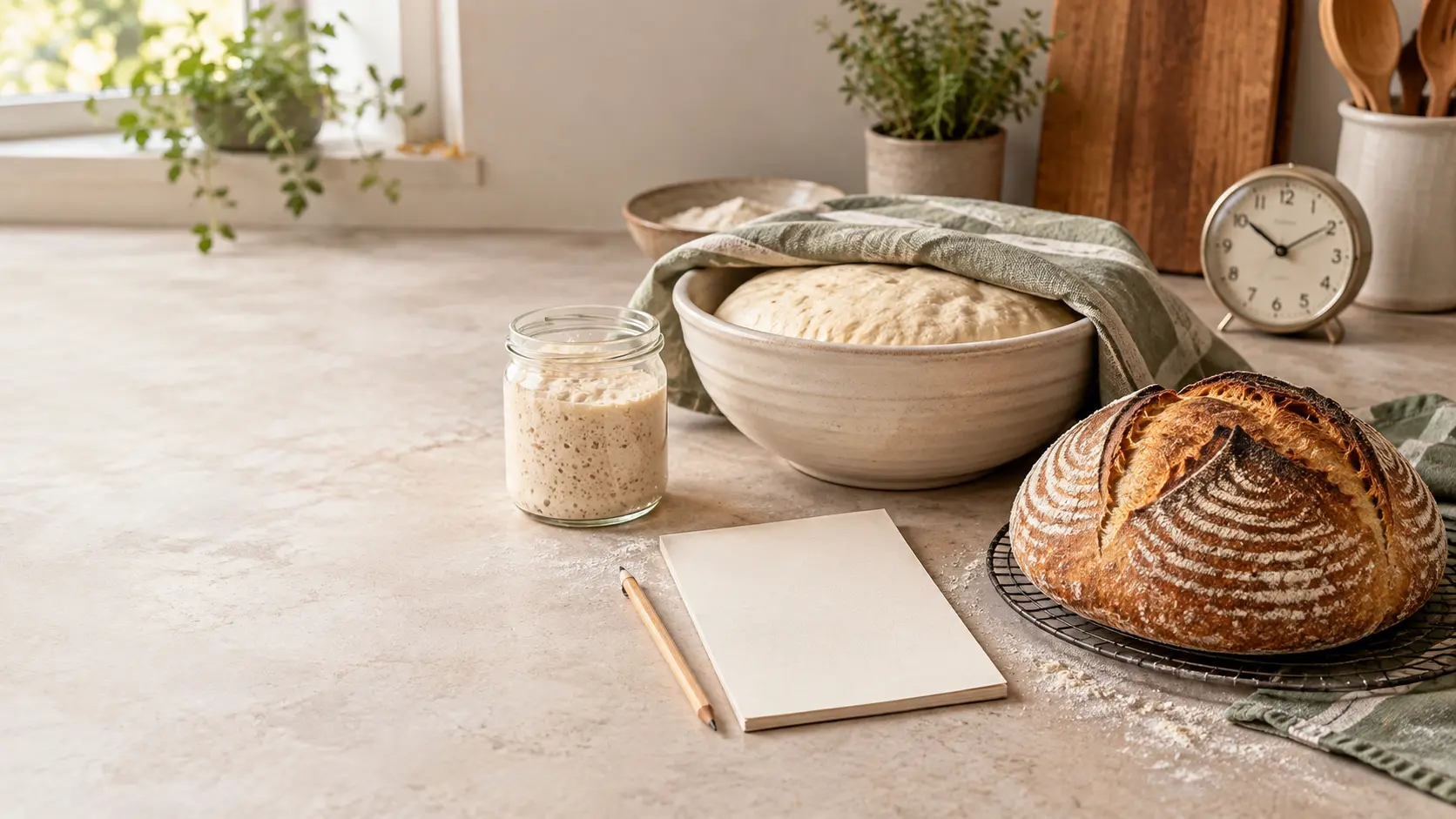
Put the dough in a lightly oiled bowl and cover. Leave for about 60–90 minutes at 24–26°C, until nearly doubled. Keep the surface covered so a dry skin does not form. The dough is noticeably larger, aerated and gently domed; time alone is not the deciding factor.
Roll and place in the tin
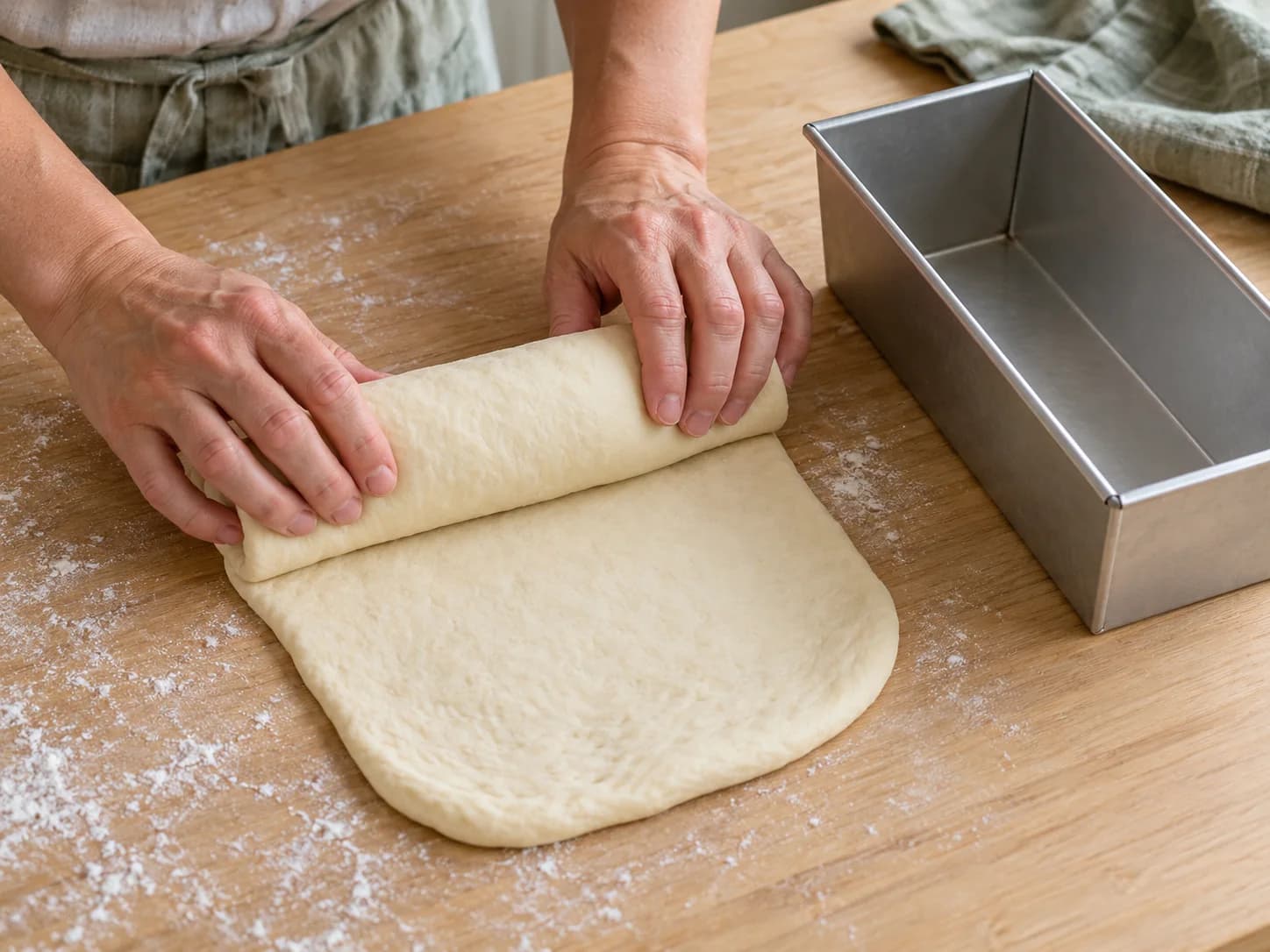
Lightly grease the tin with olive oil; add a strip of baking parchment if the tin tends to stick. Press out large air bubbles. Pat the dough into a rectangle slightly narrower than the length of the tin. Roll up snugly without stretching and pinch the seam closed. Place seam-side down in the tin. The log has a smooth top and is about 1–2 cm shorter than the tin's inside length.
Roll evenly, pinch the seam closed and place it seam-side down in the tin.
Give it a full final proof
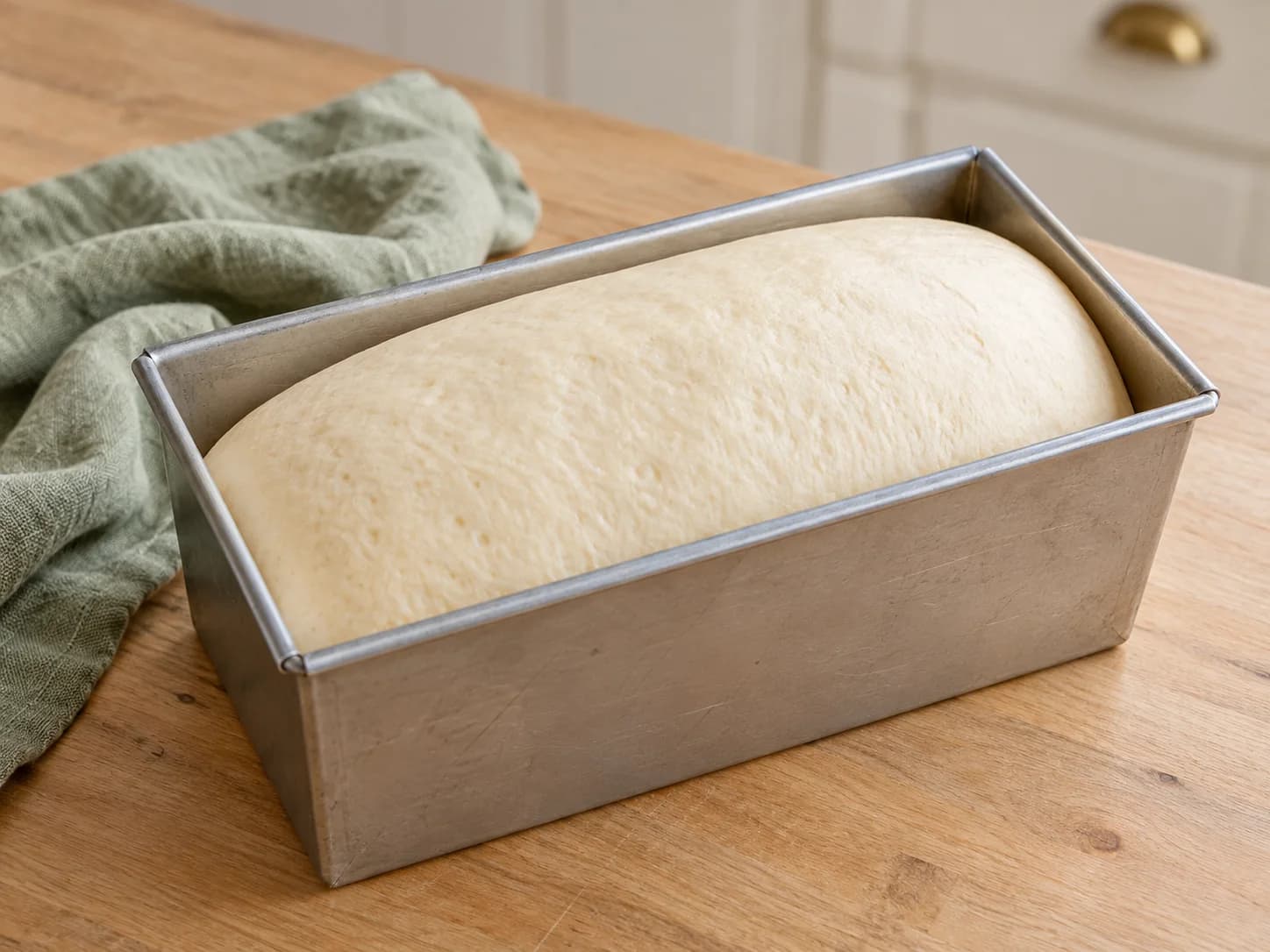
Cover loosely and proof for about 45–75 minutes. In the suggested tin, the crown should come to roughly 1 cm below the rim. Meanwhile, preheat the oven to 190°C conventional or 170°C fan. A light press with a floured finger springs back slowly and partway. An immediate spring-back means the dough needs a little longer.
In the suggested tin, the crown reaches about 1 cm below the rim. Check how it springs back, too.
Bake until golden
Bake on a rack just below the middle of the oven for 35–40 minutes until golden brown. Loosely cover the top with foil if it has enough colour after about 25 minutes. If using a thermometer, aim for about 94–96°C in the centre. The sides are set and the crust is evenly golden; a pale, soft-sided loaf needs longer.
Cool before slicing
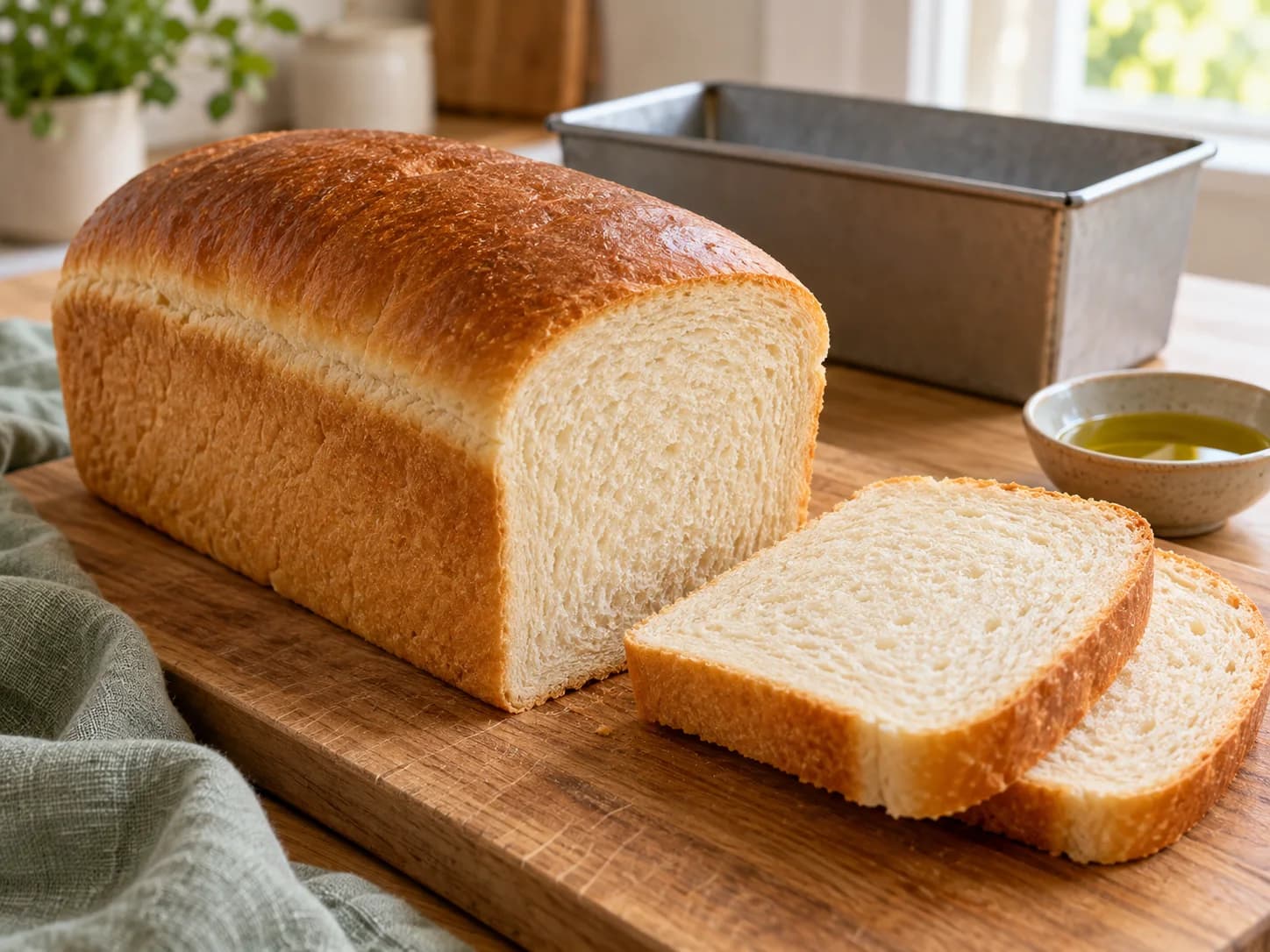
Leave in the tin for 5 minutes, then turn out onto a wire rack. Cool completely for at least 2 hours before slicing. Keep the cooled loaf well wrapped and freeze some in slices if you will not use it soon. The middle is no longer warm, so cutting will not compress the soft crumb.
Cool the loaf completely before slicing so the soft crumb is not compressed.
If things turn out differently
The loaf is low and dense
Check that the dough was kneaded sufficiently and both rises were complete. At 20°C it takes longer than the times given. Adding too much flour while kneading can also dry out the crumb.
There is a tunnel beneath the crust
Press out large bubbles before shaping and roll the dough evenly. Loose layers and excess flour between them can leave a gap.
The loaf splits along the side
The final proof was often too short, or the surface dried out. Keep it covered and check how a light finger press springs back before baking.
The crumb is gummy when sliced
Let the loaf cool completely. If it is still gummy, check the centre temperature on the next bake and allow more baking time.
Before you begin
Can I use fresh yeast?
Yes. Replace the roughly 5 g of instant yeast with about 15 g of fresh yeast, crumbled into the water. The same signs of readiness apply, though the timing may change slightly.
Can I replace all the flour with wholemeal?
Not with the same amount of water. Wholemeal absorbs more water and produces a different crumb. You could start with 20% wholemeal and add a little water only if the dough feels too firm.
Is 850 g the baked loaf weight?
No. It is the combined weight of the ingredients before baking. Water evaporates in the oven, so the cooled loaf weighs less.
How do I adjust it to my tin?
Use the pan calculator with the inside dimensions and classic setting. Open the result in the main calculator, which uses this recipe's bread formula. A smaller loaf may also need a shorter bake.