British Easter baking
Hot Cross Buns
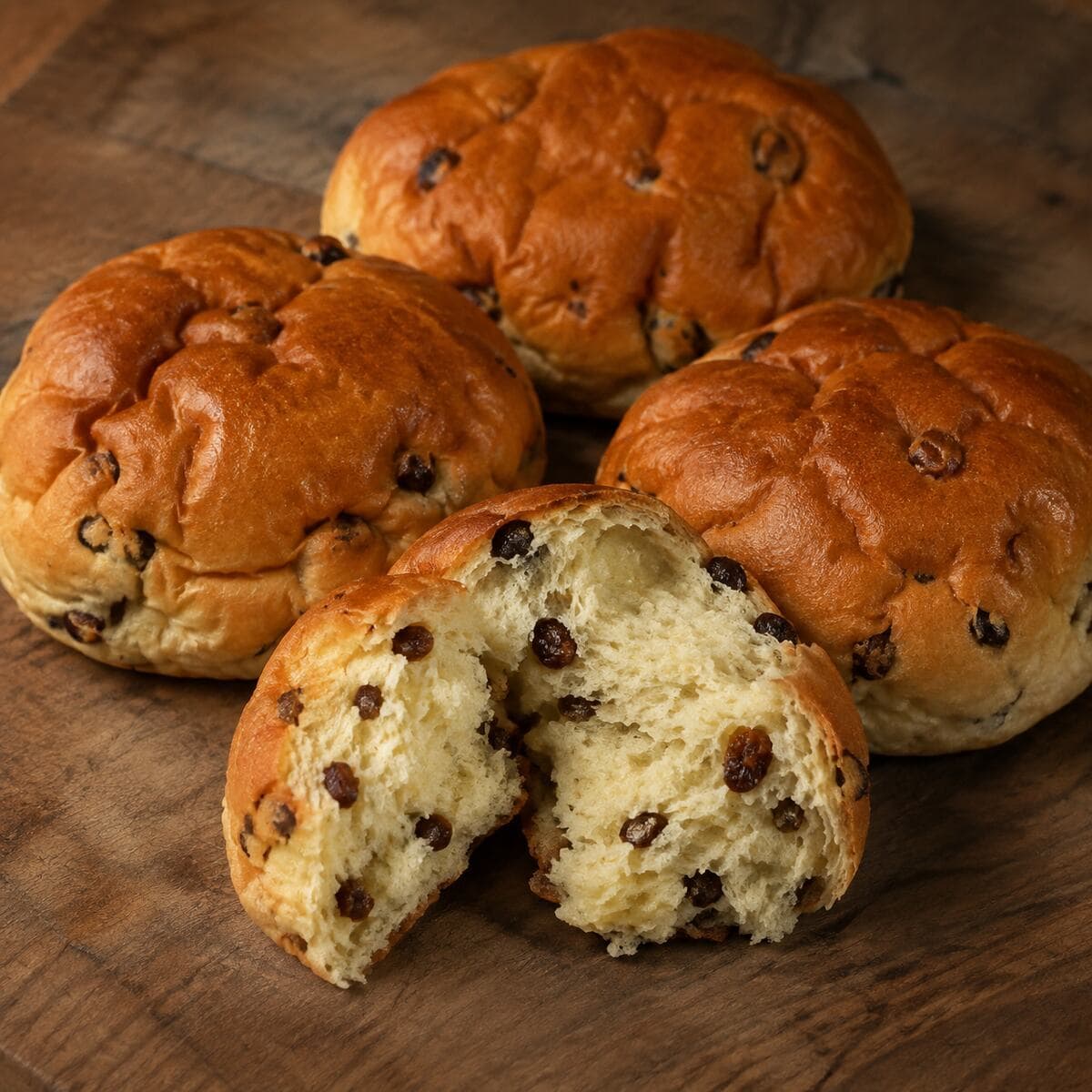
Soft, warmly spiced, fruity and glossed from the oven.
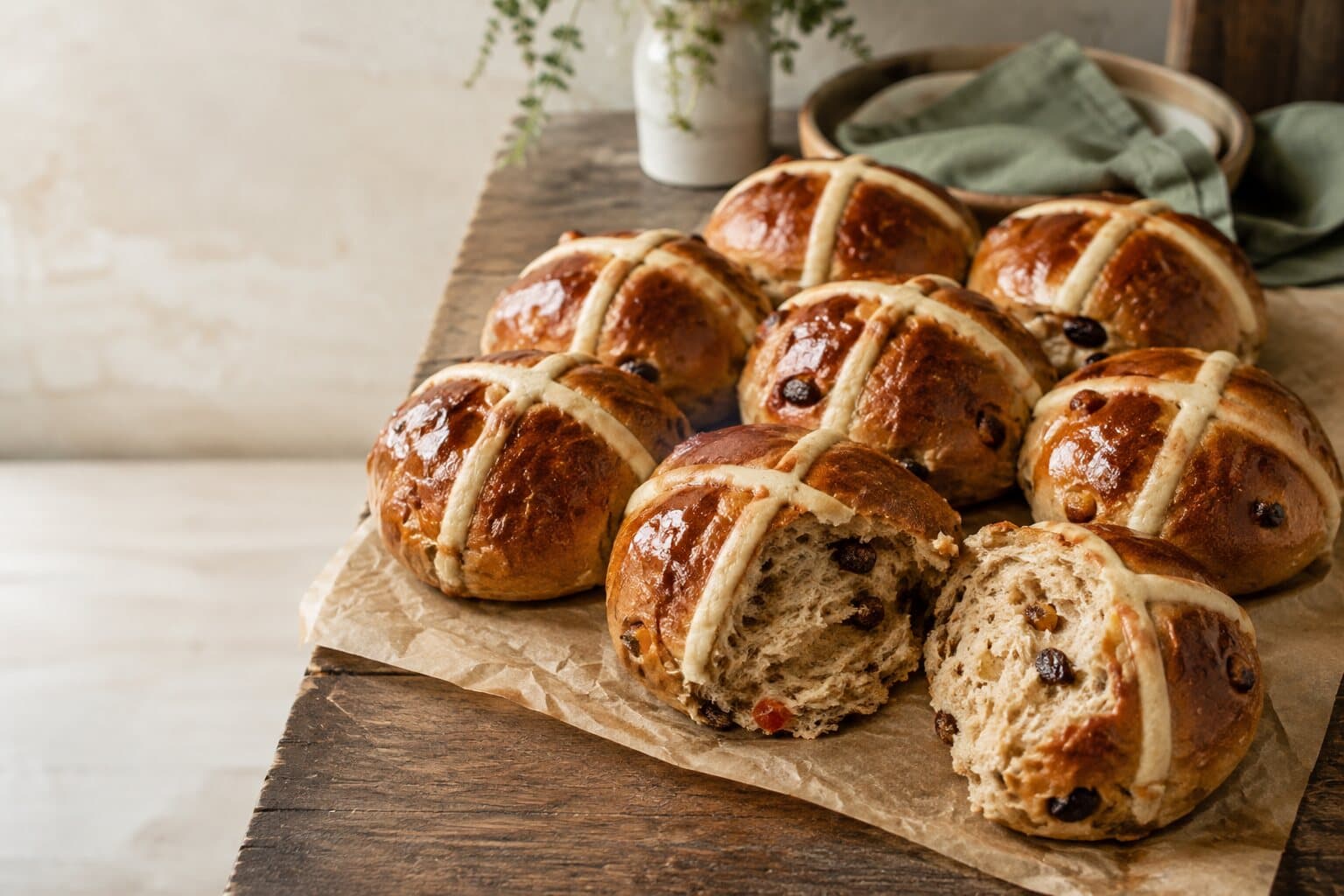
Soft British yeast buns with warm spice, raisins, sultanas and candied citrus. The flour-paste cross bakes with the bun; a thin sugar syrup adds the familiar shine after baking.
The formula
Twelve classic Hot Cross Buns
Starting point: 12 buns of about 100 g including cross and glaze. Divide roughly 90 g of fruited dough per bun; discarded fruit-soaking liquid is not included.Active preparation: about 40 min · Baking: about 18–22 min. Soaking and proofing take additional time.
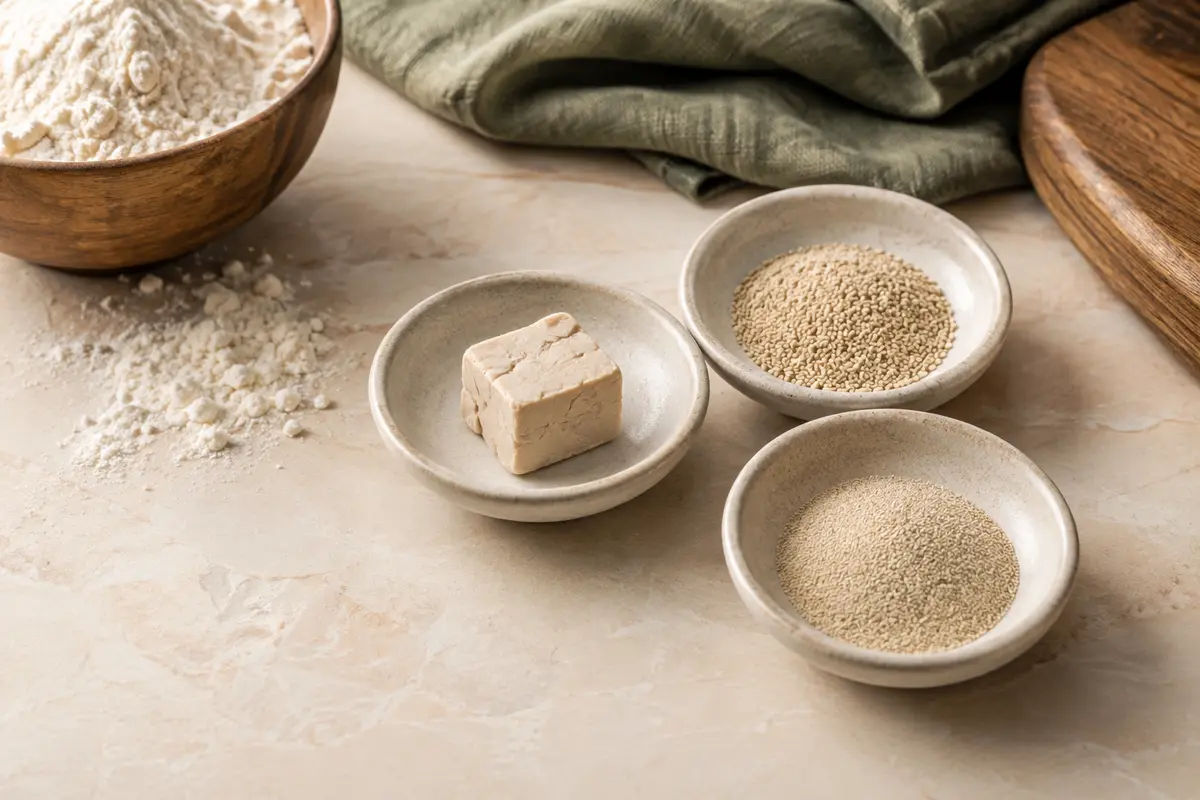
- Strong bread flour for the dough
- 100%440 g
- Whole milk
- 60%264 g
- Salt
- 1.6%7 g
- Instant yeast
- 1.4%6.2 g
- Butter
- 10%44 g
- Sugar in the dough
- 14%62 g
- Egg, fruit & finishing
- 85.5%377 g
Weights are rounded for weighing; their sum may differ slightly from the calculated total. Small additions stay in grams.
Egg, fruit, spice, crosses and glaze
This second strip divides everything outside the six base lines. The fruit, piping paste and sugar syrup therefore scale with the dough.- Whole egg
- 11.7%44 g
- Sultanas
- 29.2%110 g
- Raisins
- 14%53 g
- Candied citrus peel
- 9.4%35 g
- Mixed spice
- 1.8%6.8 g
- Finely grated orange zest
- 1.2%4.5 g
- Flour for the crosses
- 11.7%44 g
- Water for the crosses
- 11.7%44 g
- Sugar for the glaze
- 4.7%17.7 g
- Water for the glaze
- 4.6%17.2 g
Weights are rounded for weighing; their sum may differ slightly from the calculated total. Small additions stay in grams.
A tender crumb, plenty of fruit and a thin baked cross
Milk and egg keep the bread tender. The fruit is generous without becoming too heavy for the dough to rise; the syrup coating stays deliberately light.Whole milk
Enough liquid for a soft, slightly tacky dough that gains strength as it is kneaded.
Dried fruit
Sultanas, raisins and citrus peel put fruit in every bite without compressing the crumb.
Dough per bun
Piping paste and glaze are added separately, bringing each complete bun close to 100 grams.
Oven
Hot enough for color, restrained enough to protect exposed pieces of fruit.
What defines a Hot Cross Bun — and what we actually know
A Hot Cross Bun is enriched yeast bread, but not heavy brioche. Milk, egg and butter tenderise the crumb; mixed spice and orange balance warmth with freshness. The fruit is folded in only after the dough has developed enough gluten strength.
In the classic British finish, a paste of flour and water is piped on after proofing and before baking. Its matte cross bakes into the crust. The thin sugar syrup is brushed on immediately after baking, adding shine without turning the bun into iced pastry.
In Britain, the buns are closely associated with Good Friday, and the cross is understood within that Easter tradition as a reference to the Crucifixion. A familiar origin story links a medieval monk and the so-called Alban Bun in St Albans; still earlier stories also circulate. The exact inventor and starting date are not conclusively documented.
Build a strong dough, add the fruit, then finish with cross and glaze
Judge the dough and its proof, not just the minutes. Enriched dough tends to move more slowly than a lean white loaf.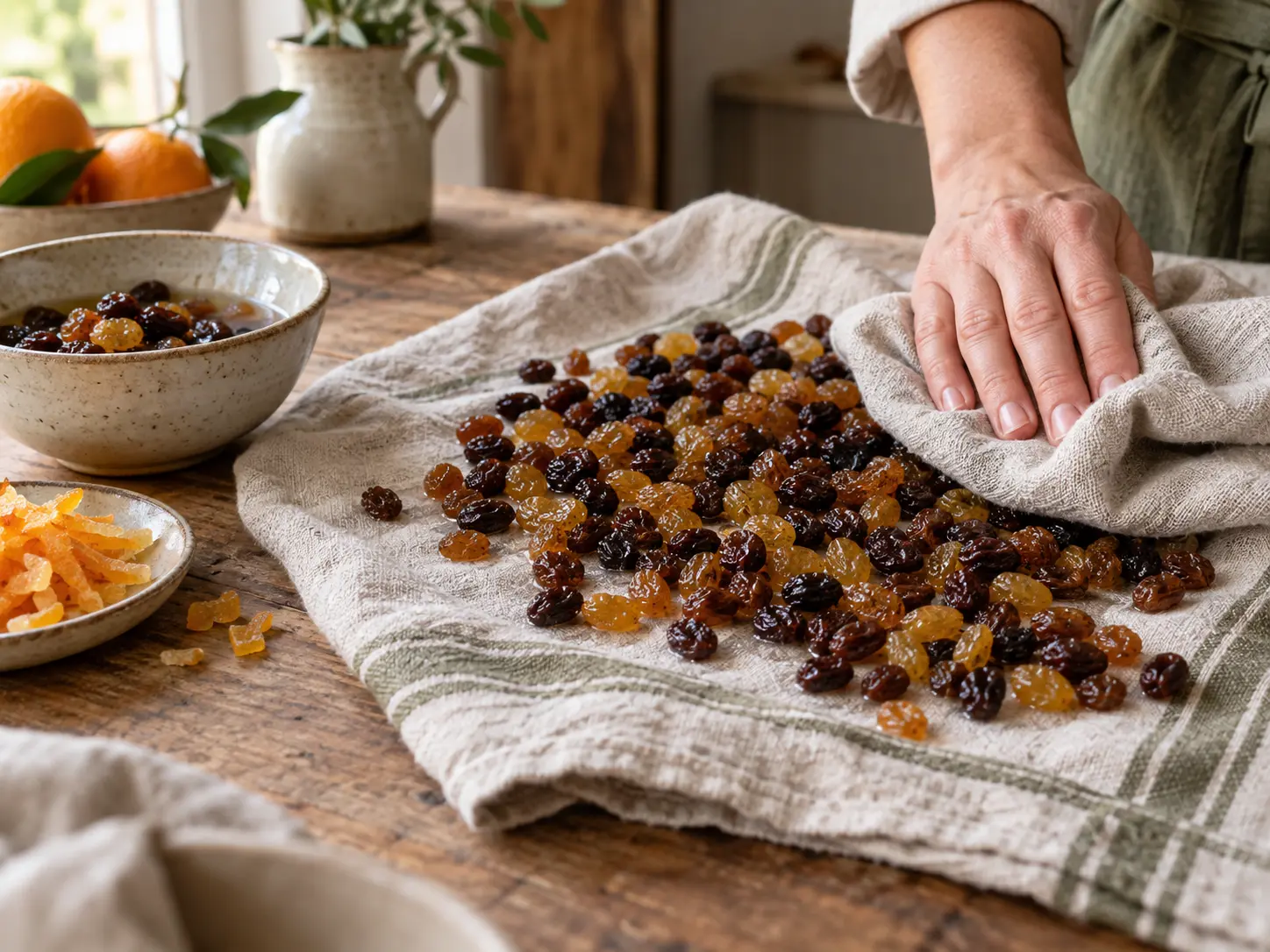
Soak and dry the fruit
Cover the sultanas and raisins with hot water or tea and leave for 15 minutes. Drain and pat very dry. This discarded soaking liquid is not part of the calculated formula.
Dry the surface well so the dough accepts the fruit without turning pasty.
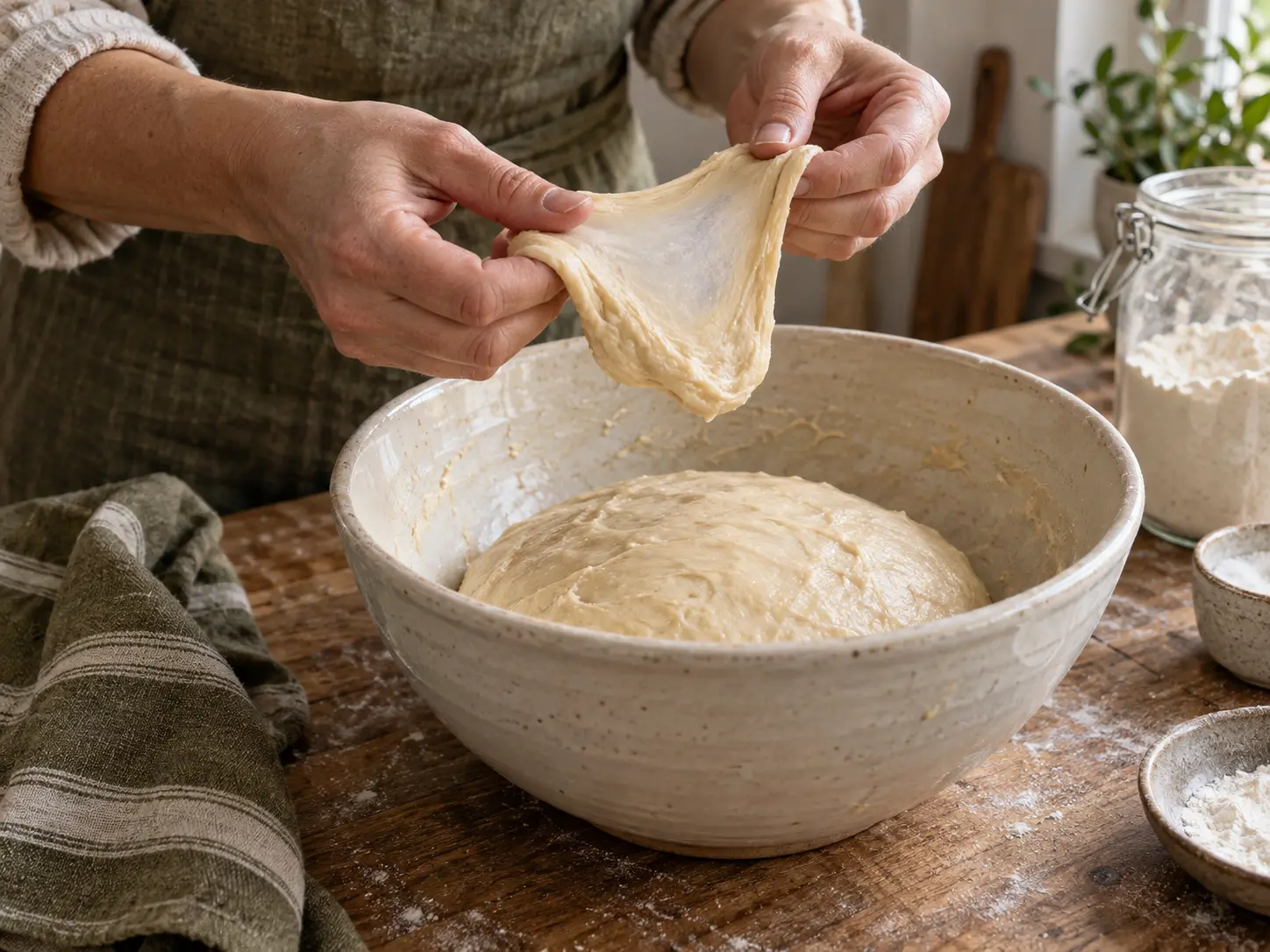
Knead the base dough
Mix the calculated dough flour, milk, whole egg, yeast and dough sugar. Add the salt, knead until the dough has clear structure, then work in the soft butter gradually.
Add the fruit only once the dough stretches this thin without tearing immediately.
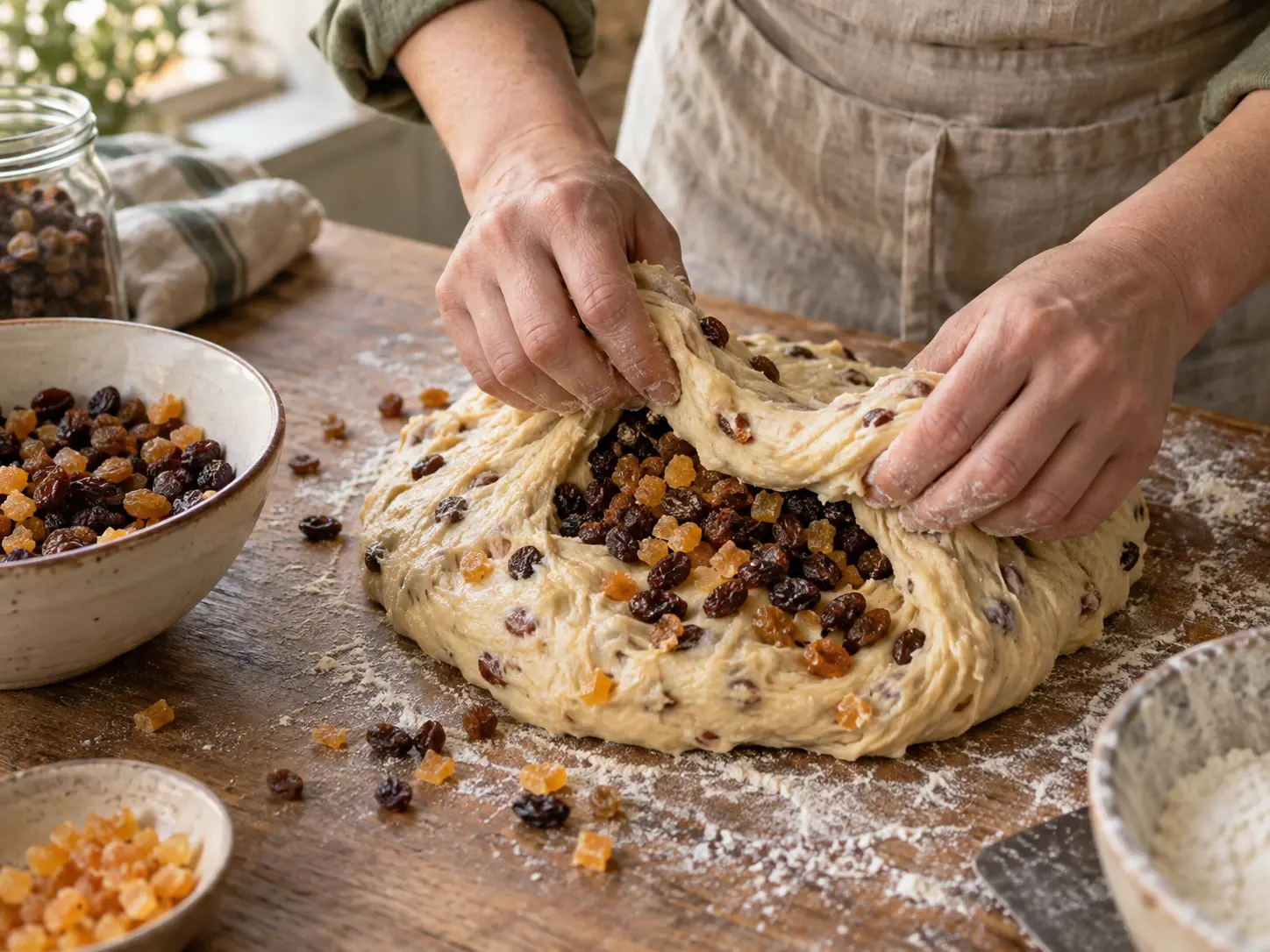
Add flavor and fruit
Briefly knead in the mixed spice and orange zest. Add the dried sultanas, raisins and citrus peel on low speed. Stop as soon as they are reasonably even and still intact.
Work gently and stop as soon as the fruit is reasonably evenly distributed.
Let the dough rise
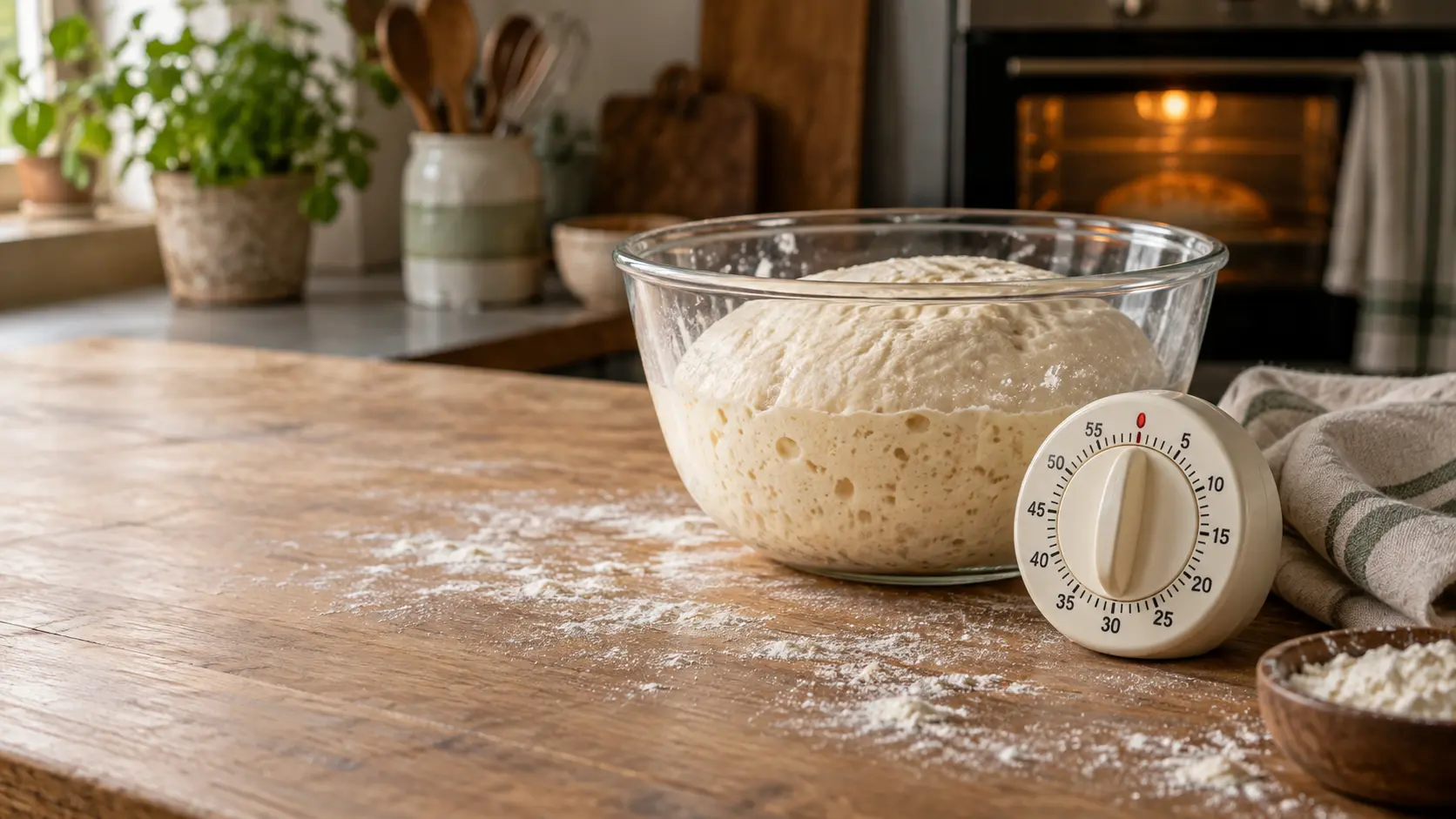
Cover and leave until about 60–75% larger, light and springy. At a comfortable room temperature this may take 60–90 minutes; a cool or fruit-heavy dough needs longer.
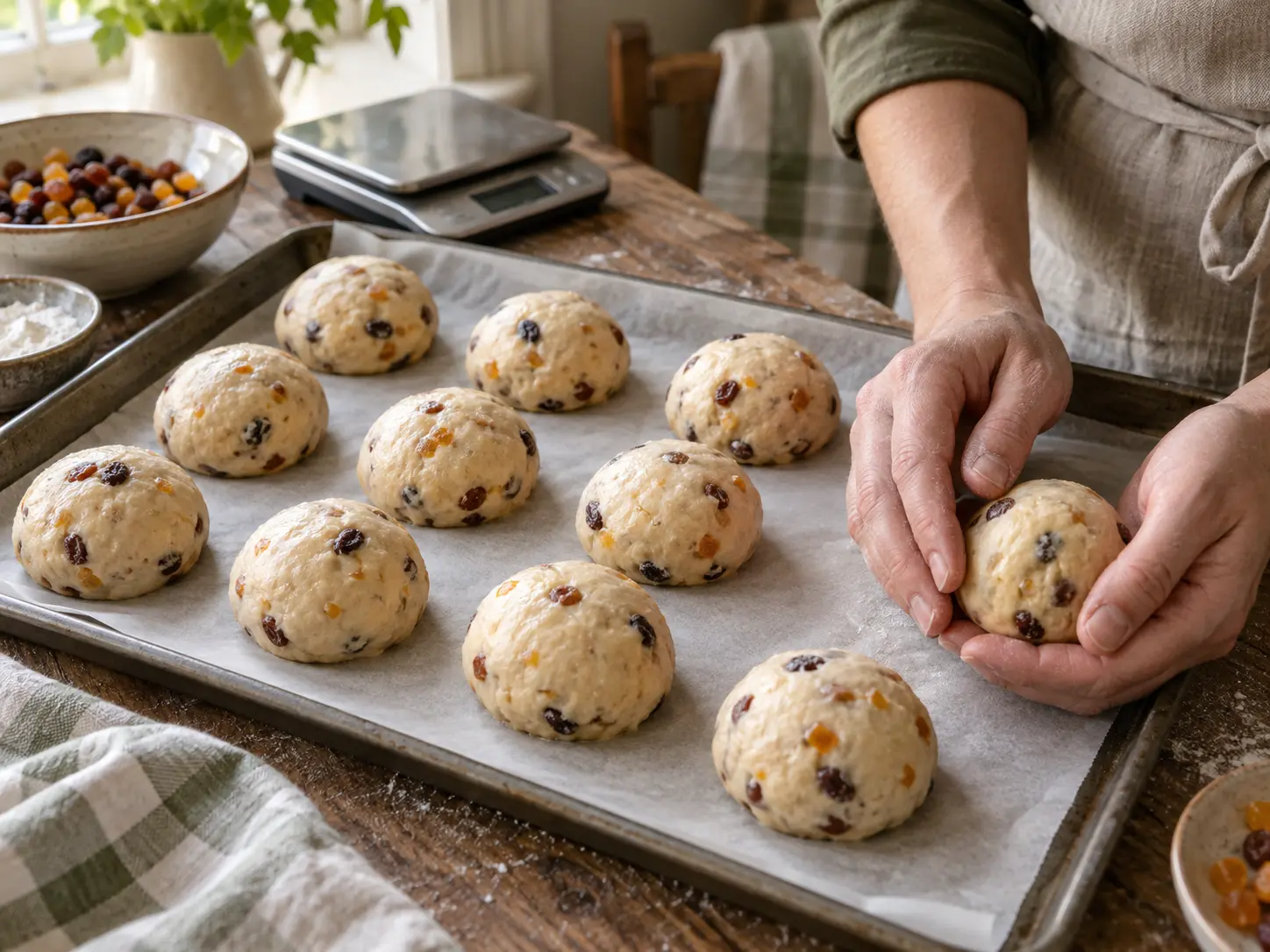
Divide and round firmly
Weigh only the complete fruited dough, keeping cross paste and glaze separate. Divide into twelve equal pieces — about 90 grams / 3.2 oz in the starting formula — and round each firmly. Arrange in three rows of four with small gaps on baking paper.
Weigh only the fruited dough and tighten the surface without letting exposed raisins tear it.
Proof until almost touching
Cover and proof for 45–75 minutes, until the buns feel light, nearly meet and a gentle fingertip impression returns slowly.
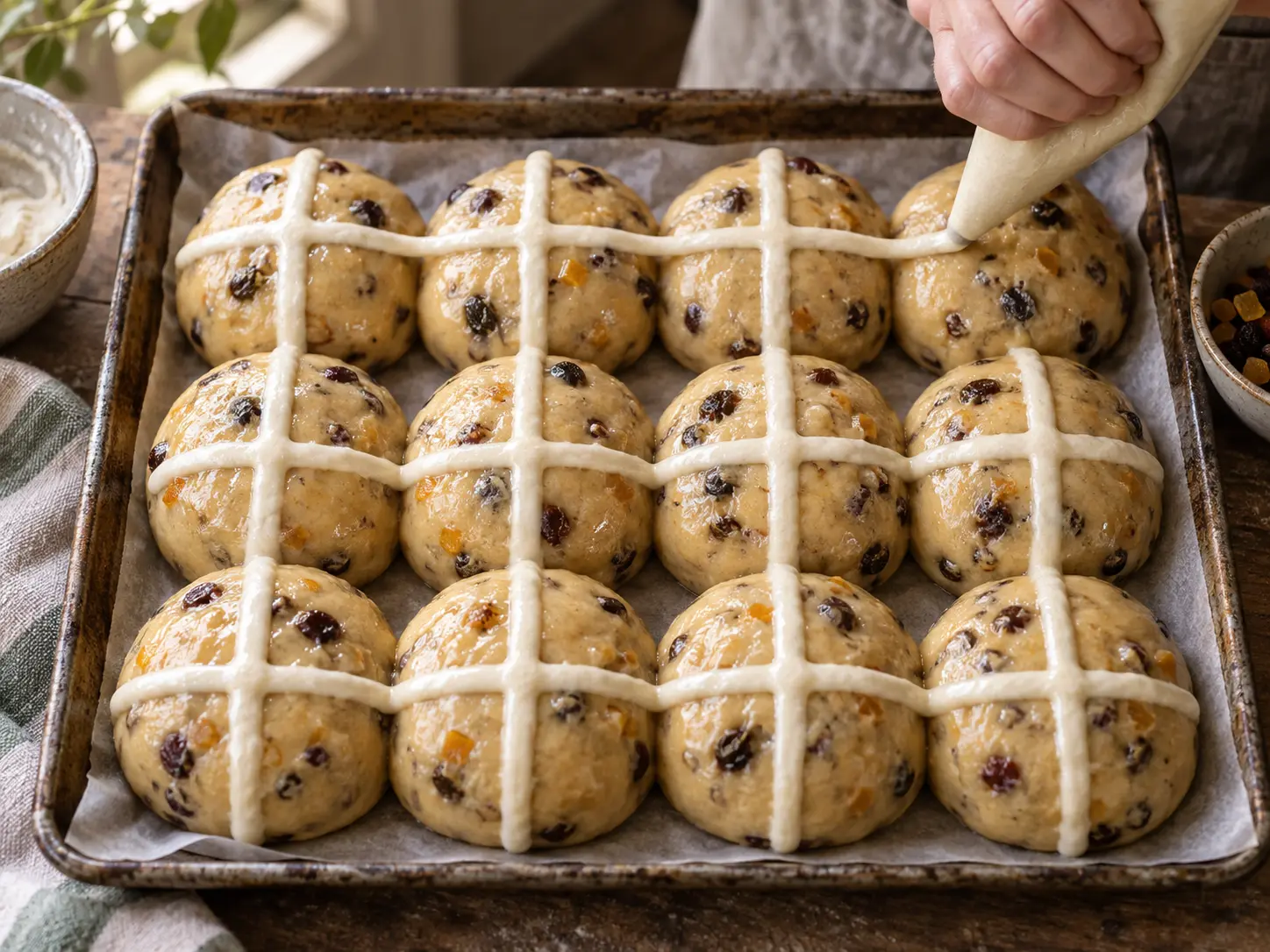
Pipe the crosses
Stir the calculated cross flour and water into a smooth, thick but pipeable paste. Through a 4–5 millimetre opening, pipe long straight lines over every row and then across the columns.
Pipe continuously across each row to keep the crosses straight and even.
Bake and glaze
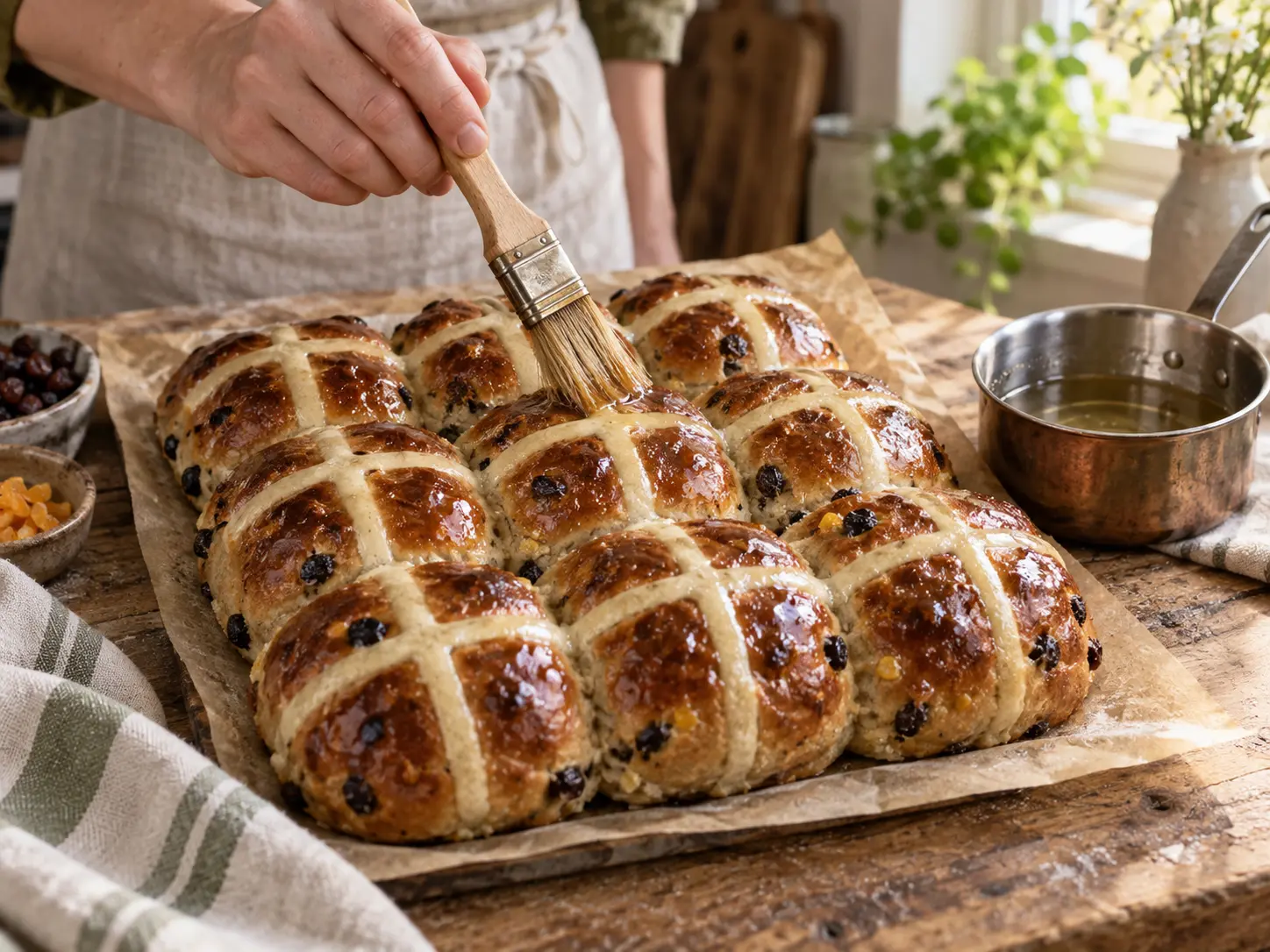
Bake for 18–22 minutes at 200°C conventional or 180°C fan, until deeply golden. Meanwhile heat the calculated glaze sugar and water until dissolved. Brush the syrup thinly over the buns as soon as they leave the oven.
A thin coat on hot buns adds shine without creating a sticky crust.
Problems with dough, fruit or crosses
The buns remain dense
Do not add flour just to make the dough dry, and extend the final proof. Milk, egg, butter and fruit all slow the yeast.
Fruit falls out or burns
Dry soaked fruit thoroughly, add it only at the end and tuck exposed raisins underneath while rounding the buns.
The crosses spread or disappear
Make the paste about as thick as toothpaste and apply it only after the full proof. A watery paste sinks into the dough.
The buns become dry
Start checking at 18 minutes rather than baking by color alone. Remove as soon as they are done and apply the thin syrup while still hot.
Frequently asked questions
What is British mixed spice?
It is a warm baking blend. Try 4 parts cinnamon, 2 parts allspice, 1 part nutmeg and 1 part ginger, plus a very small pinch of cloves.
Can I omit the candied citrus peel?
Yes. Replace it gram for gram with extra sultanas or raisins. The orange zest will still keep a fresh citrus note in the dough.
Can the dough chill overnight?
Yes. Reduce the instant yeast to about 0.7%, let the mixed dough start for 20–30 minutes, then refrigerate it well covered. Divide and shape the following day.
Why not make the cross with white icing?
A baked flour-and-water paste is the classic British approach. An icing cross is added after baking, tastes much sweeter and produces a different bun.
Can I freeze Hot Cross Buns?
Yes. Freeze them completely cool and airtight. Thaw, refresh for 5–7 minutes at 170°C and add a whisper-thin new coat of syrup if you want the shine back.