I want to fill a pan
Enough dough for your pan, without guessing.
Enter the inside dimensions of your pan and choose the dough style. You get a target weight and a useful range.
Useful for loaf tins, Pullman pans and round bread forms.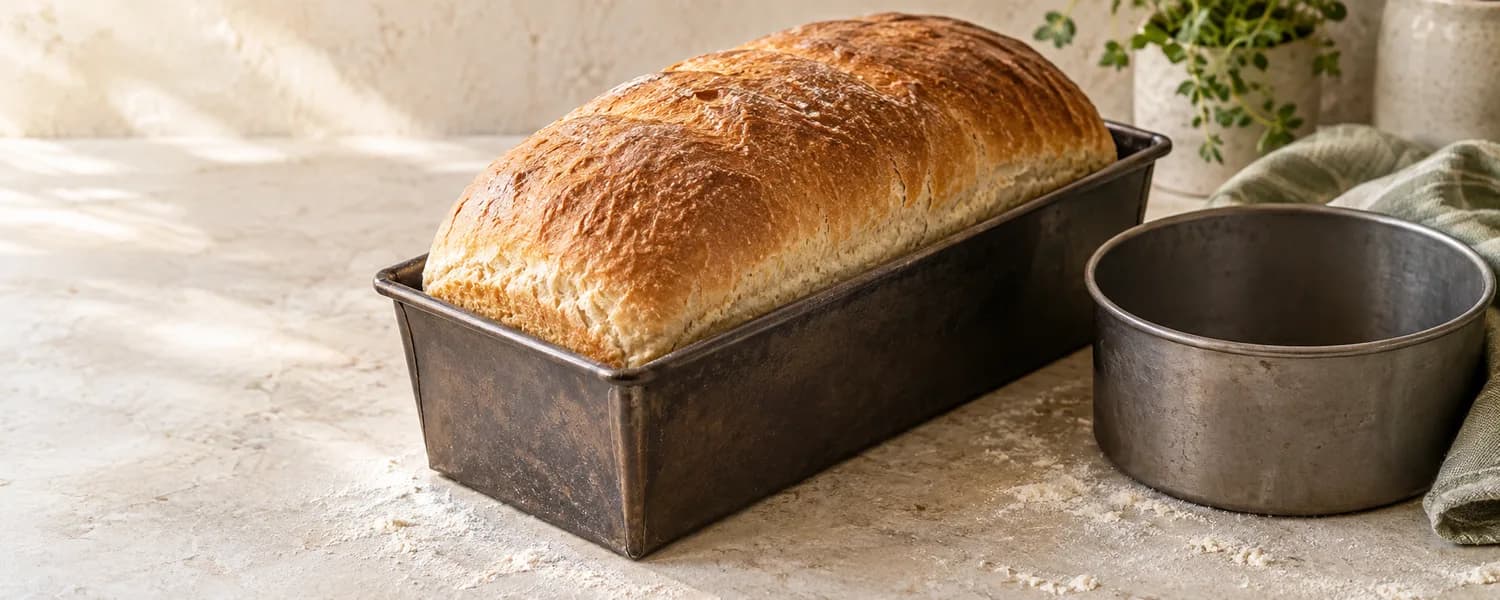
Your baking pan
Measure the inside of the pan
Measure on the inside, excluding the rim and handles. Enter dimensions in the unit shown.
Try a pan
Example inside dimensions using the classic setting. Adjust them to your own pan.
Sloping sides? Measure length and width about halfway up. Volume remains an estimate. A proofing basket is not a baking pan; use its maker’s dough-weight guidance.
Fill factor
Pan volume is not the whole story. An airy dough needs less weight than a firmer dough.
Your target weight
This should fit well
Rounded to 5 grams: a starting point for your pan and recipe.
This is the weight of all your dough
Flour, water, salt, yeast or starter and any other ingredients all count. Weigh this amount before shaping and final proofing.
- Useful range
- 850 g–1,000 g
- Estimated pan volume
- 2,640 cm³
The range is deliberately not razor-sharp: recipe, proof and desired height all matter. Note what works best for your pan.
Turn it into a recipe
Use the recommended dough weight in the regular calculator to calculate all ingredients.
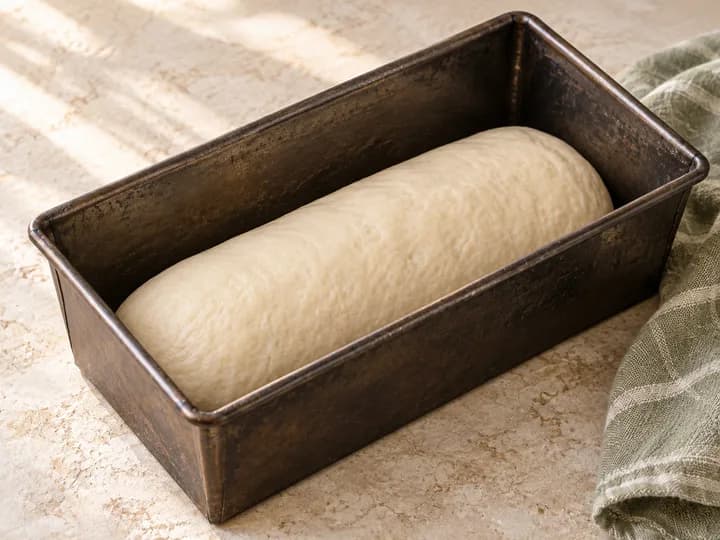
Leave room for the final rise
Place the shaped dough in the prepared pan and follow your recipe’s proofing instructions. The photo shows dough before final proofing; it is not a universal filling level.
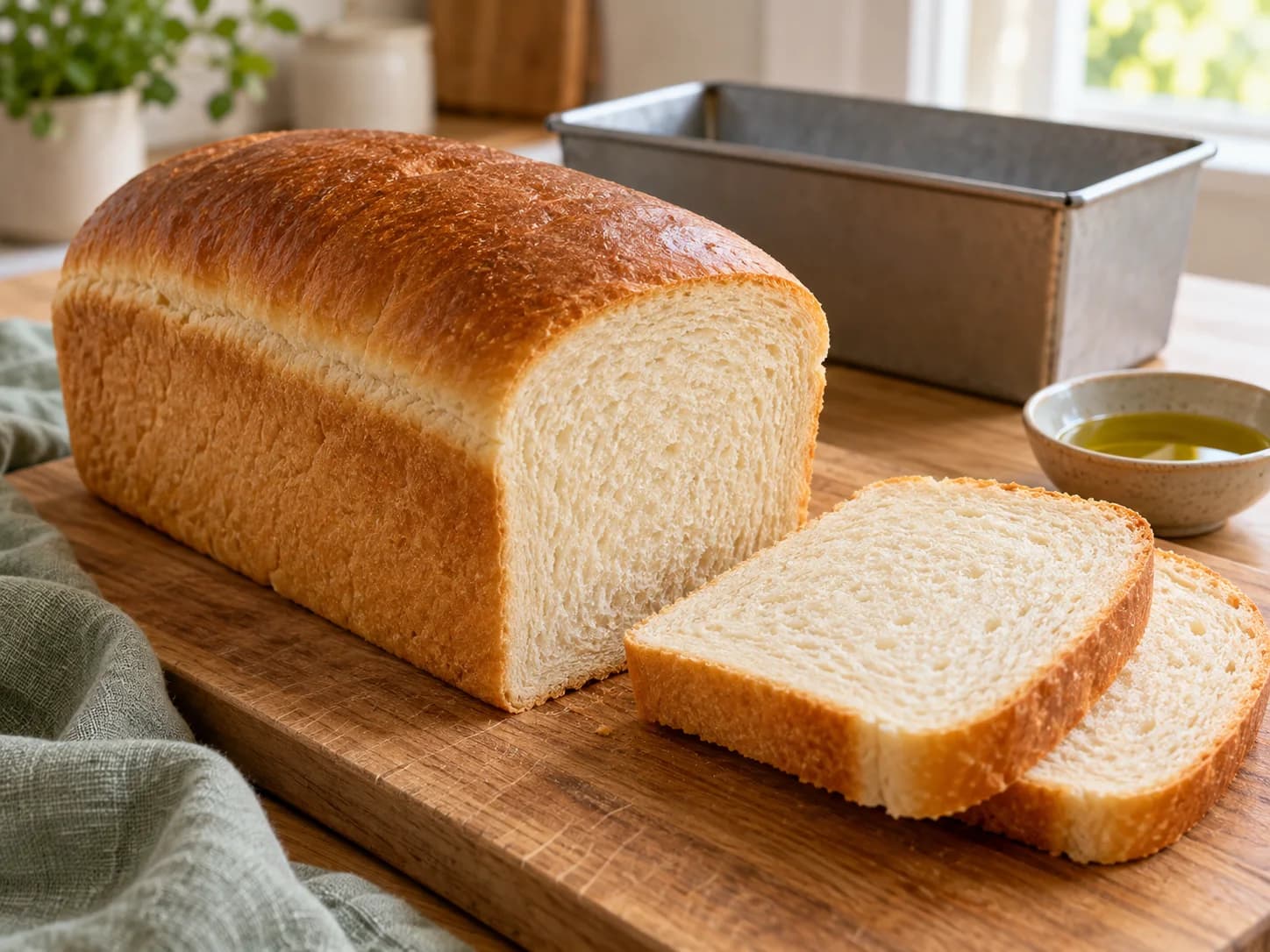
Make a sandwich loaf
A soft white loaf with olive oil, with ingredients and photos of shaping and final proofing.
View the recipeHow to read the result
Calculate dough weight from the pan's actual capacity
Length alone says little. This tool uses internal dimensions and a fill factor for airy, classic or firm bread.Worked example
Classic loaf in a 30 × 11 × 8 cm pan
The volume is 2,640 cm³. The classic fill factor of 0.35 g per cm³ converts that volume into dough.Result: about 925 g dough, with a small practical range.What it means
Pan volume times fill factor
An airy dough uses a lower factor; a firmer or denser loaf needs more dough in the same pan.Common mistake
Entering the pan's outside dimensions
Thick rims and sloping sides can distort volume. Measure the usable internal dimensions where possible.Use it for
Scale a recipe to another bread pan
Use it for rectangular and round pans when you need a target total dough weight.Not for this
Not for flat pizza or focaccia
Surface area matters more than pan volume there, so choose a pan-pizza or focaccia calculator.From calculation to bake