I want to feed my starter
Exactly enough active starter, without the excess.
Enter how much starter you want to use and how much levain your recipe needs. You immediately get the flour and water to add.
Works for stiff and liquid levains too.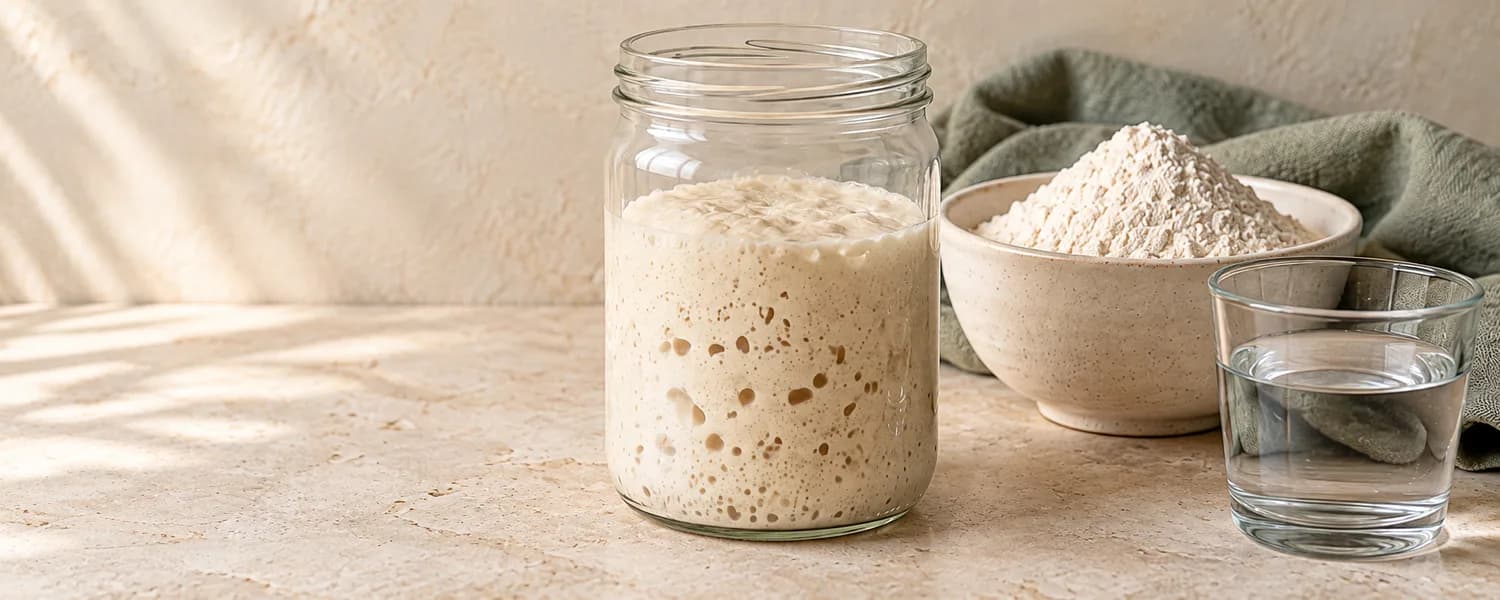
Your starting point
What do you have and what do you need?
Use an established starter that rises reliably after feeding. This tool feeds an existing starter; it does not create one from scratch.
Start with an example
The examples use 20 g starter at 100% hydration. Adjust the amounts to your own recipe afterwards.
100% means equal weights of flour and water.
Your feed
Mix these together
- You get
- 180 g
- Hydration
- 100%
- Feeding ratio
- 1 : 4 : 4starter : flour : water
The ratio is by weight: one part starter, followed by the parts of fresh flour and water to add. It does not tell you the ripening time.
Your starter is already counted
Your seed starter already contains 10 g flour and 10 g water. Both have been deducted from the additions.
- Total flour
- 90 g
- Total water
- 90 g
From freshly fed to ready for dough
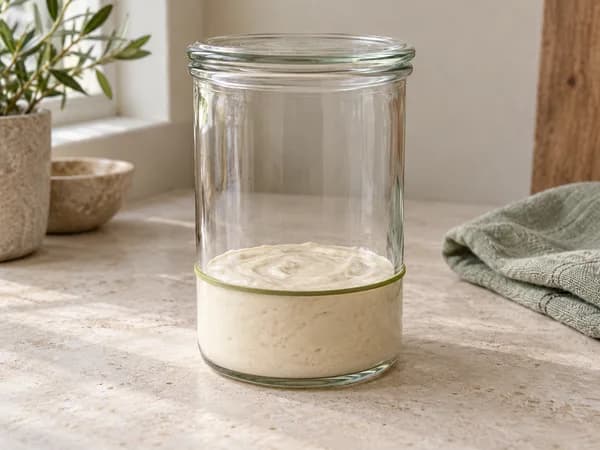
The photos show a liquid starter at 100% hydration. A stiff levain holds its shape more; look for growth and aeration there too.
Mix, mark and cover
Weigh the calculated amounts and mix until all the flour is moistened. Clean the jar walls and place a rubber band at the starting level. Cover loosely and leave plenty of room to rise.
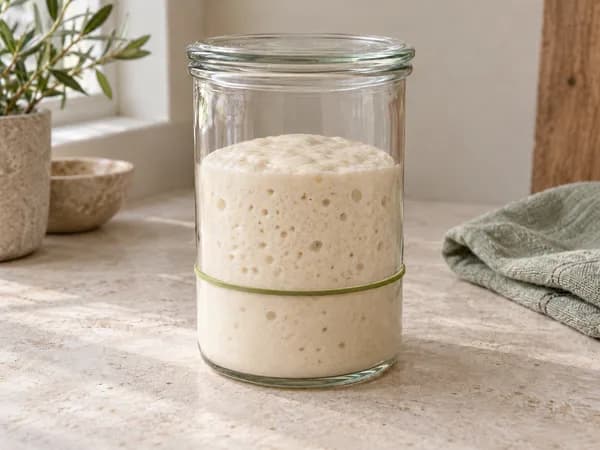
Look for growth and bubbles
Use the levain when clearly risen and aerated, at or near its peak. Track the rise; one photo cannot tell you whether it is still growing. Take the amount needed for your dough and keep your extra portion separately.
Watch the starter, not just the clock. Temperature, flour and activity determine how quickly it matures.
From calculation to bake