Starting formula
Pizza
Thin base. Airy rim. Enough dough.
A practical pizza foundation for three generous dough balls. You choose count and weight; the formula preserves every ratio.

The formula
Three generous pizzas
Starting point: three 270 g dough balls. Change count or ball weight for your oven and pizza style.Active preparation: about 25 min · Baking: about 30 min total for 3 pizzas. Same day: about 4–6 hours proofing; cold: 12–24 hours plus 2–3 hours at room temperature.
- Flour
- 100%482.9 g
- Water
- 65%314 g
- Salt
- 2.5%12.1 g
- Yeast
- 0.2%1 g
A base that stretches without instantly sticking
This hydration gives enough air and suppleness while staying practical in a domestic kitchen and home oven.Hydration
Supple and airy without becoming extremely wet.
Per ball
A generous pizza; reduce the weight for a smaller oven.
Salt
Clear flavor and a little extra dough strength.
Why pizza needs more than stretch
An airy rim appears when dough has retained enough gas and you push that gas outward while opening it. Hydration helps, but fermentation and gentle shaping make the real difference.
The yeast level is deliberately restrained. Warm dough can move quickly; cold dough needs far more time. Adjust yeast to your schedule and judge the balls by volume, softness and tension.
From dough ball to a rim full of air
These steps match the standard batch of three 270 g / 9.5 oz balls. For a same-day bake, allow about 5–7 hours from mixing to baking; a cooler kitchen takes longer.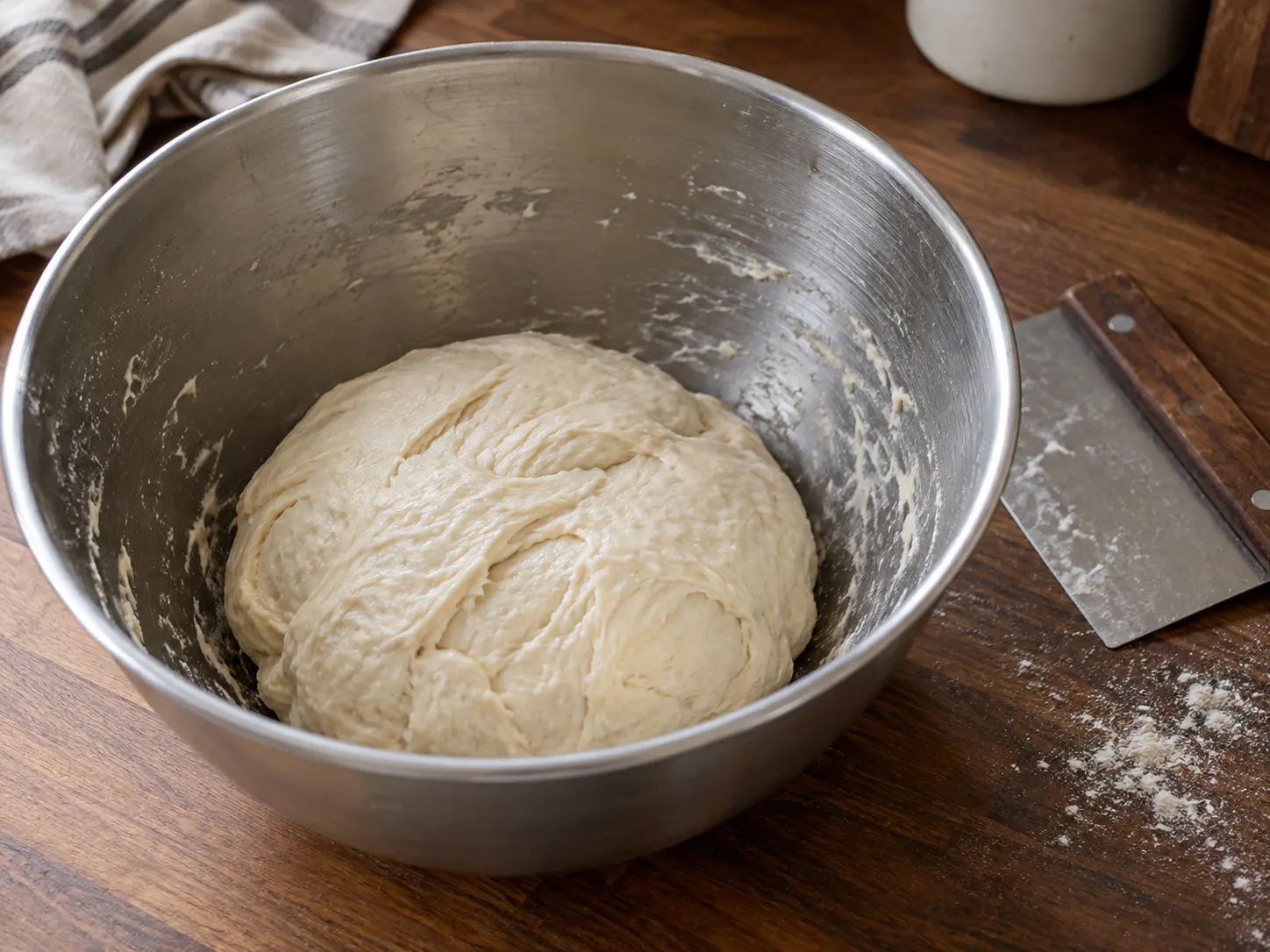
Mix
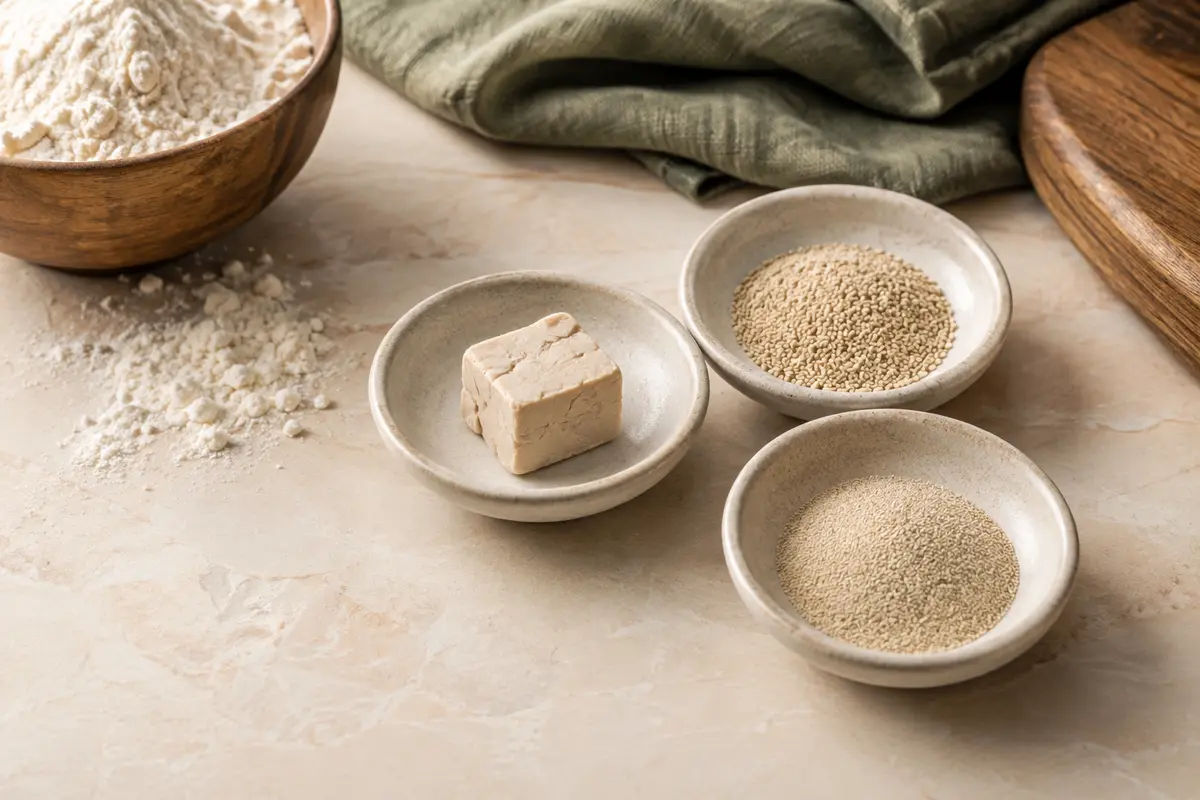
Use 483 g strong white or bread flour, 314 g cool water, 1.0 g instant yeast and 12.1 g salt. Stir the yeast into the water, add the flour and mix until no dry flour remains. Cover and rest for 20 minutes. Add the salt and knead for 5–7 minutes by machine or 8–10 minutes by hand, until smooth and elastic. Aim for a final dough temperature of 22–24 °C / 72–75 °F.
No dry flour remains; the dough does not need to be smooth yet.
Let it develop
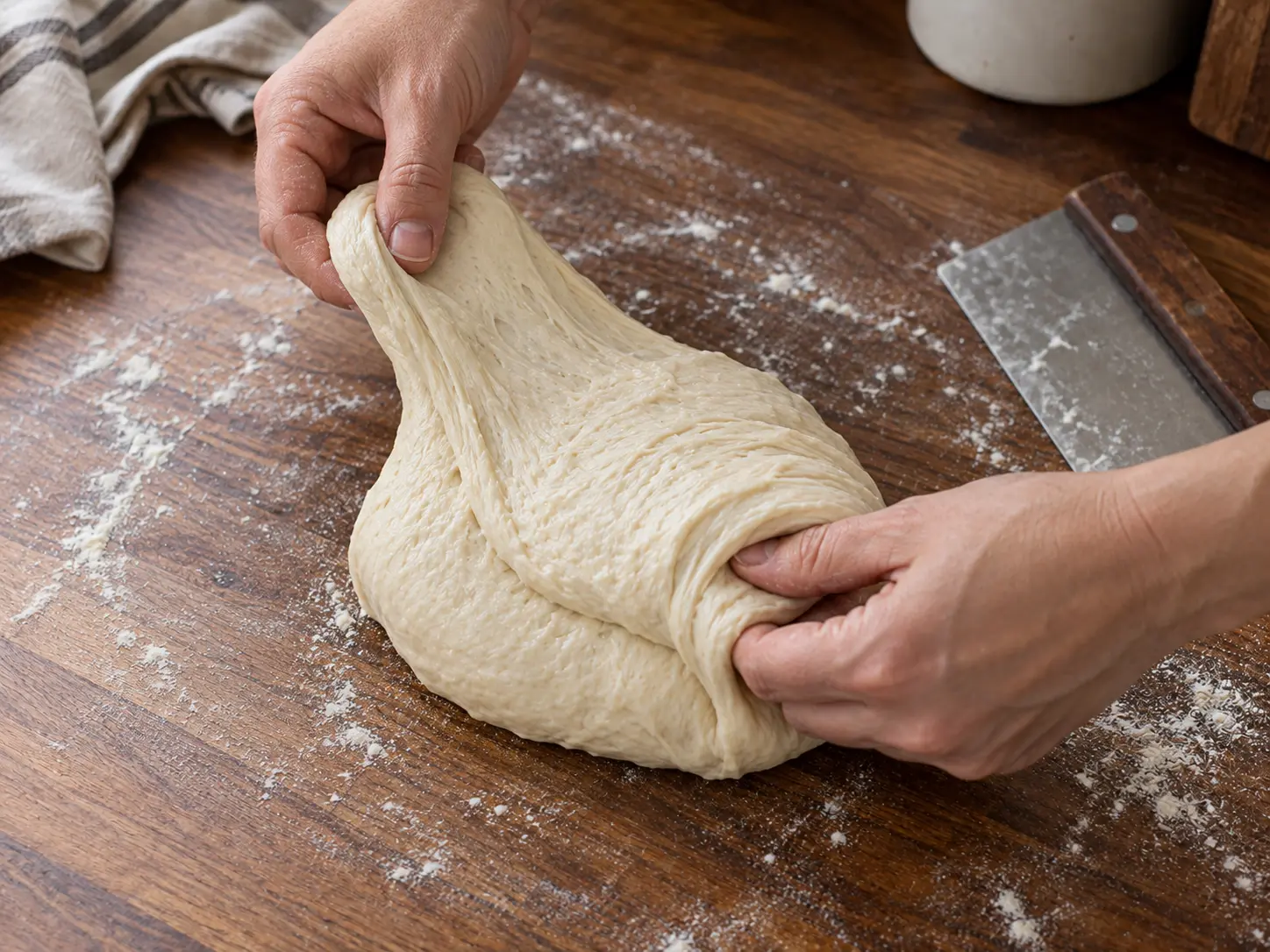
Place the dough in a lightly oiled bowl and cover. Leave for about 2 hours at 22–24 °C / 72–75 °F. Stretch and fold once all around after 30 and 60 minutes. Continue when it is about 50% larger, shows small bubbles and regains tension after folding.
The dough stretches without tearing and regains tension after the fold.
Divide and ball
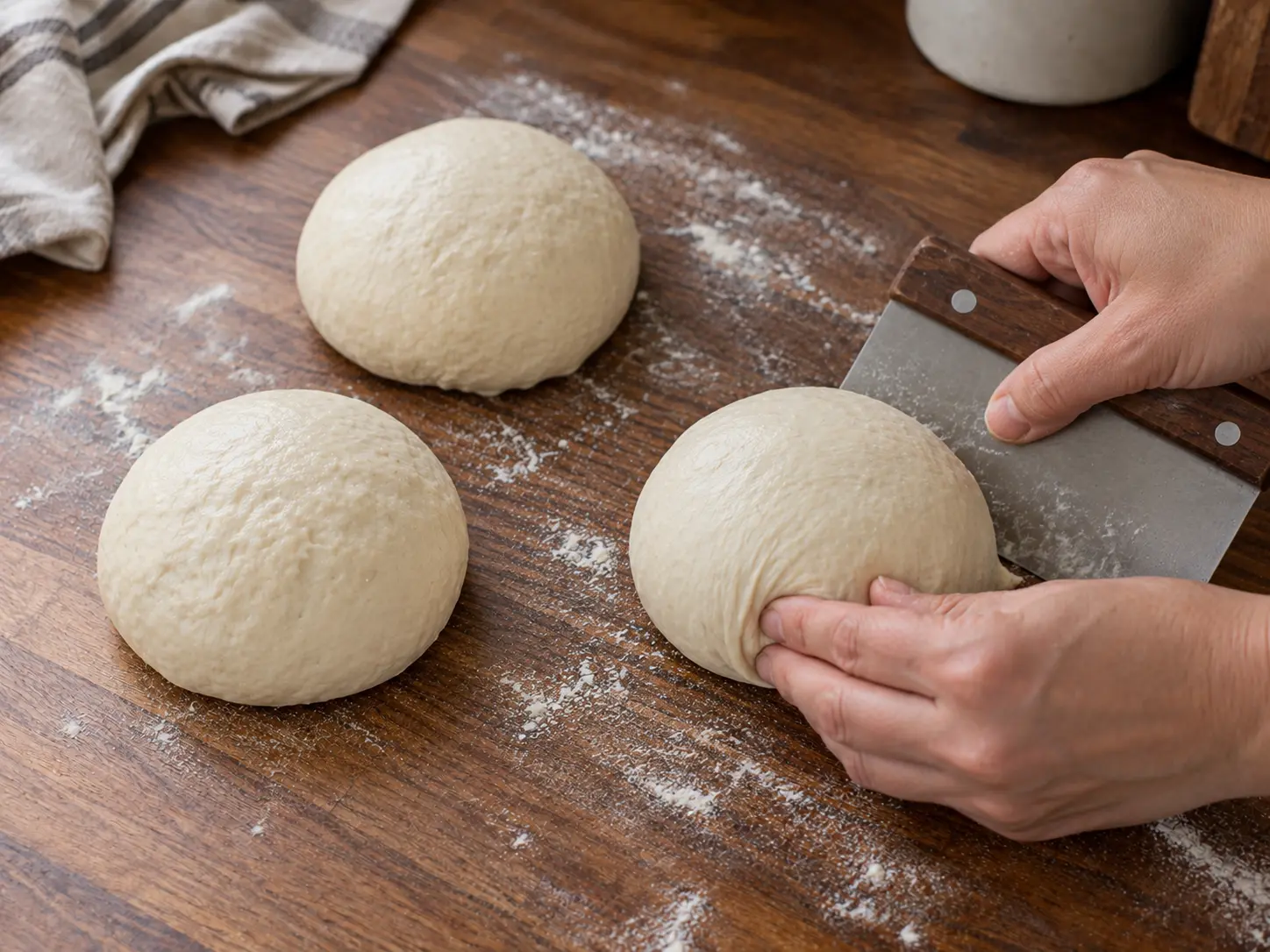
Divide into three 270 g / 9.5 oz pieces. Fold the edges underneath and drag each piece across an almost unfloured worktop to make a taut ball, seam-side down. If the surface tears or the dough springs back strongly, cover and rest for 10 minutes before finishing.
Tighten the surface without tearing the dough.
Let them relax
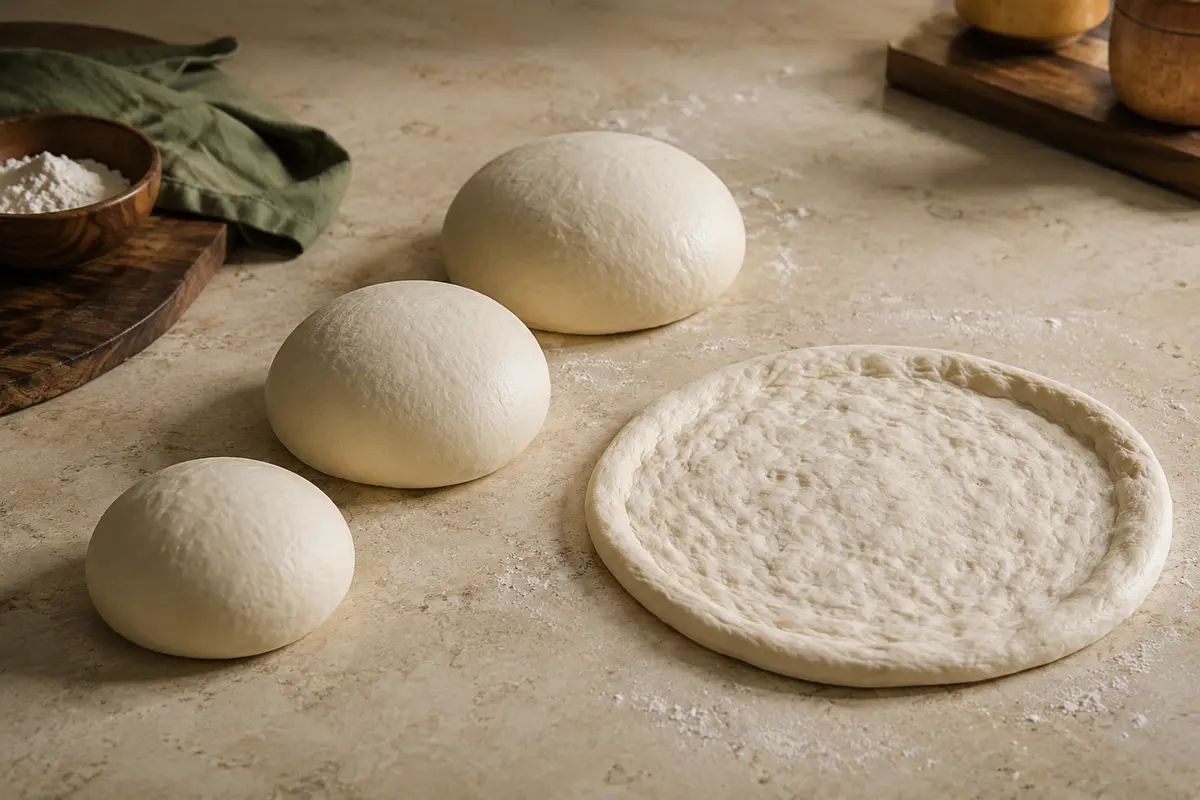
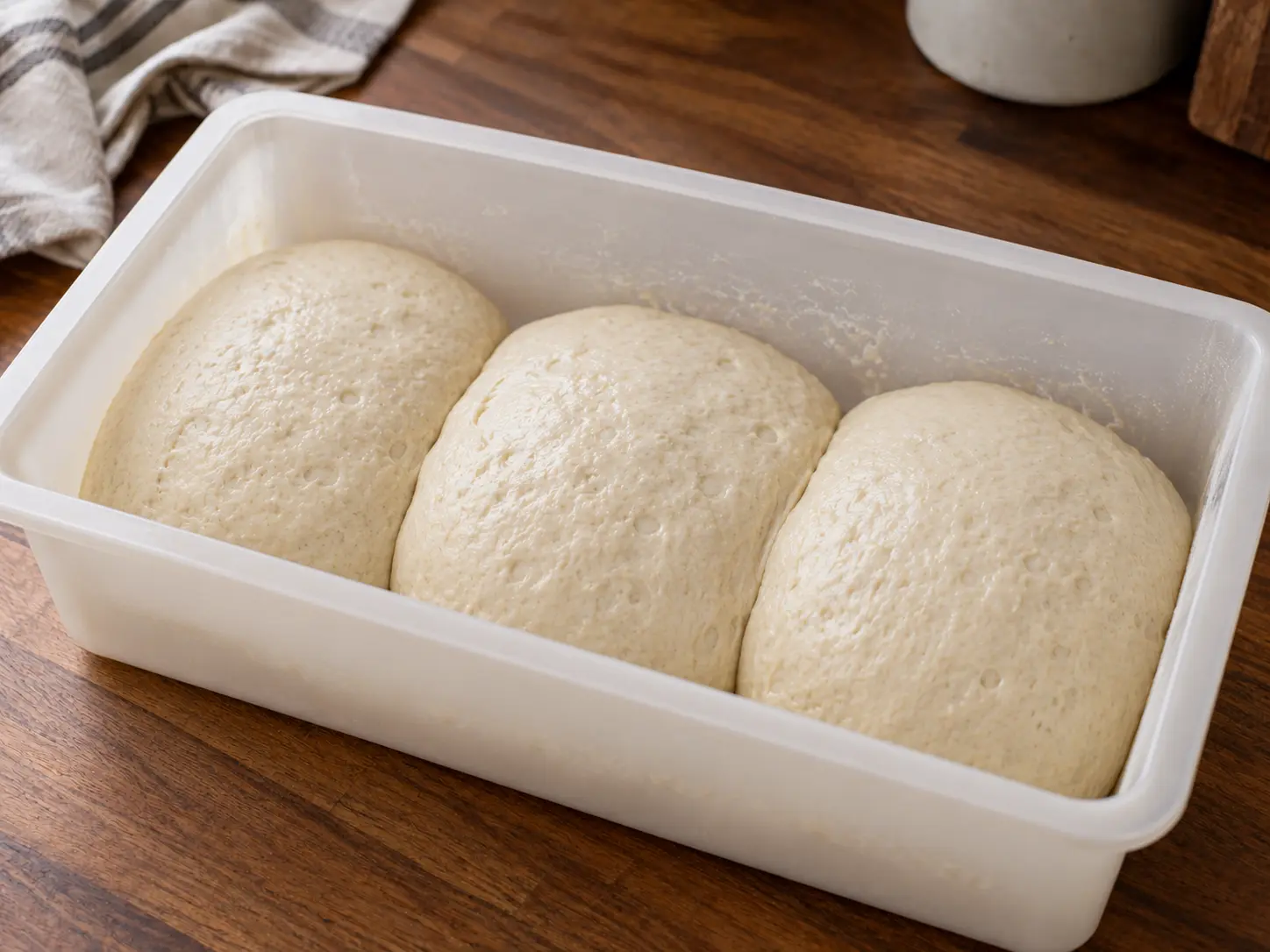
Cover the balls separately and mature for 2–4 hours at 22–24 °C / 72–75 °F. They are ready when soft and airy and a light indentation returns slowly. For a cold proof, refrigerate after 30 minutes for 12–24 hours, then bring out 2–3 hours before baking.
Aerated and soft enough to open without springing back.
Open and bake hot
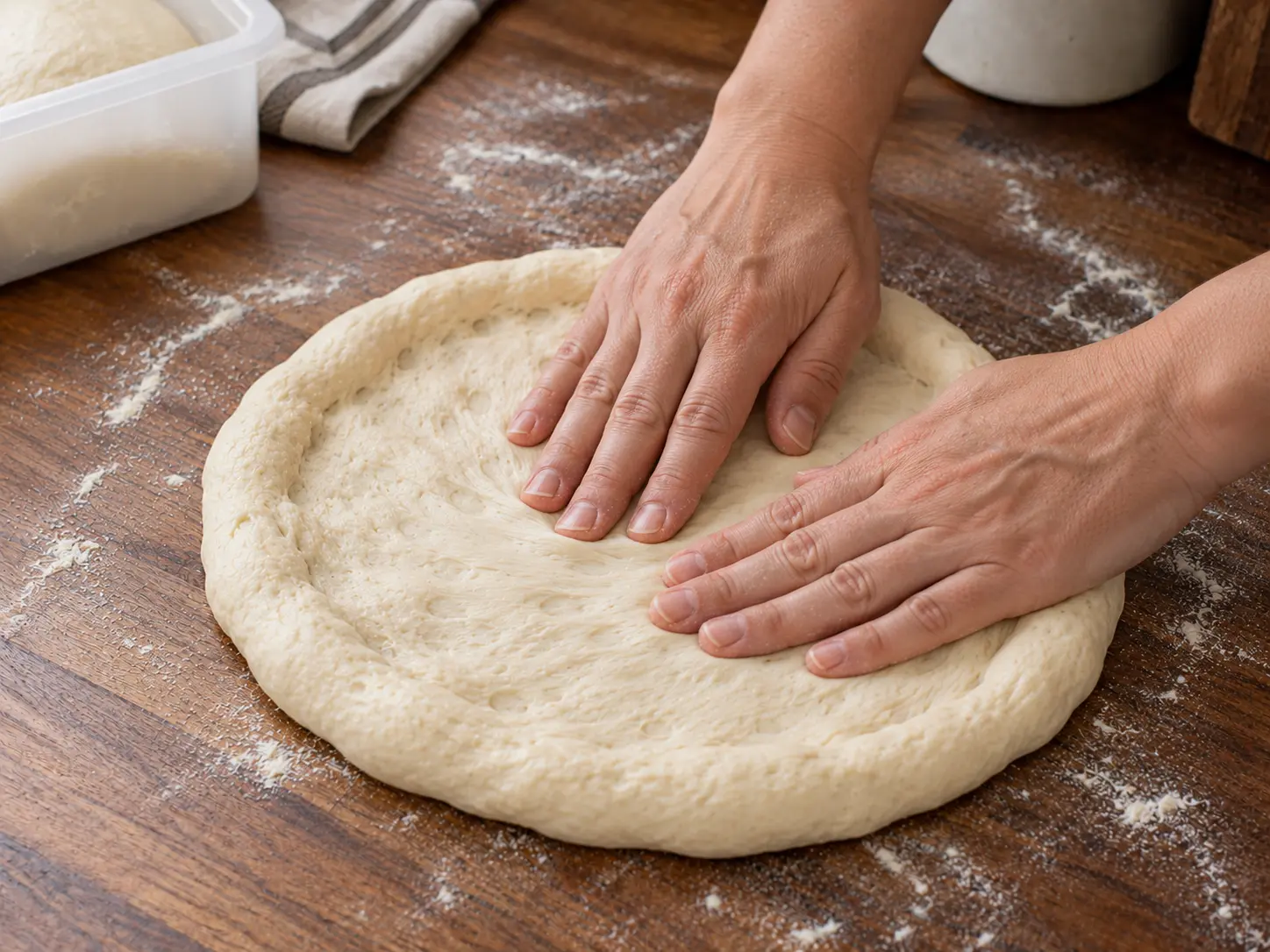
Preheat a pizza stone or baking steel on the oven's highest setting for at least 45 minutes, ideally to 250 °C / 480 °F or hotter. Dust lightly, press from the centre outward and leave a 1.5–2 cm / ⅝–¾ in rim untouched. Open to about 30–32 cm / 12–13 in, top sparingly and bake one pizza at a time for 6–9 minutes at 250–275 °C / 480–525 °F. At 230 °C / 445 °F, allow about 9–12 minutes.
Press out the center and leave the outer rim untouched.
Problems with shaping and baking
The dough keeps springing back
Let the ball relax longer and check that it is not too cold.
The base tears
Develop more structure, open it more evenly and use flour with enough strength.
The rim stays pale and dense
Ferment further, use fewer toppings and preheat the stone or steel longer.
Frequently asked questions
Can pizza dough chill overnight?
Yes. With the standard yeast amount, refrigerate after 30 minutes for 12–24 hours, then bring the balls out 2–3 hours before baking. Reduce the yeast only for a longer cold proof.
Do I need a pizza stone?
Not necessarily, but a stone or steel stores heat and gives a drier, better-colored base in a domestic oven.
How large is a 270 g ball?
That depends on thickness and technique. For many home ovens 250–270 g is generous; adjust piece weight in the calculator.