Starting formula
Sourdough
More time. More flavor. Dough you learn to read.
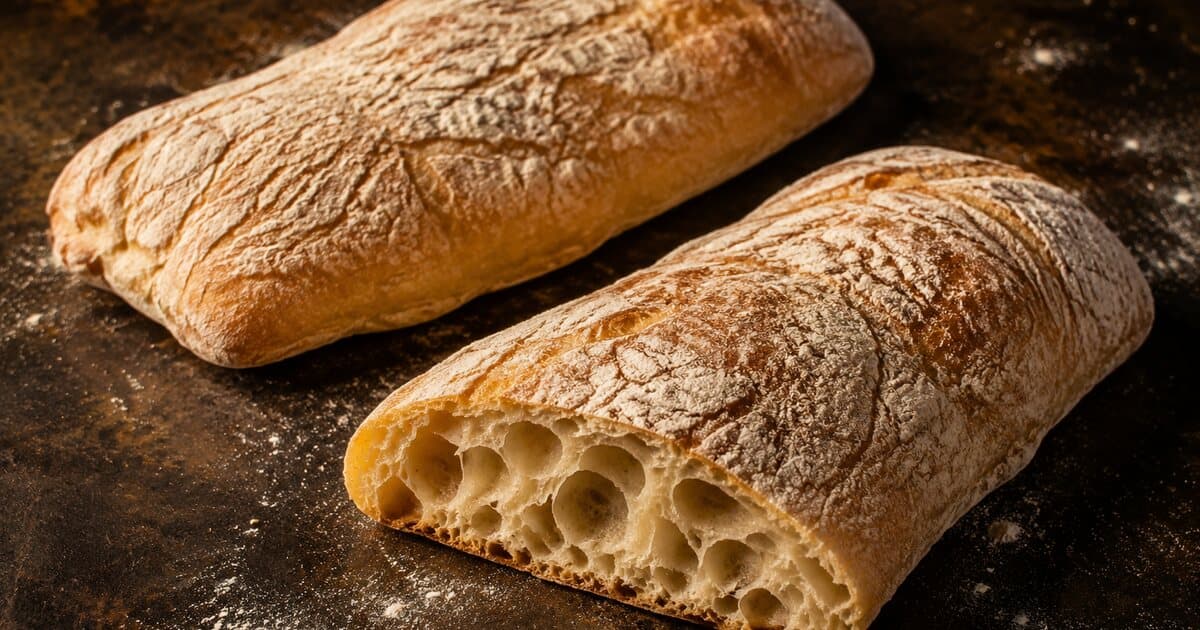
A balanced sourdough formula for one loaf. Not extremely wet, but open enough to learn fermentation, tension and an airy crumb.
The formula
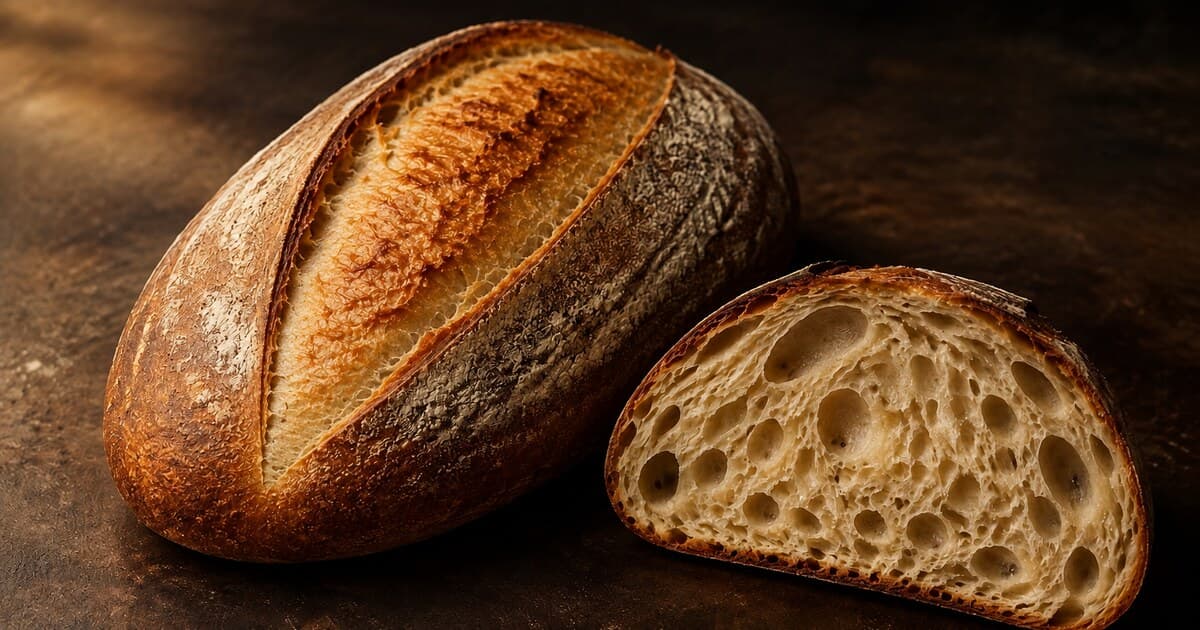
One sourdough loaf
Starting point: one 900 g loaf with a starter at 100% hydration.Active preparation: about 25 min · Baking: about 45 min. Fermentation time varies.
- Flour
- 90%470.8 g
- Water
- 60%314 g
- Sourdough starter
- 20%104.7 g
- Salt
- 2%10.5 g
Enough water for openness, enough margin to shape
Starter contributes both flour and water. The calculator includes both, so 70% hydration really remains 70%.Hydration
A useful middle ground between open crumb and control.
Starter
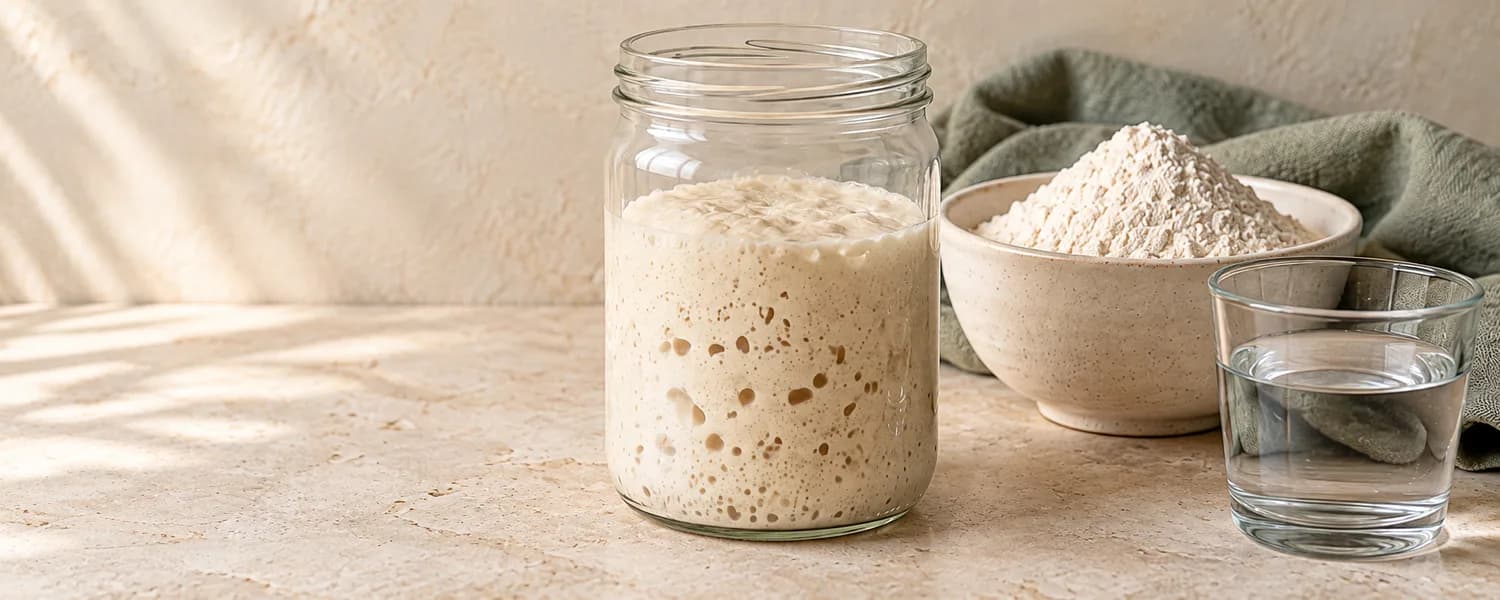
Active starter at 100% hydration as a solid baseline.
Per loaf
A generous loaf that fits many proofing baskets.
Why starter water belongs in the calculation
A starter at 100% hydration contains equal parts flour and water. Both count toward the total formula. Ignore them and you bake wetter than the percentage on paper suggests.
Sourdough responds strongly to starter activity and temperature. A schedule can guide you, but a formula cannot predict an exact proofing time. Watch volume, bubbles, the surface and how the dough retains tension.
Build tension and give fermentation room
Work calmly, record dough temperature and look at the dough more often than the clock.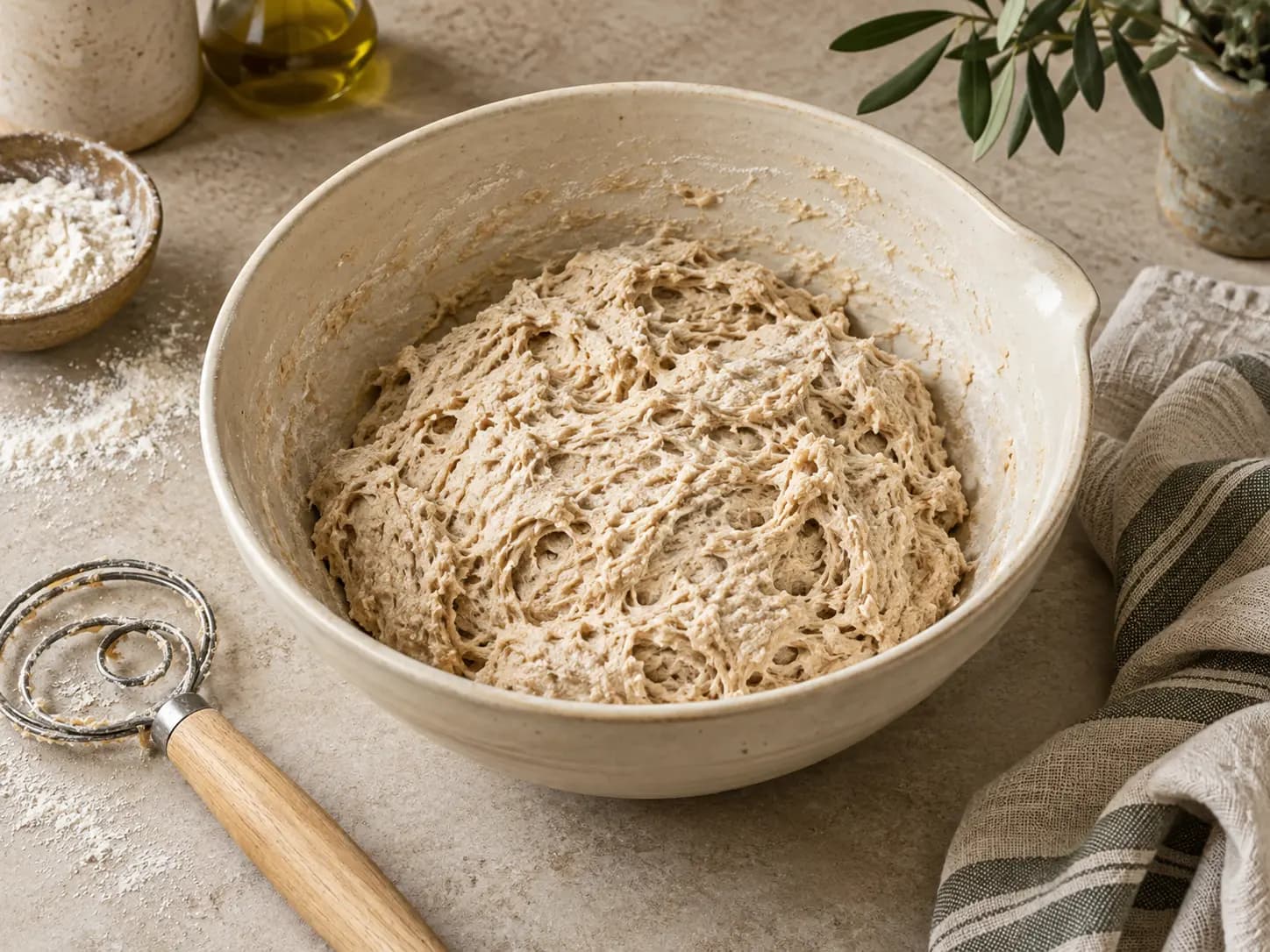
Mix and rest
Combine flour and water and rest briefly before adding starter and salt.
Stop once all the water is absorbed; the dough does not need to be smooth yet.
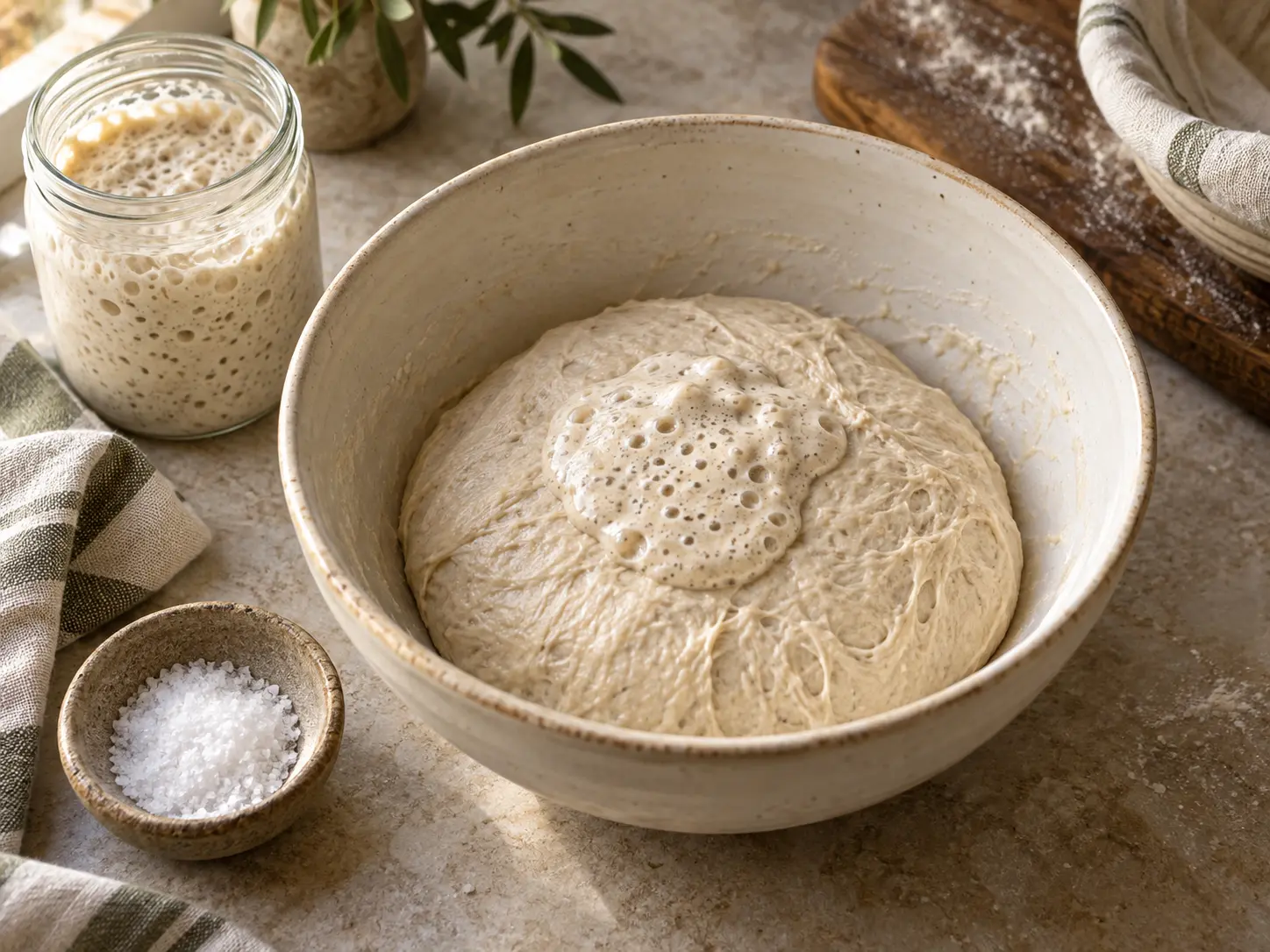
Add the starter
Work active starter and salt evenly through the dough without needless force.
Use visibly bubbly starter and distribute it evenly together with the salt.
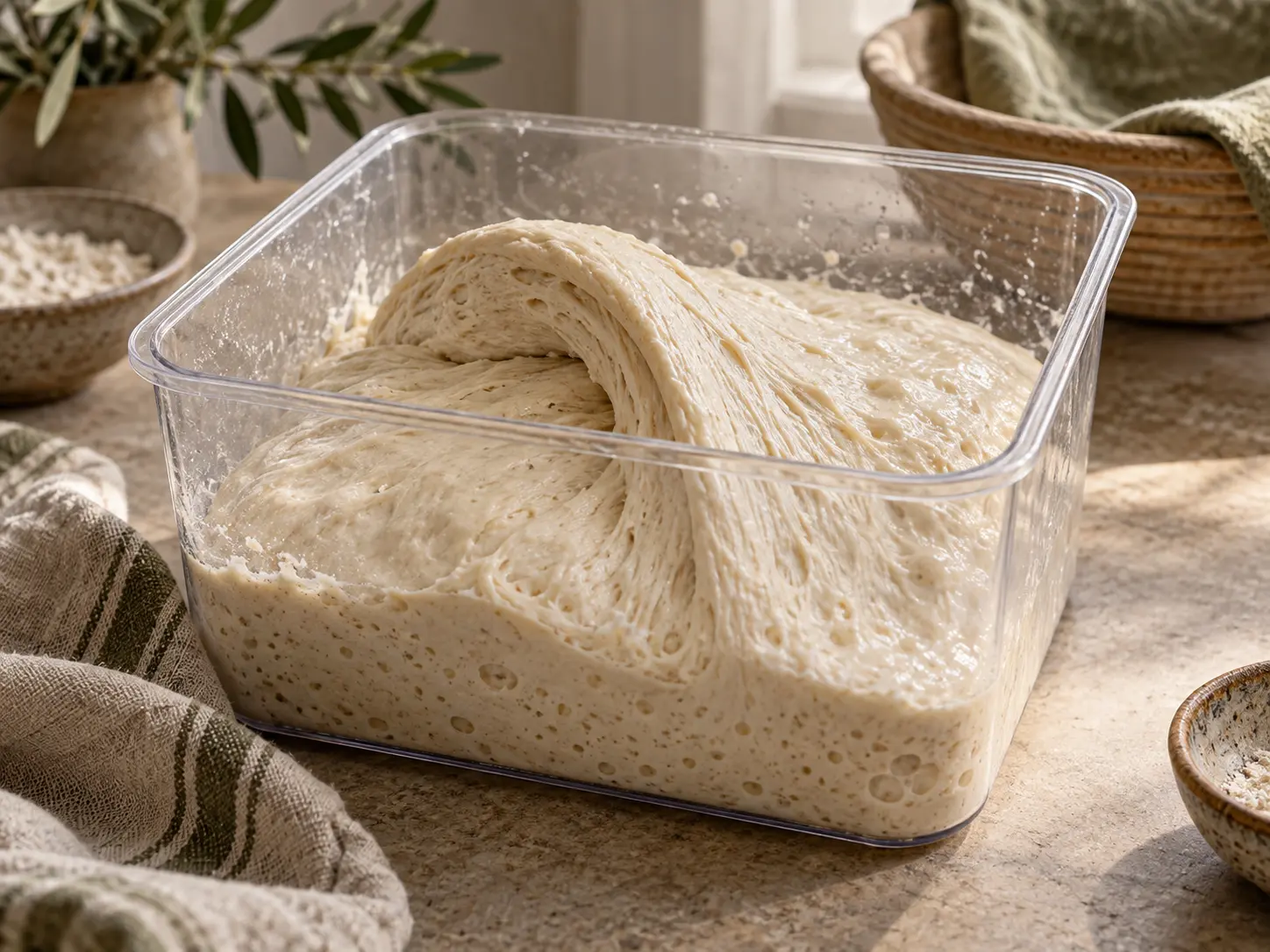
Fold and ferment
Fold several times early on, then mature until the dough is visibly lively.
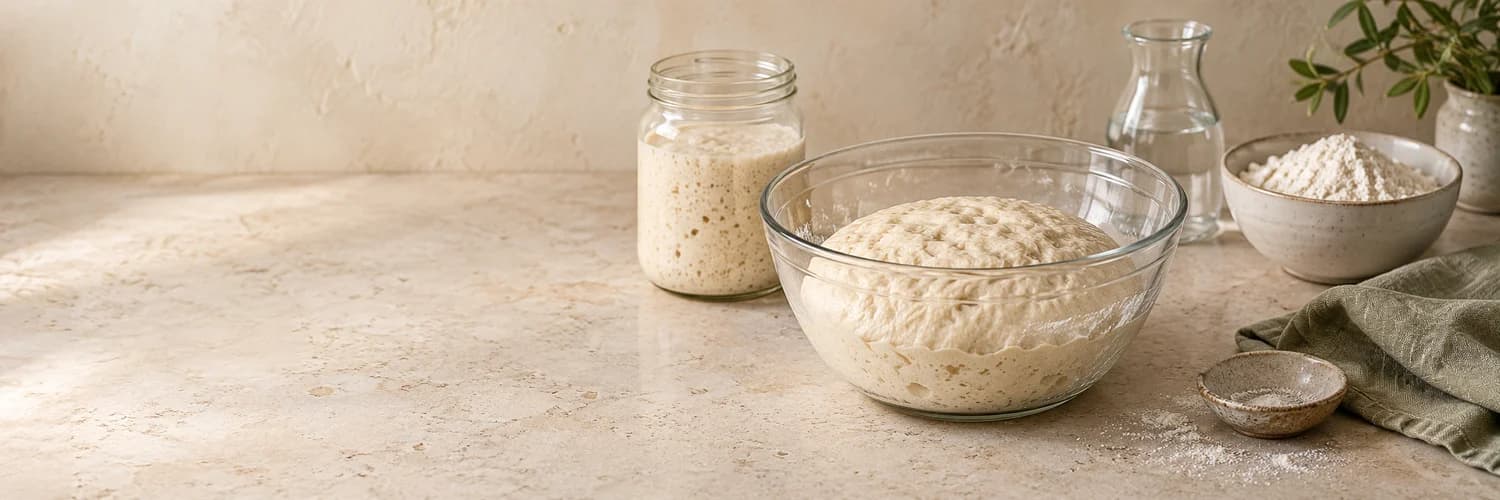
Fold early in fermentation, then leave the dough until bubbles and volume clearly increase.
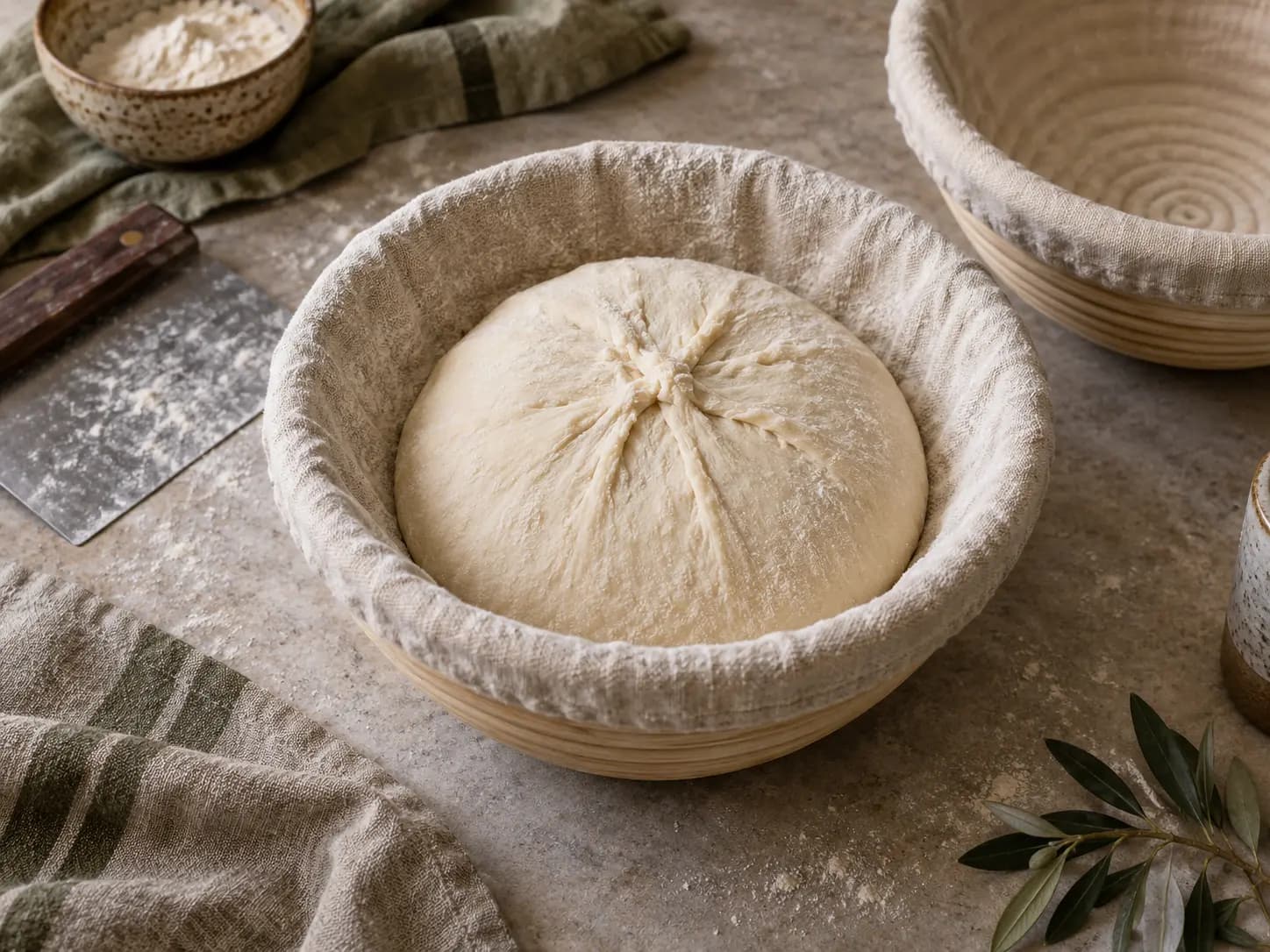
Shape and chill
Shape with tension, place in a dusted basket and refrigerate if it suits your schedule.
The outside should feel taut without tearing the dough surface.
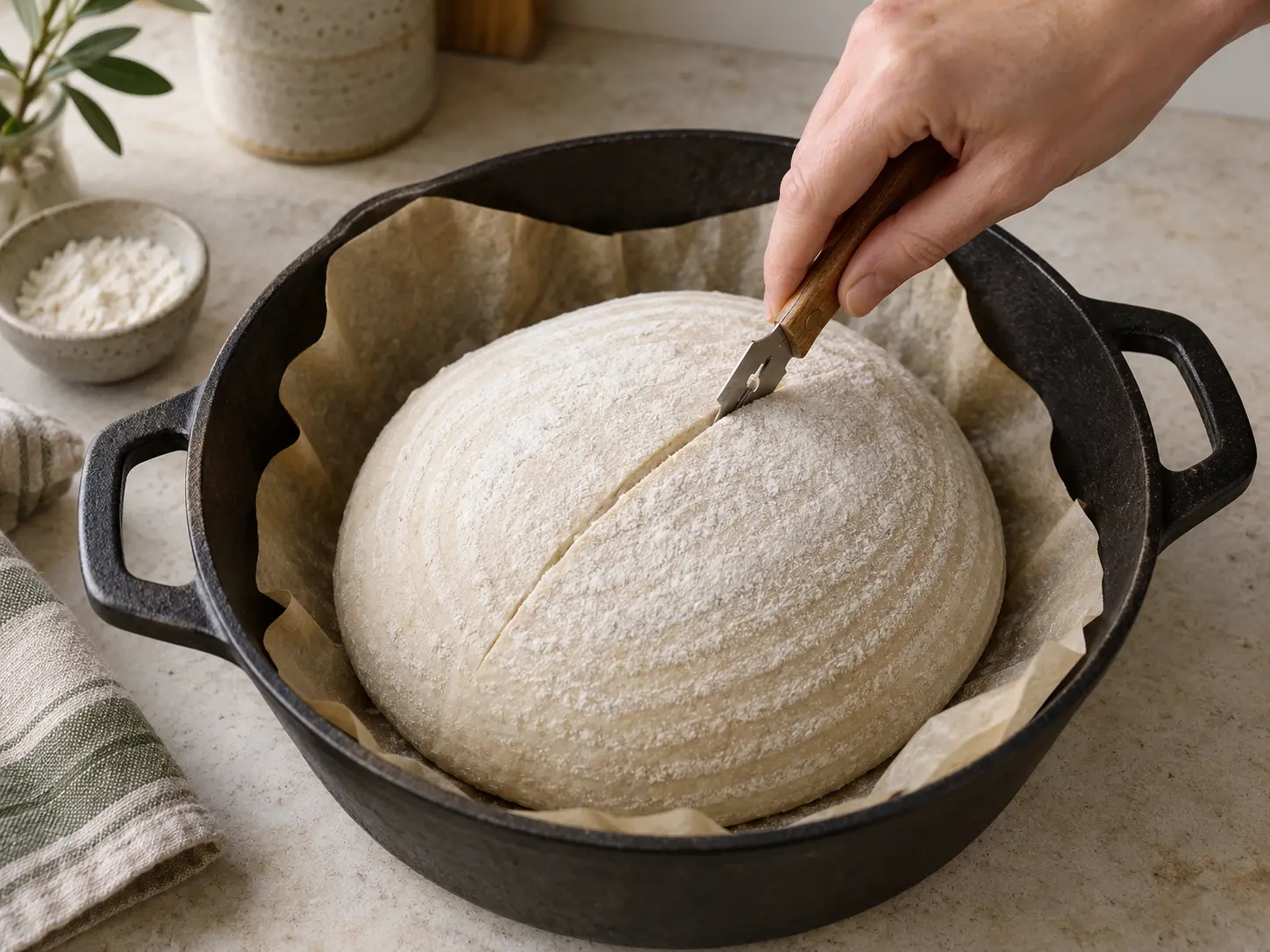
Score and bake
Bake from cold or after final proofing with strong initial heat and enough steam.
Score in one decisive motion and bake with strong initial heat and enough steam.
Problems with fermentation and timing
The dough stays heavy and still
Check starter activity and allow more time or a warmer dough environment.
The dough turns slack and sour
Shorten fermentation, lower dough temperature or use the starter earlier after feeding.
The loaf bursts in the wrong place
Score more deeply and decisively, and check that final proofing was not too short.
Frequently asked questions
Must my starter be at its peak?
It mainly needs to be clearly active and predictable. Around peak often provides strong lift, though temperature and feeding determine the exact moment.
Can I use less starter?
Yes. Less starter usually slows fermentation and can suit warm weather or a longer schedule.
Why refrigerate the shaped loaf?
Chilling can improve flavor and timing and often makes scoring easier. It is a tool, not a requirement.