I want to make pizza
The right dough ball for your pizza size.
Choose the number of pizzas, their diameter and how thin or airy you want them. You immediately get the weight per ball and the total dough weight.
A practical starting point; your oven and method decide the final amount.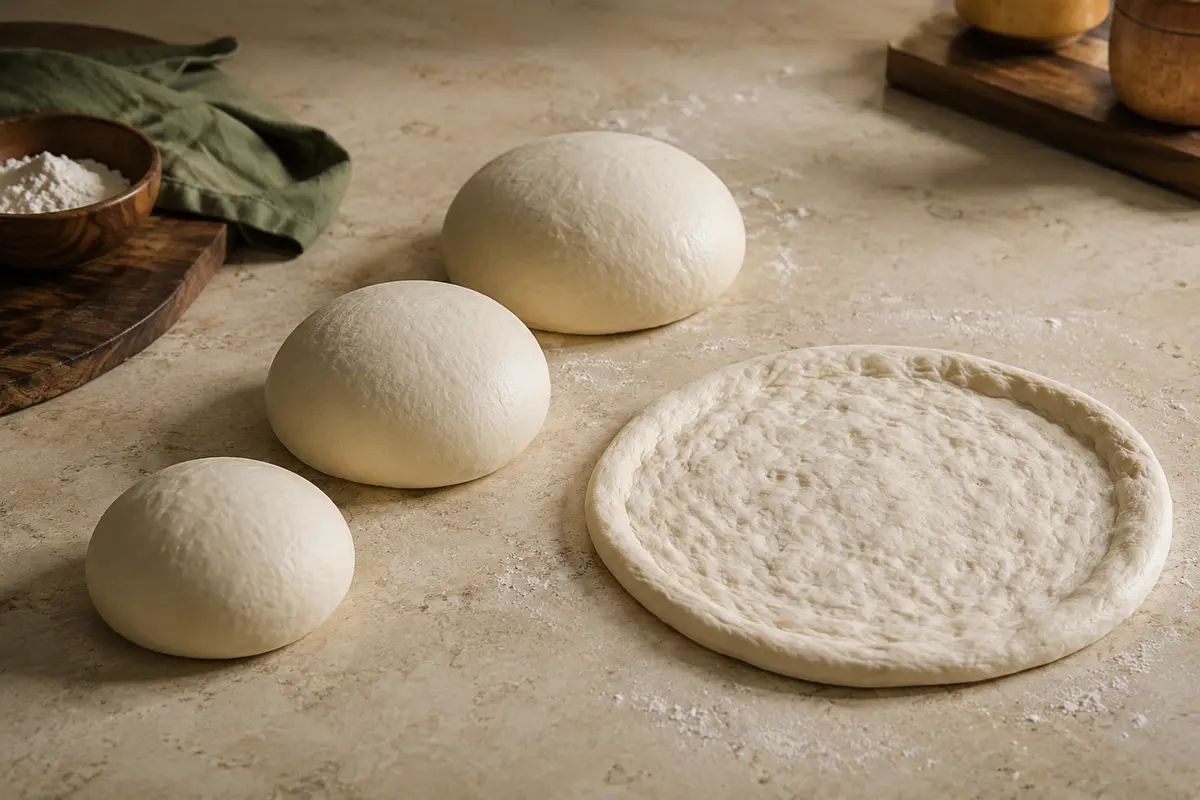
Your pizzas
How large and how airy?
Measure the desired diameter from edge to edge, then choose the style closest to your pizza.
Dough loading
This number connects pizza surface area to dough weight. The examples are enough for most home bakers.
Your target weight
Divide the dough like this
- Total dough
- 720 g
- Useful range per ball
- 220 g–260 g
- Surface per pizza
- 707 cm²
Start with the target weight. Go slightly lower for a thinner base or higher for a fuller rim.
Turn it into a recipe
Use the total dough weight in the regular calculator, then choose hydration, salt and yeast or starter.
From weight to better pizza
How to use the calculated ball weight
The calculator sets the amount of dough. Even dividing, enough resting time and careful opening then determine the shape and airy rim.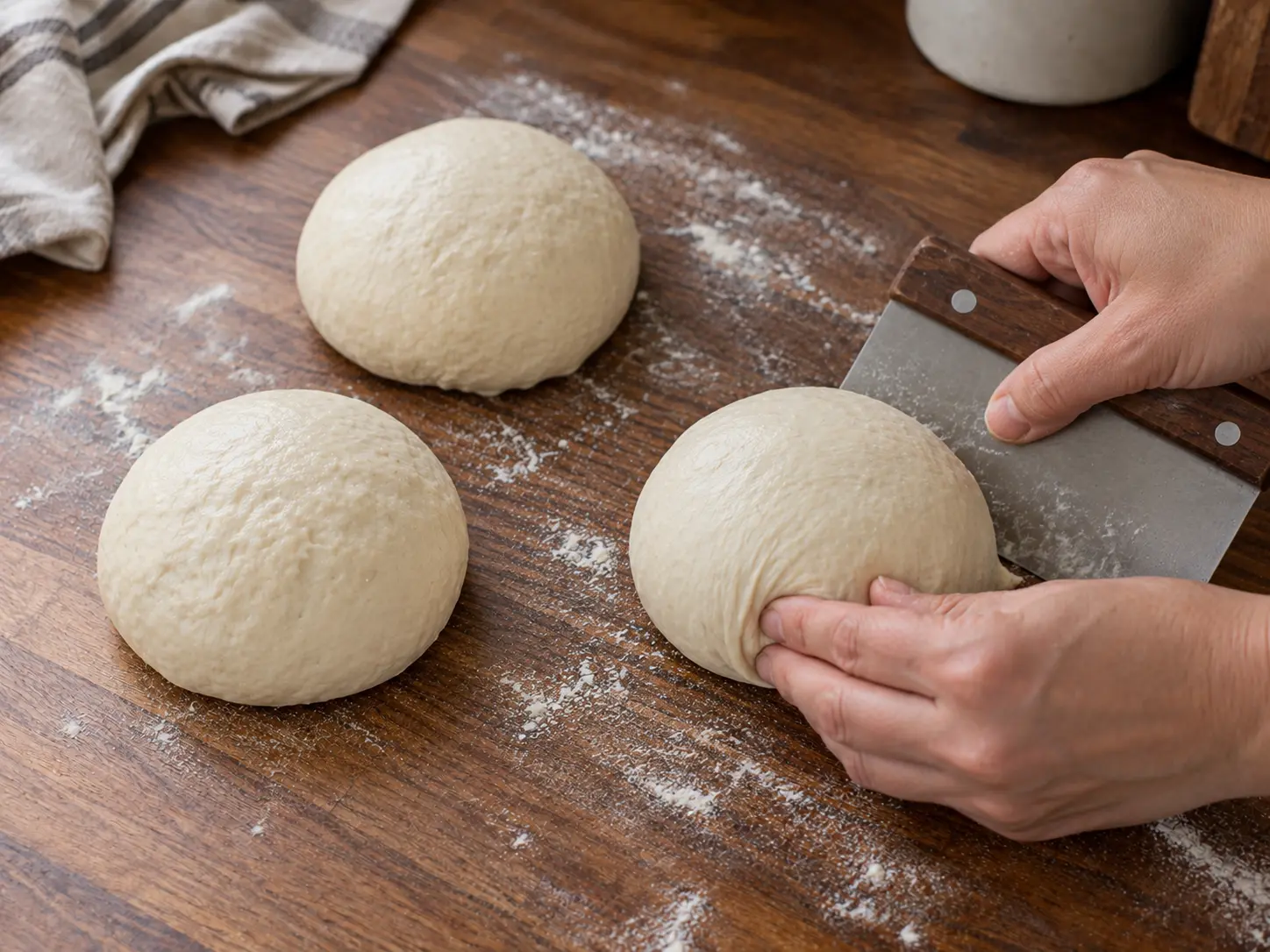
1 · Weigh and ball
Make equal dough balls
Divide the total dough on a scale. Create a smooth, taut surface on every ball without tearing the dough.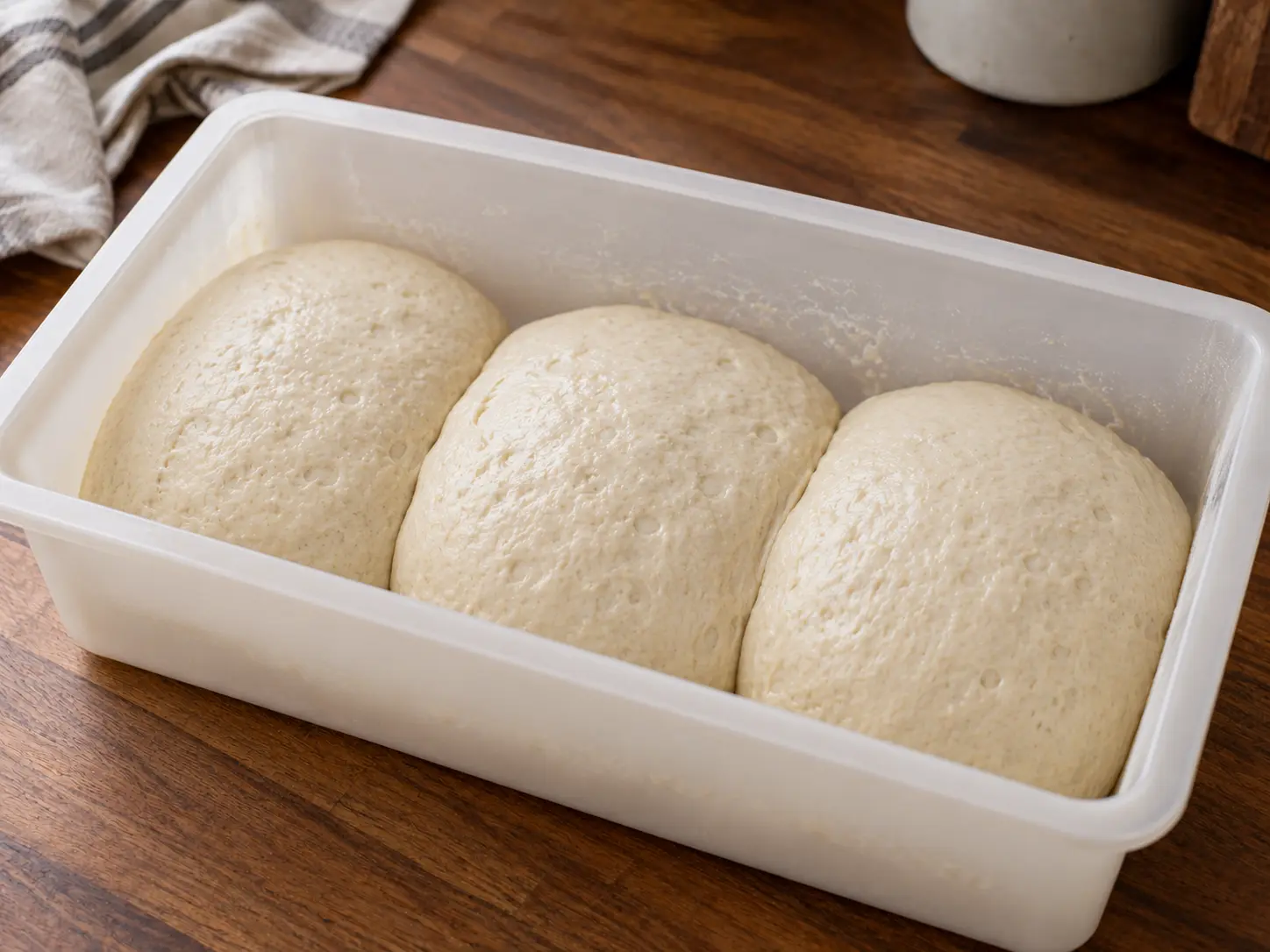
2 · Let it relax
Give the dough time
Proof the balls covered until they feel supple. If the dough springs back strongly, it needs more time.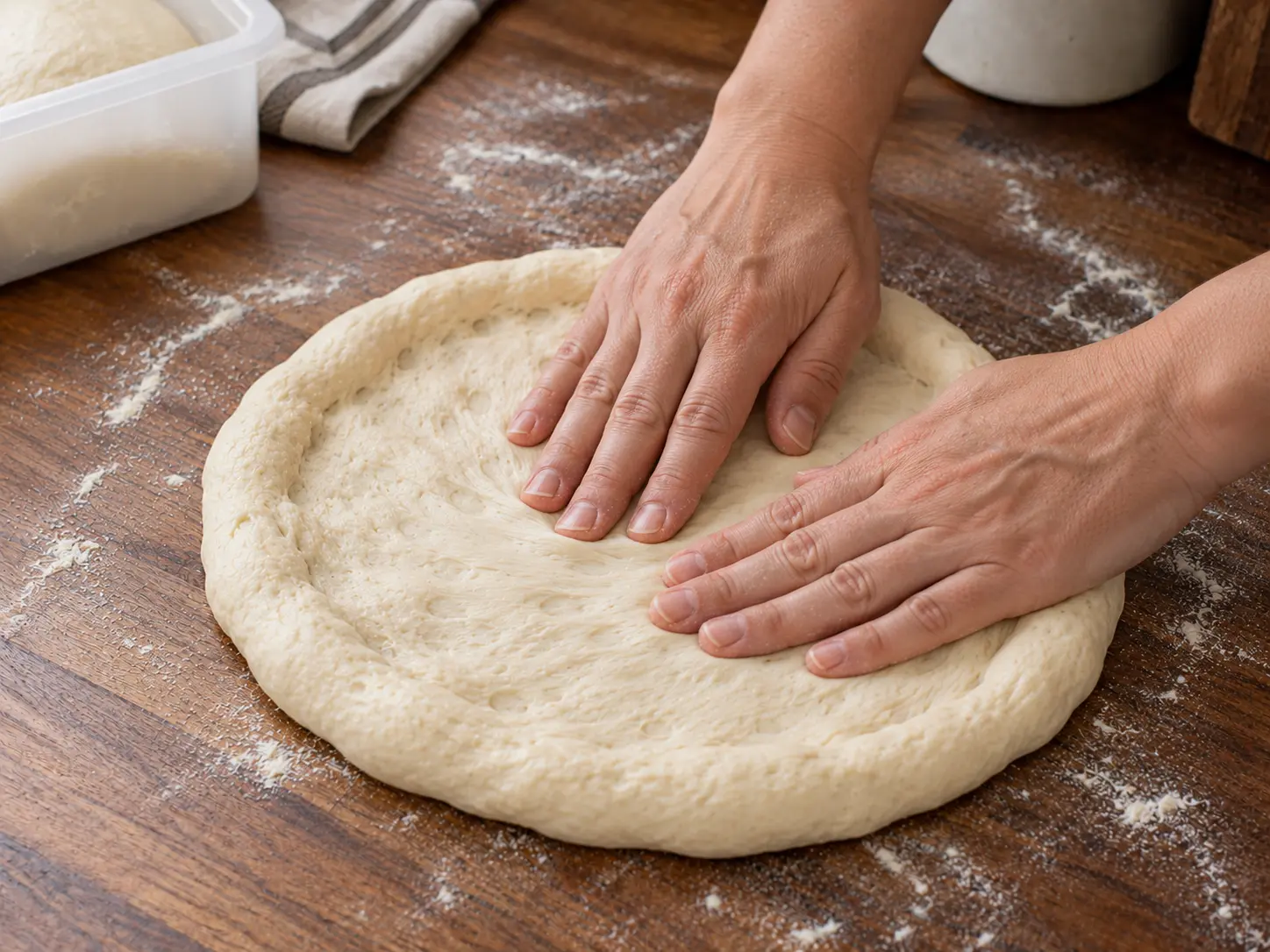
3 · Open
Work towards the diameter
Press from the centre out and leave the rim untouched. Treat the chosen diameter as a target, not something to force.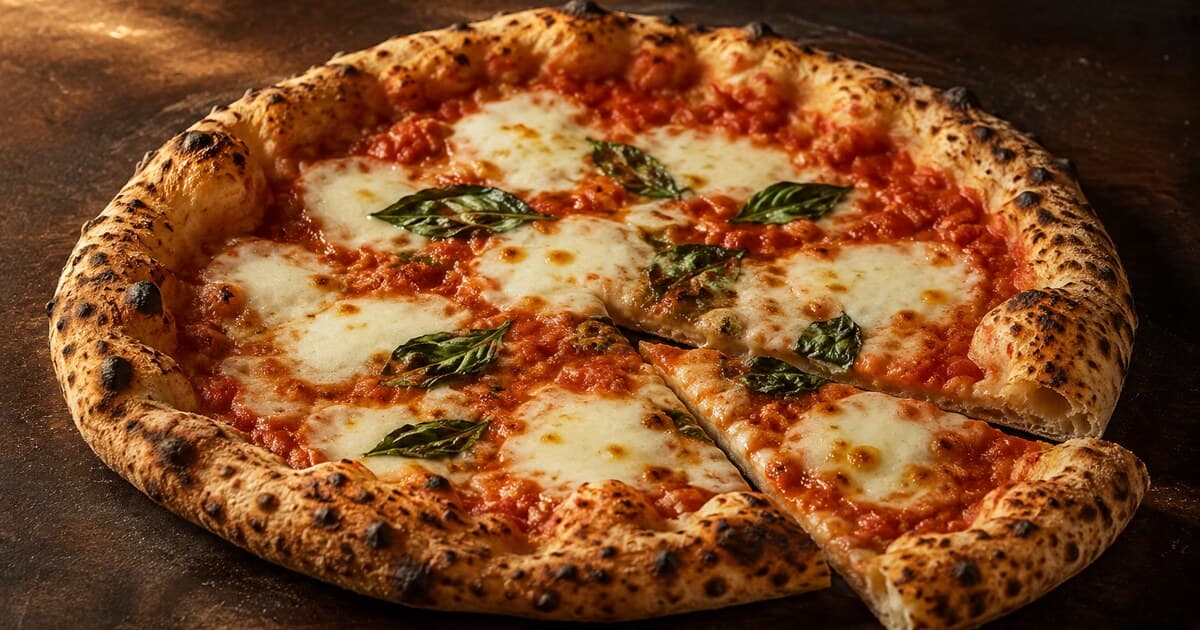
4 · Top and bake
Bake hot and straight away
Keep the toppings light and bake at once in a thoroughly preheated oven, until the rim is airy and deeply golden.How to read the result
Convert pizza diameter into the right dough-ball weight
This tool calculates from pizza surface area, so the dough ball grows logically when diameter, quantity or thickness changes.Worked example
Three 30 cm pizzas
Choose 3 pizzas, a 30 cm diameter and the classic dough load of 0.34 g per cm².Result: about 240 g per ball and 720 g dough in total.What it means
Area grows faster than diameter
A 36 cm pizza needs more than 20% extra dough compared with a 30 cm pizza because circle area is what matters.Common mistake
Treating ball weight as flour weight
The result is total dough per ball, including water, salt, yeast and any oil.Use it for
Portion round pizzas before mixing
Use it for thin, classic or airy round pizzas when you know the diameter and number of pizzas.Not for this
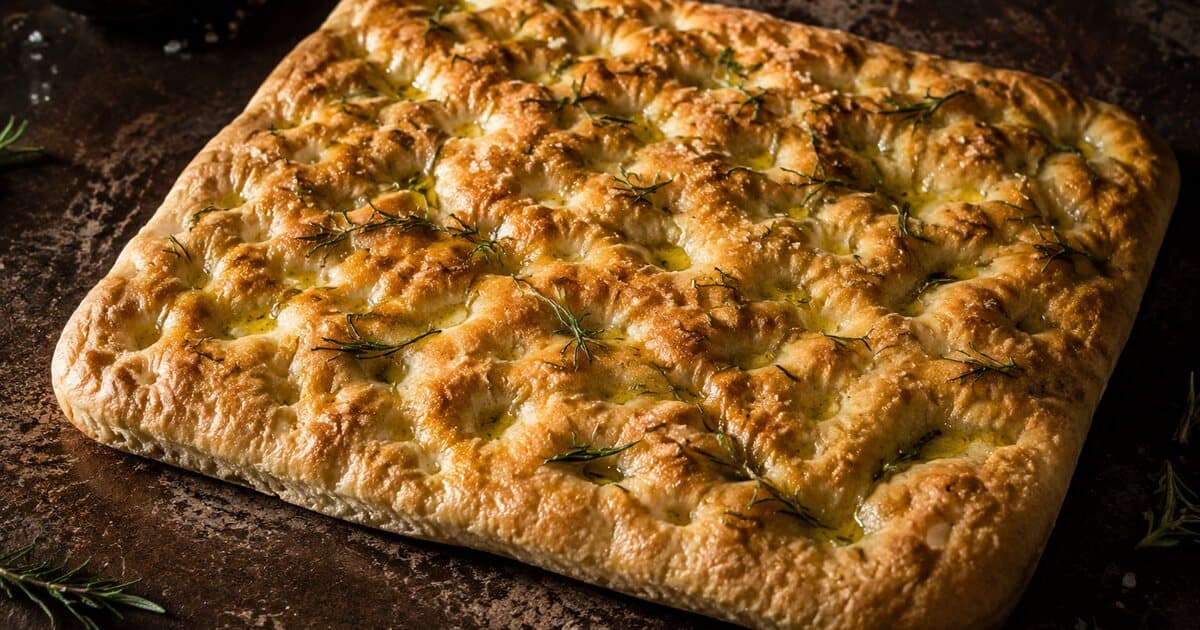
Not for a tray or Detroit pan
Use the pan-pizza or focaccia calculator instead; those work from the pan's actual internal dimensions.From calculation to bake