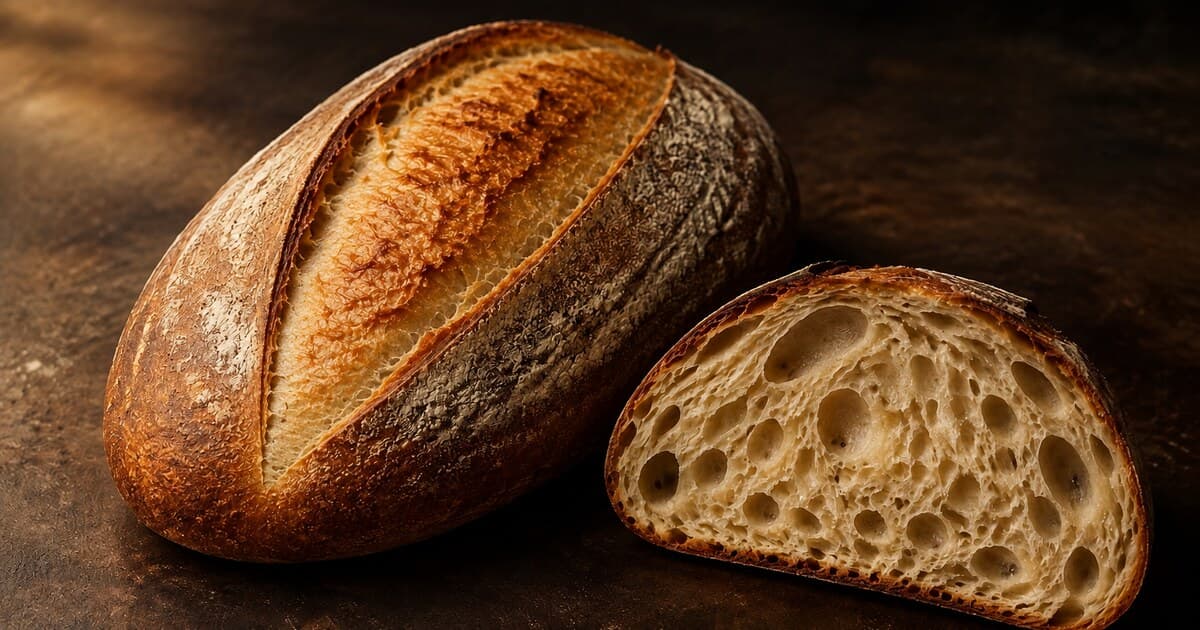
Starting formula
Ciabatta
More water. Less force. Bigger holes.
Ciabatta rewards a gentle approach. This wet formula makes two airy loaves and scales instantly when you want to bake more or less.
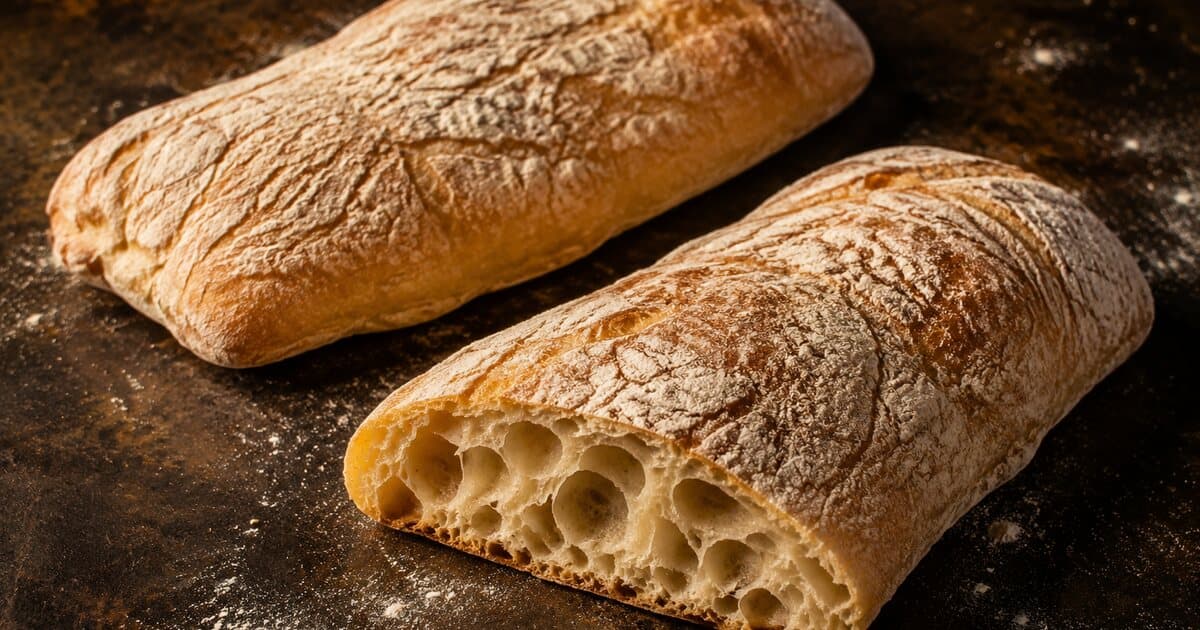
The formula
Two airy ciabatta loaves
Starting point: two equal loaves. With different flour, consider holding back some water.Active preparation: about 25 min · Baking: about 30 min. Proofing time varies.
- Flour
- 100%492.9 g
- Water
- 78%384.4 g
- Salt
- 2.2%10.8 g
- Yeast
- 0.4%2 g
- Olive oil
- 2%9.9 g
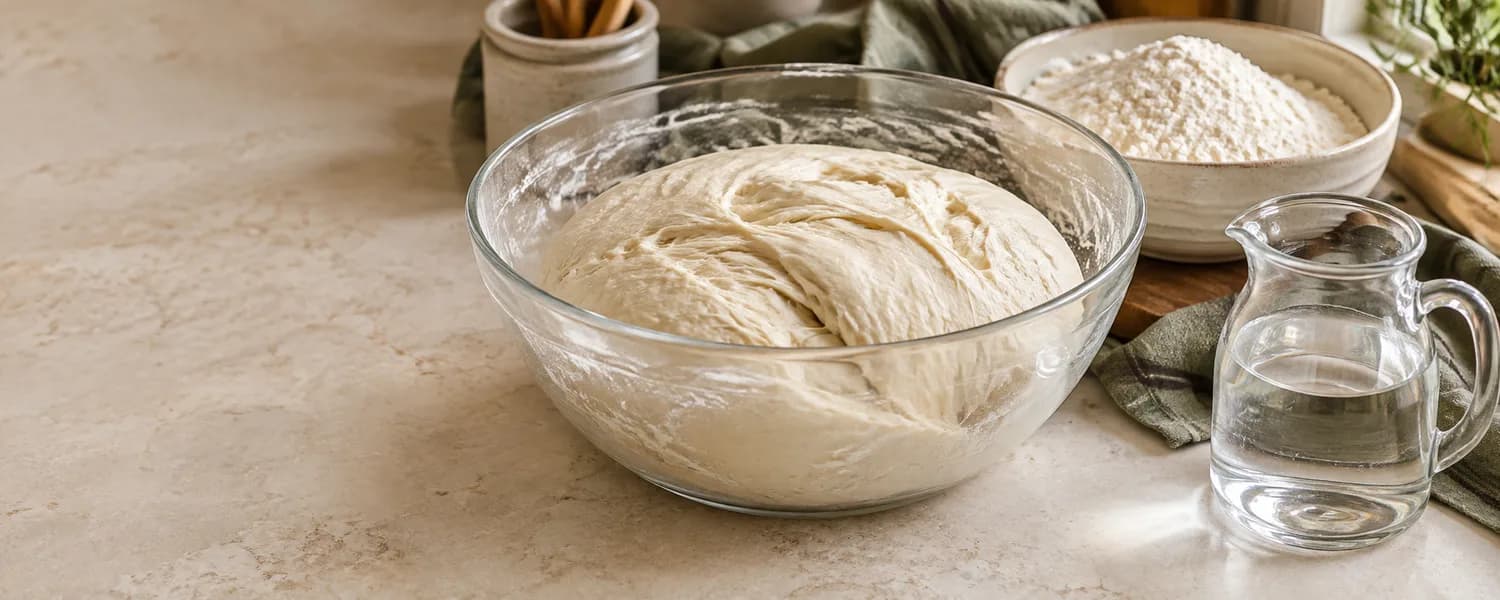
Wet dough you build rather than beat into submission
An open crumb comes from hydration, adequate structure and gentle handling. Adding water alone is not a shortcut to large holes.Hydration
Wet enough for an open crumb, provided the flour can support it.
Equal loaves
Two manageable loaves with room to open in the oven.
Olive oil
A restrained amount for suppleness and flavor.
Why a gentle approach pays off
Wet dough needs time to absorb water and organize gluten. Folding builds tension without pressing out all the air. Bread flour offers more margin than low-protein all-purpose flour.
The final hole structure also depends on fermentation and shaping. Overripe dough turns weak; underripe dough remains tight. Use volume and visible bubbles as evidence, not just the clock.
Build structure without knocking out the air
Rest and folding build the structure; forceful kneading pushes air out of the wet dough.Mix and rest
Mix flour with most of the water and give the dough a short rest.
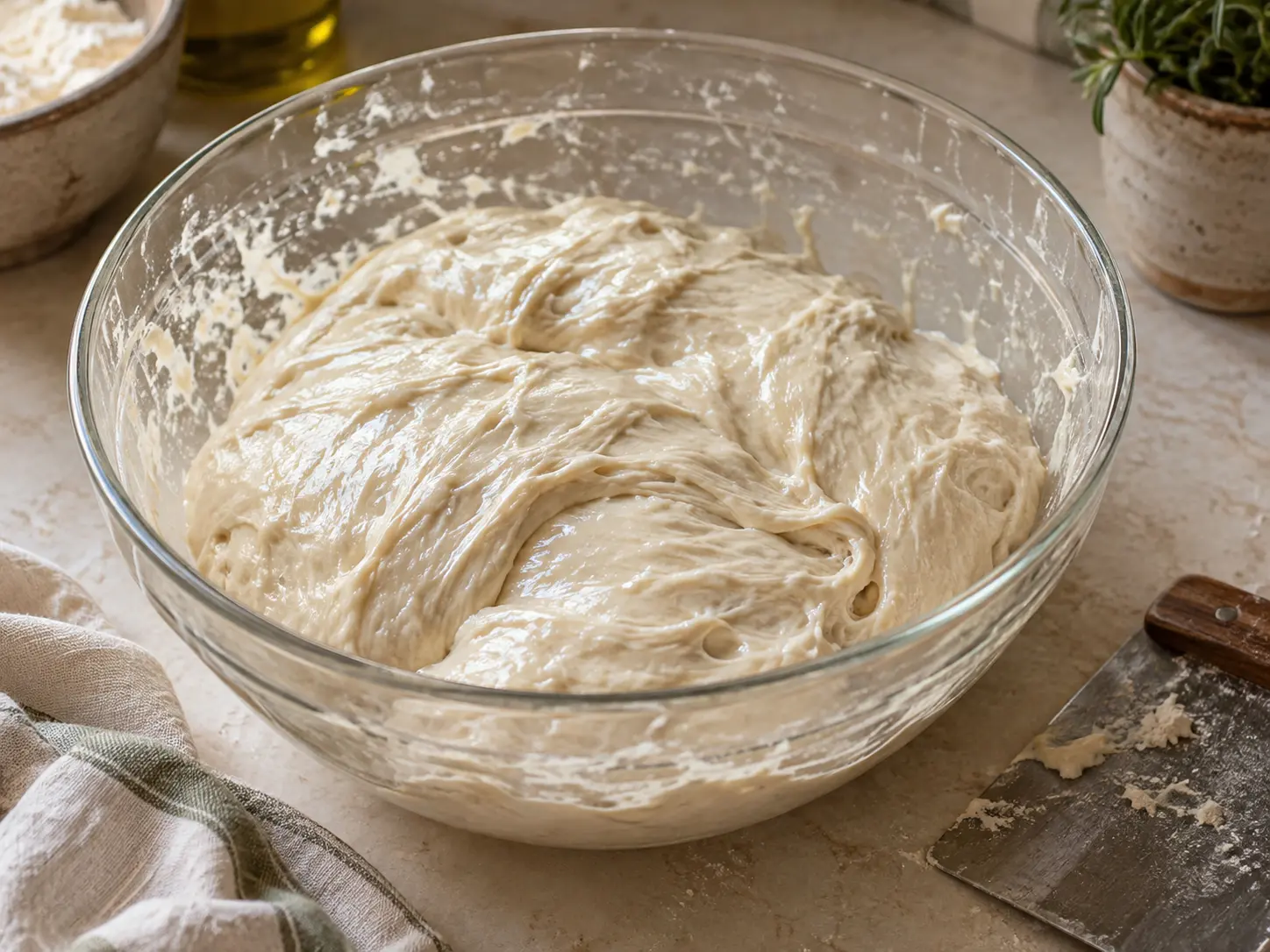
Add the rest
Work in yeast, salt, oil and any held-back water gradually.
The dough stays wet but becomes cohesive and glossy.
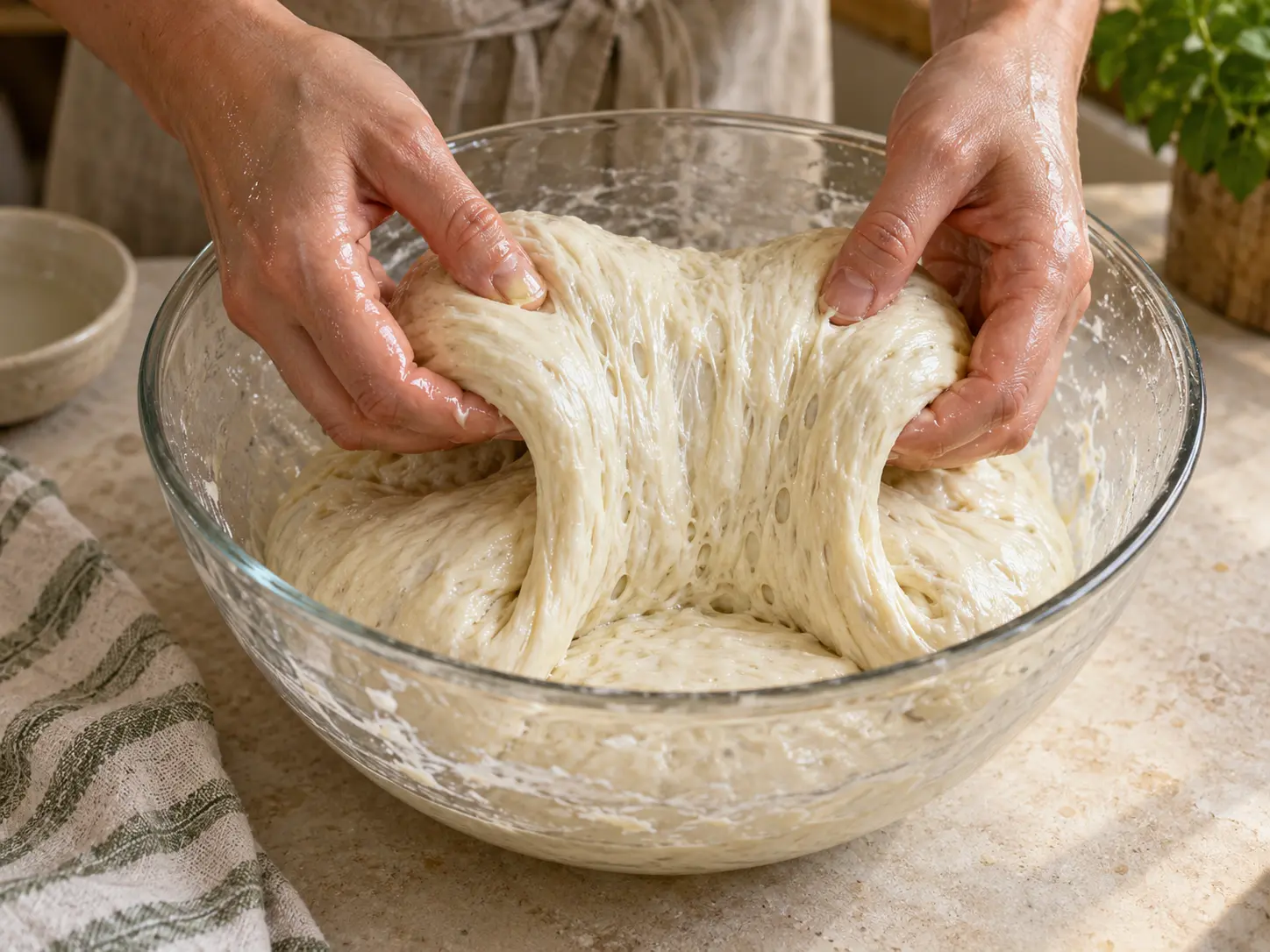
Fold
Use several gentle coil folds or stretch-and-folds during early fermentation.
Lift gently and let the ends fold underneath. Stop before the dough tears.
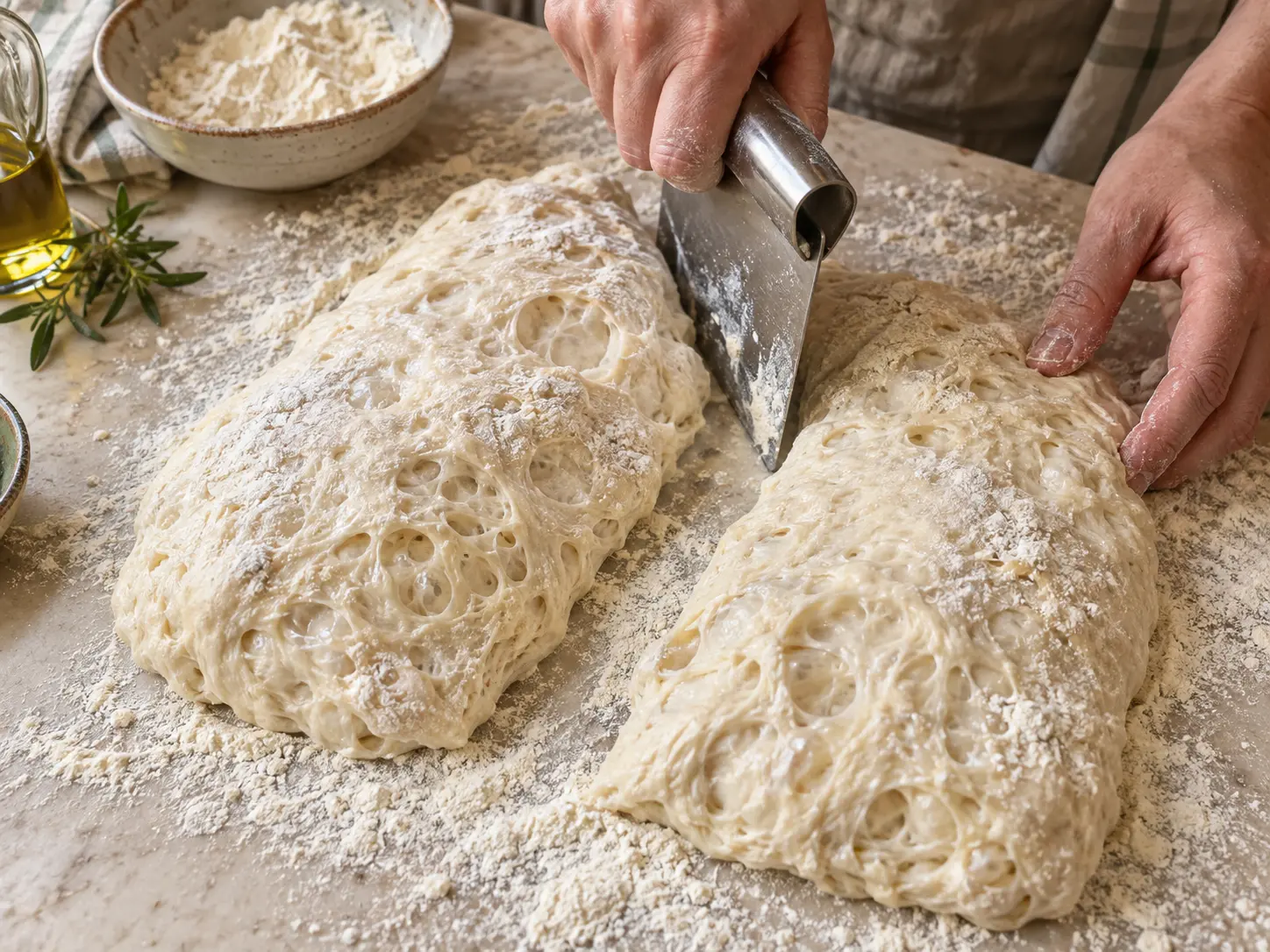
Divide gently
Turn onto a well-floured bench, divide and ease into oblong loaves.
Use a bench scraper and keep the large air bubbles intact.
Bake hot
Bake with steam until the crust is deeply colored and clearly crisp.
Problems with hydration and structure
The dough holds no shape
Next time hold back 3–5% water, use stronger flour or add an early fold.
The crumb has small holes
Check fermentation, handle more gently and give the dough enough heat and steam.
The loaf bakes flat
Avoid overproofing and fully preheat the oven and baking surface.
Frequently asked questions
Do I need bread flour?
It helps at 78% hydration. With all-purpose flour, start with less water and add only what the dough can hold.
Can I make ciabatta without oil?
Yes. Oil is not mandatory. Set oil to 0% in the calculator for a leaner formula.
Do I need a preferment?
No, but a poolish or biga can add aroma. Use the preferment converter in the baking tools if you want one.