Include my starter
How much water is really in your dough?
Your starter brings flour and water. See what to weigh separately and how everything adds up to the final hydration.
For dough made with flour, water and a flour-and-water starter.
Three weights, one complete calculation
Enter the separate flour, separate water and starter weight. Do not include the flour and water inside the starter in the first two fields.
Your dough
Enter the main dough and starter
Enter only the flour and water added directly to the main dough. Add the starter separately below.
100% means equal weights of flour and water.
These buttons change only starter hydration. Use the ratio from your starter recipe; bubbles cannot reliably tell you its hydration.
True ratio
Hydration including starter
375 g ÷ 500 g × 100 ≈ 75%
Already inside your starter
- Flour
- 50 g
- Water
- 50 g
100 g starter = 50 g flour + 50 g water. Do not weigh these out again.
| Added separately | In starter | Total | |
|---|---|---|---|
| Flour | 450 g | 50 g | 500 g |
| Water | 325 g | 50 g | 375 g |
Displayed weights are rounded; the percentage uses unrounded values.
Salt is not part of this ratio. Water in milk, eggs or other additions is outside this simple calculation.
From your calculation to the mixing bowl
The weights below follow your inputs. Photos show the actions; your dough’s appearance also depends on flour and method.
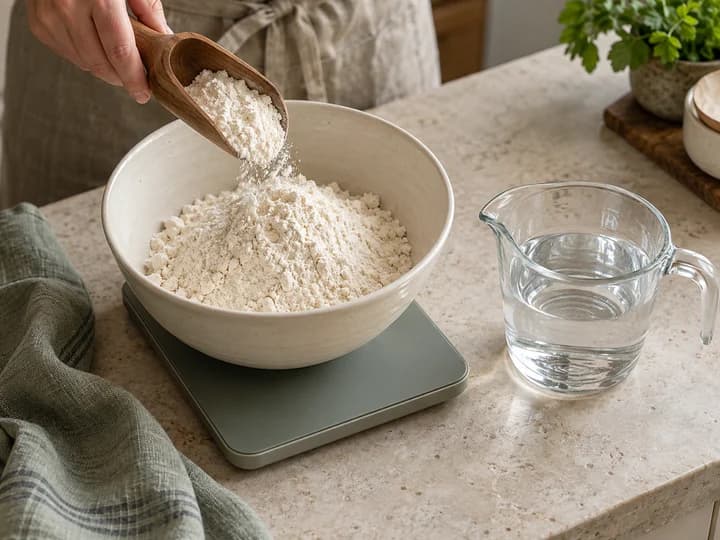
Weigh flour and water separately
Put your bowl on the scale and tare it. Weigh 450 g flour and separately 325 g water. These amounts are in addition to your starter.
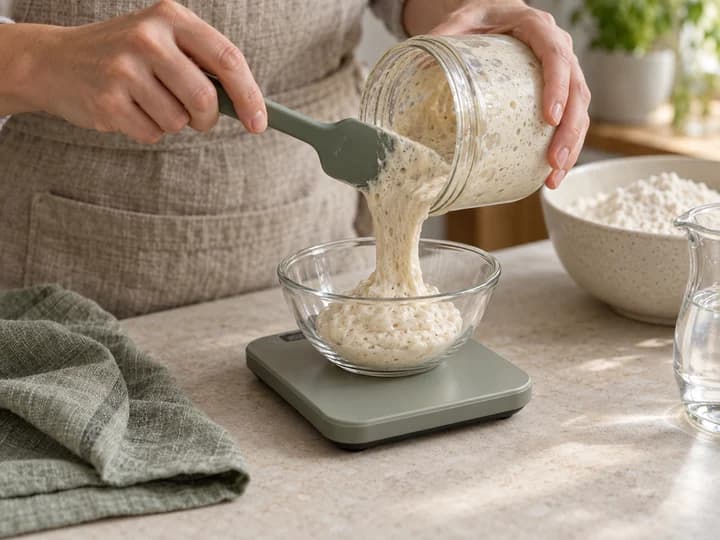
Weigh starter as one ingredient
Place an empty small bowl on the scale, tare it and weigh 100 g starter. The calculated flour and water are already inside it.
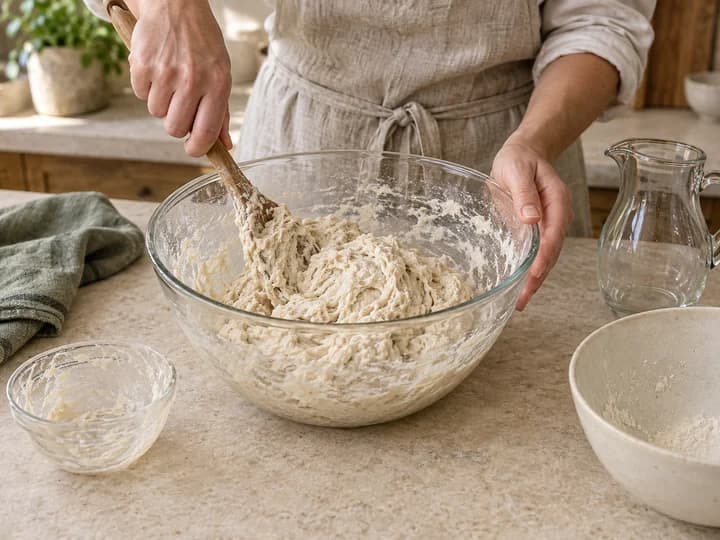
Mix according to your recipe
Use the weighed flour, water and starter at the stages specified by your recipe. Add salt and any extras as directed. The flour-and-water calculation gives 75% hydration.
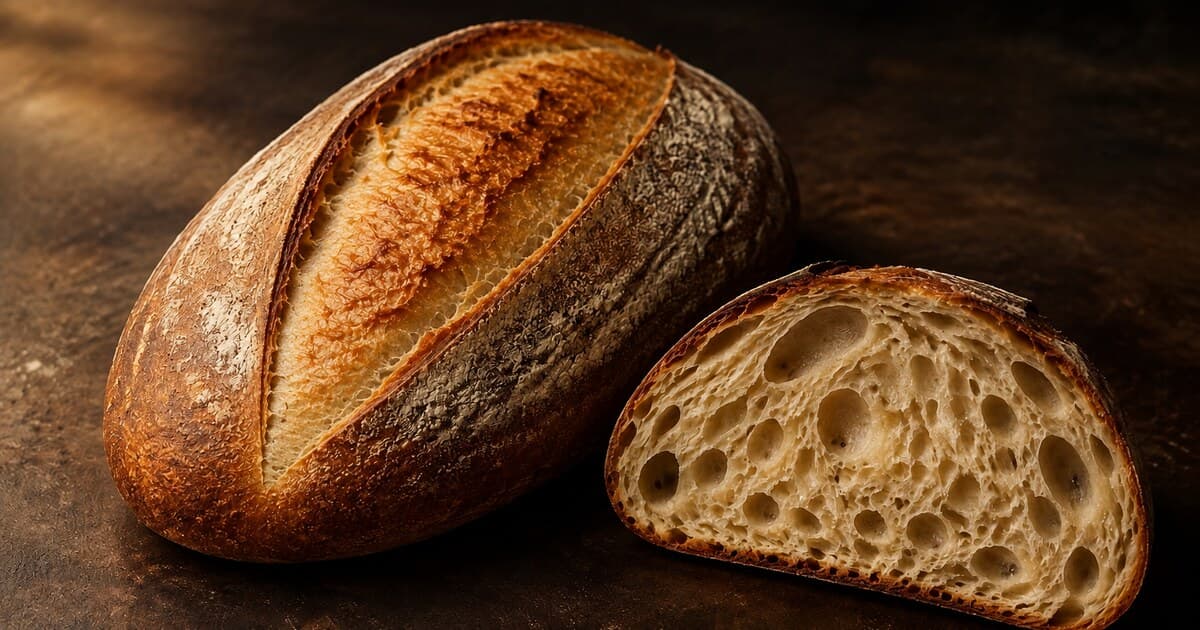
Next: kneading, rising and baking
This tool calculates your ratio. Continue with a complete recipe, using its quantities and checks for fermentation.
See the sourdough recipe →What does the percentage tell you?
Hydration describes a ratio, not a guaranteed dough texture. Flour type, whole-grain content and dough development all make a difference.
Is 100% starter hydration the same as 100% dough hydration?
No. A 100% starter contains equal weights of water and flour. Adding separate flour and water creates a new ratio for the whole dough.
How do I know my starter’s hydration?
Check the starter recipe and weights. Equal total weights of flour and water mean 100% hydration. A 1:2:2 feed maintains this if the seed starter is also at 100%. A starter with a different initial hydration does not become exactly 100% after just one such feed.
My recipe lists only total flour and total water. What do I enter?
First subtract the flour and water in your starter from those totals. Enter only the remaining amounts as main dough. Otherwise you count your starter twice.
Why is my dough still sticky?
Hydration is only one factor. Flour type, temperature, gluten development and fermentation also matter. Do not add extra flour solely because dough feels sticky; follow your recipe’s guidance.