Madeira and Porto Santo
Bolo do Caco
Sweet-potato flatbread with a lightly charred griddle crust.
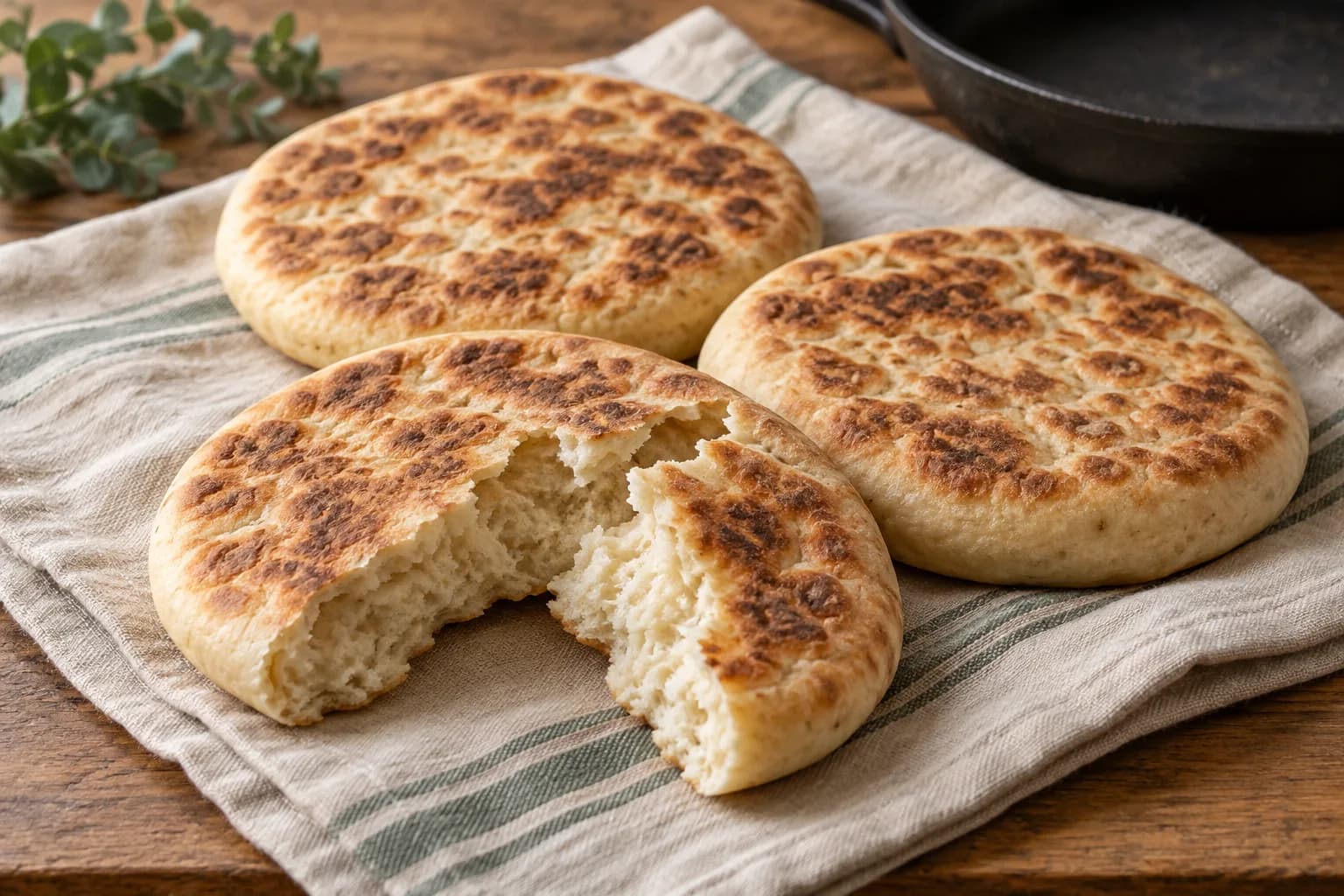
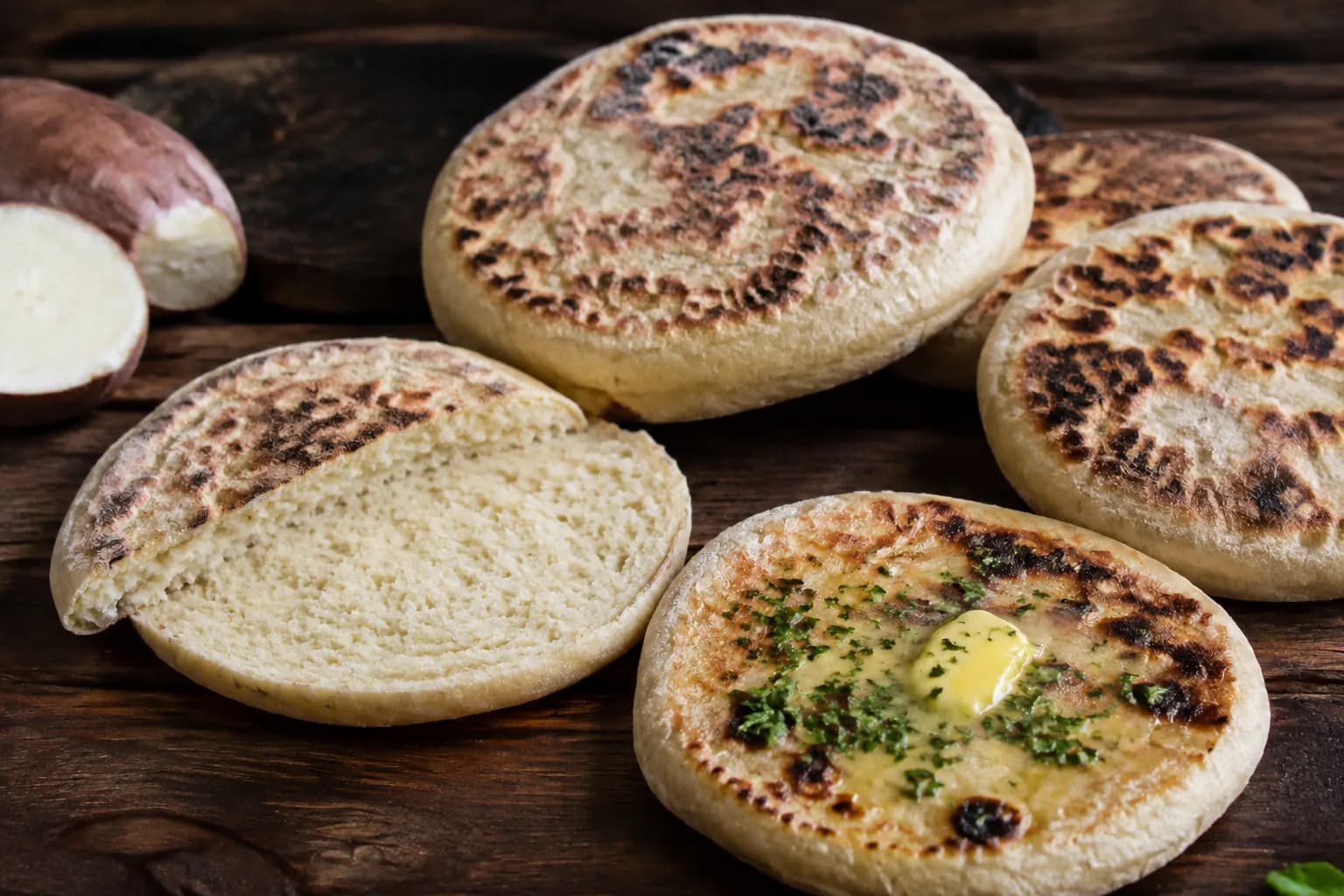
Round, soft inside and lightly charred outside. Cooked sweet potato keeps the dough tender; a hot stone or heavy pan gives the bread its familiar thin crust.
The formula
Eight round flatbreads at about 150 grams each
Starting point: 8 breads of about 150 g. Hold back 10% of the calculated water at first; sweet potatoes vary considerably in moisture.Active preparation: about 35 min · Griddle cooking: about 16–20 min per batch. Proofing takes additional time.
- Wheat flour
- 100%548 g
- Water
- 46%252 g
- Salt
- 2%11 g
- Instant yeast
- 1%5.5 g
- Sweet potato purée
- 70%384 g
Weights are rounded for weighing; their sum may differ slightly from the calculated total. Small additions stay in grams.
Sweet potato belongs inside the dough
The purée is calculated separately so flour and added water remain clear. That makes adjustment easier when your sweet potato is wetter or drier.- Cooked sweet potato purée
- 100%384 g
Weights are rounded for weighing; their sum may differ slightly from the calculated total. Small additions stay in grams.
Tender from the potato, character from the hot plate
The formula is deliberately simple. The difference comes from drying the purée properly, proofing sufficiently and controlling the heat while cooking.Sweet potato
Enough purée for a tender, faintly sweet crumb without turning the bread heavy or gummy.
Starting water
A practical baseline alongside the purée; add the reserved water only while the dough still feels firm.
Thickness
Thin enough to cook through on the griddle and thick enough to retain a soft bread crumb.
Cooking method
No oil in the pan: direct contact creates the mottled, lightly charred crust.
Why Bolo do Caco belongs to Madeira
According to Madeira's official tourism organisation, Bolo do Caco originated on Porto Santo as a way to use leftover bread dough. Sweet potato became its defining ingredient, giving the bread its soft texture and distinctive flavor.
The word caco refers to the hot slab on which the bread was cooked. Traditionally this was a strongly heated basalt stone, allowing the dough to be prepared without a conventional bread oven. At home, a heavy cast-iron pan or flat griddle comes closest.
Across Madeira it is eaten warm with butter, garlic and parsley, served beside espetada or used as the bread for a prego. The same simple round can therefore be a starter, side or filled sandwich.
Let the purée steam dry and cook over controlled heat
A blazing pan sounds impressive but burns the outside before the center cooks. Preheat heavy cookware steadily and adjust the heat from bread to bread.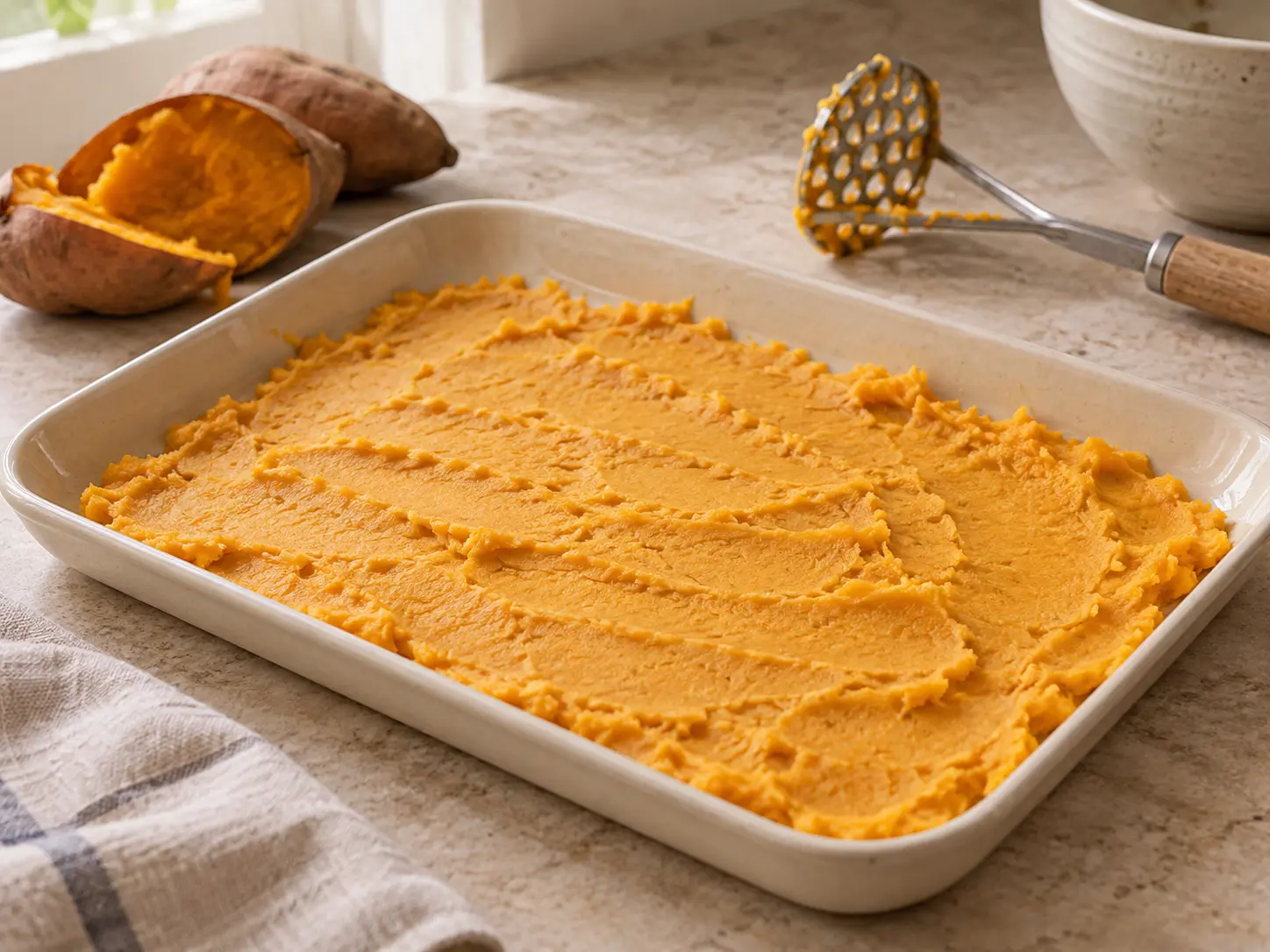
Cook and dry the sweet potato
Boil or steam chunks of sweet potato until tender. Peel, mash completely smooth and spread the purée thinly so steam can escape. Weigh it once cool.
Spread the purée thinly and weigh it only once it has cooled completely.
Mix with part of the water
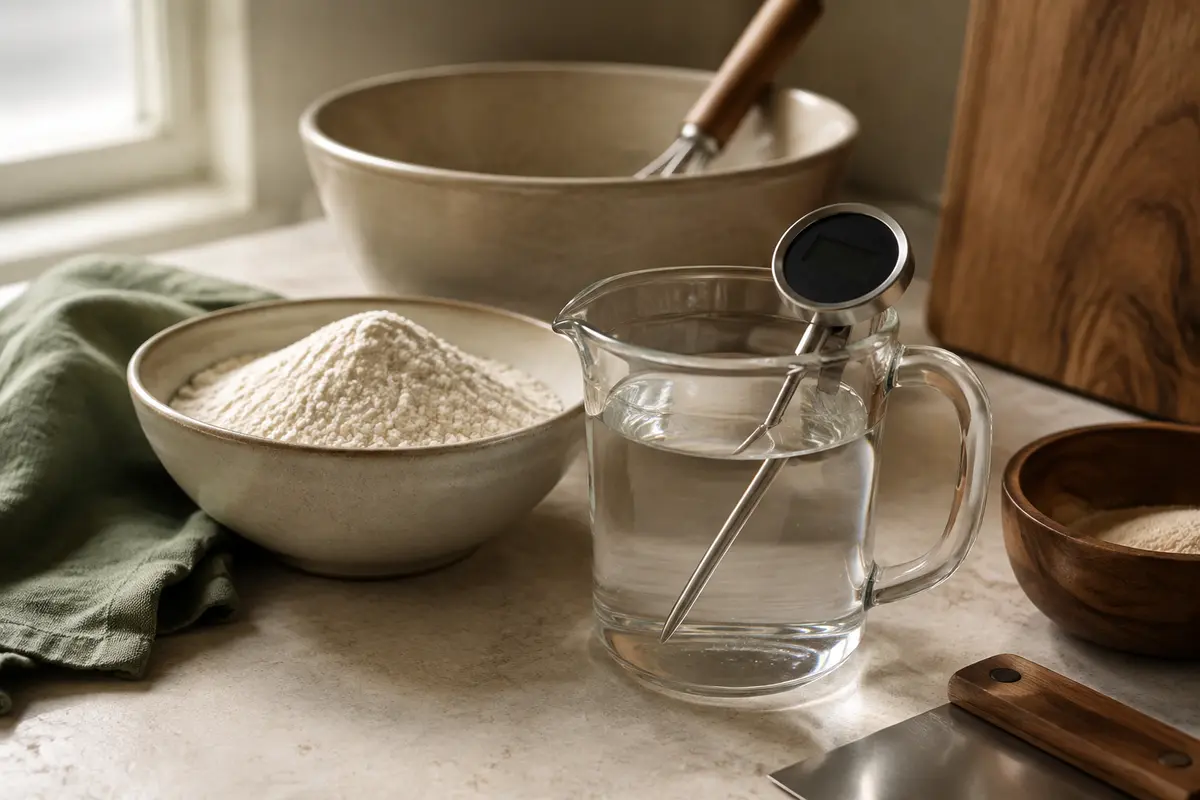
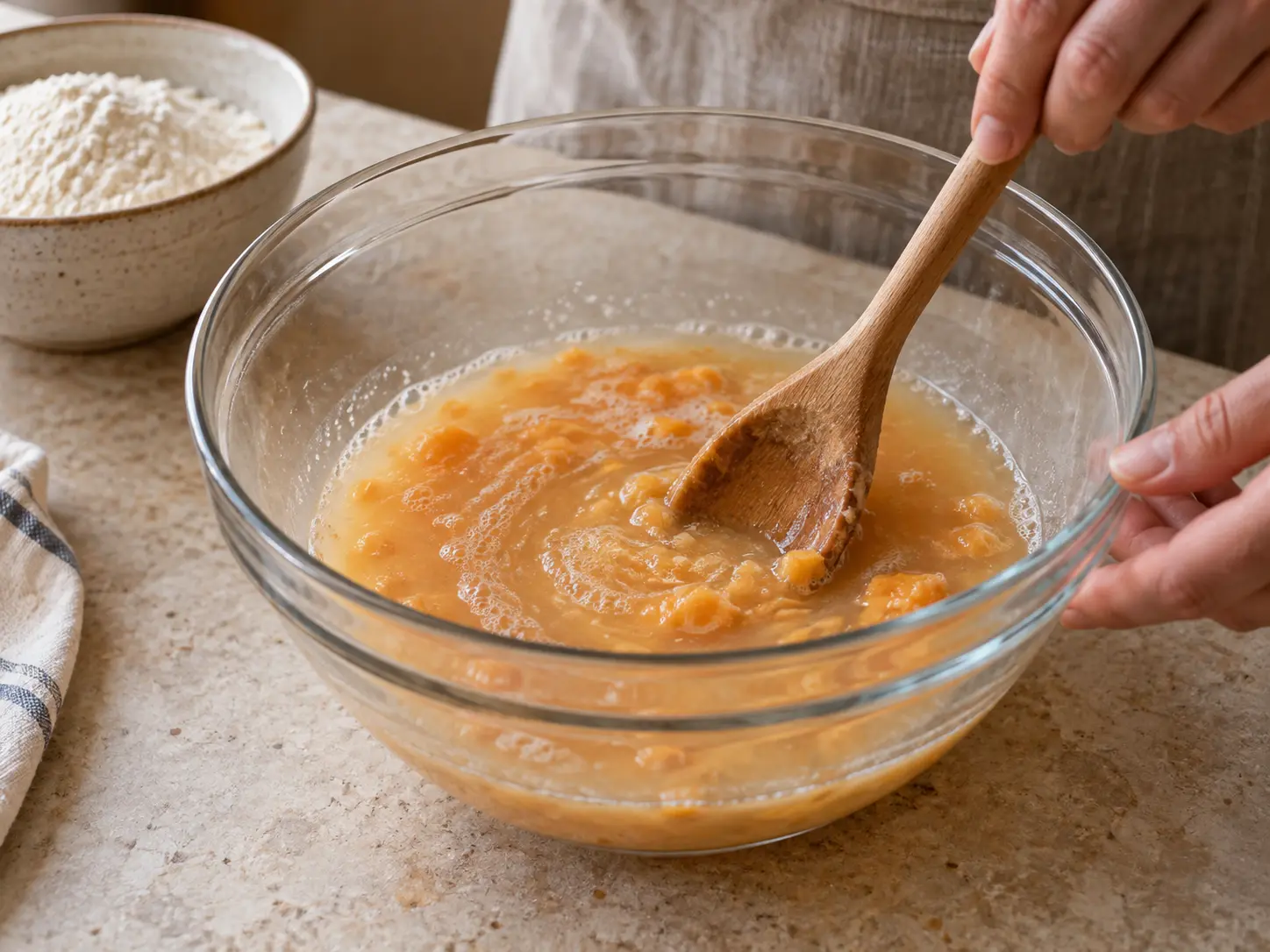
Stir the yeast into about 90% of the calculated lukewarm water. Mix in the purée, then add the flour and salt. Reserve the final water for kneading.
Mix the purée and yeast water until smooth, reserving the final water for kneading.
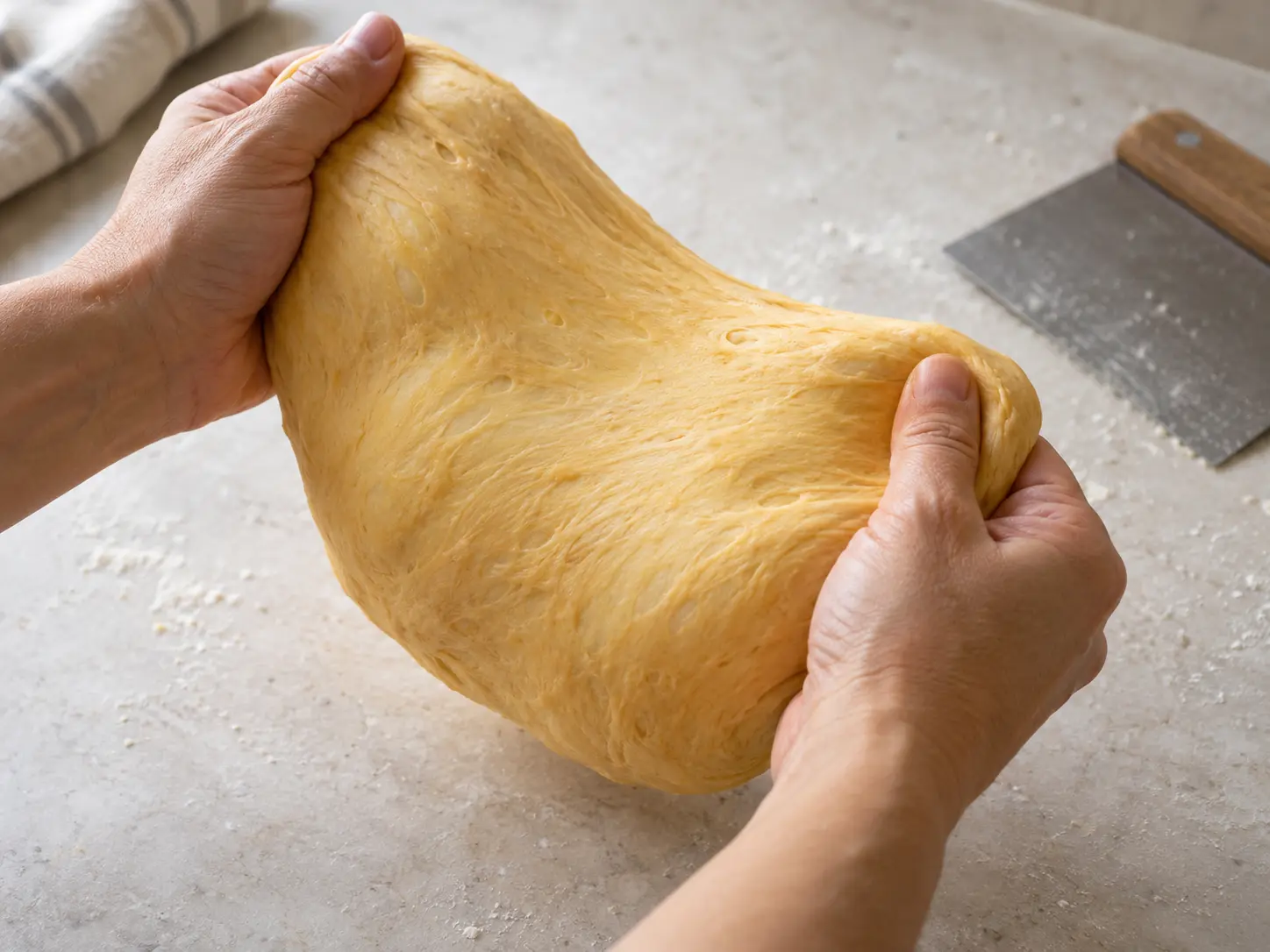
Knead to a supple dough
Knead for 8–10 minutes until cohesive and elastic. Add the reserved water in small amounts only while the dough feels firm; do not automatically add extra flour.
The dough may feel slightly tacky, but it should remain cohesive and elastic.
Let it rise steadily
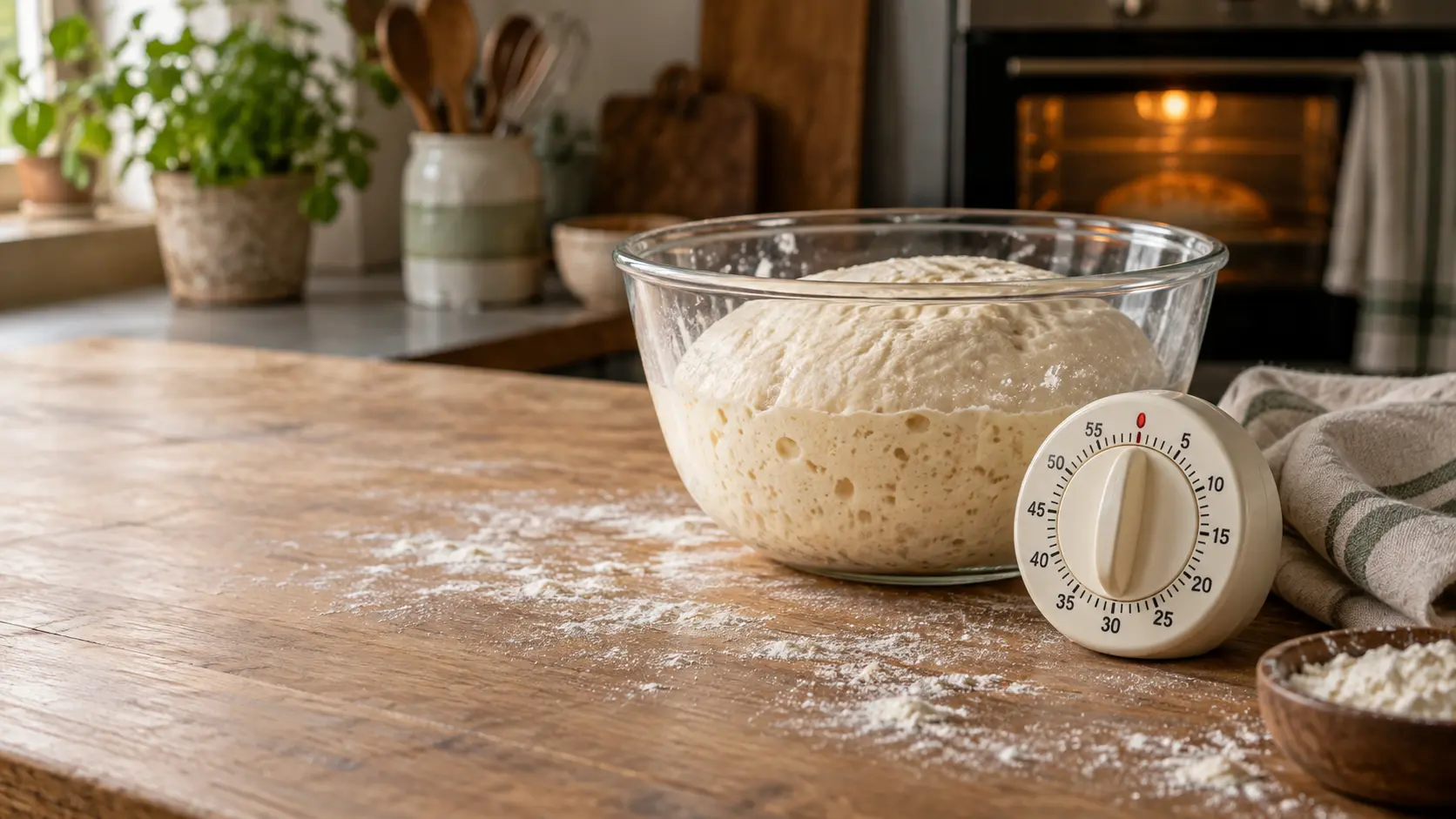
Cover and leave for 60–90 minutes, until about 75% larger. With the purée in the dough, it need not double dramatically to hold enough air.
Divide, round and relax
Divide into eight equal pieces, round them lightly and rest covered for 15 minutes. Press into rounds 12–14 cm wide and about 2.5–3 cm thick.
Give them a short final proof
Proof the shaped breads covered for 25–40 minutes. They should look fuller but remain firm enough to move into the pan without stretching.
Cook on a dry hot plate
Preheat a heavy cast-iron pan or flat griddle over medium heat for 8–10 minutes. Cook without oil for about 4–6 minutes per side. Lower the heat if dark patches develop before the side feels set.
Serve warm
Rest for a few minutes and split horizontally. If you like, spread with softened butter mixed with garlic, parsley and a pinch of salt.
Problems with purée, pan or crumb
The dough remains loose and sticky
Your purée held more water than average. Reserve more calculated water next time. For now, rest the dough for 15 minutes and use a scraper; add a little flour only as a last resort.
The outside burns while the center stays gummy
The pan is too hot or the disc too thick. Lower the heat, briefly cover the pan if necessary and keep the next breads closer to 2.5 cm.
The bread stays dense
Extend both the first and final proof. Also check that the purée was completely cool; hot purée can damage the yeast.
The crumb turns dry and crumbly
Do not work in lots of extra flour or cook longer than necessary. Steam-dried purée is not dehydrated purée; it should remain smooth and moist.
Frequently asked questions
Do I need a basalt stone?
No. A heavy cast-iron skillet, plancha or flat griddle retains heat well and is more dependable at home. Do not oil the pan.
Which sweet potato works best?
A drier, pale-fleshed sweet potato is easier to adjust, but an orange variety also works. Start with less water because that purée is often wetter.
Why is it called bolo when it is bread?
Bolo usually means cake, but Bolo do Caco is a yeasted flatbread. The established regional name mainly refers to the round form and the traditional hot caco on which it is cooked.
Can I bake it in the oven?
Yes, on a thoroughly preheated stone or steel at about 230°C. The crust will color more evenly and lose some of the characteristic dark griddle patches.
Can I freeze Bolo do Caco?
Yes. Freeze completely cool and well wrapped. Thaw and refresh briefly in a dry pan; add garlic-parsley butter only when serving.