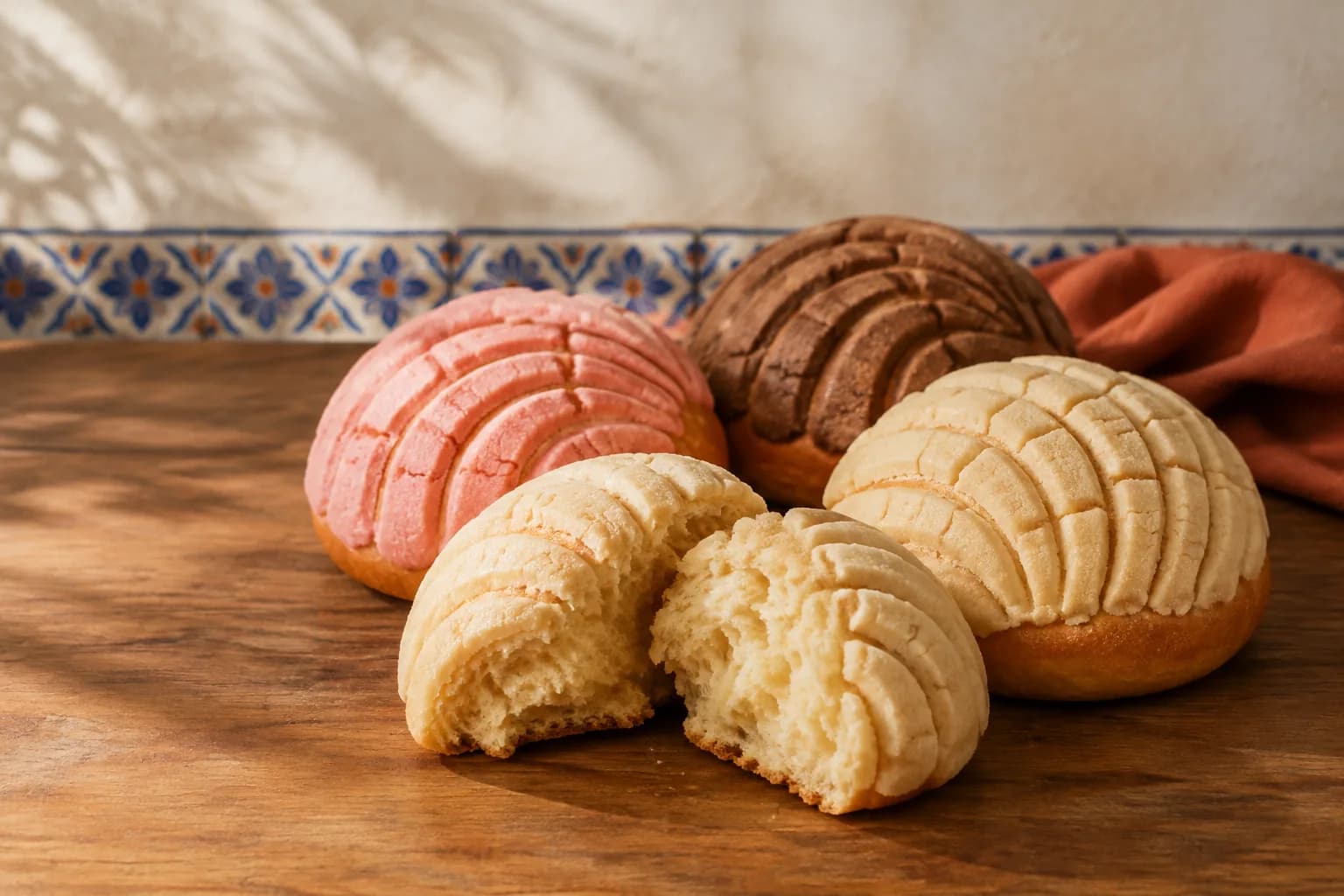
Hamburg pastry
Franzbrötchen
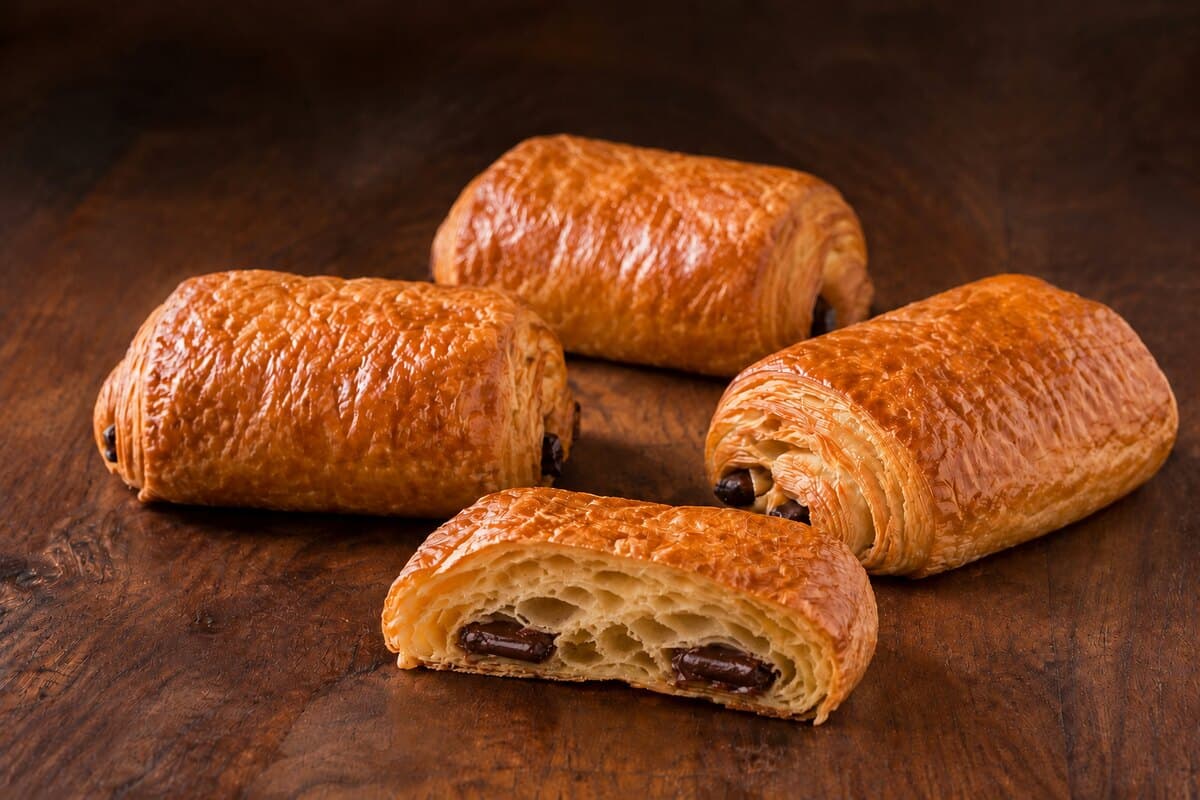
Crisp layers with a tender, caramelized center.
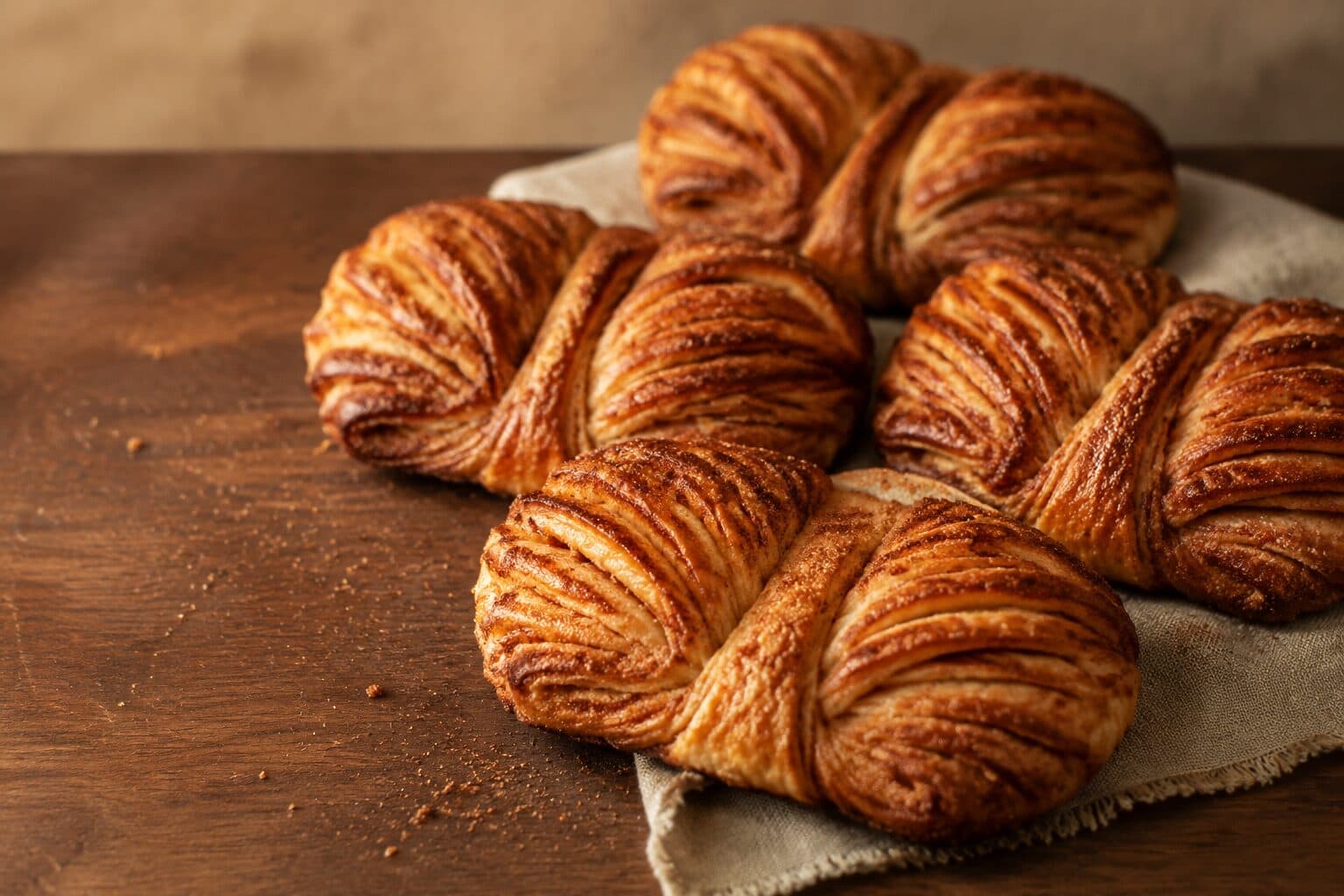
Not an ordinary cinnamon roll, but Hamburg-style laminated yeast pastry: rolled tightly with cinnamon sugar and pressed deeply so the layers fan open on both sides.
The formula
Ten classic Franzbrötchen
Starting point: 10 pastries of about 120 g. The flour and butter include the butter block; brushing water and an optional egg-yolk glaze are not included.Active preparation: about 60 min · First proof: 60–90 min · Chilling: 75–90 min · Final proof: 45–60 min · Baking: 18–20 min.
- Bread flour (total)
- 100%526 g
- Whole milk
- 45.5%239 g
- Salt
- 1%5.3 g
- Instant yeast
- 1.2%6.3 g
- Butter (dough + butter block)
- 50%263 g
- Sugar in the dough
- 10.5%55 g
- Cinnamon sugar
- 20%105 g
Weights are rounded for weighing; their sum may differ slightly from the calculated total. Small additions stay in grams.
Cinnamon sugar
Mix the calculated sugar and cinnamon just before filling so it stays dry and spreads evenly.- Sugar
- 91%96 g
- Ground cinnamon
- 9%9.5 g
Weights are rounded for weighing; their sum may differ slightly from the calculated total. Small additions stay in grams.
Crisp edges, tender layers and caramelized cinnamon
The butter block creates flaky layers; the deep press keeps each pastry low and pulls the cinnamon spirals visibly outwards.Whole milk
A firm dough that encloses the butter cleanly while you roll.
Total butter
For the dough and butter block together: rich, yet manageable to laminate.
Per pastry
Generous enough for a defined fan and a tender center.
Oven
Hot enough to lift the layers and caramelise the cinnamon edges.
Why this is not just another cinnamon roll
Classic Franzbrötchen begin as laminated yeast dough: a cool, pliable butter block is folded into yeasted dough. The butter separates the layers in the oven, while yeast gives a softer bite than puff pastry.
All flour counts as 100%, including the flour in the butter block. The 50% butter is also the combined amount for dough and block. Cinnamon sugar is shown separately, so both pastry and signature filling scale cleanly.
Work cool, make one neat letter fold, then press firmly
The quantities below make 10 Franzbrötchen of about 120 g / 4.2 oz. Keep dough and butter cool but pliable: hard butter shatters and soft butter leaks.Divide the flour and butter
For the standard batch, weigh 525.8 g / 18.5 oz strong flour and 262.9 g / 9.3 oz butter. Reserve 47 g / 1.7 oz flour and 192 g / 6.8 oz butter for the butter block. The dough uses the remaining 479 g / 16.9 oz flour and 71 g / 2.5 oz butter, plus 239 g / 8.4 oz whole milk, 55.2 g / 1.9 oz sugar, 6.3 g instant yeast and 5.3 g salt.
Knead, proof and chill the dough
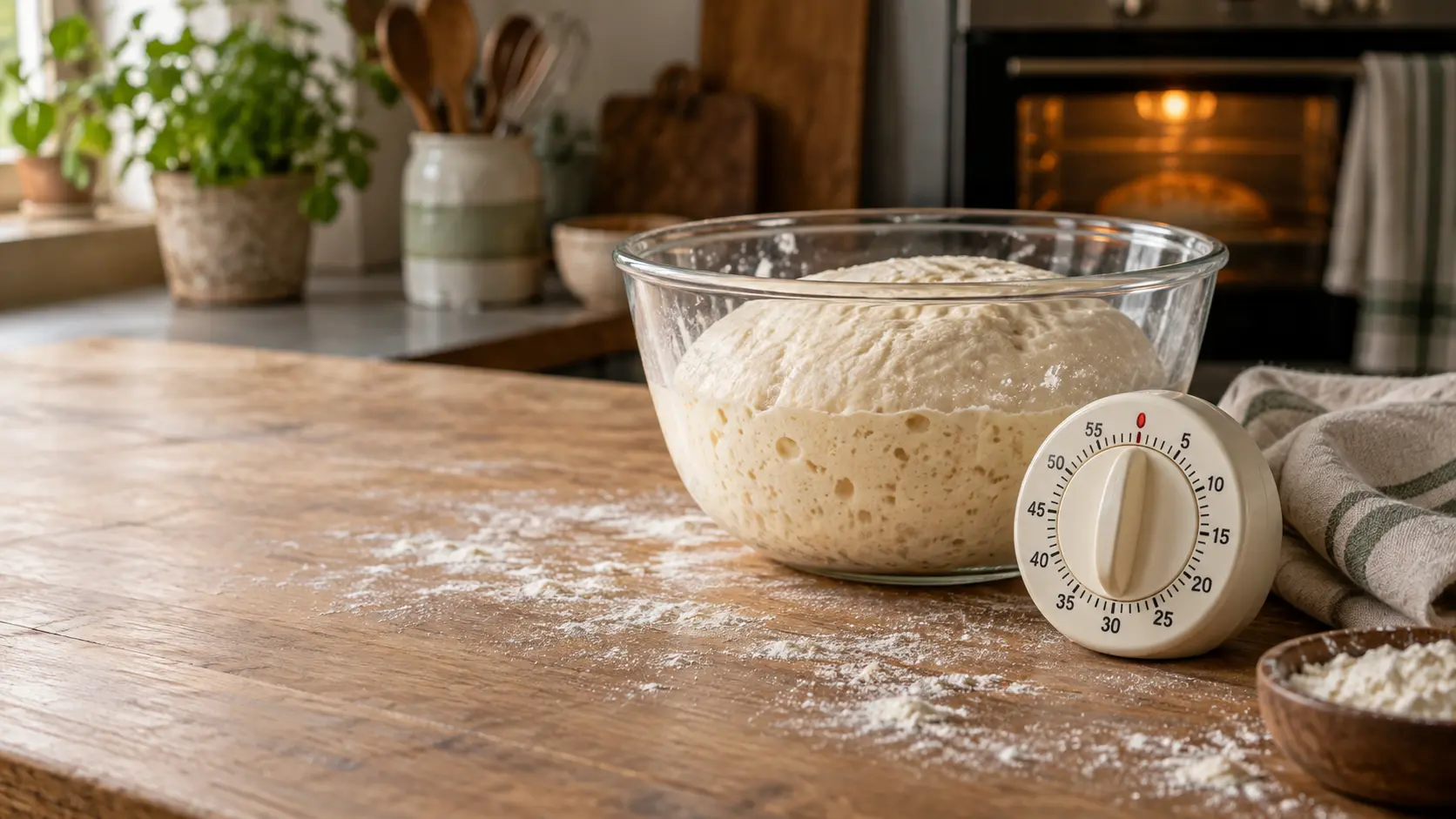
Bring the milk to 20–22 °C and stir in the yeast and sugar. Add 479 g / 16.9 oz flour and mix for 3 minutes. Add the salt and 71 g / 2.5 oz butter in three portions, then knead for another 6–8 minutes until smooth and elastic. Aim for 23–24 °C. Cover and proof for 60–90 minutes at 22–24 °C, until about 50% larger. Flatten into a rectangle, wrap and chill for 30 minutes.
Make the butter block
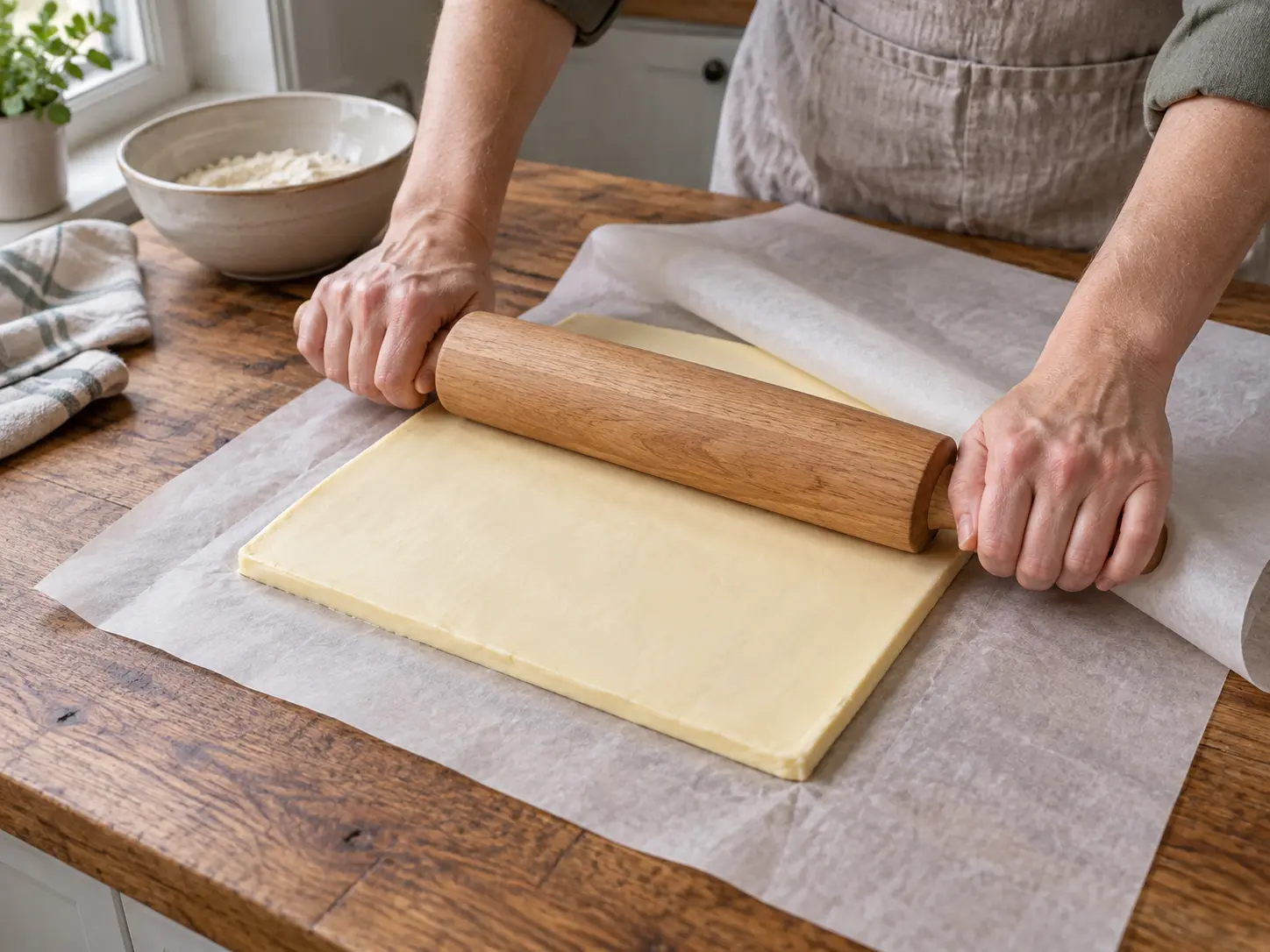
Briefly work 47 g / 1.7 oz flour into 192 g / 6.8 oz cold but pliable butter. Roll between baking paper to a 25 × 30 cm rectangle about 8 mm thick. Chill for 15–20 minutes; it should feel firm but bend without cracking.
Roll to 25 × 30 cm and about 8 mm thick; the block should stay firm but pliable.
Lock in the butter
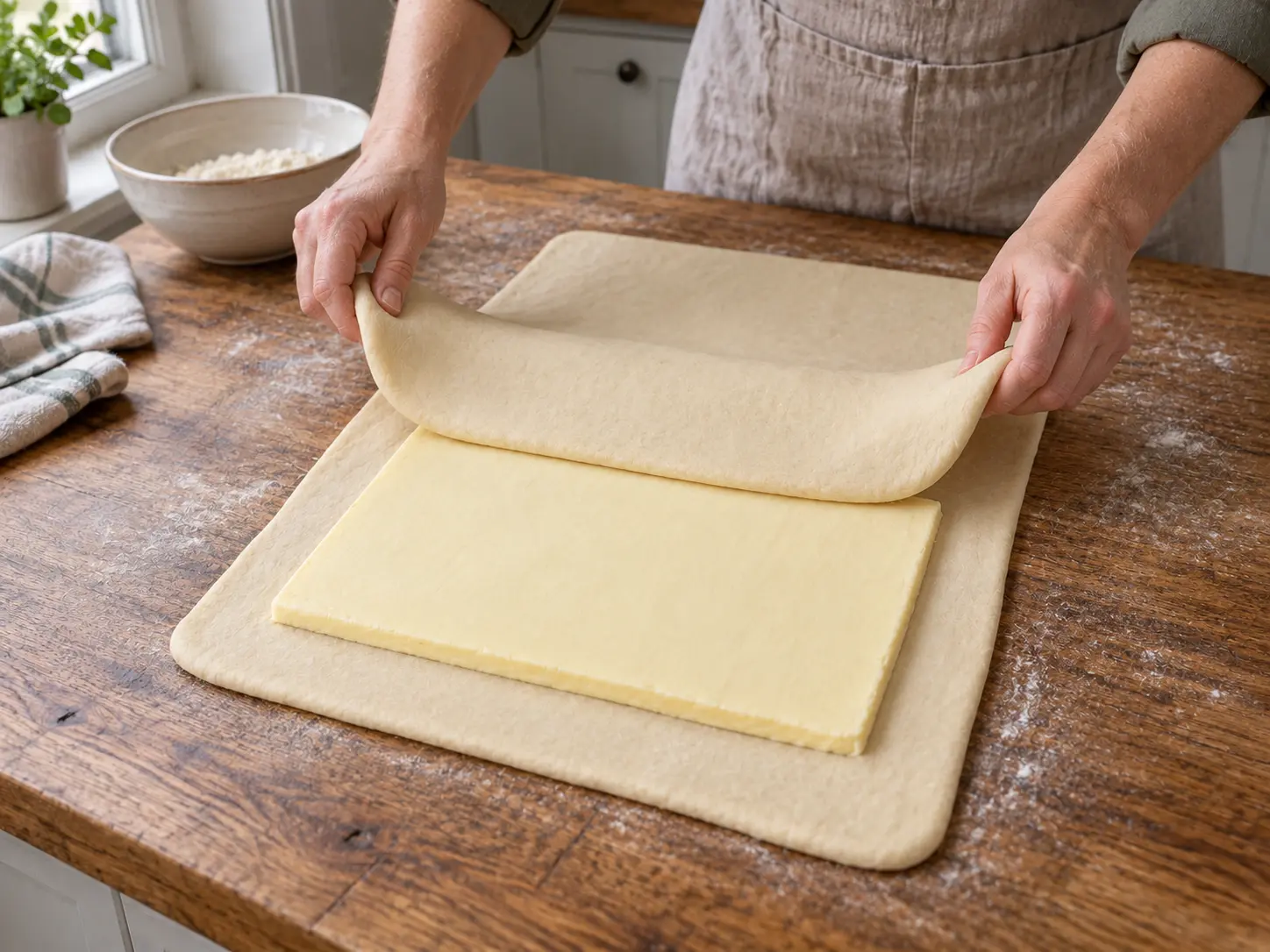
Roll the chilled dough to 40 × 50 cm. Place the butter block across the lower half as a 30 × 25 cm rectangle, leaving about 5 cm of dough at each side. Fold the empty upper half down over the butter. Press out trapped air and seal the three open edges carefully; no butter should remain visible.
Fold the empty half over the butter and seal the three open edges without trapping air.
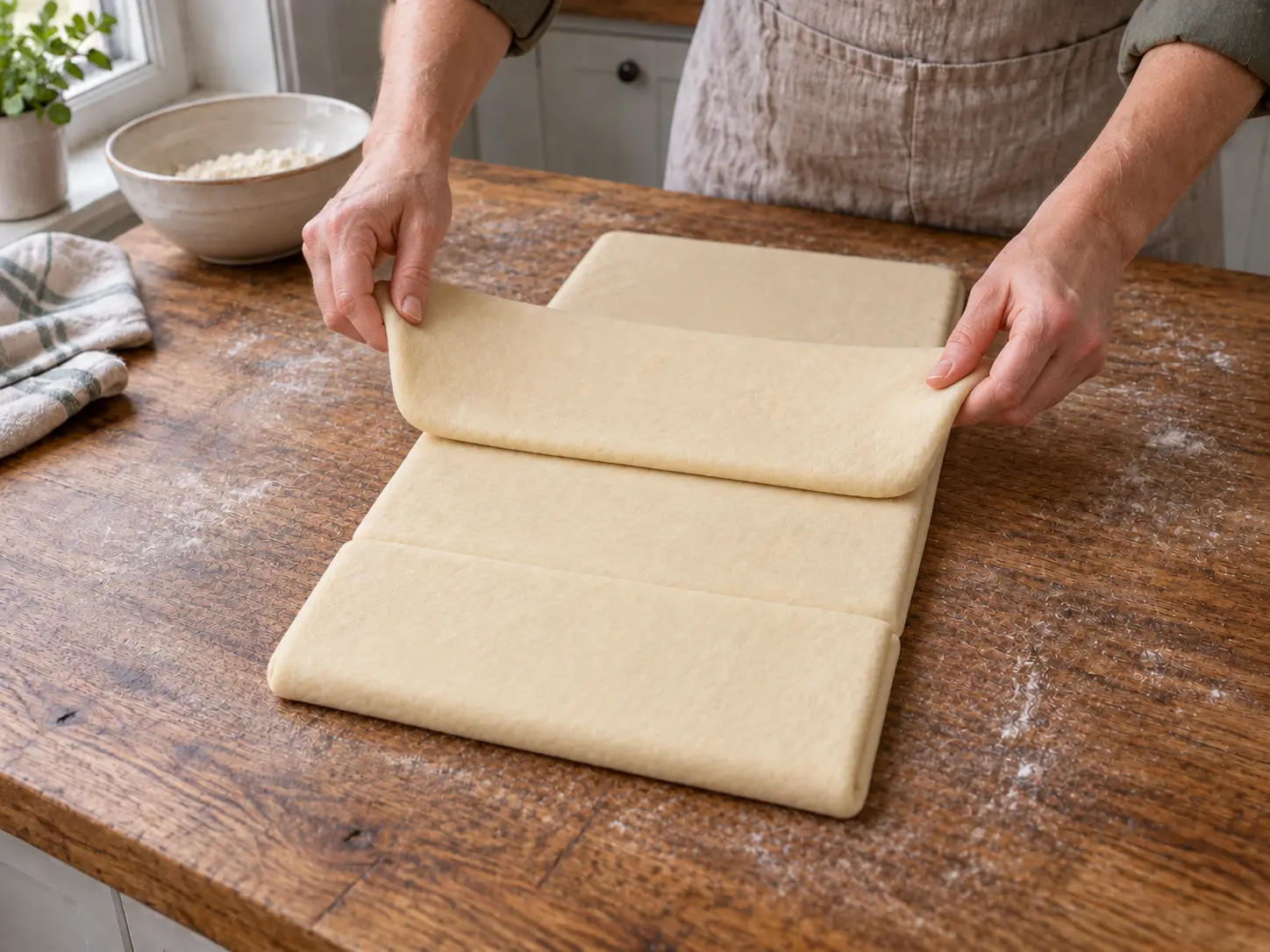
Make one letter fold
Turn the packet a quarter turn and roll with calm, even pressure to about 30 × 60 cm. Brush away loose flour. Fold the lower third up and the upper third down over it to make three square layers. Wrap and chill for 45 minutes.
Brush away loose flour and align all three layers before chilling the packet for 45 minutes.
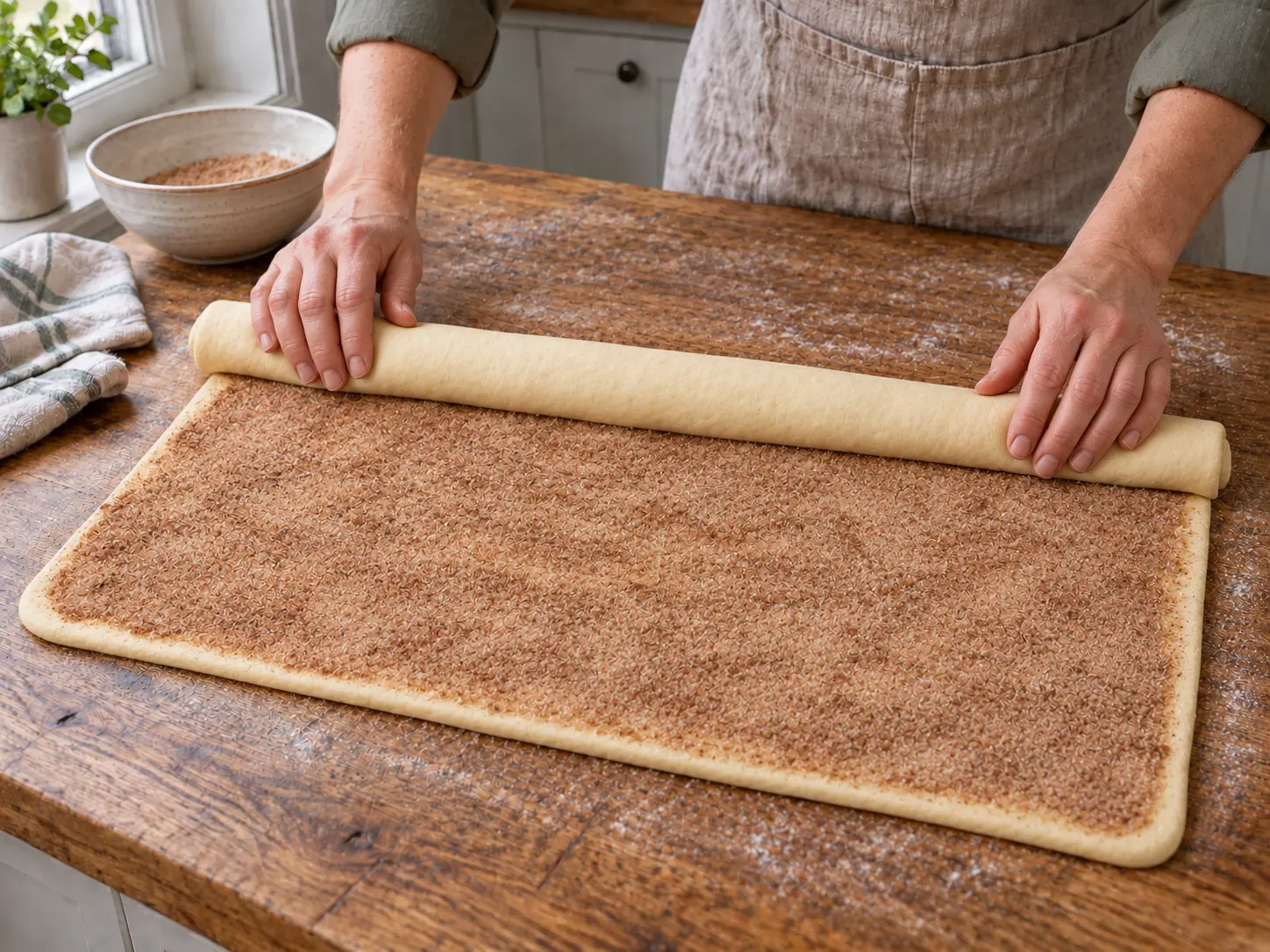
Fill and roll up
Mix 95.7 g / 3.4 oz sugar with 9.5 g cinnamon. Roll the cold packet to 40 × 50 cm. Brush with the thinnest film of water, distribute all the cinnamon sugar evenly and roll tightly from a long side into a log about 50 cm long. Set it seam-side down and chill for 15 minutes if it feels too soft to cut cleanly.
Roll from the long side into one straight log about 50 cm long and place it seam-side down.
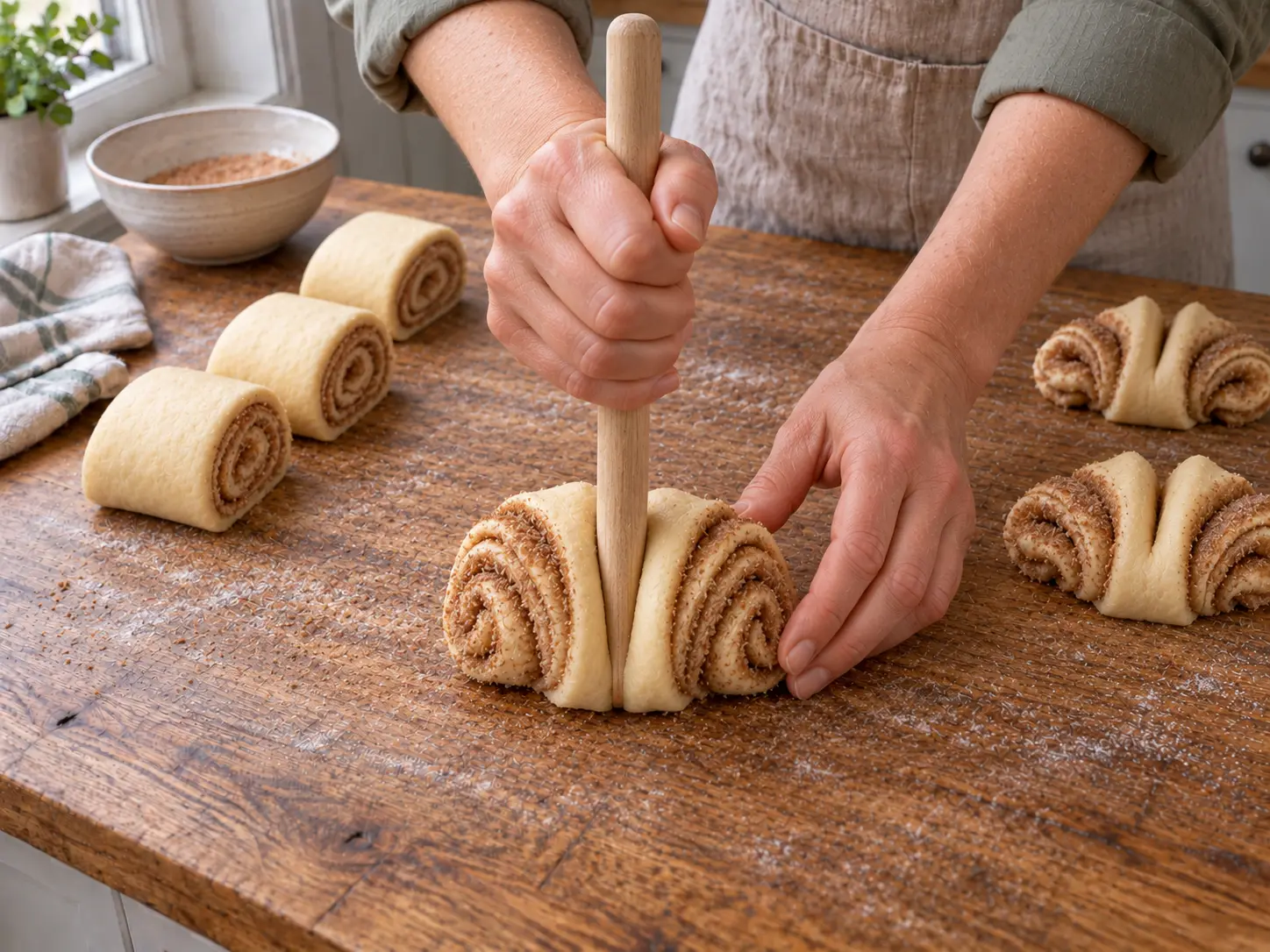
Cut and press the shape
Cut the log into 10 pieces about 5 cm wide. Place each on its curved side with the spiral cut faces pointing left and right. Press a wooden-spoon handle front-to-back deeply through the center, parallel to the cut faces and almost to the tray, until both sides fan open.
Cut faces left and right; press the handle front-to-back almost to the tray.
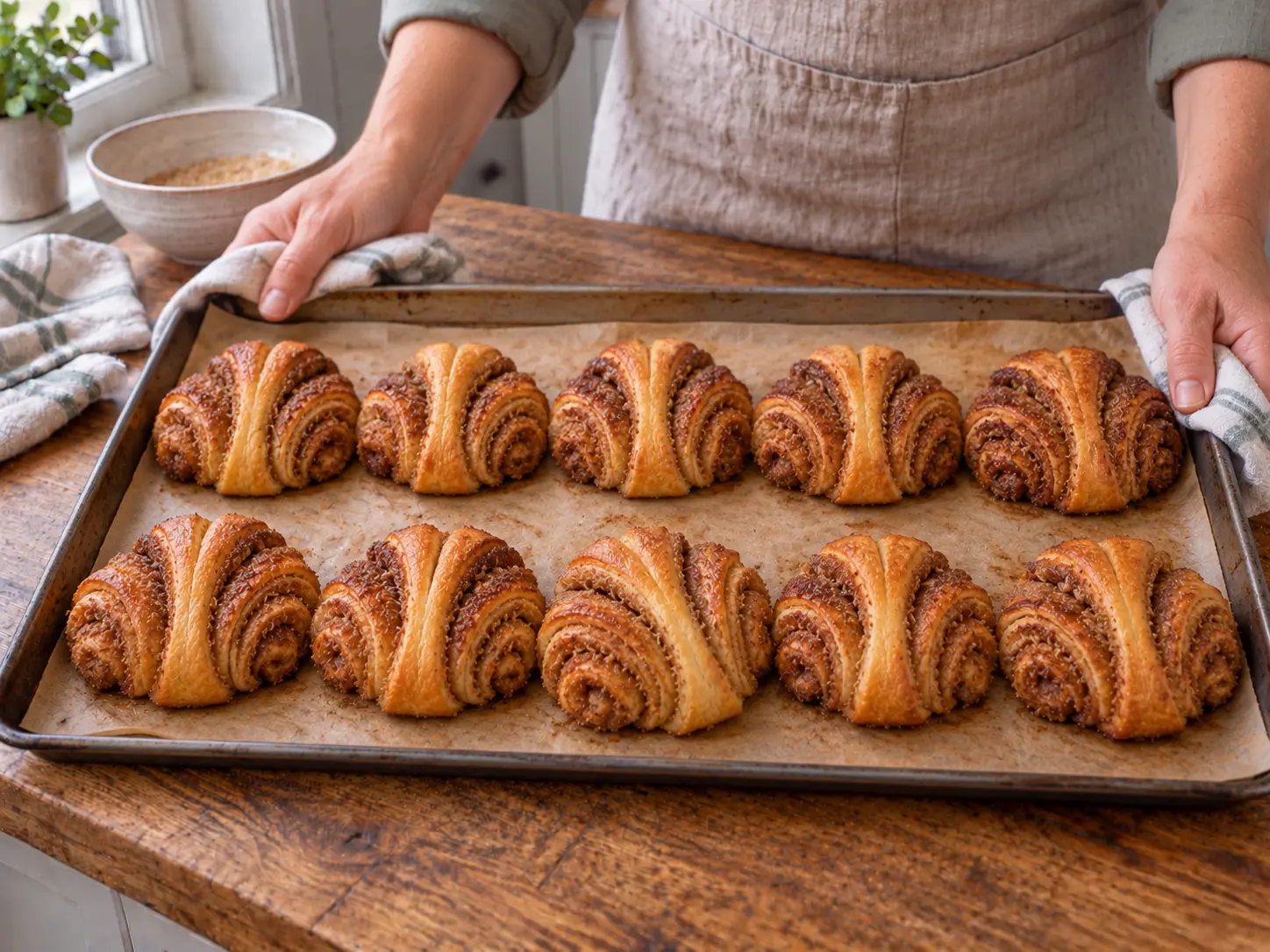
Proof and bake
Space the shaped pieces well apart on baking paper. Cover and proof for 45–60 minutes at 22–24 °C, until visibly lighter. Preheat the oven for at least 30 minutes to 210 °C conventional or 190 °C fan. Brush lightly with egg yolk if desired and bake for 18–20 minutes. Rest on the tray for 10 minutes, then transfer to a rack.
Bake until the layers are deeply golden and the exposed cinnamon edges caramelise.
Problems with layers and shaping
The butter shatters into hard plates
Leave the dough packet for 5–10 minutes before rolling again. The butter was colder and harder than the dough.
Butter leaks while rolling
Stop immediately and chill the packet for 20–30 minutes. Continue with light, even pressure and only a minimal dusting of flour.
The fan closes during proofing
Press the spoon handle more deeply, almost to the worktop, and leave enough room between the pastries.
The outside colors before the center is baked
Lower the oven by 10 °C and bake a little longer. Dark cinnamon sugar is welcome; a raw, compact center is not.
Frequently asked questions
How are Franzbrötchen different from cinnamon rolls?
Classic Franzbrötchen use laminated yeast dough and are pressed deeply. That makes them flatter, flakier and more caramelized than a soft cinnamon roll.
Can I prepare the dough a day ahead?
Yes. Chill after the first rise, laminate with the butter and refrigerate the covered dough packet overnight. Fill, shape and proof the pastries the next day.
Can shaped Franzbrötchen be frozen?
Yes. Freeze them directly after shaping. Thaw covered overnight in the refrigerator, finish proofing at room temperature and bake fresh.
Can I use fresh yeast?
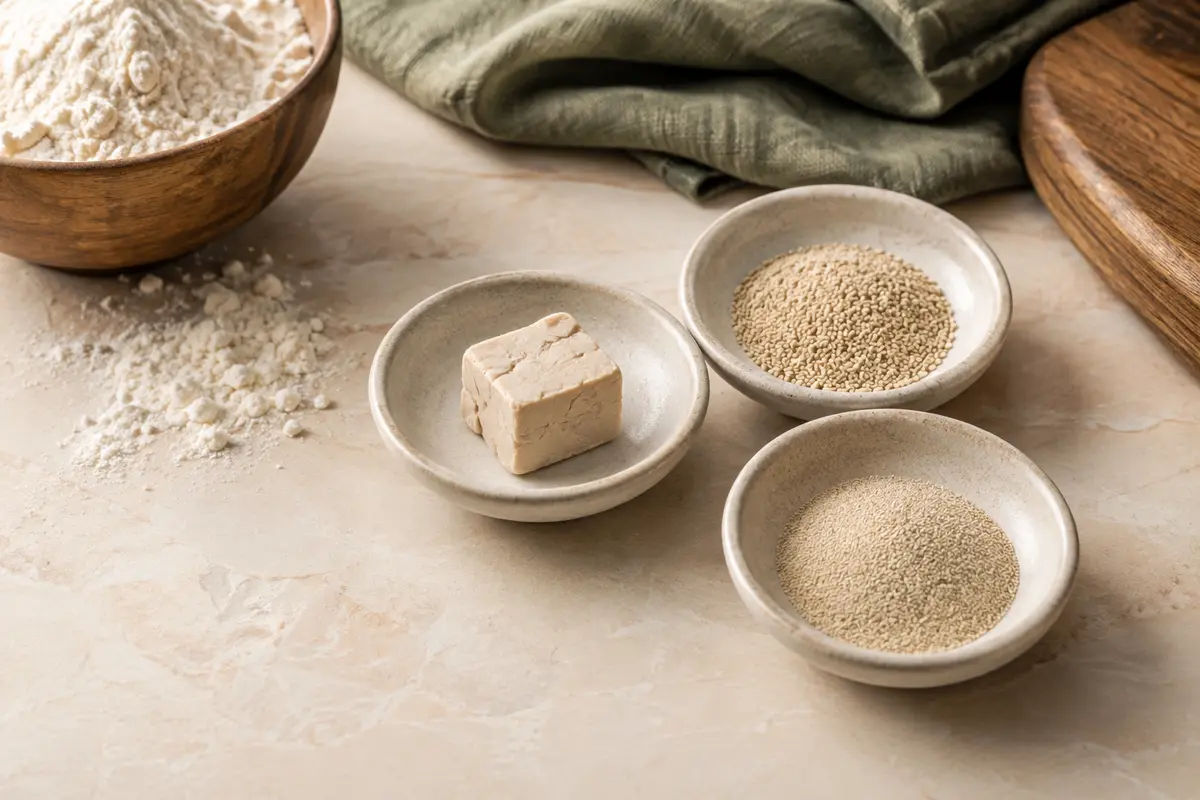
Yes. Use roughly three times the calculated instant-yeast weight and dissolve it in the milk.