Laminated dough
Pain au chocolat
Flaky croissant pastry with chocolate inside.
Scale the classic rectangular chocolate pastry by count or piece weight. The formula keeps croissant dough, roll-in butter and chocolate batons in proportion.
The formula
Ten laminated pains au chocolat
Starting point: 10 pastries at 80 g / 2.8 oz. The 65% butter is split into 10% dough butter and 55% roll-in butter.Active preparation: about 55 min · Baking: about 18–20 min. Chilling and proofing take additional time.
- Flour
- 100%306 g
- Milk + water
- 58%177 g
- Salt
- 2%6.1 g
- Instant yeast
- 1.5%4.6 g
- Total butter
- 65%199 g
- Sugar
- 10%31 g
- Chocolate batons
- 25%77 g
Weights are rounded for weighing; their sum may differ slightly from the calculated total. Small additions stay in grams.
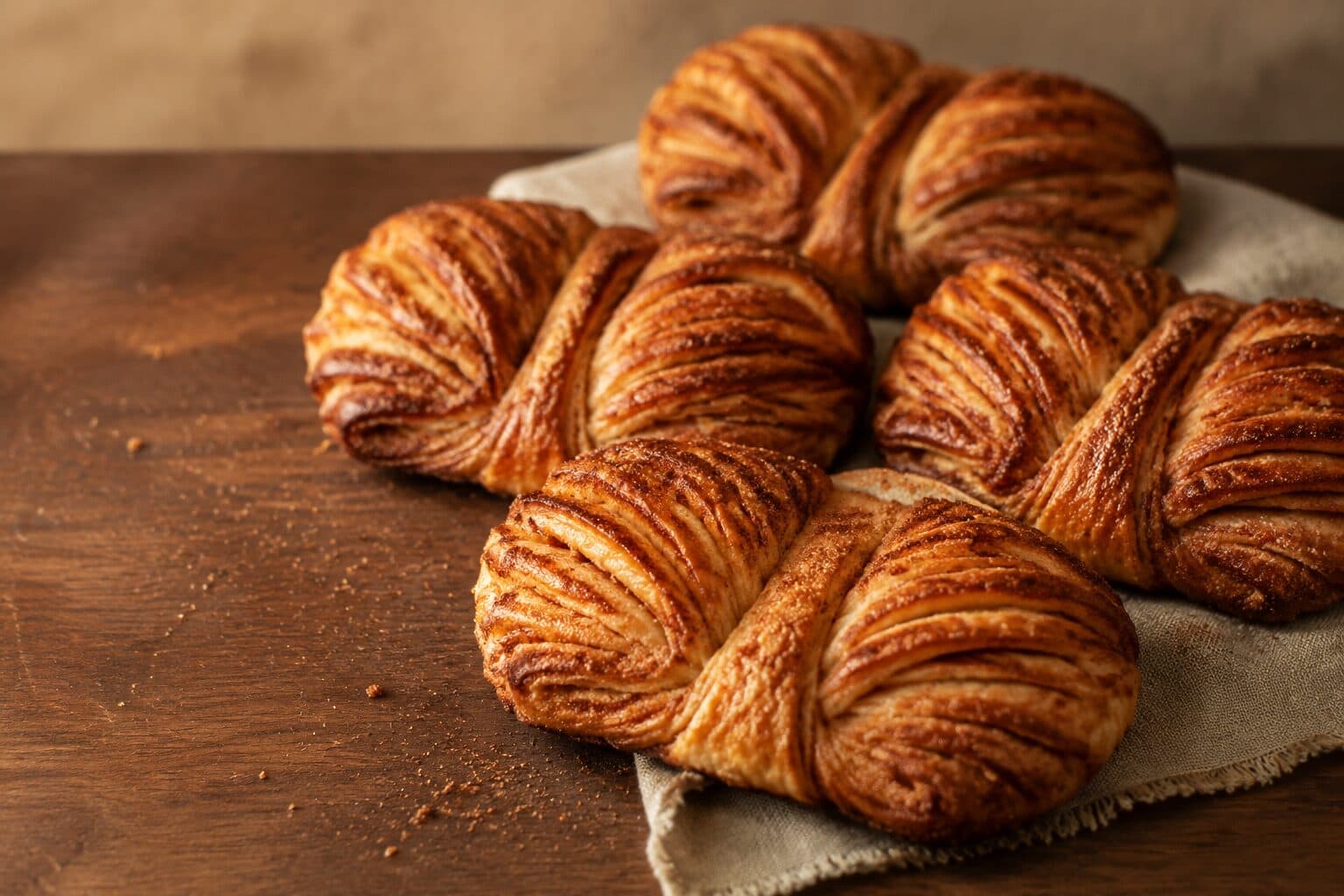
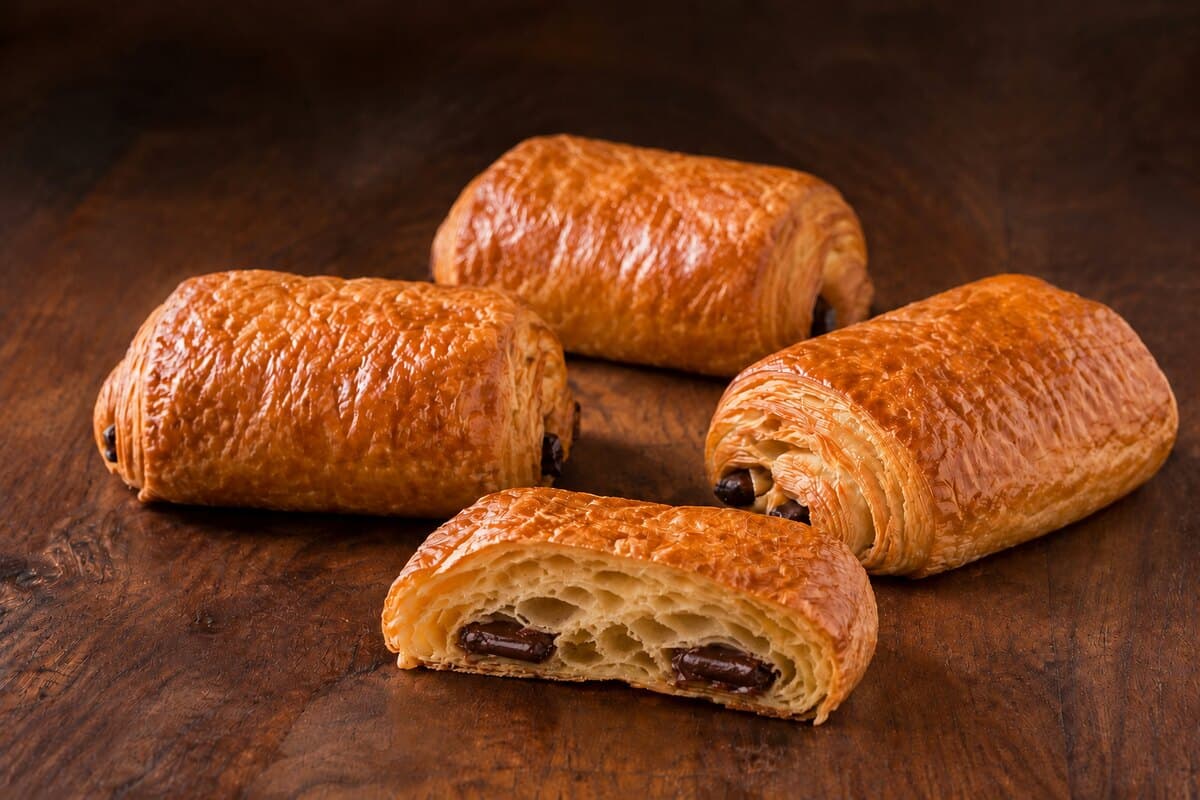
An airy honeycomb wrapped in thin, crisp butter layers
This is croissant dough shaped as a rectangle: yeasted, chilled and laminated. Two batons add chocolate without weighing down the layers.Milk + water
Use roughly equal parts for extensible dough and reliable browning.
Total butter
10% goes into the dough and 55% creates the laminated layers.
Per pastry
2.8 oz including two chocolate batons: generous but still airy.
Oven
Bake at 375 °F for about 18–20 minutes.
What makes this a true pain au chocolat
Pain au chocolat uses yeasted dough wrapped around a cold sheet of butter, then rolled and folded several times. In the oven, water in the butter turns to steam and lifts the separate dough layers.
The calculator groups milk and water as 58% liquid; divide it roughly equally. It also shows butter as one total: use 10% of the flour weight in the dough and reserve 55% as cold, pliable roll-in butter.
Chocolate batons are set at 25% of the flour weight and included in the final piece weight. A light egg wash is only a finish, so it is not part of the calculation.
Cool, controlled work creates the layers
Plan this over two days if possible. The amounts below are for the default batch of 10 pastries at 80 g / 2.8 oz; if you change the calculator, use the gram amounts shown there.Mix the base dough
Mix 89 g / 3.1 oz cold whole milk, 89 g / 3.1 oz cold water and 5 g instant yeast. Add 306 g / 10.8 oz flour and 31 g / 1.1 oz sugar and mix until no dry flour remains. Add 6 g salt and 31 g / 1.1 oz softened butter; knead for 5–7 minutes by machine or 7–9 minutes by hand. Stop when the dough is smooth and elastic and no warmer than about 24 °C / 75 °F. Flatten, cover, rest for 30 minutes at room temperature, then refrigerate overnight or for at least 4 hours.
Chill dough and butter
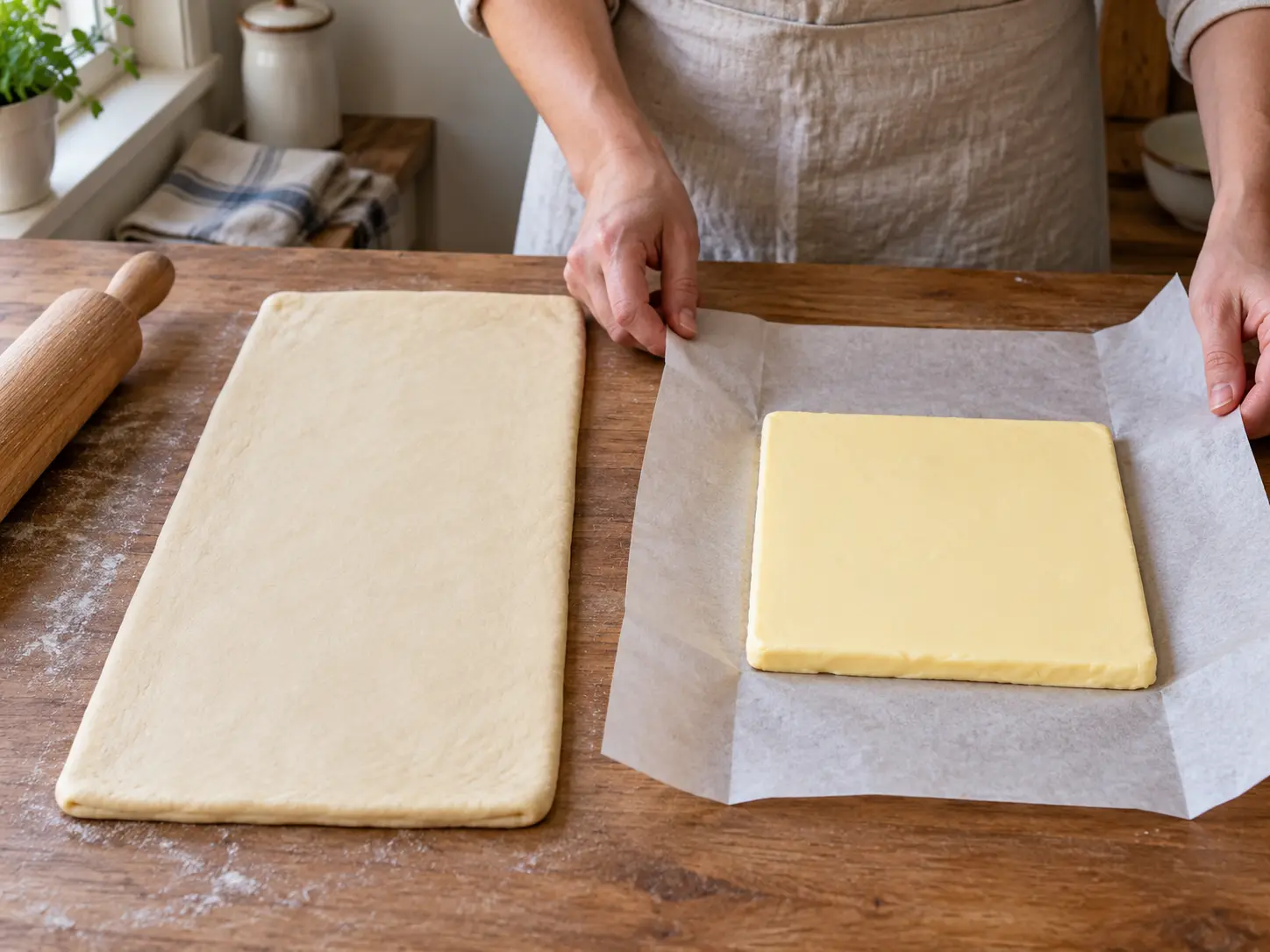
On day 2, shape 168 g / 5.9 oz cold roll-in butter between parchment into an even slab about 18 × 20 cm / 7 × 8 in. Roll the cold dough to about 20 × 40 cm / 8 × 16 in. Dough and butter should feel similarly pliable: the butter bends without cracking. If it breaks, let it temper for 5–10 minutes; if it turns glossy or soft, chill it again.
The butter is cold but pliable and fits with a narrow dough margin all around.
Lock in the butter
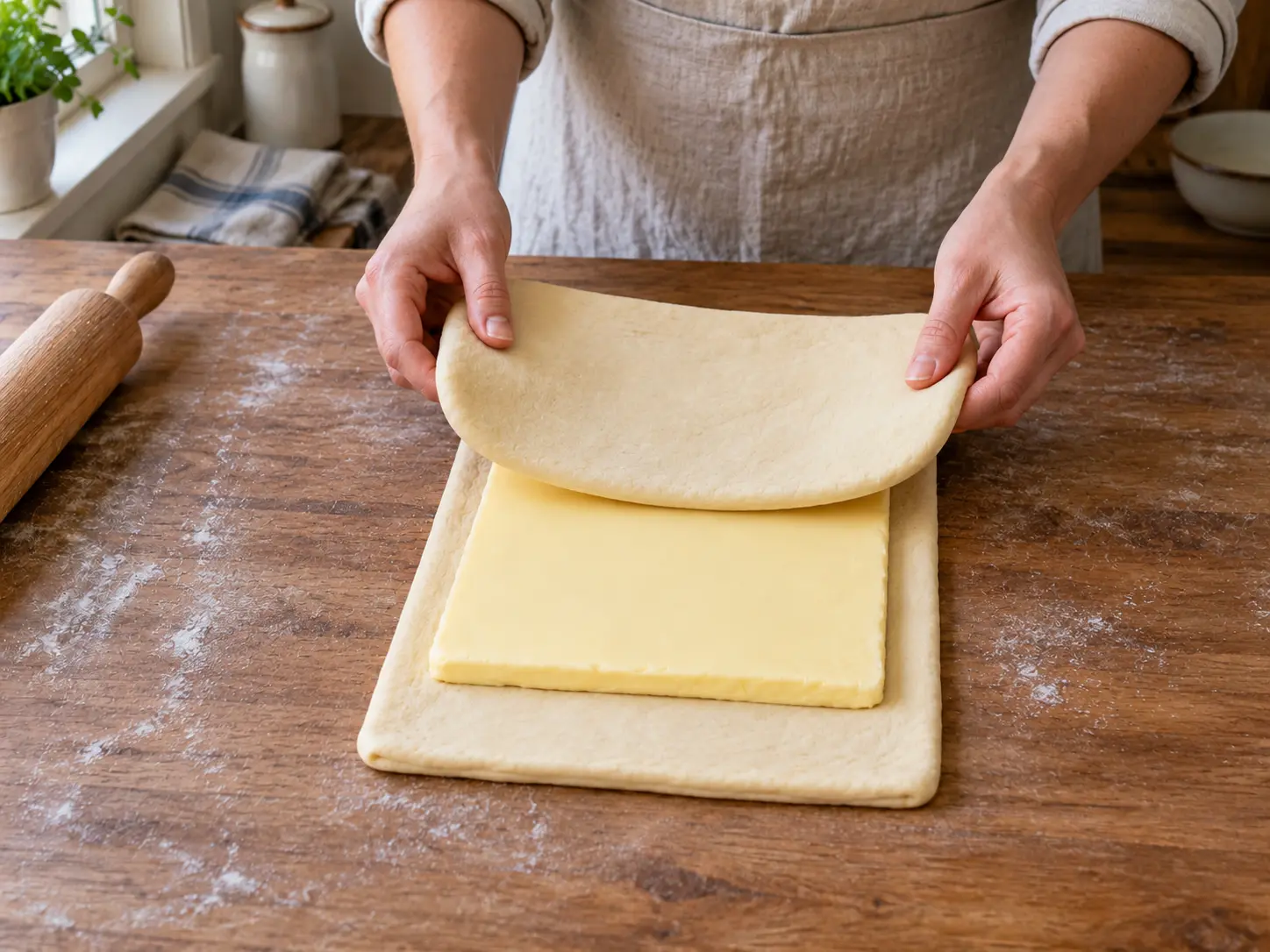
Place the butter on one half of the dough, leaving about 1 cm / ⅜ in of bare dough around it. Fold over the other half, press out trapped air and pinch every seam closed without forming a thick ridge. No butter should remain exposed.
Seal every seam; no butter should remain visible.
Give three turns
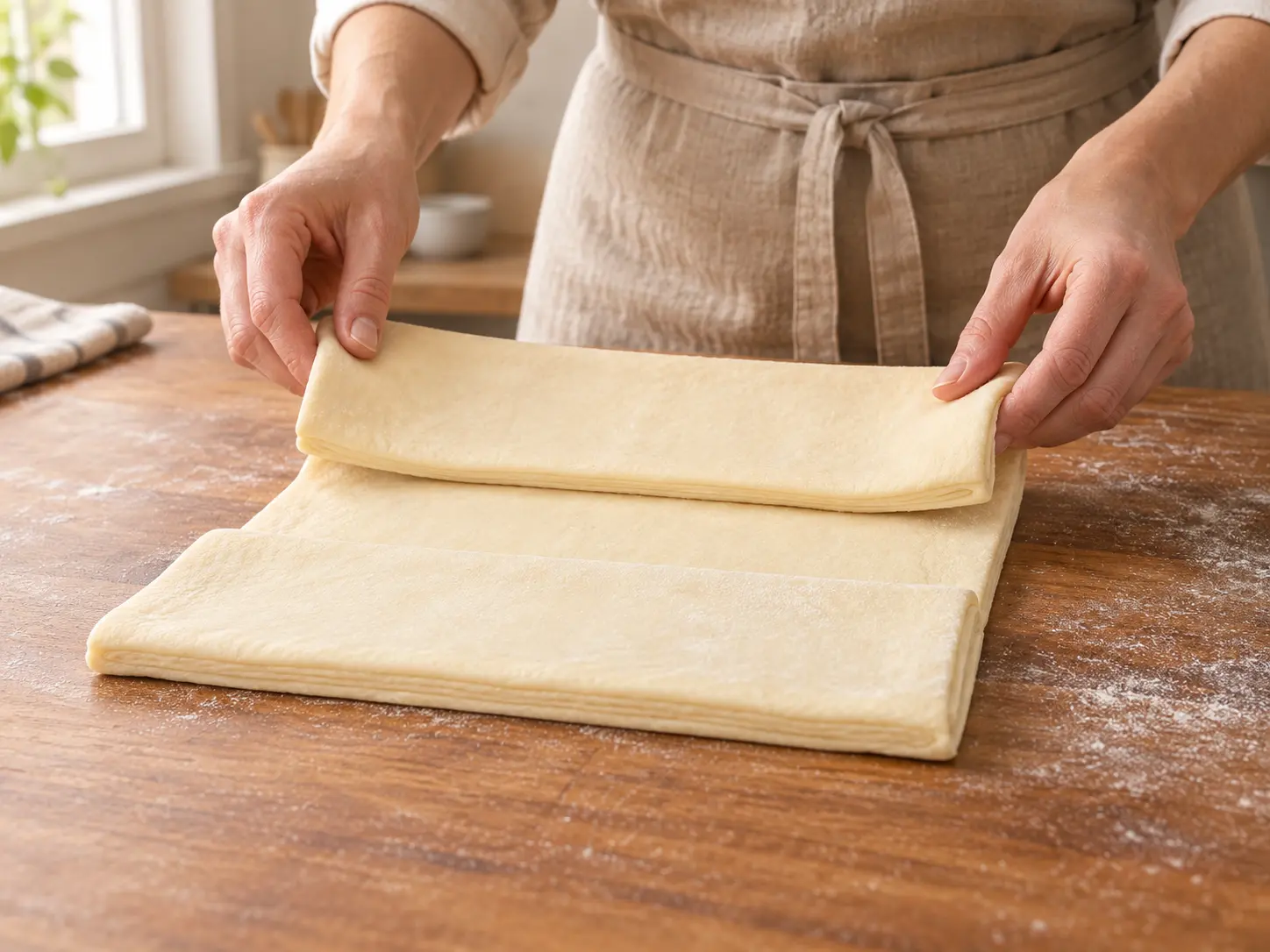
Roll the packet gently from the center to about 20 × 60 cm / 8 × 24 in and 5–6 mm thick. Brush off loose flour, fold the bottom third up and the top third over it like a letter. Cover and chill for 30 minutes. Turn 90 degrees and repeat twice more: three single turns in total. If the dough shrinks or the butter softens, chill for another 20–30 minutes. After the third turn, chill for at least 60 minutes or overnight.
Brush away loose flour and align the three layers squarely.
Cut and fill
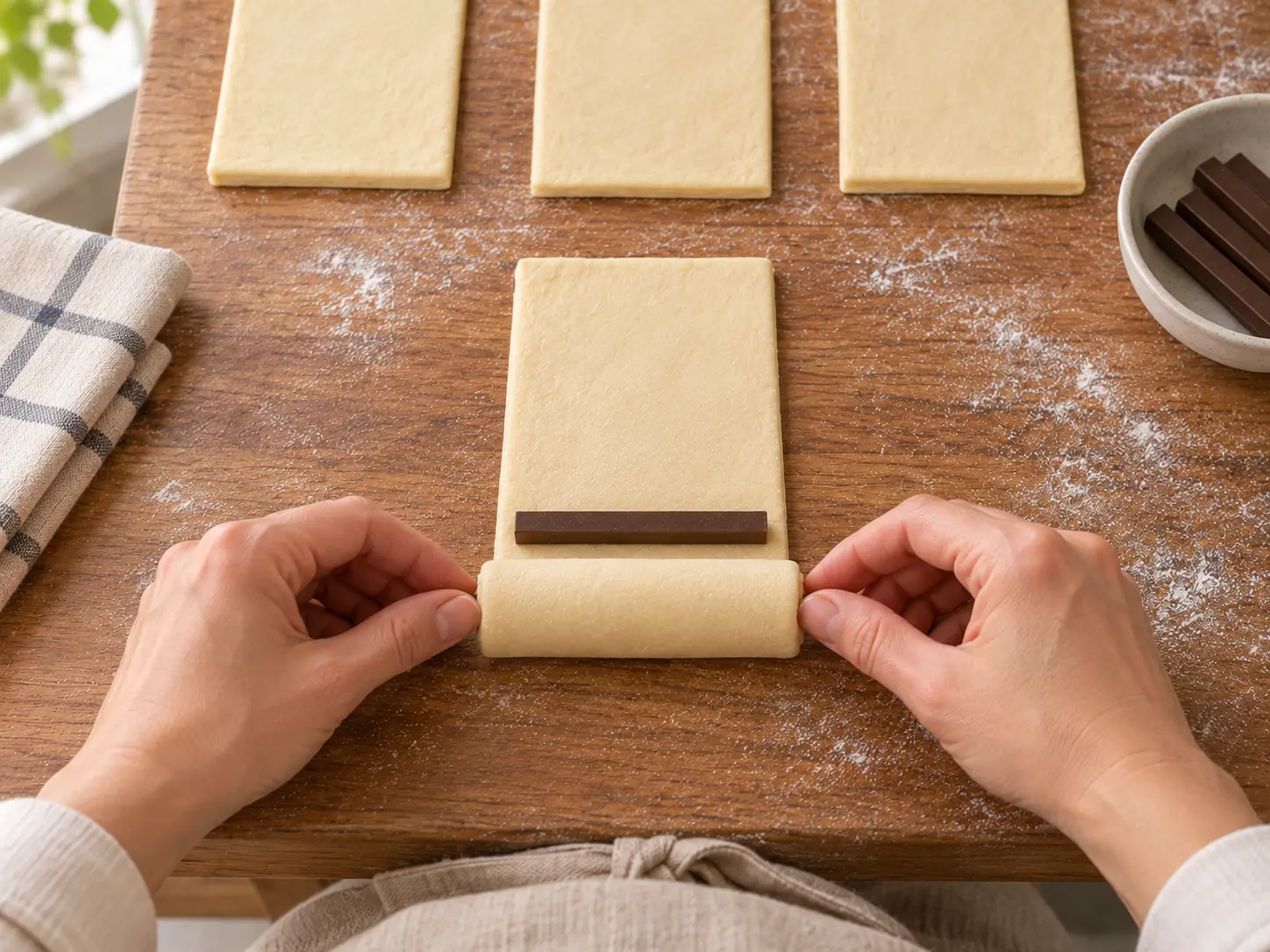
Roll the cold dough to about 30 × 40 cm / 12 × 16 in and 3.5–4 mm thick. Trim the edges and cut ten rectangles about 8 × 15 cm / 3 × 6 in. Use 76 g / 2.7 oz chocolate in total: twenty equal batons of about 3.8 g each. Place the first baton across the full width, parallel to the short edge. Starting at that short edge, roll the dough one full turn over the baton, place the second baton parallel to the first and finish rolling. Set each pastry seam-side down and do not press the cut edges closed.
Both batons run parallel to the short edge; roll the dough over them at a right angle.
Proof gently
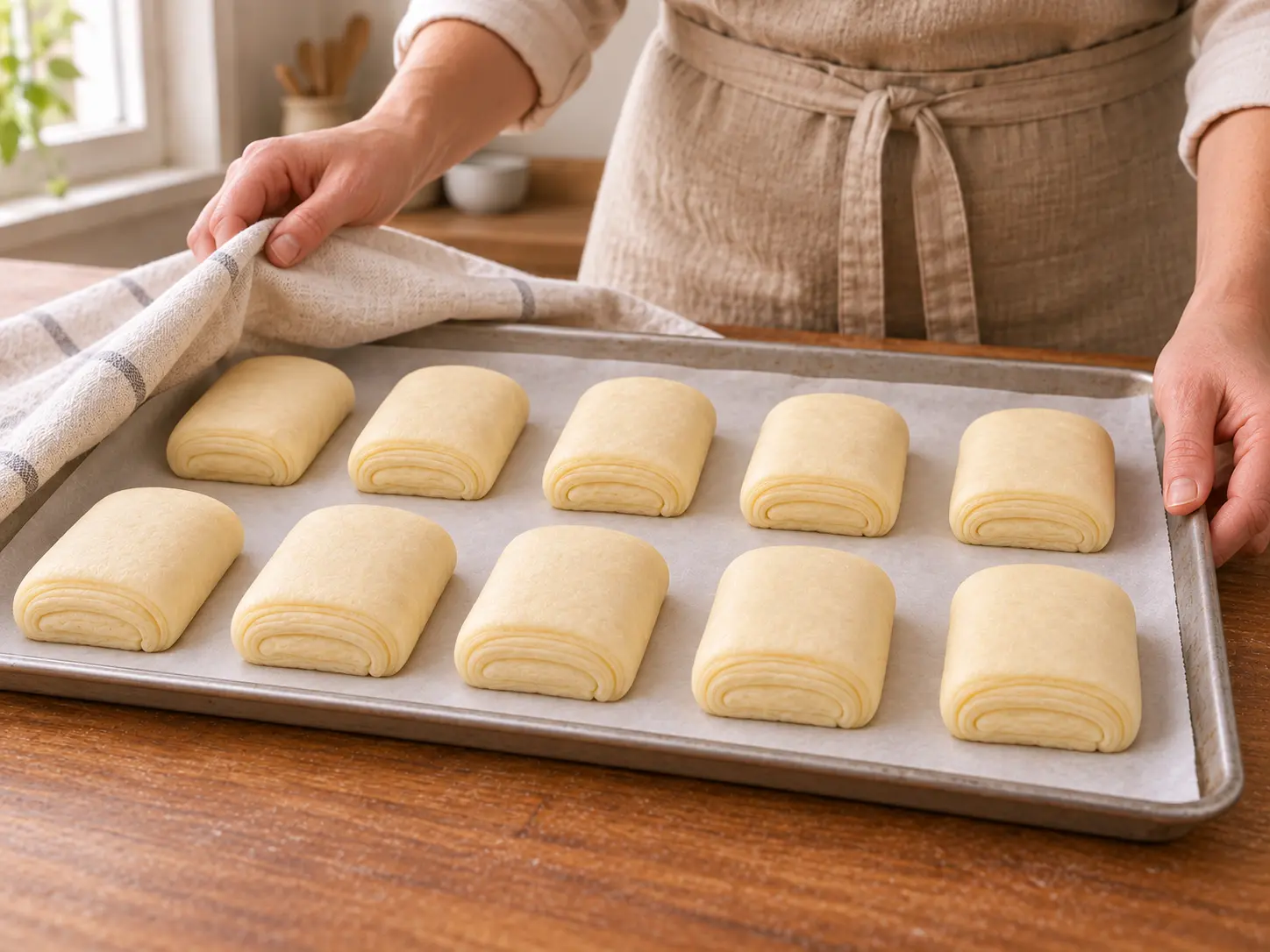
Cover the pastries on parchment and proof at about 24 °C / 75 °F for 2½–4 hours; do not exceed 26 °C / 79 °F or the butter may melt. They are ready when clearly larger and lighter, with visible layers and a soft wobble when you move the tray. Do not rely on doubling alone. Preheat the oven during the final 30 minutes.
Ready when they look light and wobble softly as the tray moves.
Brush and bake
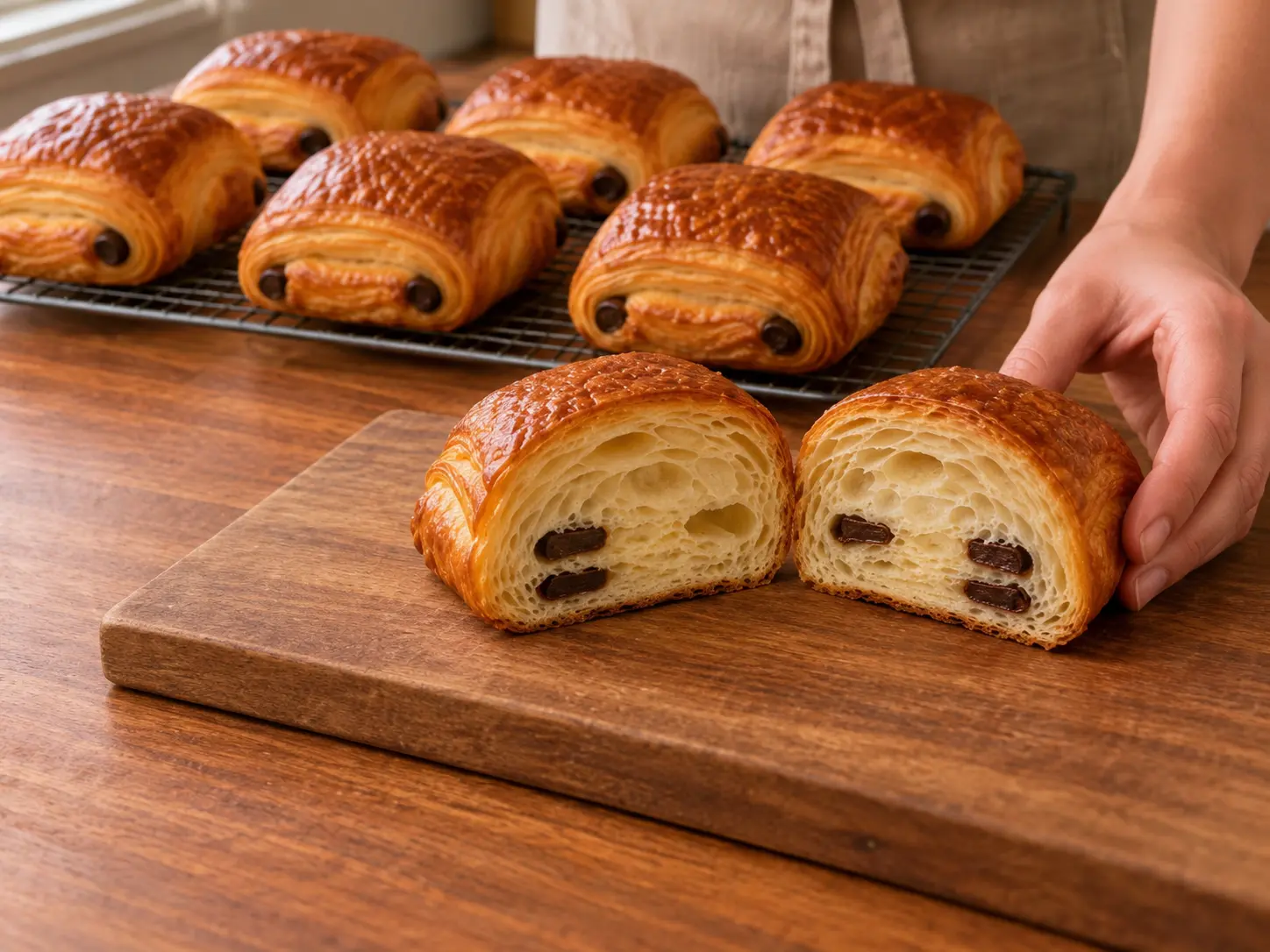
Whisk 1 egg with 1 tablespoon milk and a pinch of salt. Brush only the tops lightly and avoid the cut edges. Bake for 18–22 minutes at 190 °C / 375 °F conventional or 175 °C / 350 °F fan; rotate the tray after about 12 minutes if your oven bakes unevenly. Remove when deeply golden with no pale, raw-looking seams. Cool for at least 15 minutes; the chocolate is extremely hot.
Bake to a deep gold; pale seams mean the center is not fully baked.
Problems with lamination and layer definition
The butter cracks into hard shards
Let the packet temper for a few minutes before rolling. The butter should stay cold but bend without breaking.
Butter leaks while rolling
Stop when the dough becomes glossy or slack, cover it and chill. Patch a small leak with a light dusting of flour.
The pastries show few layers
Roll evenly, chill between turns and avoid sealing the cut edges. Make sure the final proof is complete before baking.
A pool of butter forms on the tray
The butter or proofing environment was too warm. Work cooler and bake only after the oven is fully preheated.
Frequently asked questions
Which chocolate should I use?
Baking batons give the neatest shape. You can also cut 55–70% dark chocolate into slim, evenly sized sticks.
Can I use store-bought puff pastry?
That makes a quick chocolate pastry, but not pain au chocolat. Croissant dough contains yeast and develops a lighter, distinct structure.
Does this have to take two days?
Not strictly, but overnight chilling is practical: the dough relaxes, the butter stays firm and the work is split into two short sessions.
Can I freeze pain au chocolat?
Yes. Cool completely, wrap airtight and freeze while fresh. Reheat for a few minutes after thawing to restore the crisp exterior.