I want to use my sourdough discard
Turn leftover starter into something crisp.
Your discard already contains flour and water. Work out what to subtract, or try the cracker example below.
Six step photos, from mixing to the first crisp snap.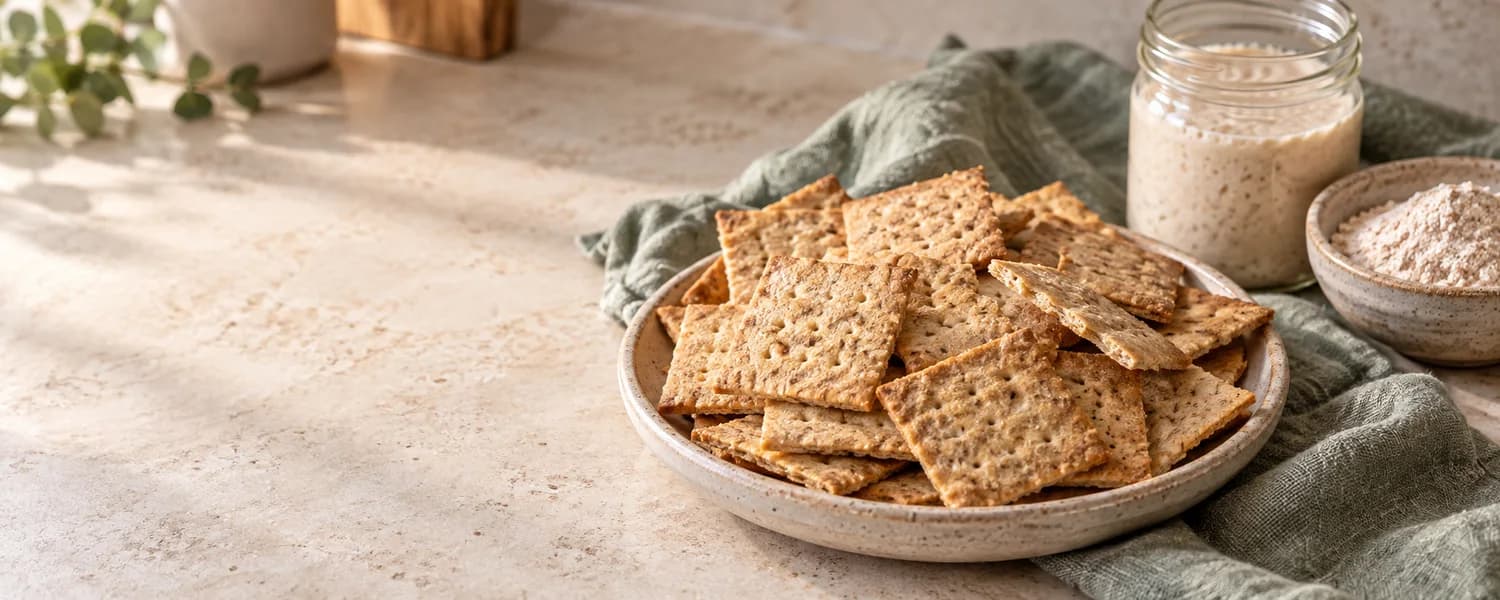
Your discard
How much discard are you using?
At 100% hydration, discard contains equal weights of flour and water.
100% means equal weights of flour and water.
Adjust an existing recipe
Enter the original total flour and water, before replacing any with discard. Do not enter milk, eggs, butter or oil as water here.
What is inside?
Flour and water in your discard
- Water from discard
- 75 g
- Flour share
- 50%
- Water share
- 50%
Still to add
- Flour
- 225 g
- Water
- 175 g
Use all the discard plus the remaining flour and water. This keeps those two recipe totals unchanged.
This subtraction applies to water. Milk, eggs and butter contain other substances too; oil contains no water. Those ingredients are not converted here.
What is in the discard only goes in once
From discard + added separately ≈ original recipe total
- Flour
- 75 g + 225 g ≈ 300 g
- Water
- 75 g + 175 g ≈ 250 g
Flavor is not the same as rising power
Discard is the portion left over when you feed your starter. It may still be alive, but its rising power is unpredictable. Crackers do not need that lift. For airy bread, follow a suitable recipe with enough active leavening.
Start with a healthy starter
Use discard from an established, healthy starter and keep it covered in the refrigerator. Do not use discard with mould, pink or orange discolouration, or a rotten smell.
Try it: thin sourdough crackers
Fixed example for two baking sheets, using 100% hydration discard. This ingredient list does not change with your own entries above.
The base contains 200 g flour and 100 g water. The 200 g discard supplies 100 g flour and all the water, so you add another 100 g flour.
- Discard · 100% hydration
- 200 g
- Whole wheat flour
- 100 g
- Unsalted butter · softened
- 50 g
- Fine salt
- 3 g
- Olive oil · for brushing
- 5 g
No extra water, yeast or baking powder needed. Add butter and salt separately; the oil is for the surface.
From mixing to crisp: six steps
The step photos show the plain base. Find the flavor options below the six steps. Choose before starting: herbs and cinnamon go into the dough when mixing.
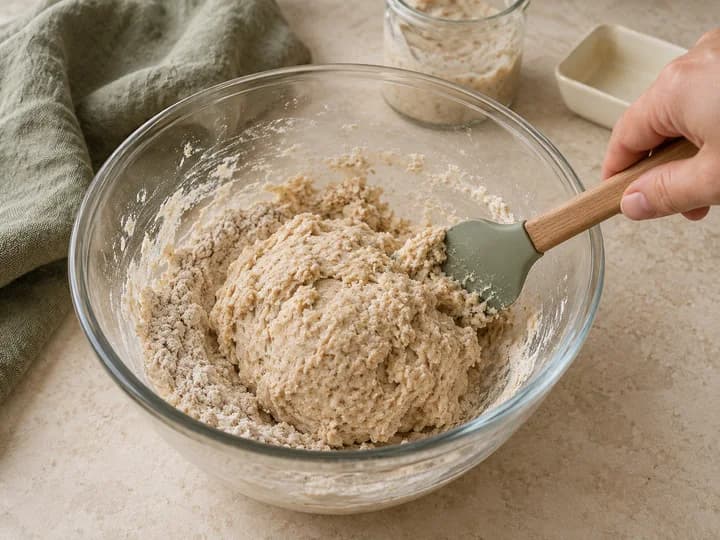
Bring the dough together
Stir the discard smooth. Mix with the flour, softened butter and salt until cohesive, scraping in dry edges too. You want a firm dough, not a pourable batter; there is no need for prolonged kneading.
Herb version: mix in the herbs now. Cinnamon version: add 2 g cinnamon now and reduce the salt to 1 g.
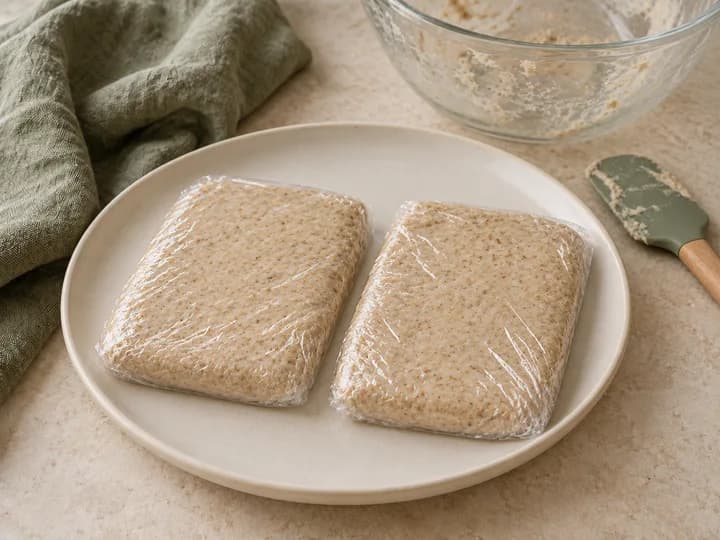
Divide and chill
Divide into two equal portions and flatten into rectangles. Wrap and refrigerate for about 30 minutes. The dough should firm up enough to roll thinly; it does not need to rise.
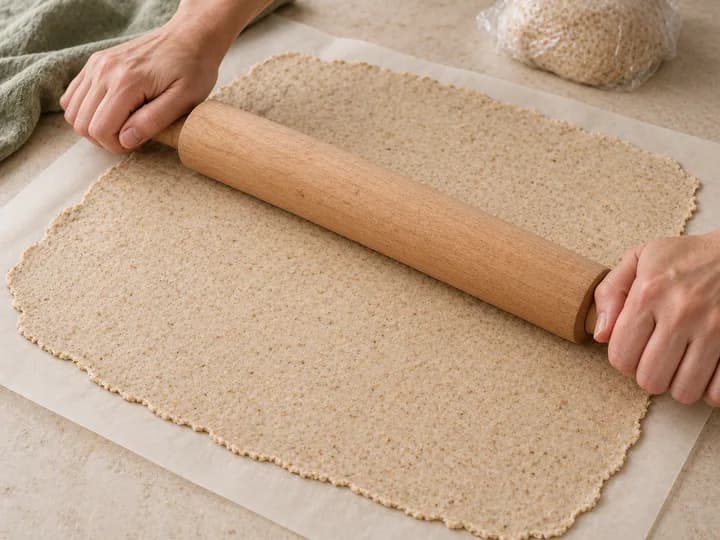
Roll very thinly
Preheat to 175 °C / 350 °F conventional, or about 160 °C fan. Roll each portion on lightly floured parchment to roughly 1.5 mm / 1/16 inch. Keep the center as thin as the edges: thicker areas stay softer.
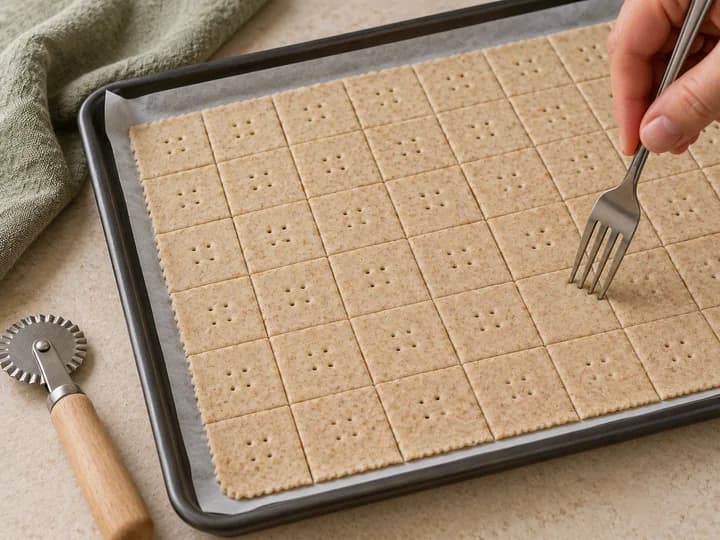
Cut and prick
Slide the dough and parchment onto a baking sheet. Brush the oil thinly over both sheets of dough. Cut into roughly 3 cm / 1¼ inch squares and prick each several times with a fork to limit large air pockets.
Cinnamon version: after brushing with oil, scatter a total of 15 g fine granulated sugar over both sheets.
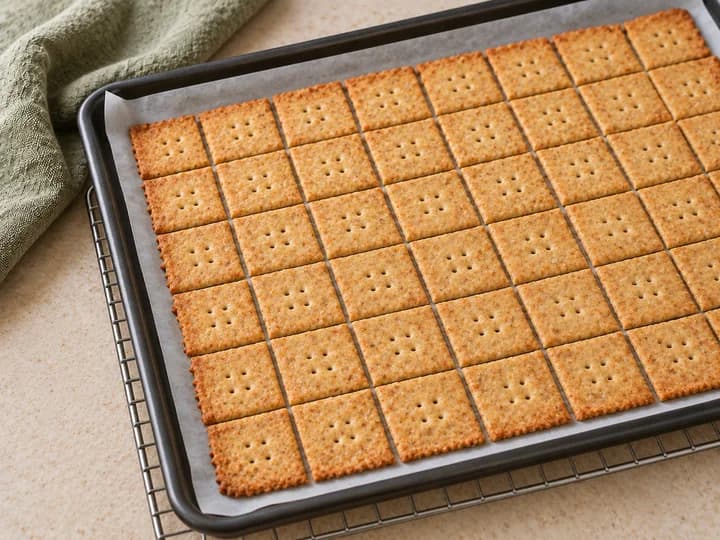
Bake until golden
Bake for about 20–25 minutes, checking from 15 minutes. Rotate halfway through; in a conventional oven, preferably bake one sheet at a time. Remove dark edge pieces early and give pale center pieces longer if needed.
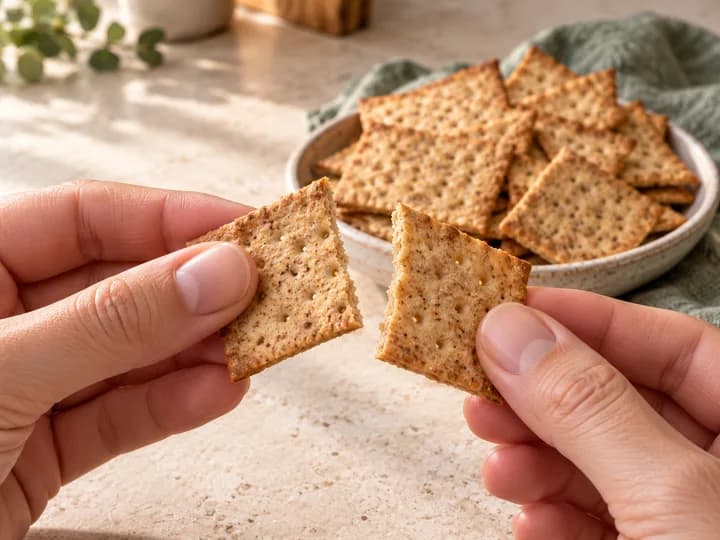
Cool and check the snap
Cool completely on the sheet set on a rack. A cracker should snap crisply and feel dry. If it still bends, dry it for a few more minutes at 150 °C / 300 °F and check again once cool. Store airtight only when completely cold.
Make them savory or sweet
Sourdough, butter and salt already give the base flavor. Choose what to add below. Quantities are for the whole example with 200 g discard: two baking sheets.
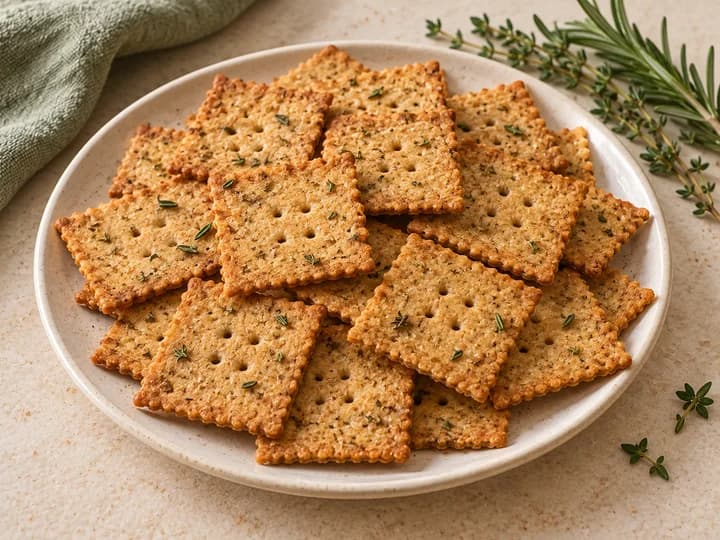
Rosemary & thyme
In step 1, mix a total of 2 g dried rosemary and/or thyme into the dough. Or use 6 g fresh garden herbs, finely chopped and patted dry. Chop tough rosemary needles especially finely. Keep the base recipe’s 3 g salt.
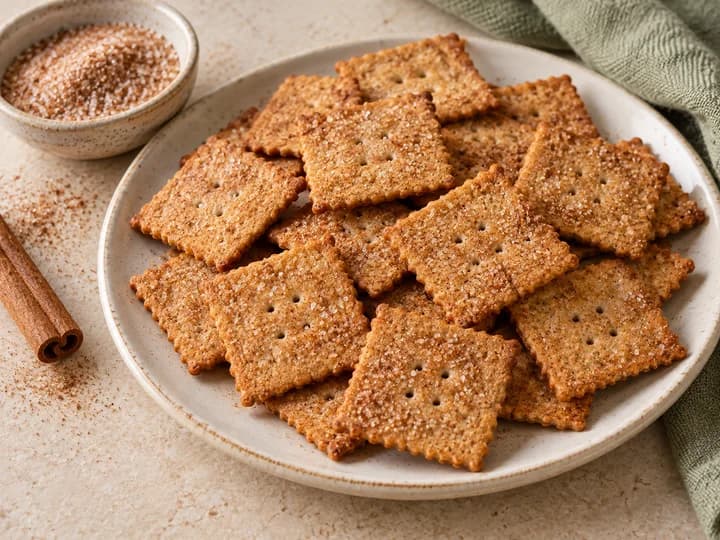
Cinnamon & sugar
In step 1, mix 2 g cinnamon into the dough and use 1 g salt instead of 3 g. In step 4, brush with the base recipe’s 5 g oil, then scatter 15 g fine granulated sugar over both sheets. Check from 15 minutes: the sweet surface may brown faster.
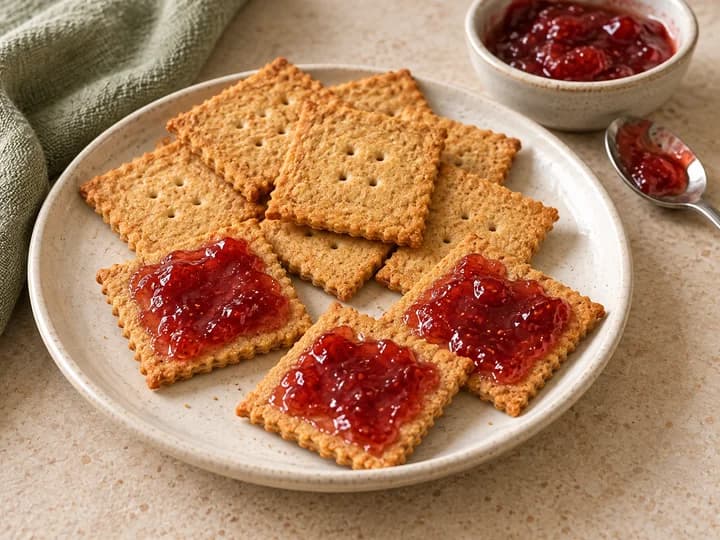
With a little jam
Bake the plain base and cool completely. Spread thinly with your favorite jam just before eating. Store crackers and jam separately to keep the crackers crisp. Want to bake jam inside? That needs a different dough and an adjusted recipe; jam can leak from these thin crackers.
Using active starter in bread dough?
Use the sourdough hydration calculator when the starter also drives fermentation.
From calculation to bake