From the imperfect oven
Failed bakes. Useful lessons.
A flat loaf or soggy pizza base says more than ‘bad luck’. See what the baker noticed, open the diagnosis and choose one change for the next attempt.
The names, quotes and situations below are composite fictional examples. The baking problems and advice are based on common baking practice and the sources listed below.
Fictional visitor story
Noor from BredaSourdough · attempt 7
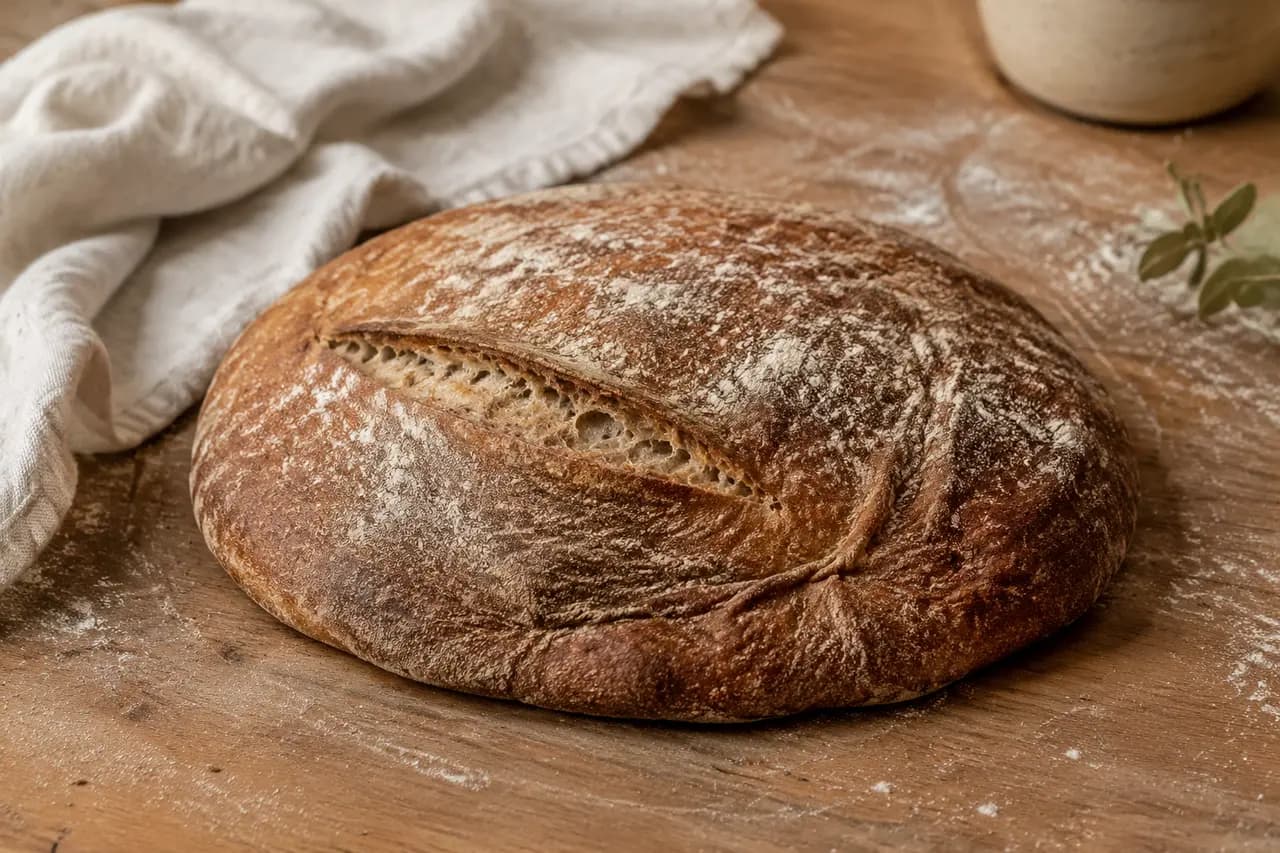
‘It looked beautifully domed in the basket.’
The moment I turned it out, the dough spread wide. The score barely opened and the oven added almost no height. It tasted fine, but it was more discus than loaf.
Open the bake diagnosisFermented too far, possibly combined with insufficient dough strength.+
Likely cause
Fermented too far, possibly combined with insufficient dough strength.
What probably happened
During fermentation that runs too long or too warm, the gluten network gradually loses its ability to retain gas. The dough may feel airy but lose tension when turned out. Loose shaping or excessive hydration can reinforce the same result.
Check these clues
- The dough spreads immediately after leaving the basket.
- A light fingertip mark remains and barely springs back.
- The dough feels very sticky, fragile and difficult to shape tightly.
Next attempt
- Mark the dough's starting level during bulk fermentation and record its actual temperature.
- End bulk a little earlier next time; use volume and feel as well as the clock.
- Keep hydration and formula unchanged so the shorter fermentation is the variable you test.
Fictional visitor story
Milan from ZwolleCountry loaf · Sunday morning
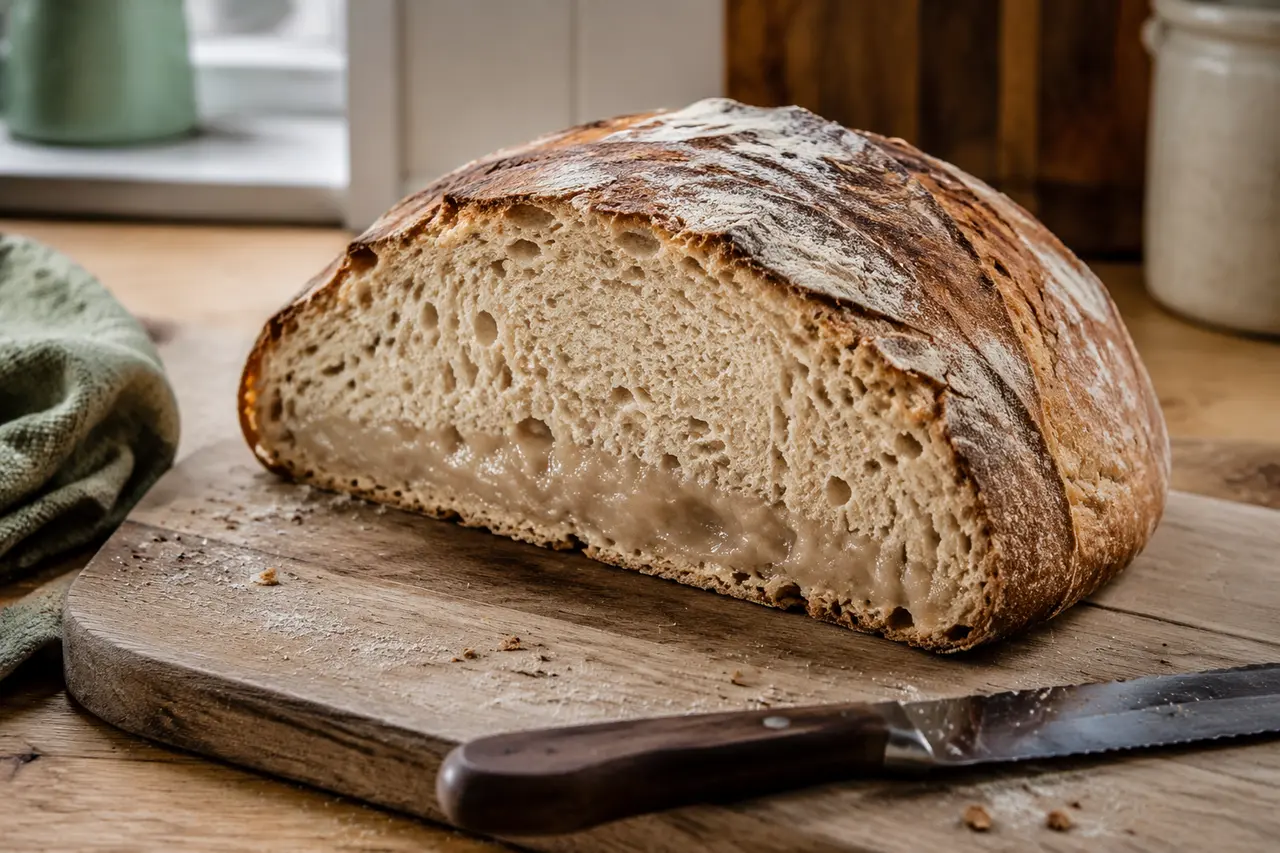
‘The crust sounded right, so I cut it at once.’
After ten minutes I could not wait any longer. The knife came out sticky and there was a glossy compressed band along the bottom. An hour later the rest was already better, but that first slice was lost.
Open the bake diagnosisSliced too soon; the centre may also have been slightly underbaked.+
Likely cause
Sliced too soon; the centre may also have been slightly underbaked.
What probably happened
Bread has not finished setting the moment it leaves the oven. Moisture moves and the crumb firms as it cools. Cutting early compresses that warm structure. If the loaf was underbaked too, the wet band remains after it has cooled fully.
Check these clues
- The knife sticks and pulls small rolls of dough from the crumb.
- The cut surface shines while a lot of steam is still escaping.
- Even when fully cool, the centre or base feels wet and heavy.
Next attempt
- Cool the loaf completely on a rack before slicing.
- Alongside colour and time, check the core temperature appropriate for your recipe.
- Record bake time, oven temperature and cooling time separately in your bake journal.
Fictional visitor story
Samira from GhentPizza · Friday night
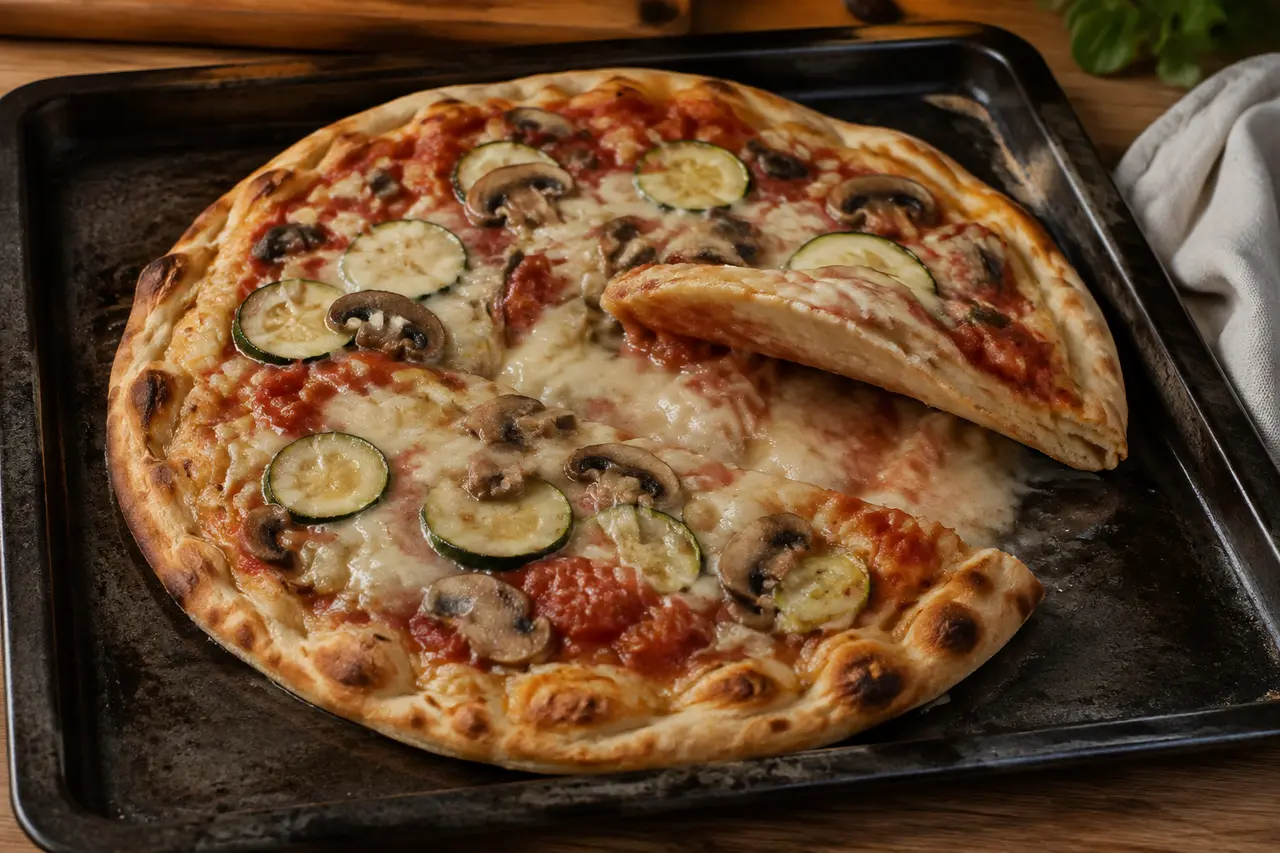
‘The rim looked good. The centre became soup.’
The mozzarella, courgette and mushrooms did not seem excessive. Yet everything slid to the middle when I lifted a slice. The rim coloured nicely, but the base could not keep up with the moisture.
Open the bake diagnosisMore moisture on top than a not-quite-hot-enough base could evaporate quickly.+
Likely cause
More moisture on top than a not-quite-hot-enough base could evaporate quickly.
What probably happened
Sauce, fresh mozzarella and vegetables release water as they bake. A fully heated stone or steel can handle a modest amount, but wet or heavy toppings cool the base before it sets.
Check these clues
- Visible liquid pools between the cheese and toppings.
- The underside is much paler in the centre than at the rim.
- The oven or stone had little time to recover between pizzas.
Next attempt
- Drain mozzarella and pre-cook or squeeze water-rich vegetables dry.
- Use slightly less sauce and topping; spread everything in a thin, loose layer.
- Preheat the stone or steel fully and let it recover between pizzas.
Fictional visitor story
Jonas from UtrechtBagels · first water bath
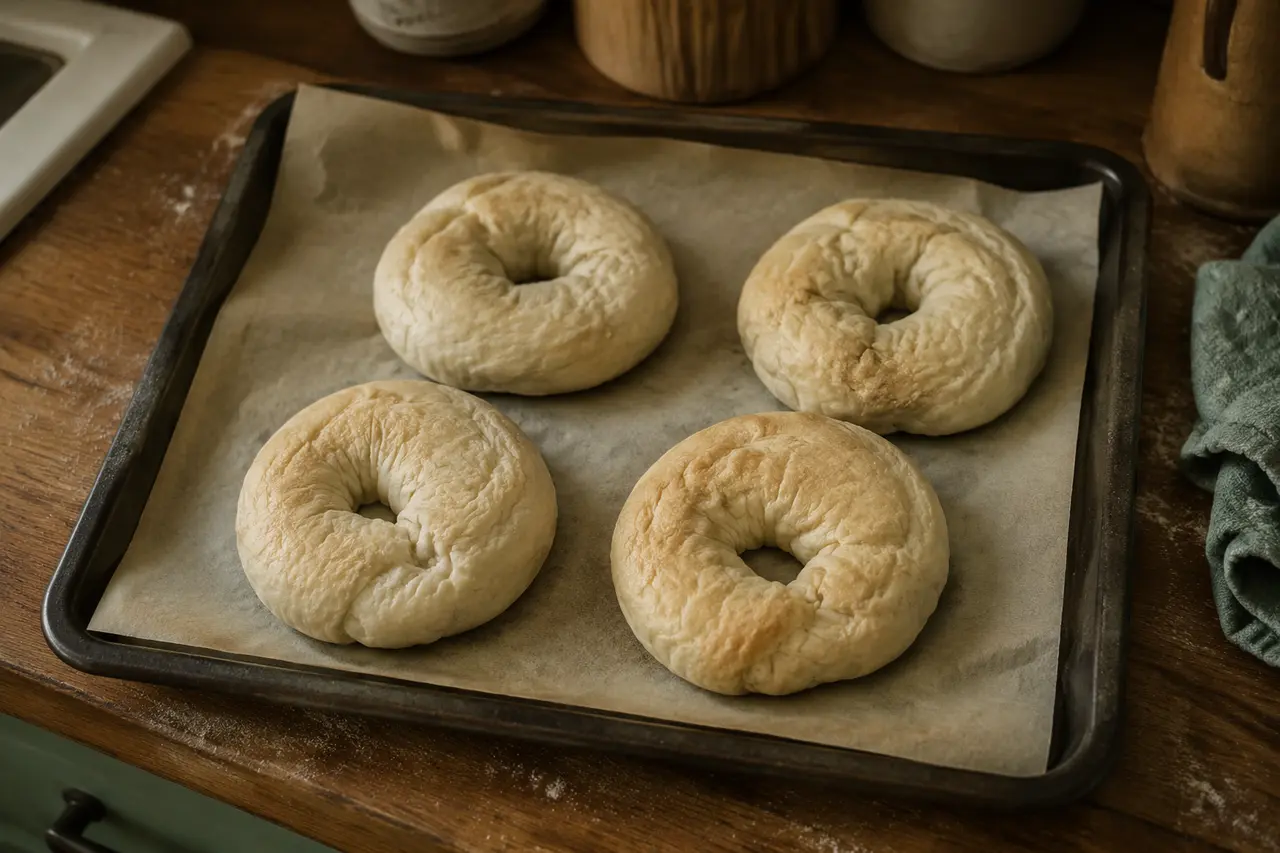
‘They were round in the water, then they sank.’
I left the shaped bagels on the counter for a long time. They floated at once but felt limp when I lifted them from the water. They stayed pale in the oven and wrinkled as they cooled.
Open the bake diagnosisProbably overproofed before the water bath, followed by too little rapid crust setting.+
Likely cause
Probably overproofed before the water bath, followed by too little rapid crust setting.
What probably happened
Strongly proofed bagels are fragile when moved and boiled. If their gas structure collapses, the skin can wrinkle as it cools. A gentle boil, fully heated oven and quick workflow help the surface set and colour.
Check these clues
- The shaped bagels feel very airy and fragile before boiling.
- They visibly deflate when lifted or when leaving the water bath.
- The crust remains matt and pale after the recipe's stated bake time.
Next attempt
- Proof shaped bagels for less time, or chill them and boil straight from the fridge.
- Keep the water at a gentle boil and follow your recipe's boiling time closely.
- Work in small batches and move each boiled batch quickly to a fully preheated oven.
From mistake to experiment
Look. Record. Change one thing.
A baking mistake becomes useful information when you can trace the clue. This sequence stops the next attempt from changing five variables at once.- 01
Describe what you see
Record shape, colour, crumb, aroma and feel before deciding on a cause.
- 02
Place it beside the process
Write down times, temperatures, weights and unusual moments. The difference is often there.
- 03
Test one hypothesis
Change one factor and hold the rest steady. Then the next bake becomes a real comparison.
What the diagnoses draw on
These examples are editorial composites. Their technical basis includes the following practical sources.
Keep the failed bake too