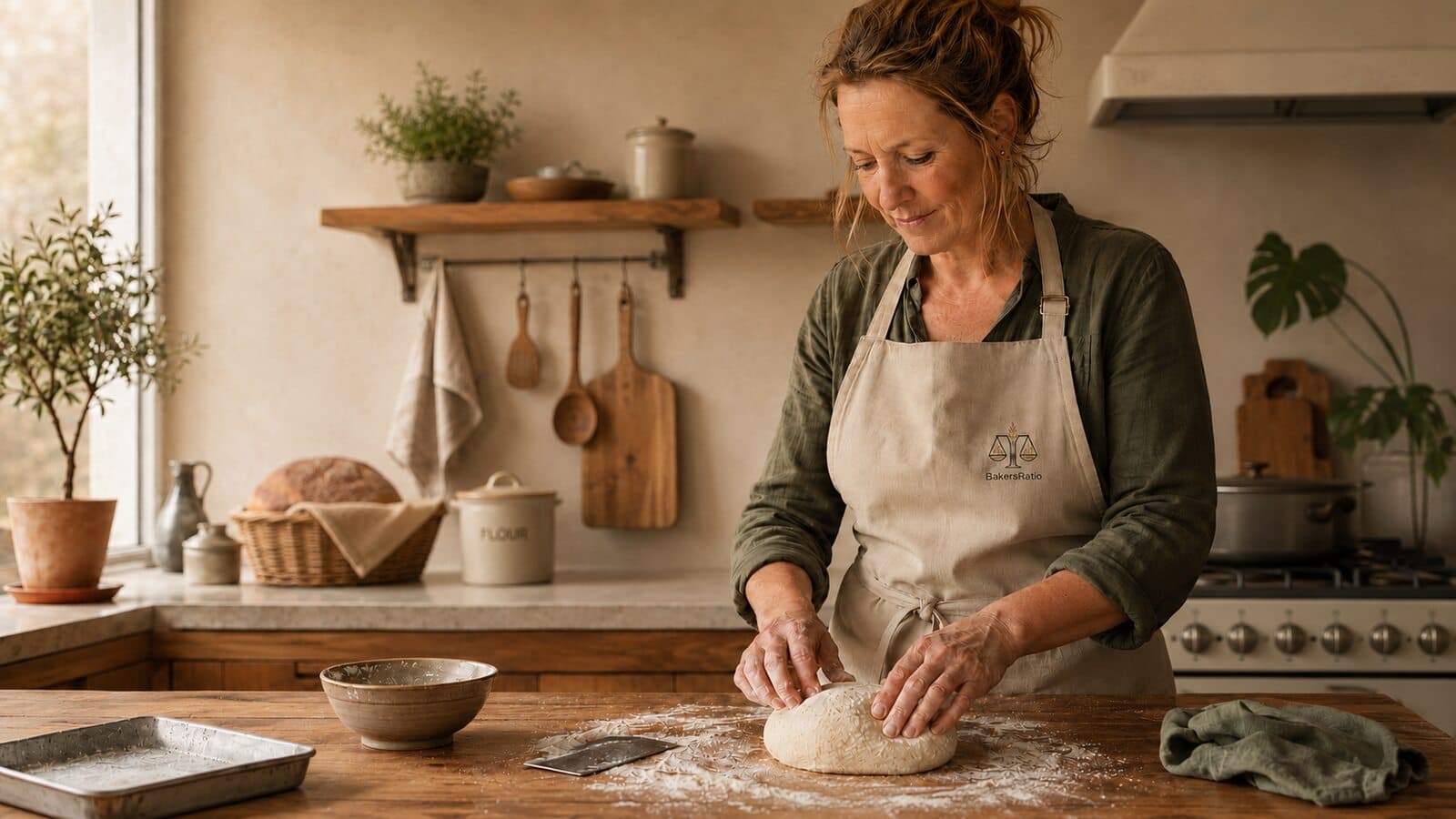
Baker's percentages without the arithmetic

From percentages to exactly enough dough.

Scale bread, pizza and sourdough by weight. Baker's Ratio handles the formula, so you can keep your hands in the dough.

Build your dough recipe

Choose an example or enter your own amounts. Your recipe updates instantly.

1. Choose an easy starting point

You can adjust every number afterwards.

2. How much do you want to make?

Choose what you already know. The calculator fills in the rest.

g

Enter how many portions you want and how much each portion should weigh.

3. What should your dough be like?

Easy starting point for water

Your choice fills the hydration field below. You can still adjust that percentage afterwards.

The total water as a percentage of all flour. 65% means 65 g of water for every 100 g of flour.%
%

60% is firm, 65% is soft, and 70% or more becomes wetter and stickier. Around 2% salt is common.

4. What will make it rise?
%

Not sure which percentage to use? The examples above provide a practical starting point.

Add fat, sugar or add-insOptional — for enriched doughs and filled breads
Add fat, sugar or add-ins
%
%
%

Use Add-ins for fruit, nuts or seeds. Leave anything you do not use at 0%.

Yield: 12 portions · 90 g per piece.

Total dough1,080 g
Per portion90 g

Your recipe

Baker's % · flour = 100%Every ingredient is compared with the total flour. All flour together is always 100%.
Flour
100%440.9 g
Water
55%242.4 g
Salt
2%8.8 g
Yeast
2%8.8 g
Oil or butter
10%44.1 g
Sugar
6%26.4 g
Add-ins
70%308.6 g

You do not need to calculate the percentages yourself; they are shown only as a reference.

Open bake journal
What happens next?
  1. Weigh the ingredients in the recipe list.
  2. Mix and knead using the method in your recipe.
  3. Watch the dough: proofing time changes with temperature, flour, and the amount of yeast or starter.
100%

Total flour

55%

Water / hydration

2%

Salt
Baking language, translated

Three terms that sound harder than they are.

You do not need to be a baker to use the calculator. Here is what the most important terms mean in plain language.

Hydration
The amount of water compared with the total amount of flour.65% means 65 g of water for every 100 g of flour.
Baker's percentage
A way to compare every ingredient with the flour. All flour together is always 100%.2% salt means 2 g of salt for every 100 g of flour.
Starter
An active mixture of flour and water that makes sourdough rise.A starter at 100% hydration contains equal weights of flour and water.
Read the guide with a complete worked example

Choose a dough style

A sound formula to start from.

Seven clear starting formulas with practical guidance, troubleshooting and a calculator already set up. Choose what you want to bake, then adjust weight or hydration.
BreadAn honest loaf for every day.View recipe and formulaPizzaThin base. Airy rim. Enough dough.View recipe and formulaSourdoughMore time. More flavor. Dough you learn to read.View recipe and formulaFocacciaAiry inside. Golden at the edges.View recipe and formulaBagelsFirm dough. Glossy crust. Proper chew.View recipe and formulaCiabattaMore water. Less force. Bigger holes.View recipe and formulaKrentenbollenSoft Dutch fruit buns, generously filled.View recipe and formula
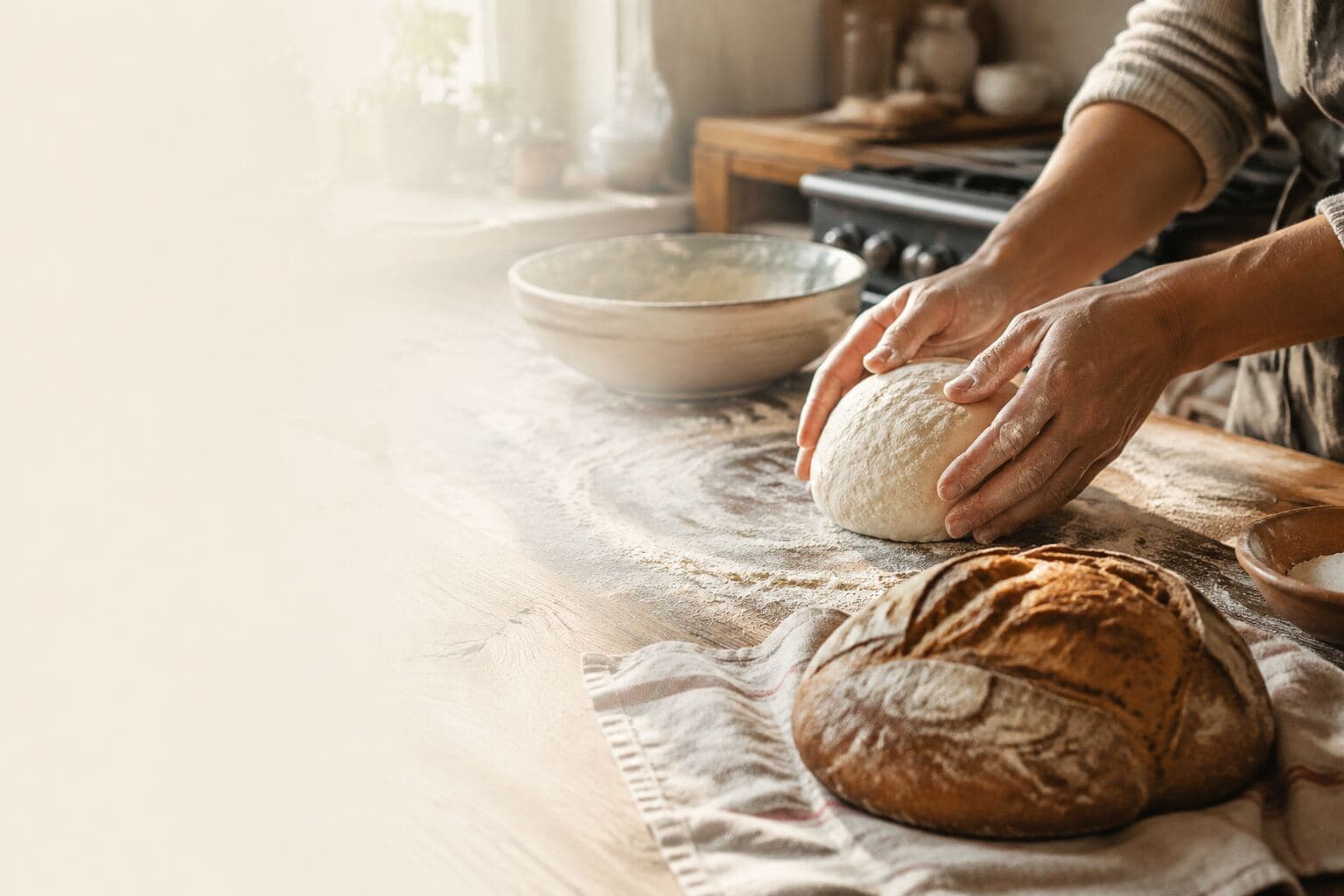
A home baker shapes dough on a flour-dusted worktop.

Keep it useful

Not a bare calculator. Not a baking laboratory either.

Exact where possible

Weights, hydration and scaling factors are deterministic and verifiable.

Honest where it varies

Fermentation is biological, so V1 will not pretend to predict an exact time.

Made to be used

Clear for beginners and quick enough for experienced home bakers.