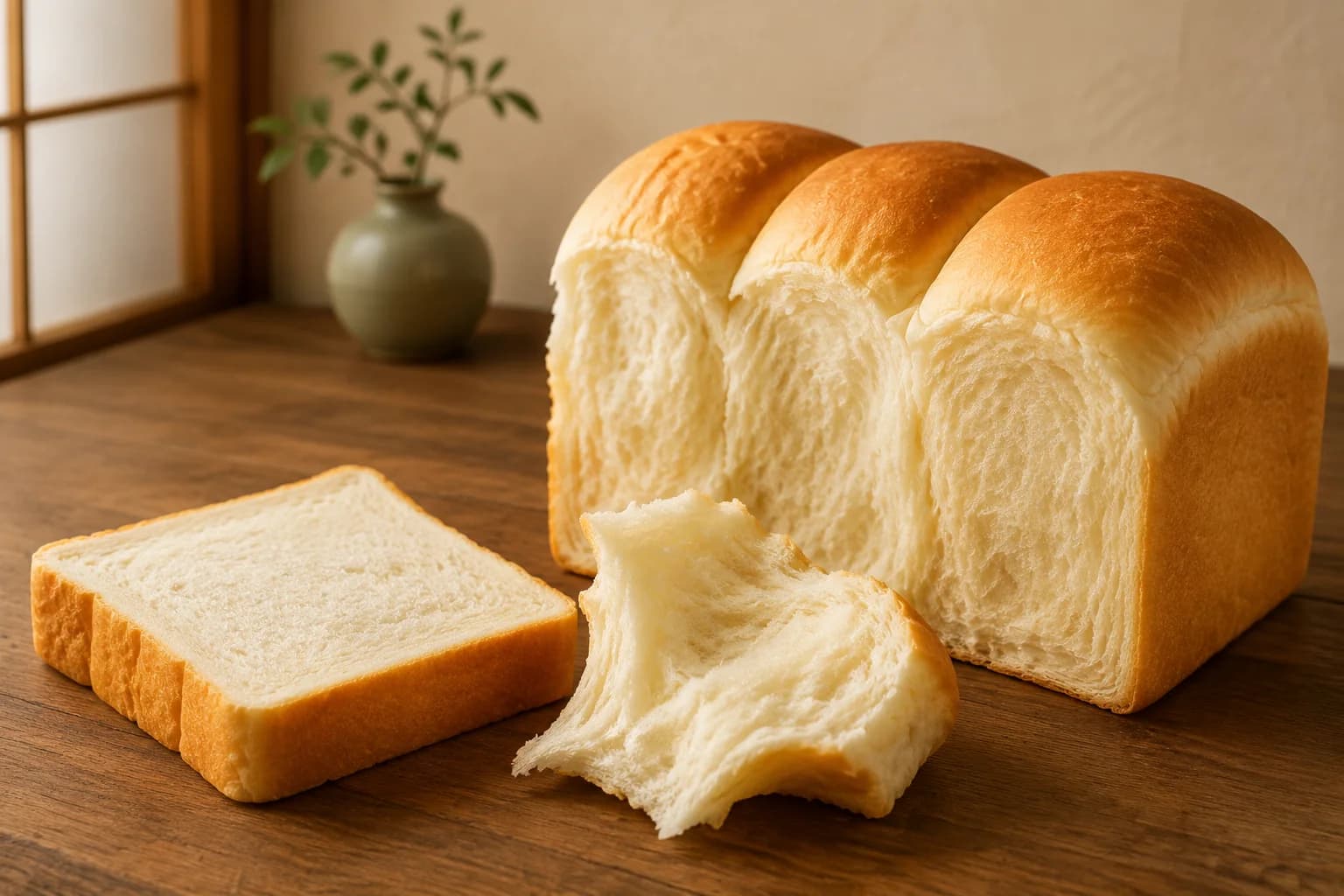
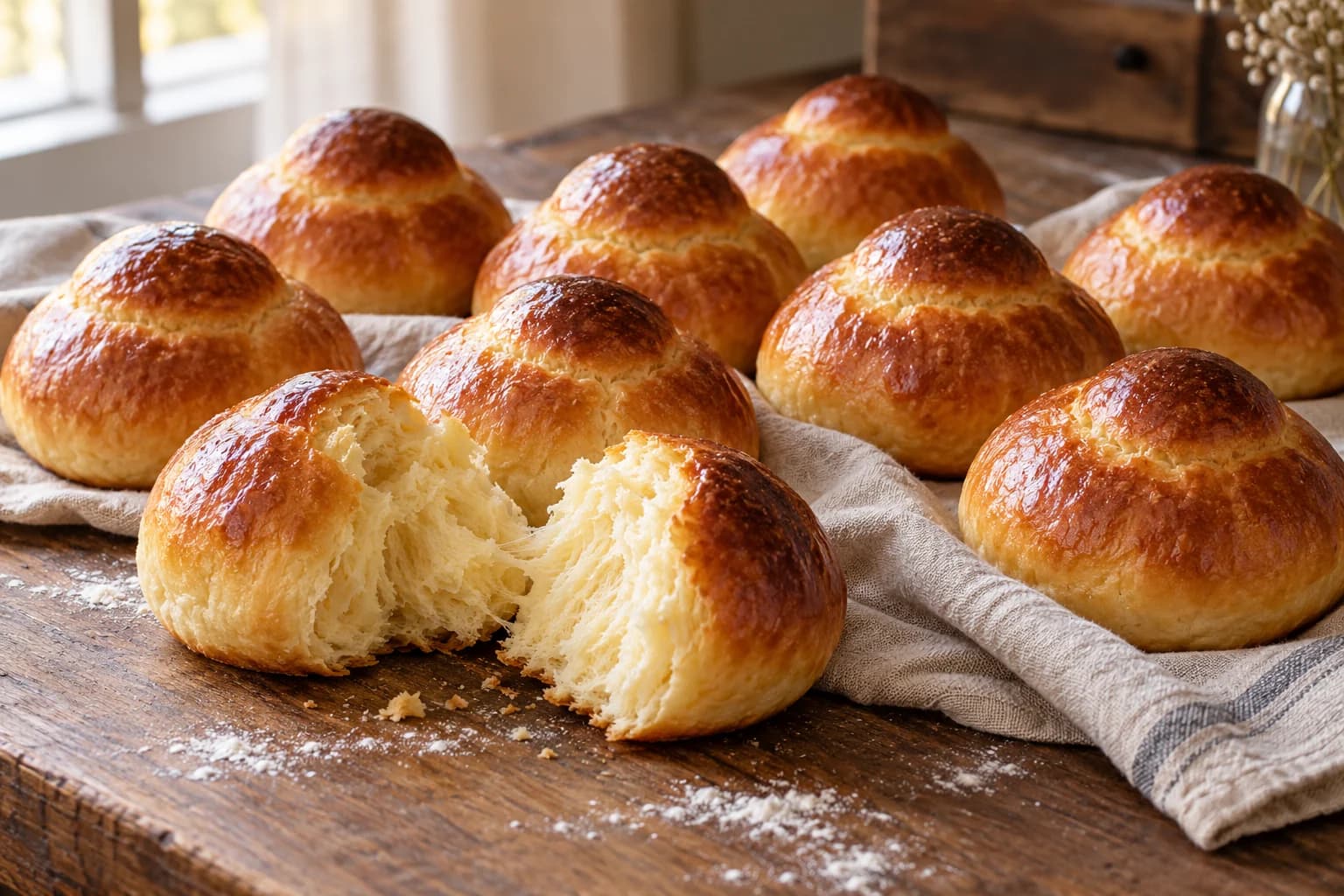
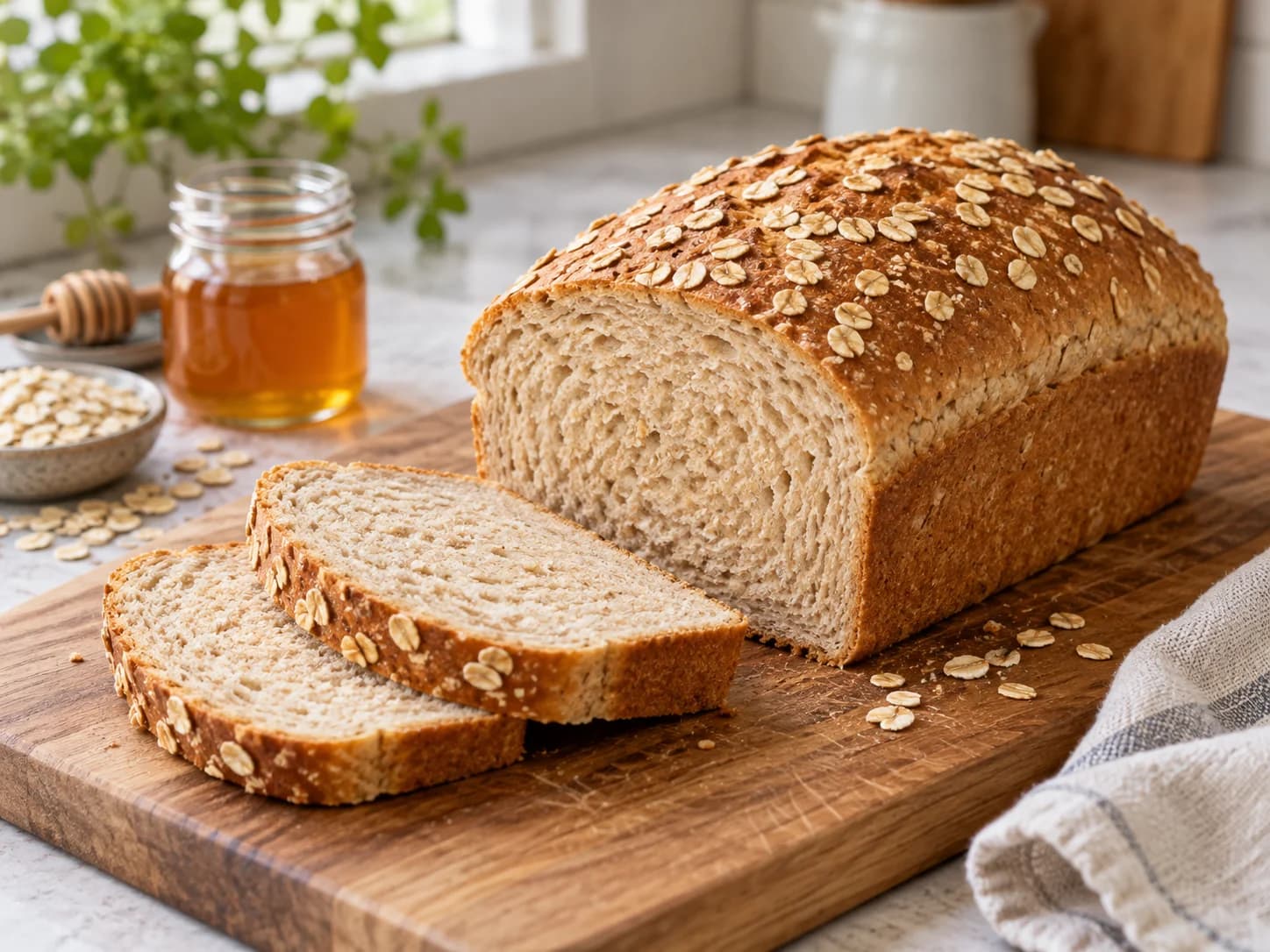
A homemade pan loaf
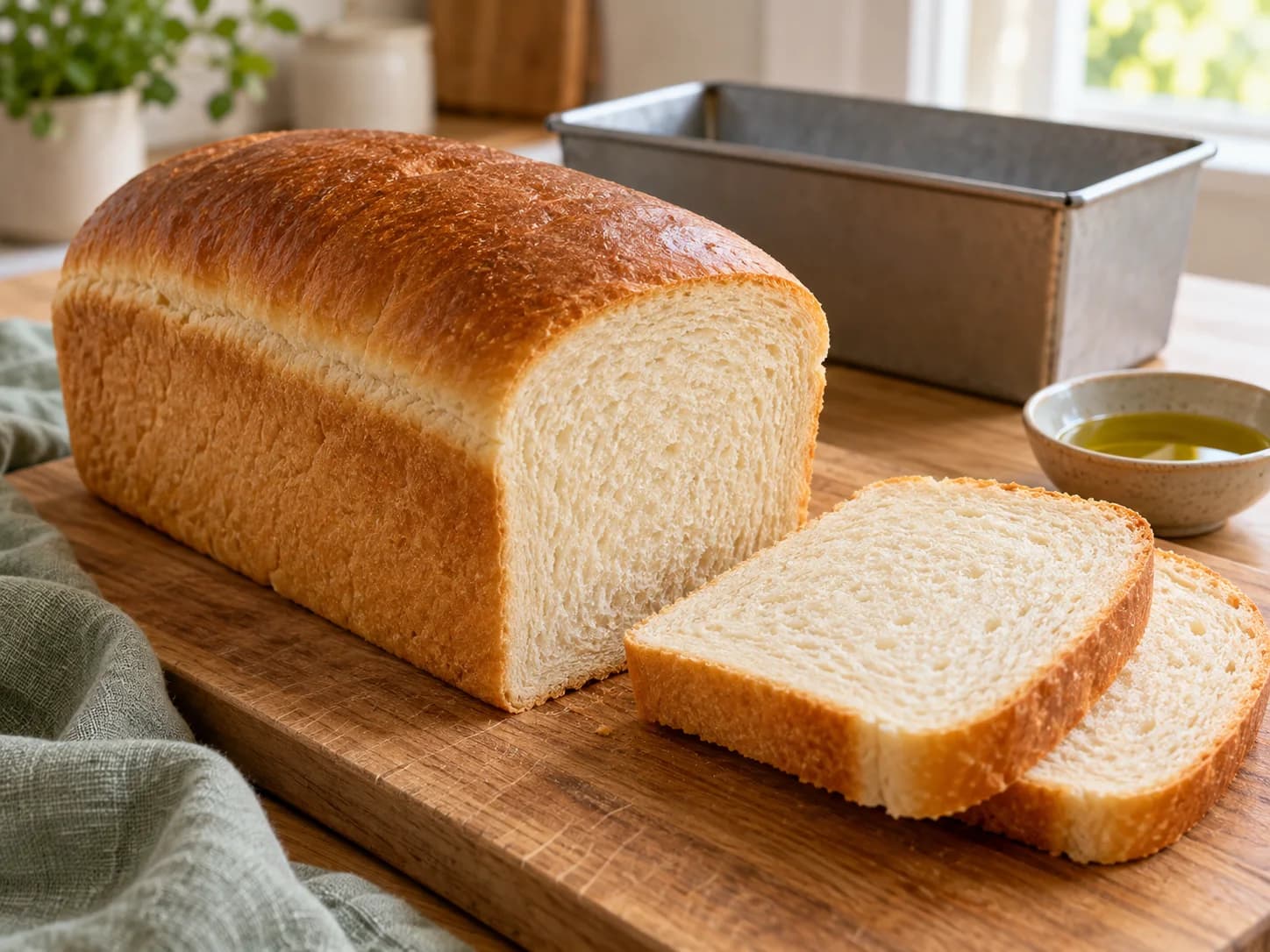
Honey oat bread
Soft slices with a little honey sweetness.
A soft yeast loaf with honey, soaked rolled oats, and a little whole wheat flour. Mildly sweet with a fine crumb, it works with butter, cheese, or a quick turn in the toaster. This recipe makes one loaf in a home oven.
View the ingredients
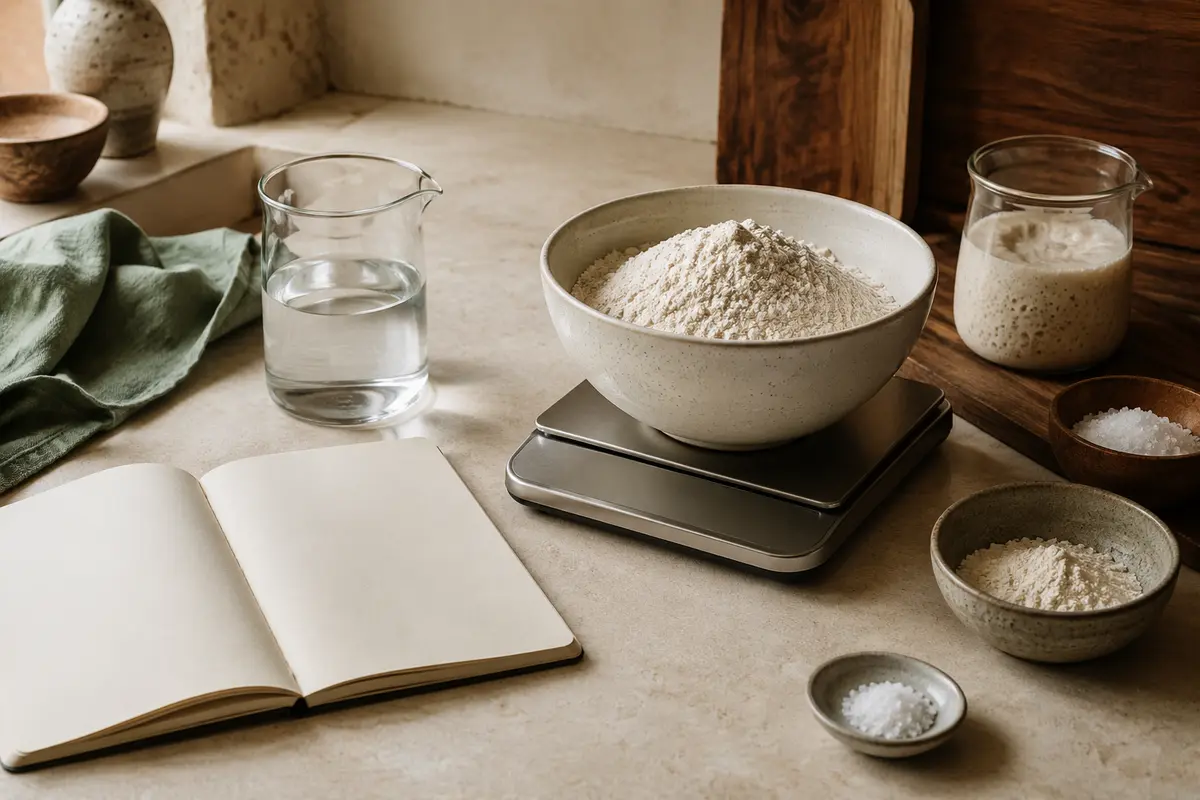
One honey oat loaf
813 g of dough plus 10 g of oats for the top: 823 g before baking. The 350 g bread flour and 50 g whole wheat flour together make 100%; rolled oats are separate. Use 100 g of the 275 g water for the oat soak and 175 g in the dough. Extra butter for the pan and a little brushing water are not included.Active: about 25 min · Soak/cool: 20–30 min · First rise: 60–90 min · Final proof: 45–75 min · Bake: 35–45 min · Cool: at least 2 hours.
- White bread flour
- 87.5%350 g
- Whole wheat flour
- 12.5%50 g
- Rolled oats for the dough
- 12.5%50 g
- Water, including the oat soak
- 68.8%275 g
- Liquid honey
- 12.5%50 g
- Unsalted butter, softened
- 6.3%25 g
- Salt
- 2%8 g
- Instant yeast
- 1.3%5 g
- Rolled oats for the top
- 2.5%10 g
Weights are rounded for weighing; their sum may differ slightly from the calculated total. Small additions stay in grams.
Honey for flavor, oats for texture
Use an open loaf pan holding about 2–2.3 liters: a standard 9 × 5 × 2.75-inch pan is a useful starting point. A narrower 8.5 × 4.5-inch pan may need less dough; check its depth too.Honey
50 g for 400 g of flour gives a mild honey flavor.
Soak the oats
Cool the oat mixture before it comes into contact with yeast.
Moderate oven
Conventional heat; honey makes the crust color quickly.
Why soak the oats first?
The 50 g of rolled oats absorb some water before mixing. This softens them and makes it easier to judge the dough without repeatedly adding flour or water. Use plain rolled oats, not steel-cut oats.
Honey contributes aroma as well as sweetness. Start with a mild floral honey. It is not pure water: the 68.75% water row describes only added water relative to flour, not the effective hydration of all the ingredients.
From soaked oats to soft slices
Allow about 5–6 hours including cooling. Rising times are guides for 75–79°F / 24–26°C; judge the dough's volume and springiness as well as the clock.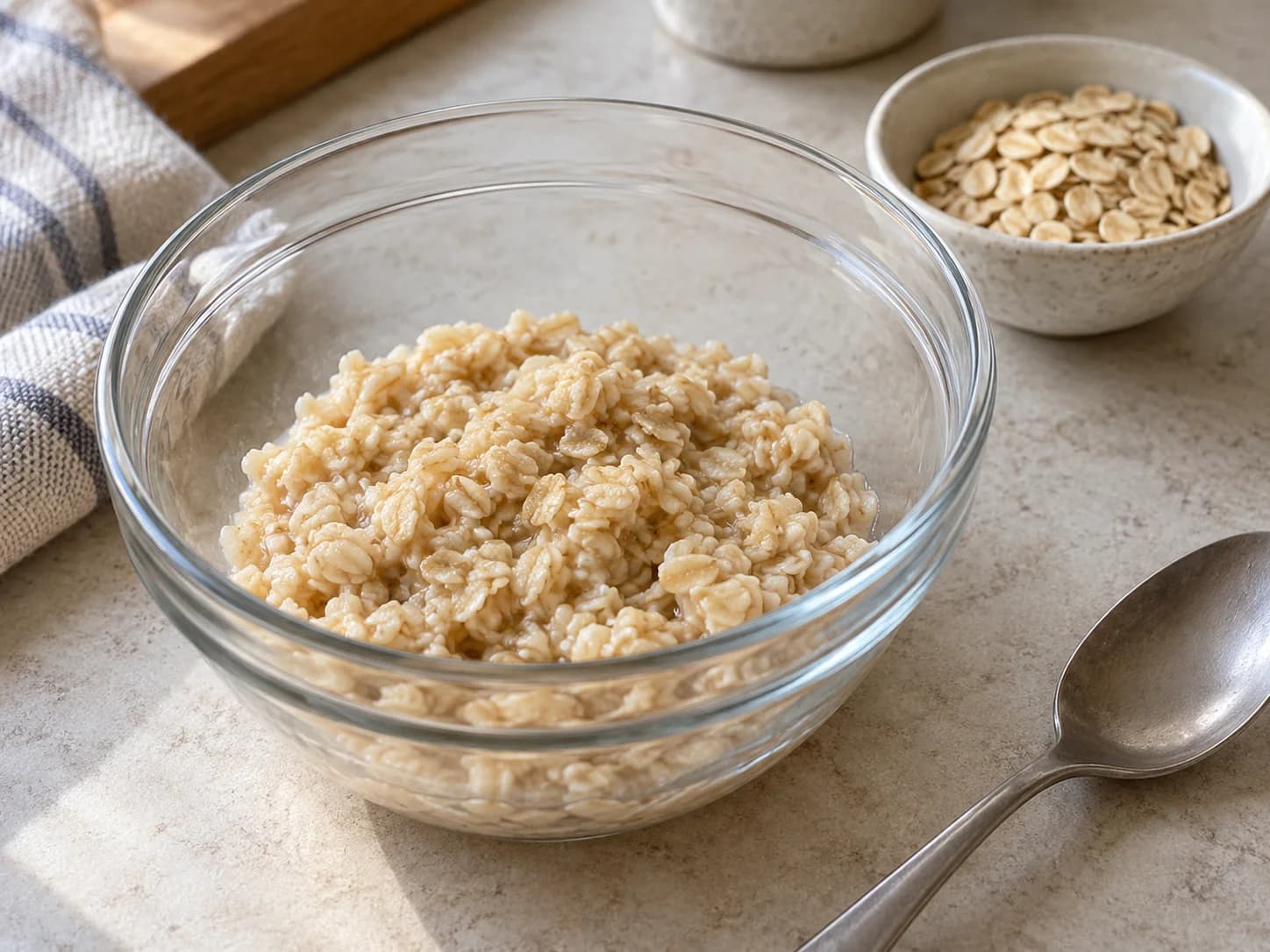
Soak the oats
Put 50 g / 1.8 oz of rolled oats in a heatproof bowl and pour over 100 g / 3.5 oz of boiling water. Stir, cover, and leave for 20–30 minutes. Allow longer if needed to cool below 86°F / 30°C. Reserve the other 10 g of oats for the top.
Cool the oat mixture below 86°F / 30°C before adding yeast.
Mix and knead
Mix 350 g / 12.3 oz of bread flour, 50 g / 1.8 oz of whole wheat flour, the cooled oats, the remaining 175 g / 6.2 oz of water, 50 g / 1.8 oz of honey, 5 g of instant yeast, and 8 g of salt. Knead for a few minutes, then work in 25 g / 0.9 oz of soft butter. Knead by hand for about 10–12 minutes in total, until cohesive and elastic. Slight tackiness is fine; resist adding flour immediately. Rest for 5 minutes if the dough resists stretching, then continue.
Let the dough rise
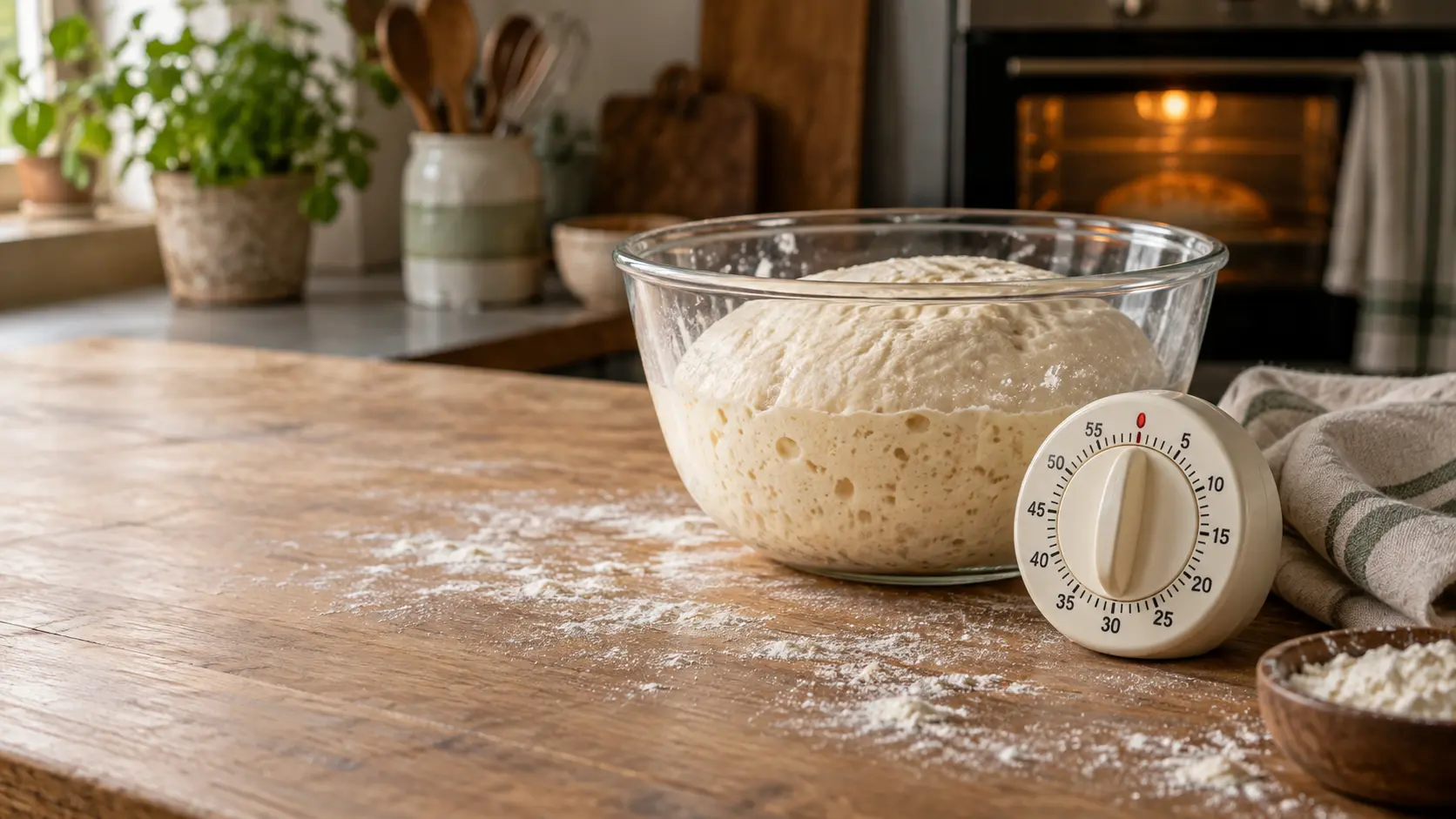
Place in a lightly greased bowl and cover. Leave for about 60–90 minutes at 75–79°F / 24–26°C, until noticeably airy and roughly 1.5 to 2 times its starting volume. A cool kitchen will need more time.
Shape and place in the pan
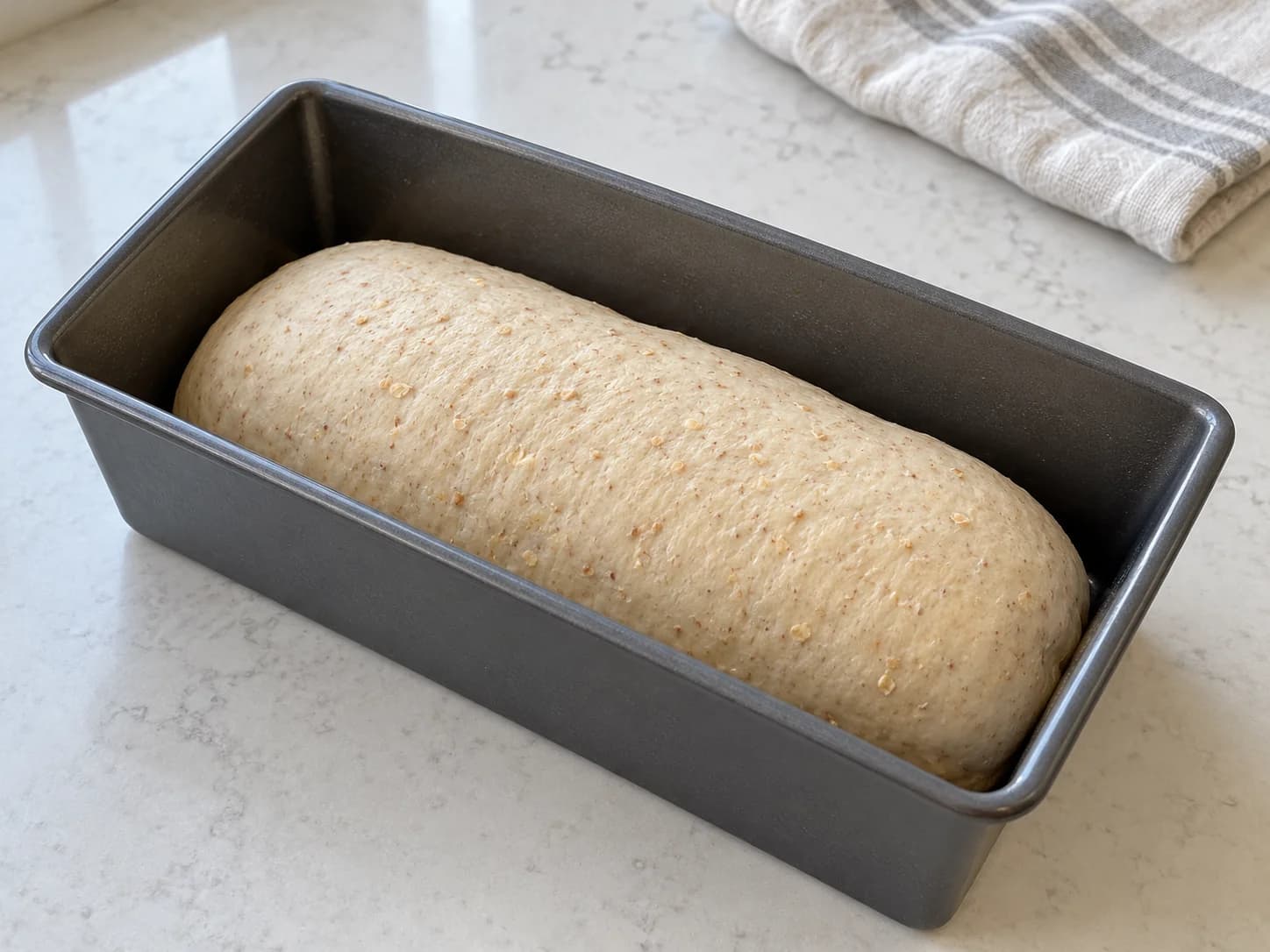
Lightly grease the pan and line the bottom and long sides with a strip of parchment if needed. Gently press large bubbles out of the dough. Pat into a rectangle slightly narrower than the pan's length. Roll up evenly, pinch the seam closed, and place seam-side down in the pan.
Place the sealed seam underneath. The dough still needs its final proof.
Proof and add the oats
Cover loosely and proof for about 45–75 minutes. In the suggested pan, the crown should reach around the rim. Press lightly with a floured finger: the dent should spring back slowly and partway. Meanwhile, preheat to 350°F / 180°C conventional or 320°F / 160°C convection. Just before baking, gently brush with a little water and sprinkle with the reserved 10 g of oats.
Bake until golden
Bake on a rack just below the oven's center for about 35–45 minutes. Check the color after 20–25 minutes and tent loosely with foil once the top is golden enough. Honey can brown the outside before the middle is cooked. Aim for about 200–203°F / 93–95°C in the center with a thermometer; the sides should feel set.
Cool completely
Leave in the pan for 5 minutes, then turn out onto a rack. Cool completely for at least 2 hours before slicing. Keep the cooled bread well wrapped. Freeze any slices you will not eat soon.
Cool completely for at least 2 hours before slicing.
If things turn out differently
The crust gets too dark
Tent with foil and keep baking until the middle is done. Check whether your oven is set to conventional or convection; they use different temperatures.
The dough feels sticky
Rest it for 5 minutes after mixing, then continue kneading with lightly greased hands. Lots of extra flour can make the loaf dry and heavy.
The crumb stays gummy
Wait until the bread is completely cool before cutting. If it remains gummy, bake longer next time and check the center temperature.
The loaf stays low
Check that the oat soak was cool enough and the yeast was active. Let the dough rise by volume. Oats and whole wheat make a slightly sturdier crumb than white sandwich bread.
Before you begin
Which honey should I use?
Mild liquid floral honey is a good starting point. Stronger honey also makes a stronger-tasting loaf. Gently warm crystallized honey until pourable, then let it cool.
Can I use fresh yeast?
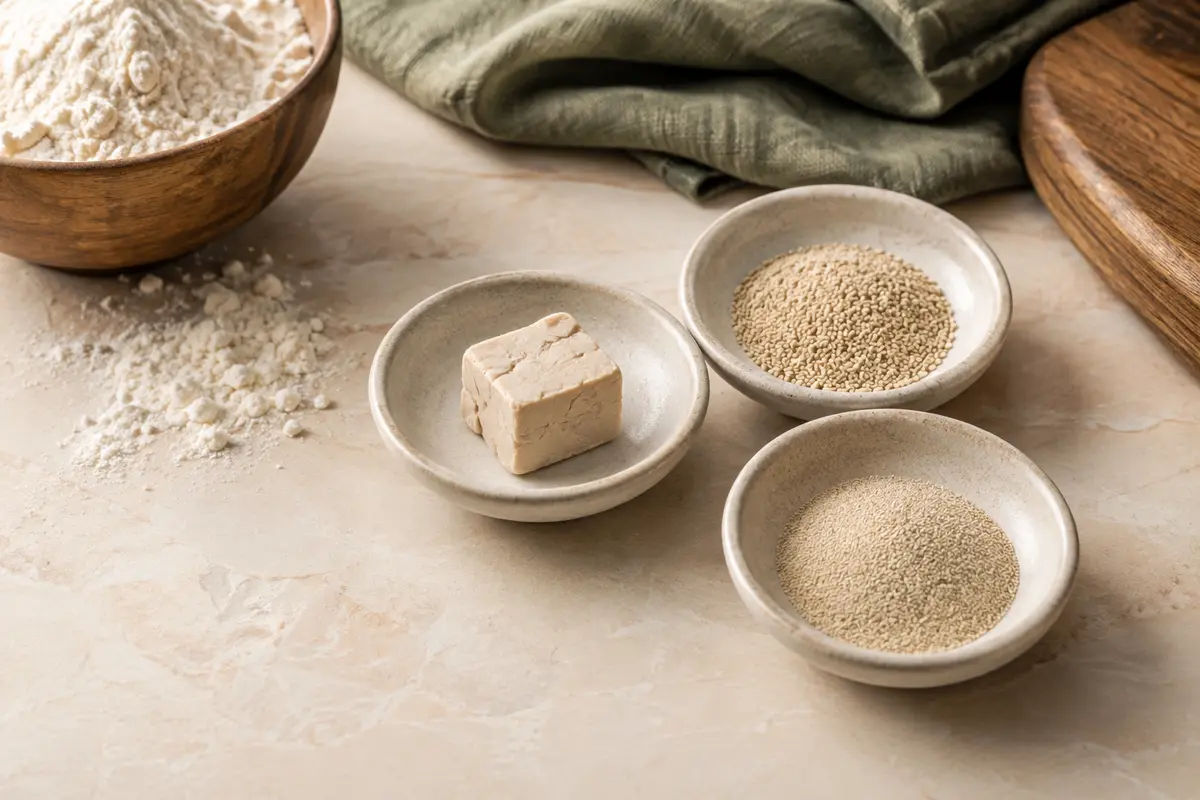
Use about 15 g of fresh yeast instead of 5 g of instant yeast. Crumble it into the dough water and use the same signs of readiness.
Can I leave out the oats or honey?
That changes the moisture balance and character of this recipe. For an oat-free loaf, try the olive oil sandwich bread in the related recipes.
What if my pan is smaller?
Multiply every weight by the same factor. For about 650 g of dough, use 650 ÷ 813 ≈ 0.80. Scale the soaking water and topping too; a smaller loaf may bake faster.